

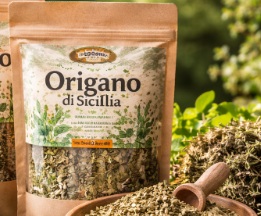
Sicilian oregano (Origanum vulgare subsp. hirtum – family Lamiaceae)
Description
Sicilian oregano is a perennial aromatic plant native to the Mediterranean area and widely distributed in hilly and mountainous regions of Sicily. It belongs to the genus Origanum and is valued for its intense and persistent aroma, which is associated with a high content of essential oils. The plant develops erect, branched stems, opposite oval leaves, and terminal inflorescences composed of small, light-colored flowers.
Cultivation typically occurs in sun-exposed environments with well-drained soils and dry climatic conditions. Harvesting is carried out during the flowering stage, when the concentration of aromatic compounds reaches its maximum. After harvesting, the plant material undergoes natural drying, which preserves both aromatic intensity and product stability.
From a nutritional perspective, Sicilian oregano is used in small quantities but provides relevant bioactive compounds, including polyphenols, flavonoids, and essential oil constituents such as carvacrol and thymol. It also contains minerals and vitamins, particularly vitamin K and several B-group vitamins. Sicilian oregano is mainly used as a culinary herb, where its primary role is sensory, with a qualitative nutritional contribution.
Classification
| Level | Classification |
|---|
| Origin | Plant-based |
| Species | Origanum vulgare |
| Subspecies | hirtum |
| Botanical family | Lamiaceae |
| Category | Aromatic herb |
Plant and raw material characteristics
| Aspect | Description |
|---|
| Plant type | Perennial herbaceous plant |
| Average height | 30–70 cm |
| Leaves | Opposite, oval, aromatic |
| Used parts | Leaves and flowering tops |
| Harvest period | Flowering |
| Commercial form | Dried |
| Main aromatic components | Carvacrol, thymol |
| Allergens | None |
Indicative average nutritional values per 100 g
| Component | Average value |
|---|
| Energy | 265 kcal |
| Protein | 9.0 g |
| Carbohydrates | 69.0 g |
| of which sugars | 4.1 g |
| Dietary fiber | 42.5 g |
| Fat | 4.3 g |
| Calcium | 1,600 mg |
| Magnesium | 270 mg |
| Potassium | 1,260 mg |
| Vitamin K | 620 µg |
| Vitamin A (RAE) | 170 µg |
Average values referring to dried oregano. Natural variability may occur depending on harvesting area and drying conditions.
Note on nutritional use of the bioactive compounds present
Sicilian oregano is a concentrated source of polyphenols and phenolic compounds of the essential oil, particularly carvacrol and thymol, which are associated with antioxidant activity. Although used in small amounts, it contributes micronutrients and bioactive substances to the diet. Its use as a culinary herb enhances flavor while potentially reducing the need for added salt, supporting an overall favorable nutritional profile.