

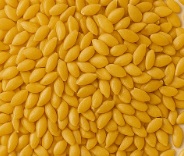
Golden linseeds
Rating : 7
| Evaluation | N. Experts | Evaluation | N. Experts |
|---|---|---|---|
| 1 | 6 | ||
| 2 | 7 | ||
| 3 | 8 | ||
| 4 | 9 | ||
| 5 | 10 |
Pros:
Antidiabetic (1) Antioxidant (1) Anti-inflammatory (1) Anti-obesity (1)0 pts from Al222
| Sign up to vote this object, vote his reviews and to contribute to Tiiips.Evaluate | Where is this found? |
| "Descrizione" about Golden linseeds by Al222 (23420 pt) | 2025-Dec-10 17:31 |
| Read the full Tiiip | (Send your comment) |
Golden linseeds, Yellow flax seeds, Linum usitatissimum (Linaceae)
Golden linseeds, best known as Yellow flax seeds, obtained from the plant Linum usitatissimum, are one of the most significant plant sources of essential fatty acids, dietary fibre, and bioactive compounds. Belonging to the family Linaceae, they are distinguished by their golden colour and a milder flavour compared with brown flax seeds, while maintaining comparable nutritional properties.
Morphologically, yellow flax seeds are flattened, ovoid, and glossy, with a colour ranging from pale yellow to golden. Their smooth, slightly oily surface reflects their high lipid content. The flavour is mild and subtly nutty, making this variety particularly suitable for both sweet and savoury preparations due to its more neutral sensory profile.
![]() | ![]() |
Compositionally, yellow flax seeds contain:
– a significant amount of polyunsaturated fatty acids, particularly alpha-linolenic acid (ALA), a plant-derived omega-3 fatty acid;
– soluble and insoluble fibre, essential for gastrointestinal function;
– moderate levels of plant proteins;
– lignans, notably secoisolariciresinol diglucoside, with recognised antioxidant properties;
– minerals such as magnesium, phosphorus, potassium, and manganese;
– B-group vitamins.
Nutritionally, yellow flax seeds are regarded as a functional food due to their combination of omega-3 fatty acids, fibre, and lignans. Soluble fibre contributes to intestinal regulation and may modulate glucose and lipid absorption. ALA provides a key plant source of essential omega-3s, associated with cardiovascular support and potential anti-inflammatory effects. Lignans add further antioxidant capacity, with possible benefits for metabolic health.
From a culinary perspective, yellow flax seeds are used in numerous applications:
– as an ingredient in bread, crackers, granola, porridge, yogurt, and smoothies;
– in baking, where their fibre content helps retain moisture and improve texture;
– as an egg substitute in vegan recipes due to their natural gel-forming capacity when hydrated;
– freshly ground to enhance the bioavailability of lipid-soluble nutrients.
Compared with brown flax seeds, the yellow variety is often preferred for its more neutral flavour and its suitability for lighter-coloured or delicately flavoured recipes.
| Category | Data |
|---|---|
| Common name | yellow flaxseeds; golden flaxseeds |
| Botanical name | Linum usitatissimum L. |
| Kingdom | Plantae |
| Clade | Angiosperms → eudicots |
| Order | Malpighiales |
| Family | Linaceae |
| Genus | Linum |
| Species | Linum usitatissimum L. |
Average values refer to non-roasted yellow flaxseeds; composition is very similar to brown flaxseeds, with slight variations depending on cultivar.
| Component | Approximate value per 100 g |
|---|---|
| Energy | ~ 525–540 kcal |
| Water | ~ 6–7 g |
| Total carbohydrates | ~ 28 g |
| — of which sugars | ~ 1–2 g |
| Dietary fiber | ~ 27–28 g (both soluble and insoluble fractions) |
| Protein | ~ 18–19 g |
| Total lipids | ~ 41–43 g |
| — saturated fatty acids (SFA) | ~ 3–4 g |
| — monounsaturated fatty acids (MUFA) | ~ 7–8 g |
| — polyunsaturated fatty acids (PUFA) | ~ 27–30 g (rich in alpha-linolenic acid, ALA) |
| Sodium | ~ 25–30 mg |
| Main minerals | magnesium (≈ 390 mg), phosphorus (≈ 640 mg), potassium (≈ 800 mg), calcium (≈ 250 mg), iron |
| Relevant vitamins | vitamin E, B-vitamins (notably B1) |
Yellow flaxseeds have a nearly identical nutritional profile to brown flaxseeds but often a slightly milder flavour.
Extremely rich in PUFA, especially ALA (alpha-linolenic acid), a plant-based omega-3 considered beneficial within a balanced diet.
Low in SFA and moderate in MUFA.
Very high fiber content, supporting digestive health and glycemic control.
Provide plant proteins, minerals, and antioxidant compounds (lignans).
Grinding or soaking the seeds enhances nutrient bioavailability.
Production process
Yellow flax seeds for food use are obtained by harvesting the mature capsules, threshing to separate the seeds, followed by mechanical cleaning (aspiration, sieving and, if needed, optical sorting) to remove impurities and foreign materials. The seeds are then dried to a moisture level suitable for storage, optionally graded by size and finally packed in bags or barrier packaging. For yellow flaxseed oil production, whole seeds are used, often with cold mechanical pressing for high-quality food applications.
Physical properties
Yellow flax seeds are small, oval–pointed seeds with a smooth, slightly glossy surface. The colour ranges from light yellow to golden yellow, generally uniform. Moisture content is typically low, which favours good storage stability when the product is properly stored. In the presence of water, the seed coat releases mucilage, forming a viscous surface gel that underlies many of the seed’s technological and functional properties.
Sensory and technological properties
From a sensory perspective, yellow flax seeds have a mild, slightly nutty flavour, generally softer and more neutral than brown flax, with lower perceived bitterness when the product is fresh and well stored.
Technologically, yellow flax seeds:
Provide a combination of oil and mucilage that can improve moisture, succulence and texture in doughs and baked goods.
Form a gel in the presence of water, useful as a binder and thickener in traditional recipes and as a partial egg replacer in vegan applications.
Contribute to the structure and moisture retention of gluten-free formulations, where mucilage partly mimics the structuring effect of gluten.
In ground form, increase water absorption capacity and affect batter and dough viscosity, requiring careful recipe balancing.
Food applications
Yellow flax seeds are used in a wide variety of foods:
As a topping on bread, crackers, breadsticks and other baked products, often in seed mixes with sesame, sunflower or pumpkin seeds.
In ground or coarsely milled form to increase fibre and “good fats” in breads, biscuits, cereal bars, muesli and granola.
As an ingredient in porridge, yogurt, smoothies and breakfast bowls.
In gluten-free or reduced-gluten doughs, where mucilage helps provide structure and moisture.
In the production of yellow flaxseed oil used as a cold condiment or functional ingredient.
As a component in functional foods or nutraceuticals (e.g. seed blends, enriched flours).
In vegan products, ground flax mixed with water is often used as an egg substitute (“flax egg”) in recipes such as muffins, pancakes and plant-based burgers.
Nutrition and health
Yellow flax seeds are rich in high-quality lipids, with a substantial share of omega-3 (alpha-linolenic acid, ALA), together with omega-6 and omega-9 fatty acids. They also provide plant proteins, dietary fibre (particularly soluble fibre and mucilage), and relevant amounts of minerals (magnesium, phosphorus, manganese) and B-group vitamins.
Key nutritional and physiological aspects:
Fibre and mucilage help modulate postprandial glycaemic response, support bowel regularity and enhance satiety.
Alpha-linolenic acid (ALA) is an essential omega-3 fatty acid, with potential benefits on lipid profile and cardiovascular health when consumed within a balanced diet.
Flax seeds contain phenolic compounds (especially lignans), widely studied for their potential antioxidant and bioactive roles.
For optimal nutrient utilisation, flax seeds are best consumed ground or cracked, as whole seeds may pass through the digestive tract only partially digested.
Serving note
As a general reference, a daily portion in the range of 10–20 g of yellow flax seeds (preferably ground) is often used in practice, to be adjusted according to overall diet, energy needs and any medical advice, especially in people with specific intestinal conditions or taking certain medications.
Allergens and intolerances
Flax is not listed among the major allergens in European regulations, but specific flaxseed allergies have been reported. In predisposed individuals, cutaneous or systemic reactions may occur.
Points of attention:
Flax seeds are naturally gluten-free, but can be contaminated with gluten-containing cereals if grown or processed in shared environments.
The high content of fibre and mucilage can be poorly tolerated by individuals with certain gastrointestinal disorders, especially at high intakes.
Due to the presence of lignans and other bioactive compounds, high consumption should be discussed with a physician in people with particular hormone-related conditions or those on specific medications.
In commercial products, the presence of flax seeds must be listed in the ingredient declaration; advisory statements (e.g. “may contain traces of…”) should be used when relevant.
Storage and shelf-life
Because of their high lipid content, yellow flax seeds are sensitive to oxidation and rancidity, especially when ground. For proper storage:
Whole seeds should be kept in a cool, dry, dark place, away from heat sources, in closed containers.
Under correct conditions, whole seeds typically have a shelf-life of about 12–24 months.
Ground seeds or flax meal have a shorter shelf-life and benefit from storage in tightly closed containers, ideally refrigerated if kept for extended periods.
Any bitter or rancid odour or taste indicates quality degradation and the need to discard the product.
Safety and regulatory
Yellow flax seeds are considered a traditional food and are generally not classified as novel food. However, they must comply with:
Limits on mycotoxins, heavy metals and pesticide residues.
Applicable microbiological criteria for seeds intended for food use.
Regulations on foods enriched with omega-3 fatty acids and related nutritional or health claims.
Rules on gluten and allergen labelling for products that bear “gluten-free” or similar claims.
Throughout the supply chain, producers are expected to apply Good Manufacturing Practice (GMP) and Hazard Analysis and Critical Control Points (HACCP) systems to ensure safety, traceability and consistent quality.
Labelling
On labels, the ingredient may appear as “flax seeds”, “yellow flax seeds” or, in more specific products, with indication of the form (e.g. “ground yellow flax seeds”).
Key aspects:
Clear listing of flax seeds in the ingredient list.
Use of “gluten-free” claims only if the supply chain ensures gluten levels below regulatory limits (typically <20 ppm).
Transparent indication when flax is a characterising ingredient (e.g. “yellow flaxseed bread”) in the name of the food, without misleading consumers.
Appropriate storage instructions (e.g. “store in a cool, dry place”) and, for ground product, recommendations regarding timeframe after opening.
Troubleshooting
Overly dense or moist baked goods: excessive amounts of ground flax or mucilage, combined with high hydration, can produce heavy textures; reduce flax level or rebalance water and other structuring agents.
Bitter or rancid flavour: typically due to oxidised or poorly stored seeds; check production date, storage conditions and opt for smaller packs with faster turnover.
Poor dough rise in bread: high levels of ground flax can significantly change dough rheology; consider reducing flax percentage, slightly increasing hydration and flour strength, and adjusting fermentation times.
Overly gelatinous texture in vegan recipes: an excessively high water-to-flax ratio in the “flax egg” can produce an overly viscous gel; optimise ratio and rest time (for example, 1:3 ground flax:water with a short hydration period) according to the recipe.
Main INCI functions (cosmetics)
Yellow flax seeds are the source of various cosmetic ingredients (oils, extracts, polysaccharide fractions), labelled for example as Linum Usitatissimum (Linseed) Seed Oil or Linum Usitatissimum Seed Extract. Main INCI-related functions include:
Emollient: flaxseed oil softens skin and improves slip in creams, lotions and hair products.
Skin conditioning: oils and extracts contribute to improved skin feel and appearance.
Hair conditioning: oils can enhance shine and manageability of hair.
Film forming (especially polysaccharide/mucilage fractions): formation of a light protective film on skin or hair, with conditioning and sensory-modulating effects.
Antioxidant: phenolic compounds and tocopherols can help support formula stability and contribute to protection against oxidative processes.
Humectant / soothing (for some water-soluble fractions): support surface hydration and comfort in mild or sensitive-skin formulations.
Conclusion
Yellow flax seeds are a multifunctional ingredient with both nutritional and technological relevance. Their profile rich in unsaturated fatty acids, fibre and bioactive compounds makes them an interesting component of a balanced diet, especially within patterns that emphasise plant-based sources of fat and dietary fibre.
From a technological standpoint, their strong ability to form mucilaginous gels and to improve dough structure and moisture makes them valuable in gluten-free, vegan and high-fibre formulations. In cosmetics, flax-derived ingredients serve as emollients, conditioning agents and antioxidants, fitting well into product concepts that highlight natural-origin raw materials. Proper storage, quality control and transparent labelling are essential to fully harness the potential of yellow flax seeds along both the food and cosmetic value chains.
Mini-glossary
Mucilage: water-soluble polysaccharides present in the seed coat that form a viscous gel when hydrated.
Alpha-linolenic acid (ALA): an essential omega-3 fatty acid of plant origin, abundant in flax seeds.
Flax egg: mixture of ground flax seeds and water used as a vegan egg substitute thanks to its gelling ability.
Lipid oxidation: degradation of fats leading to compounds responsible for rancid odours and flavours.
GMP (Good Manufacturing Practice): set of principles and procedures ensuring products are manufactured and controlled consistently to defined quality and safety standards.
HACCP (Hazard Analysis and Critical Control Points): food-safety management system based on risk analysis and control of critical points in the production process.
20 ppm: commonly adopted threshold for defining a food as “gluten-free”, corresponding to 20 parts per million of gluten in the finished product.
Studies
In the seeds there are interesting antioxidant components such as the phenylpropanoid compounds, vanillic acid, vanillin, coumaric acid, ferulic acid and are the richest source of alpha-linolenic acid as well as an excellent source of dietary fibers. The flax stem is the main source of cellulose-rich fibres used by the textile industry for the production of bed linen. Its seed oil (linseed) is beneficial for human health due to the presence of a high amount of omega-3 fatty acids. In addition, linseed oil is used in the preparation of many industrial solvents (1). Flax contains about 34% oil and a high content of α-linolenic acid (> 50%) makes it a common feed ingredient for the enrichment of n-3 fatty acid (2) It also contains mucilosis polysaccharides (neutral polysaccharides and acids composed mainly of galacturonic acid) (3). One of the most common diseases of the flax plant is the fungal disease caused by Fusarium oxysporum (4).
References_________________________________________________________________________
(1) Shivaraj SM, Deshmukh RK, Rai R, Bélanger R, Agrawal PK, Dash PK Genome-wide identification, characterization, and expression profile of aquaporin gene family in flax (Linum usitatissimum). Sci Rep. 2017 Apr 27;7:46137. doi: 10.1038/srep46137.
Abstract. Membrane intrinsic proteins (MIPs) form transmembrane channels and facilitate transport of myriad substrates across the cell membrane in many organisms. Majority of plant MIPs have water transporting ability and are commonly referred as aquaporins (AQPs). In the present study, we identified aquaporin coding genes in flax by genome-wide analysis, their structure, function and expression pattern by pan-genome exploration. Cross-genera phylogenetic analysis with known aquaporins from rice, arabidopsis, and poplar showed five subgroups of flax aquaporins representing 16 plasma membrane intrinsic proteins (PIPs), 17 tonoplast intrinsic proteins (TIPs), 13 NOD26-like intrinsic proteins (NIPs), 2 small basic intrinsic proteins (SIPs), and 3 uncharacterized intrinsic proteins (XIPs). Amongst aquaporins, PIPs contained hydrophilic aromatic arginine (ar/R) selective filter but TIP, NIP, SIP and XIP subfamilies mostly contained hydrophobic ar/R selective filter. Analysis of RNA-seq and microarray data revealed high expression of PIPs in multiple tissues, low expression of NIPs, and seed specific expression of TIP3 in flax. Exploration of aquaporin homologs in three closely related Linum species bienne, grandiflorum and leonii revealed presence of 49, 39 and 19 AQPs, respectively. The genome-wide identification of aquaporins, first in flax, provides insight to elucidate their physiological and developmental roles in flax.
(2) Cherian G, Quezada N. Egg quality, fatty acid composition and immunoglobulin Y content in eggs from laying hens fed full fat camelina or flax seed. J Anim Sci Biotechnol. 2016 Mar 3;7:15. doi: 10.1186/s40104-016-0075-y. eCollection 2016.
Abstract. Background: The current study was conducted to evaluate egg quality and egg yolk fatty acids and immunoglobulin (IgY) content from laying hens fed full fat camelina or flax seed....Results: Egg production was higher in hens fed Camelina and Flax than in Control hens (P < 0.05). Egg weight and albumen weight was lowest in eggs from hens fed Camelina (P < 0.05). Shell weight relative to egg weight (shell weight %), and shell thickness was lowest in eggs from hens fed Flax (P < 0.05). No difference was noted in Haugh unit, yolk:albumen ratio, and yolk weight. Significant increase in α-linolenic (18:3 n-3), docosapentaenoic (22:5 n-3) and docoshexaenoic (22:6 n-3) acids were observed in egg yolk from hens fed Camelina and Flax. Total n-3 fatty acids constituted 1.19 % in Control eggs compared to 3.12 and 3.09 % in Camelina and Flax eggs, respectively (P < 0.05). Eggs from hens fed Camelina and Flax had the higher IgY concentration than those hens fed Control diet when expressed on a mg/g of yolk basis (P < 0.05). Although the egg weight was significantly lower in Camelina-fed hens, the total egg content of IgY was highest in eggs from hens fed Camelina (P < 0.05). Conclusions: The egg n-3 fatty acid and IgY enhancing effect of dietary camelina seed warrants further attention into the potential of using camelina as a functional feed ingredient in poultry feeding.
(3) European Scientific Cooperative on Phytotherapy. Lini semen. 2nd ed. New York: Thieme; 2003. ESCOP Monographs; pp. 290–6.
(4) Wojtasik W, Kulma A, Dymińska L, Hanuza J, Czemplik M, Szopa J. Evaluation of the significance of cell wall polymers in flax infected with a pathogenic strain of Fusarium oxysporum. BMC Plant Biol. 2016 Mar 22;16:75. doi: 10.1186/s12870-016-0762-z.
Abstract. Background: Fusarium oxysporum infection leads to Fusarium-derived wilt, which is responsible for the greatest losses in flax (Linum usitatissimum) crop yield. Plants infected by Fusarium oxysporum show severe symptoms of dehydration due to the growth of the fungus in vascular tissues. As the disease develops, vascular browning and leaf yellowing can be observed. In the case of more virulent strains, plants die. The pathogen's attack starts with secretion of enzymes degrading the host cell wall. The main aim of the study was to evaluate the role of the cell wall polymers in the flax plant response to the infection in order to better understand the process of resistance and develop new ways to protect plants against infection. For this purpose, the expression of genes involved in cell wall polymer metabolism and corresponding polymer levels were investigated in flax seedlings after incubation with Fusarium oxysporum....Conclusion: The results suggest that the role of the cell wall polymers in the plant response to Fusarium oxysporum infection is manifested through changes in expression of their genes and rearrangement of the cell wall polymers. Our studies provided new information about the role of cellulose and hemicelluloses in the infection process, the change of their structure and the expression of genes participating in their metabolism during the pathogen infection. We also confirmed the role of pectin and lignin in this process, indicating the major changes at the mRNA level of lignin metabolism genes and the loosening of the pectin structure.
| Sign up to vote this object, vote his reviews and to contribute to Tiiips.EvaluateClose | (0 comments) |
Read other Tiiips about this object in __Italiano (1)
Content:   Last update:   2025-12-10 17:27:43 | Kcal/100g:   540 Family:   Threat factors:   |

