

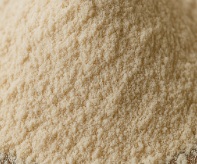
Sourdough Starter Powder
Rating : 7
| Evaluation | N. Experts | Evaluation | N. Experts |
|---|---|---|---|
| 1 | 6 | ||
| 2 | 7 | ||
| 3 | 8 | ||
| 4 | 9 | ||
| 5 | 10 |
0 pts from Al222
| Sign up to vote this object, vote his reviews and to contribute to Tiiips.Evaluate | Where is this found? |
| "Descrizione" about Sourdough Starter Powder by Al222 (24012 pt) | 2025-Dec-09 10:09 |
| Read the full Tiiip | (Send your comment) |
Sourdough starter powder – dehydrated fermented culture
Sourdough starter powder is a stabilised, dehydrated form of natural sourdough, derived from a complex community of yeasts and lactic acid bacteria similar to that of fresh sourdough starter. This ingredient is valued for its long shelf stability, ease of use, and its ability to impart aroma, balanced acidity, and a more natural fermentation profile compared with fast-acting commercial yeasts.
Morphologically and sensorially, Sourdough starter powder appears as a fine powder, ranging in colour from beige to light cream, with a mild acidic and lactic aroma characteristic of natural fermentation. Its uniform particle size ensures good dispersibility in doughs and dry mixes.
![]() | ![]() |
Compositionally, Sourdough starter powder typically contains:
– a variable population of yeasts and lactic acid bacteria (often reduced or inactivated depending on the formulation);
– organic acids such as lactic and acetic acid, responsible for flavour development and pH modulation;
– residual enzymes originating from microbial activity;
– cereal-derived nutrients including carbohydrates, peptides, minerals, and aromatic compounds.
Nutritionally, Sourdough starter powder is not a major contributor of macronutrients due to its low usage levels, yet it significantly enhances dough digestibility and contributes to complex aroma formation thanks to fermentation metabolites. The associated pH reduction also improves shelf life by limiting undesirable microbial growth in baked goods.
Technologically and gastronomically, Sourdough starter powder is used to:
– enhance the flavour and aromatic profile of breads, pizzas, and focaccia;
– improve softness and freshness over time;
– promote more uniform fermentation and a well-developed crumb structure;
– partially replace or complement fresh sourdough, allowing greater standardisation and consistency in production.
Its applications are widespread in baking and pastry industries, enabling products with a more artisan-like character while maintaining the practicality of a stable, easy-to-dose ingredient.
Sourdough starter powder is a non-botanical food ingredient (a fermented and dehydrated mixture). However, when it is produced from cereal flours, the botanical classification refers to the plant species from which the flour is obtained (commonly wheat).
| Category | Data |
|---|---|
| Common name | Sourdough starter powder; sourdough starter; sourdough powder |
| Main botanical component | wheat flour (when used) |
| Botanical name | Triticum aestivum L. |
| Kingdom | Plantae |
| Clade | Angiosperms → monocots |
| Order | Poales |
| Family | Poaceae |
| Genus | Triticum |
| Species | Triticum aestivum L. |
| Microbiological component | lactic acid bacteria and yeasts (e.g., Lactobacillus spp., Saccharomyces spp.) — not subject to botanical classification |
Average values refer to dehydrated sourdough produced from flour and water through fermentation and drying. Nutrient levels vary widely depending on producer specifications, drying level, and composition (flour, microbial cultures, optional maltodextrin).
| Component | Approximate value per 100 g |
|---|---|
| Energy | ~ 330–360 kcal |
| Water | ~ 4–6 g |
| Total carbohydrates | ~ 70–75 g |
| — of which sugars (from fermentation) | ~ 3–6 g |
| Dietary fiber | ~ 4–6 g |
| Protein | ~ 12–15 g |
| Total lipids | ~ 1–2 g |
| — saturated fatty acids (SFA) | ~ 0.2–0.4 g |
| — monounsaturated fatty acids (MUFA) | ~ 0.1–0.2 g |
| — polyunsaturated fatty acids (PUFA) | ~ 0.4–0.6 g |
| Sodium | ~ 20–40 mg |
| Main minerals | potassium, phosphorus, magnesium, iron (inherited from the flour) |
| Relevant vitamins | trace amounts of B-vitamins produced during fermentation |
Sourdough starter powder retains part of the metabolites produced during lactic fermentation, which contribute to flavor and digestibility in baked goods.
The nutritional profile largely reflects that of the flour used as the fermentation substrate.
Very low fat content, with minimal SFA, MUFA, and PUFA.
Fiber and protein content depend on the type of flour (refined vs. wholegrain).
Used in baking to enhance aroma, structure, shelf life, and dough development, often combined with baker’s yeast.
Sourdough starter powder is obtained from a traditional sourdough (a fermented mixture of flour and water containing yeasts and lactic acid bacteria) that is stabilised and then dehydrated.
Typically, a sourdough culture based on wheat flour (sometimes also durum wheat or cereal blends) is maintained through repeated refreshments until it reaches a stable fermentation and aromatic profile. This active sourdough is then subjected to gentle drying (warm air, drum or belt drying, or similar technologies) to reduce moisture to very low levels, stabilising the microbial community.
In many commercial products, the dried sourdough is then blended with flour, sometimes with a small amount of active dry yeast and, in some cases, enzymes (e.g. amylases) and flour treatment agents such as ascorbic acid. The result is a free-flowing, light beige powder that can be added directly to doughs.
Sourdough starter powder is designed to reproduce, in a stable and easy-to-use form, part of the technological and sensory effects of fresh sourdough, without the need to manage daily refreshments and storage of a live culture.
It is mainly used in:
Bread and bakery products, where it helps achieve more complex aroma, thicker and crisper crust, moister crumb and better keeping quality than yeast-only doughs.
Pizza and savoury baked goods, including pan pizza, flatbreads, grissini and savoury snacks, where it contributes to flavour, perceived digestibility and structure.
Sweet leavened products, such as brioche-type breads, soft rolls and some festive cakes, often in combination with baker’s yeast, to improve volume, flavour and freshness.
In practice, the powder is mixed directly with the flour or added during dough preparation, at the dosage recommended by the manufacturer or adjusted based on the baker’s experience.
Nutritionally, Sourdough starter powder behaves like a fermented flour-based ingredient, with an energy content comparable to other dried cereal derivatives. Technical data typically show values around 350–370 kcal per 100 g (for example, about 359 kcal/100 g in some commercial formulations), with the majority of calories coming from carbohydrates (partly in the form of simpler sugars), a moderate amount of protein and very low fat.
At the actual levels used in dough, dried sourdough starter:
contributes only a modest part of total energy, which must be considered in the context of all the flour and other ingredients;
brings fermentation products (organic acids, aroma compounds) that influence perceived digestibility, flavour and shelf-life of the final baked good;
is not intended as an independent “source of nutrients”, but as a technological and sensory aid.
Any perceived better tolerance of bread and pizza made with sourdough (fresh or dried) is related to changes in starch and gluten structure, acidification and fermentation dynamics, and must always be evaluated in the context of the overall recipe and processing method, not as a therapeutic property.
Portion note
There is no meaningful household portion for direct consumption of dried sourdough starter. In bread and pizza doughs it is usually dosed at a few percent of the flour weight (for example a few grams per 100 g of flour). Its caloric and nutritional contribution must therefore be evaluated within the portion of bread, pizza or sweet bakery product actually consumed.
Sourdough starter powder is normally produced from wheat flour or other gluten-containing cereals (e.g. durum wheat, sometimes rye or blends), so it contains gluten and is not suitable for people with coeliac disease or gluten sensitivity.
It may also contain wheat proteins responsible for wheat allergy. Some industrial formulations indicate possible presence of traces of soy, sesame, lupin or other seeds, due to cross-contamination in mills and packing plants.
Individuals with coeliac disease, gluten sensitivity or food allergies must carefully check the ingredient list and any “may contain” statements.
Because it is a dehydrated product, dried sourdough starter is much more stable than fresh sourdough, but it is still sensitive to humidity and, to some extent, to temperature.
It should be stored:
in a cool, dry place, protected from light and heat sources;
in a well-closed package, re-sealing the bag carefully after use or transferring the powder into airtight containers.
Many manufacturers pack dried sourdough under vacuum or in a protective atmosphere to preserve fermentation activity and limit oxidation. Under proper storage conditions, the commercial shelf-life is typically between 9–12 months and up to 18–24 months, depending on formulation and packaging, as stated on the label.
Sourdough starter powder falls under the category of bakery ingredients and processed cereal products. It is subject to general food-safety rules, including:
limits for chemical contaminants (mycotoxins, heavy metals, pesticide residues) relevant to cereals and derivatives;
hygiene and microbiological quality requirements in production, drying, blending and packing;
implementation of GMP and HACCP-based safety systems.
When the formulation includes baker’s yeast, enzymes or additives (such as ascorbic acid as a flour treatment agent), these components must be authorised for use in baking and correctly declared on the label according to applicable regulations.
Any communication about improved aroma, perceived digestibility or shelf-life refers to the finished baked product and must comply with rules on nutrition and health-related messaging.
On packaging, the product may appear as:
dried sourdough,
“natural dried sourdough”,
“dried mother dough”,
or under specific brand names, accompanied by a functional description.
In the ingredient list, the main components must be specified, for example: dried sourdough from WHEAT flour, wheat flour, baker’s yeast, enzymes, ascorbic acid, and “packed in a protective atmosphere” where applicable.
Because it is derived from wheat, it must be clearly identifiable as coming from gluten-containing cereals. Many labels highlight WHEAT (or the local language equivalent) using bold or other typography. Some products also mention “may contain traces of soy, sesame, lupin” or similar, when relevant.
Sourdough starter powder is primarily an food ingredient, and its direct use as such in cosmetics is uncommon. However, yeast-derived ingredients and fermented cereal extracts are used in some cosmetic formulations under INCI names such as Yeast Extract, Fermented Grain Extract or similar.
In that broader context, cosmetic functions potentially associated with ingredients derived from sourdough or its fractions can include:
Skin conditioning – helping to improve skin softness and appearance, thanks to nitrogenous (peptides, amino acids) and sugar fractions that support a pleasant skin feel.
Humectant – a mild humectant effect associated with soluble sugars and saccharides that help hold some moisture at the skin surface.
Hair conditioning – in specific hair products, a secondary contribution to hair feel and manageability, in synergy with other actives.
In practice, however, dried sourdough powder as such is essentially a technical baking ingredient, while cosmetic uses involve more specific, standardised yeast or fermented-grain extracts.
Sourdough starter powder offers a practical way to obtain some of the aroma, structure, shelf-life and sensory benefits of traditional sourdough in bread, pizza and baked goods, without the complexity of managing a live sourdough culture.
Nutritionally, it is a fermented flour ingredient with an energy content similar to other dried cereal products and a relatively small quantitative impact per portion, while playing a key role in fermentation behaviour, flavour development and texture of the final product.
Because it contains gluten and wheat-derived proteins, it requires particular attention from consumers with coeliac disease, gluten sensitivity or wheat allergy. When stored appropriately and produced under good manufacturing and hygiene practices, dried sourdough starter is a safe, stable and reliable tool for both artisanal and industrial baking.
| Sign up to vote this object, vote his reviews and to contribute to Tiiips.EvaluateClose | (0 comments) |
Read other Tiiips about this object in __Italiano (1)
Content:   Family:   Last update:   2025-12-09 09:54:23 | Kcal/100g:   360 Threat factors:   |

