

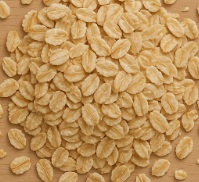
Barley flakes
Rating : 7
| Evaluation | N. Experts | Evaluation | N. Experts |
|---|---|---|---|
| 1 | 6 | ||
| 2 | 7 | ||
| 3 | 8 | ||
| 4 | 9 | ||
| 5 | 10 |
Pros:
Antioxidant (1)Cons:
Contains gluten (1)0 pts from Al222
| Sign up to vote this object, vote his reviews and to contribute to Tiiips.Evaluate | Where is this found? |
| "Descrizione" about Barley flakes by Al222 (24012 pt) | 2025-Dec-08 16:48 |
| Read the full Tiiip | (Send your comment) |
Barley flakes, Hordeum vulgare (Poaceae)
Barley flakes, produced from the cereal Hordeum vulgare, are one of the most common processed forms of barley for human consumption. Belonging to the family Poaceae, barley is among the oldest cultivated cereals and is valued for its nutritional versatility, its content of β-glucans, and its good digestibility. Flaking consists of steaming and subsequently rolling the grains, a process that improves chewability, cooking performance, and nutrient bioavailability.
Morphologically, barley flakes appear as thin, compressed layers, obtained from decorticated or pearled whole grains flattened by mechanical rollers. Their colour ranges from beige to golden, and they retain a characteristic cereal aroma. The laminated structure ensures rapid water absorption, making the product suitable for instant or short-cooking preparations.
![]() | ![]() |
The plant Hordeum vulgare thrives in temperate climates, showing strong adaptability even in dry or cold environments. Barley grains may occur in hulled or hull-less forms, leading to diverse applications across human nutrition, animal feed, and malting. Flaking is especially widespread in the food sector because it preserves many of the cereal’s intrinsic nutritional qualities.
From a phytochemical perspective, barley flakes contain β-glucans, soluble fibres known for their effects on lipid metabolism and glycaemic regulation. Barley also provides complex carbohydrates, plant proteins, tocopherols (vitamin E), and minerals such as phosphorus, magnesium, and selenium, along with phenolic compounds with potential antioxidant activity.
Nutritionally, barley flakes are recognised as a functional food, primarily due to their content of soluble fibre, which promotes satiety, modulates carbohydrate absorption, and supports intestinal well-being. Their starch profile and digestibility make them suitable for sports nutrition and balanced dietary regimes. Compared with other cereals, barley flakes generally have a moderate glycaemic index, particularly when derived from wholegrain kernels.
From a culinary perspective, barley flakes are widely used in:
– porridge, muesli, and breakfast cereal mixes;
– soups and creamy dishes as a natural thickener;
– vegetable patties, protein-rich preparations, and meat substitutes;
– bases for energy bars and wholegrain baked goods.
| Category | Data |
|---|---|
| Common name | barley; barley flakes |
| Botanical name | Hordeum vulgare L. |
| Kingdom | Plantae |
| Clade | Angiosperms → monocots (Poaceae) |
| Order | Poales |
| Family | Poaceae |
| Genus | Hordeum |
| Species | Hordeum vulgare L. |
Average values refer to flakes produced from pearled or hulled barley, steam-rolled; data may vary according to variety, degree of refinement, and residual moisture.
| Component | Approximate value per 100 g |
|---|---|
| Energy | ~ 350–370 kcal |
| Water | ~ 8–10 g |
| Total carbohydrates | ~ 73–75 g |
| — of which sugars | ~ 1–1.5 g |
| Dietary fiber | ~ 10–11 g (rich in β-glucans) |
| Protein | ~ 10–12 g |
| Total lipids | ~ 2–2.5 g |
| — saturated fatty acids (SFA) | ~ 0.4 g |
| — monounsaturated fatty acids (MUFA) | ~ 0.3 g |
| — polyunsaturated fatty acids (PUFA) | ~ 1.0–1.1 g |
| Sodium | ~ 3–5 mg |
| Main minerals | phosphorus (≈ 280–300 mg), magnesium (≈ 100–110 mg), potassium (≈ 250–280 mg), iron, zinc |
| Relevant vitamins | B-vitamins (B1, B3, B6), small amounts of vitamin E |
Barley flakes are a moderately energy-dense cereal with a high content of complex carbohydrates.
Their fiber, rich in β-glucans, supports digestive function and helps modulate post-meal blood glucose.
Low lipid content, with modest amounts of SFA, MUFA, and PUFA, with no significant impact on daily lipid intake.
Provide B-vitamins essential for energy metabolism, along with minerals such as magnesium, phosphorus, and potassium.
Suitable for porridge, soups, yogurt mixes, baked goods, and breakfast cereals.
Barley flakes are produced from pearled or hulled barley grains. After harvest, the grain is cleaned to remove stones, straw and foreign seeds and may be dehulled/pearled to take off part of the outer layers, depending on the final product.
For flaking, the barley (whole grains or groats) is usually hydro-conditioned: moisture is adjusted by steaming or soaking so that the kernels soften. The conditioned grains are then passed through smooth rollers that flatten them into flakes. The fresh flakes are dried with warm air to a safe, stable moisture level, cooled and finally packed.
The result is a product suitable for short cooking times (soups, porridges) or direct use as an ingredient in breakfast cereals and muesli mixes.
Barley flakes sit between breakfast cereals and ingredients for savoury dishes.
They are used:
At breakfast: in muesli, granola, porridge, mixed flake blends with nuts and seeds, or in cereal bars.
In soups and stews: added to broths, vegetable soups and one-pot dishes to increase texture, satiety and complex carbohydrate content.
In bakery products: in multigrain breads, crackers and flatbreads, often combined with oat, rye or spelt flakes.
Compared with whole barley grains, flakes have shorter cooking times and a softer texture, making them practical for quick preparations.
The nutritional profile of barley flakes depends on whether they are more “wholegrain” or more heavily pearled, but typical values for 100 g of dry barley flakes are approximately:
Energy: about 340–360 kcal
Carbohydrates: ~60–75 g
Fibre: ~6–17 g (higher in more wholegrain products, including beta-glucans)
Protein: ~8–12 g
Fat: ~1.5–3 g
Barley is well known for its soluble fibre, particularly beta-glucans, which can:
Help moderate carbohydrate absorption.
Support satiety.
Contribute, as part of an overall healthy diet, to maintaining a favourable blood lipid profile.
Barley flakes also supply B-group vitamins and minerals such as magnesium, phosphorus, potassium and zinc, with levels depending on how much of the grain’s outer layers are retained. Their energy density is moderate, so portion size should be considered within the daily calorie budget.
Portion note
A typical household portion of barley flakes for breakfast or as part of a main dish is about 30–50 g of dry product, adjusted to individual energy needs and the rest of the meal.
Barley is a gluten-containing cereal. Therefore:
Barley flakes are not suitable for people with coeliac disease or non-coeliac gluten sensitivity.
They may also be unsuitable for individuals with specific allergies or intolerances to gluten-containing cereals.
In composite products (muesli, cereal bars, multigrain bread, ready-made soups), other major allergens often present include tree nuts, soy, milk, sesame, etc., which must always be checked on the label.
Although barley flakes have a relatively low fat content, they can still undergo rancidity and lose flavour if poorly stored.
Store them in a cool, dry place, protected from light and heat, in well-closed containers.
Once the pack is opened, it is advisable to use the product within a few months, closing the bag carefully each time or transferring the flakes into airtight jars.
Under proper conditions, the commercial shelf-life of barley flakes is commonly 9–12 months from production (or as specified by the manufacturer).
Barley flakes are traditional cereal products and fall under general food-safety rules:
Compliance with limits for contaminants (mycotoxins, heavy metals, pesticide residues).
Adequate hygiene, microbiological quality and pest control throughout production and storage.
Application of GMP (Good Manufacturing Practices) and HACCP in processing and packing.
Nutrition and health claims such as “source of fibre” or “high in fibre” must be supported by the actual contents per 100 g or per serving, in line with nutrition and health claims regulations.
On packaging, barley flakes typically appear as:
“fiocchi d’orzo” / “barley flakes”,
sometimes with additional descriptors (e.g. “wholegrain”, “organic”).
A nutrition declaration is mandatory for prepacked foods, including energy in kJ and kcal, macronutrients and, if claimed, fibre, vitamins and minerals. The presence of gluten is clear from the cereal name (barley), and other allergens in mixed products (e.g. nuts, milk, soy, sesame) must be highlighted according to the applicable legislation.
In breakfast mixes or baked products, ingredients are listed in descending order of weight.
Barley flakes offer a practical way to bring barley into everyday meals, with shorter cooking times than whole grains and easy incorporation into breakfast bowls, soups and baked goods. They provide a mix of complex carbohydrates, fibre (including beta-glucans), protein and micronutrients with a moderate calorie content, making them a good option for diversifying cereal sources beyond wheat, oats and rice.
Because they contain gluten, they are unsuitable for those who must avoid it, but for the general population they can contribute to a varied and balanced diet when portion size and overall dietary quality are taken into account.
Studies
In barley there are functional ingredients interesting for human health such as beta-glucans, polysaccarids, the main components of the soluble part of dietary fiber. Their characteristic is to facilitate the regular function of the gastrointestinal tract, the homeostasis of glucose and the regulation of energy in the human body (2). They can prevent oncogenesis due to the protective effect against powerful genotoxic carcinogens (3).
But while a high beta-glucan content is positive for human health, the brewing industry that uses malt, needs a low concentration of beta-glucans as high levels can negatively affect malt filtration.
In addition, phenolic compounds found in barley, as well as producing an antioxidant effect in the human body, have probiotic and gastroprotective effects (4).
Another interesting aspect of the other ingredients present in barley concerns the effect that fermented barley extract produces on the colon mucosa. It has been noted that this extract can relieve constipation (5).
References__________________________________________________________________________
(1) FAO 2019
(2) Baldassano S, Accardi G, Vasto S. Beta-glucans and cancer: The influence of inflammation and gut peptide. Eur J Med Chem. 2017 Dec 15;142:486-492. doi: 10.1016/j.ejmech.2017.09.013. Epub 2017 Sep 15. PMID: 28964548.
(3) Akramiene D, Kondrotas A, Didziapetriene J, Kevelaitis E. Effects of beta-glucans on the immune system. Medicina (Kaunas). 2007;43(8):597-606.
Abstract. Beta-glucans are naturally occurring polysaccharides. These glucose polymers are constituents of the cell wall of certain pathogenic bacteria and fungi. The healing and immunostimulating properties of mushrooms have been known for thousands of years in the Eastern countries. These mushrooms contain biologically active polysaccharides that mostly belong to group of beta-glucans. These substances increase host immune defense by activating complement system, enhancing macrophages and natural killer cell function. The induction of cellular responses by mushroom and other beta-glucans is likely to involve their specific interaction with several cell surface receptors, as complement receptor 3 (CR3; CD11b/CD18), lactosylceramide, selected scavenger receptors, and dectin-1 (betaGR). beta-Glucans also show anticarcinogenic activity. They can prevent oncogenesis due to the protective effect against potent genotoxic carcinogens. As immunostimulating agent, which acts through the activation of macrophages and NK cell cytotoxicity, beta-glucan can inhibit tumor growth in promotion stage too. Anti-angiogenesis can be one of the pathways through which beta-glucans can reduce tumor proliferation, prevent tumor metastasis. beta-Glucan as adjuvant to cancer chemotherapy and radiotherapy demonstrated the positive role in the restoration of hematopiesis following by bone marrow injury. Immunotherapy using monoclonal antibodies is a novel strategy of cancer treatment. These antibodies activate complement system and opsonize tumor cells with iC3b fragment. In contrast to microorganisms, tumor cells, as well as other host cells, lack beta-glucan as a surface component and cannot trigger complement receptor 3-dependent cellular cytotoxicity and initiate tumor-killing activity. This mechanism could be induced in the presence of beta-glucans.
(4) Charalampopoulos D, Pandiella SS, Webb C. Evaluation of the effect of malt, wheat and barley extracts on the viability of potentially probiotic lactic acid bacteria under acidic conditions. Int J Food Microbiol. 2003 Apr 25;82(2):133-41. doi: 10.1016/s0168-1605(02)00248-9.
Abstract. In this work, the effect of cereal extracts, used as delivery vehicles for potentially probiotic lactic acid bacteria (LAB), on the acid tolerance of the cells was evaluated under conditions that simulate the gastric tract. More specifically, the effect of malt, barley and wheat extracts on the viability of Lactobacillus plantarum, Lactobacillus acidophilus and Lactobacillus reuteri during exposure for 4 h in a phosphate buffer acidified at pH 2.5 was investigated. In the absence of cereal extracts all strains demonstrated a significant reduction in their cell population, particularly L. plantarum. The viability of L. plantarum was improved by approximately 4 log(10) cycles in the presence of malt and 3 log(10) cycles in the presence of wheat and barley. The survival of L. acidophilus and L. reuteri was increased by more than 1.5 and 0.7 log(10) cycle, respectively, upon addition of cereal extracts. In order to evaluate the contribution of the cereal constituents on cell survival, the individual effect of glucose, maltose and free amino nitrogen (FAN), which were added at concentrations that correlated to the reducing sugar and FAN content of the cereal extracts, was examined. The viability of L. plantarum was progressively improved as the maltose or glucose concentration increased; an increase by approximately 2 log(10) cycles was observed in the presence of 8.33 g/l sugar. The survival of L. acidophilus increased by more than 1 log(10) cycle, even at very low concentrations of maltose and glucose (e.g., 0.67 g/l), while L. reuteri stability was enhanced in the presence of maltose but no appreciable effect was demonstrated in the presence of glucose. Sugar analysis indicated that glycolysis was inhibited in all cases. Addition of tryptone and yeast extract, used as sources of FAN, enhanced L. acidophilus acid tolerance, but did not affect L. reuteri and L. plantarum. The results presented in this study indicate that malt, wheat and barley extracts exhibit a significant protective effect on the viability of L. plantarum, L. acidophilus and L. reuteri under acidic conditions, which could be mainly attributed to the amount of sugar present in the cereal extracts.
(5) Lim JM, Kim YD, Song CH, Park SJ, Park DC, Cho HR, Jung GW, Bashir KMI, Ku SK, Choi JS. Laxative effects of triple fermented barley extracts (FBe) on loperamide (LP)-induced constipation in rats. BMC Complement Altern Med. 2019 Jun 21;19(1):143. doi: 10.1186/s12906-019-2557-x.
Abstract. Background: Constipation, a common health problem, causes discomfort and affects the quality of life. This study intended to evaluate the potential laxative effect of triple fermented barley (Hordeum vulgare L.) extract (FBe), produced by saccharification, Saccharomyces cerevisiae, and Weissella cibaria, on loperamide (LP)-induced constipation in Sprague-Dawley (SD) rats, a well-established animal model of spastic constipation....Results: In the present study, oral administration of 100-300 mg/kg of FBe exhibited promising laxative properties including intestinal charcoal transit ratio, thicknesses and mucous producing goblet cells of colonic mucosa with decreases of fecal pellet numbers and mean diameters remained in the lumen of colon, mediated by increases in gastrointestinal motility. Conclusion: Therefore, FBe might act as a promising laxative agent and functional food ingredient to cure spastic constipation, with less toxicity observed at a dose of 100 mg/kg.
| Sign up to vote this object, vote his reviews and to contribute to Tiiips.EvaluateClose | (0 comments) |
Read other Tiiips about this object in __Italiano (1)
Content:   Family:   Last update:   2025-12-08 16:45:45 | Kcal/100g:   352 Threat factors:   |

