

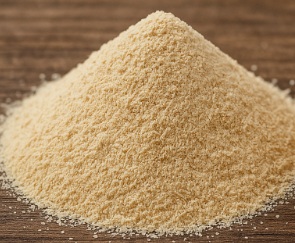
Lievito inattivato
Rating : 7
| Evaluation | N. Experts | Evaluation | N. Experts |
|---|---|---|---|
| 1 | 6 | ||
| 2 | 7 | ||
| 3 | 8 | ||
| 4 | 9 | ||
| 5 | 10 |
0 pts from Al222
| Sign up to vote this object, vote his reviews and to contribute to Tiiips.Evaluate | Where is this found? |
| "Descrizione" about Lievito inattivato by Al222 (23420 pt) | 2025-Dec-07 18:07 |
| Read the full Tiiip | (Send your comment) |
Inactivated yeast
Inactivated yeast is an ingredient obtained from cultures of yeast, typically Saccharomyces cerevisiae, which are grown, harvested and then subjected to thermal or physical treatments that irreversibly stop the biological activity of the cells. Unlike “live” or active yeast, inactivated yeast no longer ferments and cannot make doughs rise or drive alcoholic fermentation: the cell is metabolically inactive, but its cell structure and chemical composition (proteins, amino acids, vitamins, cell wall components) remain largely preserved.
From a technological standpoint, production of inactivated yeast usually involves an initial phase of controlled fermentation in sugar- or molasses-based media, followed by concentration, washing, and heat treatment (for example pasteurisation or hot-air drying) at temperatures high enough to denature key enzymes and abolish the yeast’s reproductive capacity. The final ingredient is typically marketed as a powder, flakes or microgranules, yellow-beige to light brown in colour and easily dispersible in food matrices.
In composition, inactivated yeast maintains a high level of protein, including essential amino acids, a broad spectrum of B-group vitamins (particularly thiamine, riboflavin, niacin, folate) and minerals such as phosphorus, potassium and magnesium, plus structural components like β-glucans and mannans from the cell wall. For these reasons it is considered a nutrient-dense ingredient, used both as a protein enrichener and as a source of micronutrients in various foods. Depending on processing conditions, it can develop a complex flavour profile with umami, slightly toasty or cheese-like notes, making it attractive as a natural flavour enhancer.
In the food sector, inactivated yeast plays roles quite different from those of live yeast. Since it is no longer fermentative, it is used primarily as a functional and flavour ingredient, for example in baked goods, savoury snacks, meat alternatives, powdered seasonings and ready-to-eat products. In plant-based or vegan formulations, it can help improve flavour, body and protein content. Certain specific forms of inactivated yeast, often sold as nutritional yeast, are intended for direct use as a table seasoning, sprinkled over ready dishes, salads, soups, pasta or vegetables.
From a health and nutrition perspective, interest in inactivated yeast centres on both its nutritional profile and the potential functional effects of some of its components. Nutritionally, the supply of good-quality protein, B vitamins and minerals can help complement the diet, especially where protein or vitamin intake might otherwise be limited. Functionally, cell wall fractions such as β-glucans and mannans are being studied for their possible role in modulating immune responses, supporting the intestinal barrier, and, in certain feed applications, acting as adsorbents for undesirable residues or toxins. In human nutrition, these effects are still under investigation; the most robust data currently concern animal nutrition, whereas in humans inactivated yeast is regarded mainly as a nutritional and sensory ingredient.
Regarding safety, inactivation removes the risk of unwanted fermentation in the gut or in the finished product and reduces issues related to overgrowth in highly vulnerable individuals. Nevertheless, inactivated yeast is still a yeast-derived product: in people with a specific yeast allergy or particular sensitivities (for example some reactions to fermentation products), an individual assessment is advisable. In general, products placed on the market as inactivated yeast or nutritional yeast must comply with requirements for microbiological purity, control of contaminants and food hygiene standards set by food legislation.
In industrial and biotechnological contexts, inactivated yeast is also used as a standardised organic nitrogen source, rich in vitamins and growth factors for microbial cultures, in fermentation media or other processes that require complex nutrients without live cells. In animal nutrition, products based on inactivated yeast and yeast cell walls are employed as feed additives, aiming to support gut health and to modulate certain performance parameters in livestock.
Production process
Origin of the biomass
Typically obtained from Saccharomyces cerevisiae (baker’s/brewer’s yeast) grown on sugar-rich substrates such as molasses, sugar syrups, or fermentation by-products.
Other yeast species may be used for specific feed or technical applications.
Fermentation stage
Yeast is cultivated in fermenters with controlled pH, temperature, aeration, and nutrient supply.
When the target biomass is reached, the culture broth is centrifuged or filtered to concentrate the cells.
Inactivation
The concentrated biomass is subjected to heat treatment (controlled heating) or other inactivation processes, so that cells become non-viable and lose fermentative activity.
The aim is to kill the yeast while preserving as much as possible the proteins, vitamins, minerals, and wall components.
In some processes a partial cell lysis is induced to make intracellular components more available.
Drying and finishing
After inactivation, the yeast is dried (e.g. spray-drying, drum drying, fluid-bed drying) to achieve a moisture level suitable for safe storage.
The final product is usually a powder or flakes of yellow–ochre to light brown color, with a typical “yeasty” aroma and taste.
Additional milling, sieving, and blending steps may be applied to obtain a uniform granulometry.
Some products are fortified with vitamins or minerals (e.g. B-complex, vitamin B12), others are “native” (only the naturally occurring nutrients of the yeast).
Applications
Food (human use)
As a nutritional ingredient (“nutritional yeast”):
Used as a topping or seasoning (flakes or powder) for ready meals, soups, salads, snacks, popcorn, sauces, vegan dishes, etc.
Valued for its savory/umami and “cheesy” notes and for its protein and vitamin contribution.
In bakery and cereal-based products:
As a technological aid in some doughs, to influence dough rheology, extensibility, and handling.
Sometimes used as a mild reducing agent in dough systems.
In functional foods and nutraceutical-style products, as part of bars, beverages, protein blends, or enriched foods.
Feed (animal nutrition)
As a protein source and B-vitamin source in feed for pets, poultry, pigs, ruminants, and aquaculture.
As support for intestinal health, thanks to cell-wall components (beta-glucans, mannans) with prebiotic/functional roles.
In some cases as a carrier of organic selenium or other micronutrients, where authorized.
Technical and industrial uses
In fermentation and bioprocessing as a process additive (inactivated yeast or its extracts) to improve yields or product characteristics.
As a flavor and savory ingredient in sauces, broths, and seasonings, alone or together with yeast extracts.
Cosmetics
Yeast-derived ingredients (e.g. Yeast Extract / Faex) from inactivated yeast are used in:
Facial care products with tonifying or hydrating positioning.
Hair and scalp products as co-actives for conditioning and support of the skin/hydrolipidic film.
Main functions: skin conditioning, potential antioxidant and humectant effects, depending on the fraction and degree of purification.
Nutrition & health
Energy value
Inactivated yeast (dry product) provides roughly 350–400 kcal per 100 g (about 3.5–4 kcal per gram), similar to other concentrated protein-rich dry foods.
At typical culinary or supplement doses (a few grams per day), the caloric contribution is moderate, but not negligible if used in large amounts.
Nutritional profile (general)
High-quality protein content, with all essential amino acids represented.
Relevant amounts of B-group vitamins (especially in fortified products; natural levels may be lower and variable).
Presence of minerals (e.g. zinc, selenium, manganese, potassium) and compounds with potential antioxidant activity.
Cell wall rich in beta-glucans and mannans, which are studied for possible immune and gut-microbiota effects.
Potential benefits
Useful for helping cover B-vitamin needs, especially in vegan/vegetarian diets (notably vitamin B12 when added/fortified).
Contributes to daily protein intake from a non-animal source.
Some preliminary studies suggest possible effects on cholesterol levels, immune response, and gut function due to beta-glucans and mannans; these findings require further confirmation.
Limitations and cautions
In sensitive individuals, a relatively high intake of purines from yeast may be a concern in conditions such as hyperuricemia or gout.
People with documented yeast allergy or specific gastrointestinal diseases should seek medical advice before regular high-dose use.
As with any functional ingredient, potential benefits should be considered within the context of an overall balanced diet.
Portion note
There is no single standard portion, but for everyday culinary use as a seasoning:
typical intakes are around 5–15 g per day (about 1–3 tablespoons), depending on recipe and desired nutrient contribution.
For foods, supplements, and feeds, the recommended dose per serving or ration is defined by the manufacturer, based on protein, vitamin/mineral content, and applicable regulations.
Allergens and intolerances
Yeast is not classified as one of the main mandatory allergens as a category, but:
Allergy or intolerance to yeast is described in some individuals, with possible cutaneous or gastrointestinal symptoms.
Points of attention:
Individuals with a documented allergy to Saccharomyces or other yeasts should avoid products containing inactivated yeast.
For people on specific therapies or with conditions such as gout or certain intestinal diseases, high intakes should be evaluated with a healthcare professional.
In composite products (foods or supplements), major allergens typically derive from other ingredients (gluten, milk, soy, nuts, etc.) and must always be checked on the label.
Storage and shelf-life
Powder / flakes (food use)
Store in a cool, dry place, away from direct light, heat sources, and humidity.
Keep containers tightly closed after use to prevent moisture uptake and aroma loss.
Under suitable conditions, inactivated yeast usually maintains acceptable quality for about 18–24 months, according to the producer’s specification.
Feed products
Similar requirements (cool, dry storage, protection from pests).
Typical shelf-life 12–24 months, with specific values given in the technical data sheet.
It is important to monitor absence of mould growth and keep moisture and water activity within defined limits.
Safety and regulatory aspects
In human foods, inactivated yeast is an authorized food ingredient, subject to general food law on:
microbiological safety,
limits for contaminants (heavy metals, mycotoxins, residual solvents where applicable),
proper ingredient and allergen labeling.
In feed, many inactivated yeast products are classed as feed materials or feed additives and assessed by relevant authorities for specific uses (e.g. protein source, selenium-enriched yeast).
In food supplements, use is governed by national and EU rules on permitted ingredients, added vitamins/minerals, and maximum daily intakes for certain nutrients.
In cosmetics, yeast-derived ingredients from inactivated yeast must comply with cosmetics regulations (e.g. EU Reg. 1223/2009) and GMP requirements, including:
microbiological control,
absence of contaminants above legal thresholds,
batch traceability and conformity of the chemical profile.
Labeling
Food products
Possible designations include:
“lievito inattivato”,
“lievito nutrizionale inattivato”,
“lievito di birra inattivato”,
with optional mention of the species (e.g. Saccharomyces cerevisiae).
For fortified products, added vitamins and minerals must be listed and declared in the nutrition table.
Food supplements
The ingredient may appear as “inactivated yeast (Saccharomyces cerevisiae)”, possibly with indication of protein, vitamin, and mineral content.
Nutrients supplied per daily dose and corresponding %NRV (where applicable) must be stated.
Standard warnings (e.g. do not exceed the recommended daily dose, keep out of reach of children) according to local rules.
Feed
Declared as feed material or additive, with indication of crude protein, moisture, and other relevant parameters.
Cosmetics
On cosmetic labels, yeast-derived ingredients appear under INCI names such as Yeast, Faex, or Yeast Extract, depending on the specific preparation.
Main INCI functions (cosmetics)
In cosmetics, inactivated yeast derivatives (Yeast, Faex, Yeast Extract) are primarily used for:
Skin conditioning: Help maintain the skin in good overall condition.
Humectant / moisturizing effect: Some extracts can contribute to water retention in the stratum corneum.
Antioxidant / protective role: Certain fractions support claims related to protection from oxidative stress, within regulatory limits.
Hair conditioning: In specific formulations, may improve perceived softness and combability of hair.
Conclusion
Inactivated yeast is a versatile ingredient for the food, supplement, feed, and cosmetic industries.
Thanks to its protein content, B vitamins, minerals, and cell-wall components (beta-glucans, mannans), it serves as a nutritional ingredient and, in some formulations, as a functional component.
Proper control of fermentation, inactivation, drying, and quality checks leads to safe, standardized products that can be used rationally within balanced diets and compliant formulations, without attributing unsupported therapeutic properties.
| Sign up to vote this object, vote his reviews and to contribute to Tiiips.EvaluateClose | (0 comments) |
Read other Tiiips about this object in __Italiano (1)
Content:   Last update:   2025-12-07 18:34:08 | Kcal/100g:   400 |

