

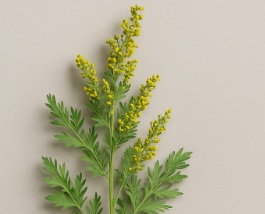
Davana
Rating : 7
| Evaluation | N. Experts | Evaluation | N. Experts |
|---|---|---|---|
| 1 | 6 | ||
| 2 | 7 | ||
| 3 | 8 | ||
| 4 | 9 | ||
| 5 | 10 |
Pros:
Anthelmintic (1) Anti-inflammatory (1)0 pts from Al222
| Sign up to vote this object, vote his reviews and to contribute to Tiiips.Evaluate | Where is this found? |
| "Descrizione" about Davana by Al222 (23258 pt) | 2025-Dec-06 10:02 |
| Read the full Tiiip | (Send your comment) |
Artemisia pallens (Artemisia pallens Wall. ex DC.)
Artemisia pallens, commonly known as davana, is an aromatic annual herb in the Asteraceae family, native to South India and cultivated as a short-duration crop during the cooler part of the year. The plant has an upright stem, woody at the base and more tender and branched in the upper portion, generally reaching 20–50 cm in height depending on genotype and growing conditions. Leaves are alternate, finely dissected (pinnate or deeply divided) and covered with dense pubescence, giving the foliage a greyish-silvery appearance. The inflorescences are composed of numerous small yellow flower heads arranged in loose panicles or racemes; the combination of leaves and flower heads releases a strong, characteristic aroma, which is the main reason for the commercial interest in davana essential oil.
From an ecological and agronomic perspective, Artemisia pallens is adapted to tropical and subtropical climates with relatively mild, dry winters. In the main production areas of South India it is typically grown as a short autumn–winter crop, with sowing or transplanting in autumn or early winter and harvest after about 3–4 months, when biomass and essential oil yield are at their peak. The species prefers full sun, good air circulation and well-drained soils, from sandy loam to loam, with moderate organic matter and slightly acidic to neutral pH. It is sensitive to waterlogging and to excessive rainfall during flowering, which can reduce biomass yield and alter essential oil composition. Propagation is usually by seed (seedlings raised in nursery and then transplanted), although stem cuttings may be used in more intensive systems. Herbage and essential oil yield are strongly influenced by sowing date, plant density, nutrient supply, water availability and growth stage at harvest.
From a compositional standpoint, the most important plant parts are the flowering tops and leaves, which contain a high proportion of water, structural carbohydrates, fibre and a significant fraction of essential oil located in secretory glands and trichomes. Davana essential oil is dominated by sesquiterpenes and oxygenated sesquiterpenes, with cis-davanone and related davanone-type ketones typically among the major constituents, accompanied by other sesquiterpene ketones, aromatic esters (such as methyl cinnamate and ethyl cinnamate), davana ether, bicyclogermacrene, spathulenol, various furan derivatives, linalool, farnesol and other terpenoids in variable proportions. The qualitative and quantitative profile of the oil depends on genotype, growing region, phenological stage at harvest and distillation conditions. The fresh and dried biomass also contains flavonoids, other phenolic compounds and a mineral fraction with potassium and other macro- and microelements, with levels influenced by soil properties and crop management.
In food, flavour and fragrance applications, Artemisia pallens is cultivated primarily for the production of davana essential oil, obtained by steam distillation of aerial parts (mainly flowering tops). The oil is highly valued in fine perfumery as a sweet, fruity-herbaceous note, often used in complex fragrance compositions. It is also employed as a flavouring agent in selected food products such as baked goods, confectionery, beverages and compound flavours, usually at low inclusion levels to avoid overpowering notes. In herbal and traditional uses, extracts from aerial parts may be incorporated into plant-based preparations. At the experimental level, extracts and essential oil fractions have been investigated for antioxidant, antimicrobial and other potential biological activities of interest for food, cosmetic and technical applications. In its regions of origin, the plant also has ornamental and cultural value, with flowering stems used in garlands, decorations and ritual offerings.
For quality assessment, it is useful to distinguish between plant material (dried aerial parts) and essential oil. For dried material, key parameters include particle-size uniformity, cleanliness (absence of foreign matter, coarse woody stems or soil residues), colour, characteristic odour and sufficiently low moisture content to limit degradation and microbial growth. For the essential oil, typical control parameters include oil yield per unit of biomass, physical properties (density, refractive index, sometimes optical rotation), chromatographic profile (relative proportions of key constituents, particularly davanone-type compounds and aromatic esters), oxidative stability and the absence of residues or contaminants beyond regulatory limits. Traceability of origin, harvest methods, distillation conditions, and storage and transport practices are crucial to ensure reproducible technological and sensory properties of davana oil and derived products.
![]() | ![]() |
Botanical classification (APG IV system)
Common name: Davana
Botanical name: Artemisia pallens Wall. ex DC.
Kingdom: Plantae
Clade: Angiosperms → Eudicots → Asterids
Order: Asterales
Family: Asteraceae
Genus: Artemisia
Species: Artemisia pallens Wall. ex DC.
Indicative nutritional values per 100 g (dried aerial parts*)
| Component | Approx. value per 100 g |
|---|---|
| Energy | ~ 260–300 kcal |
| Total carbohydrates | ~ 40–50 g |
| — of which sugars | ~ 2–4 g |
| Dietary fibre | ~ 30–40 g |
| Proteins | ~ 15–20 g |
| Total fats | ~ 4–7 g |
| — of which saturated fatty acids (SFA) | minor share of total lipids |
| — monounsaturated (MUFA) | present, lower share |
| — polyunsaturated (PUFA) | present, lower share |
| Sodium | very low |
| Potassium | present, moderate amount |
| Calcium | present |
| Magnesium | present |
| Iron | present in trace–small amounts |
* Values are indicative and extrapolated from data on dried aromatic / herbal Artemisia species. For Artemisia pallens specifically, quantitative nutritional datasets are limited; in practice, davana is not consumed in portions anywhere near 100 g, but mainly used in very small amounts (essential oil, flavouring, herbal preparations).
Mini-glossary of acronyms
SFA = Saturated fatty acids. When they predominate over unsaturated fats in the diet, they are generally considered less favourable for cardiovascular health.
MUFA = Monounsaturated fatty acids. Usually regarded as more favourable when replacing saturated fats.
PUFA = Polyunsaturated fatty acids. Include omega-6 and omega-3; essential in small amounts and involved in membrane structure and inflammatory balance.
The essential oil extracted from Artemisia pallens is rich in aromatic compounds, including:
Cultivating Artemisia pallens requires careful attention to its growing conditions:
Essential Oil Production:
Traditional Medicine:
Cultural Significance:
Aromatherapy:
Medical:
Cosmetic:
Cultural and Religious:
Environmental:
Environmental Benefits:
Safety:
The unique aromatic profile and therapeutic properties of Artemisia pallens continue to attract interest in the fields of perfumery, cosmetics, and alternative medicine. Ongoing research is exploring its applications in diabetes management, stress relief, and antimicrobial treatments. The plant’s ability to grow in semi-arid conditions also makes it a promising candidate for sustainable farming practices in challenging climates.
References__________________________________________________________________________
Haider SZ, Mohan M, Andola HC. Constituents of Artemisia indica Willd. from Uttarakhand Himalaya: A source of davanone. Pharmacognosy Res. 2014 Jul;6(3):257-9. doi: 10.4103/0974-8490.132607.
Abstract. Background: The genus Artemisia is important due to its medicinal properties as well as vital aroma compounds of commercial value. Objective: The aim of the study was to explore the potential of the essential oil of Artemisia indica wildly growing in Uttarakhand.....Conclusion: To the best of our knowledge, this is the first report on A. indica from Himalayan region of India, which detected davanone as major component. The species, collected from a specific location, can be explored for isolation of davanone for its industrial utilization and as alternate source of Artemisia pallens, which have already established commercial value.
Honmore V, Kandhare A, Zanwar AA, Rojatkar S, Bodhankar S, Natu A. Artemisia pallens alleviates acetaminophen induced toxicity via modulation of endogenous biomarkers. Pharm Biol. 2015 Apr;53(4):571-81. doi: 10.3109/13880209.2014.934382.
Abstract. Context: Acetaminophen (APAP) leads to severe hepatic and renal necrosis and thus causes significant clinical problems. Artemisia pallens Walls ex D.C. (Asteraceae) possesses various pharmacological properties such as antidiabetic, antioxidant, analgesic, and anti-inflammatory activity. Objective: The objective was to evaluate the protective effects of Artemisia pallens methanol extract (APME) in APAP-induced hepatic and nephro-toxicity.....Conclusion: It is concluded that the methanol extract of Artemisia pallens alleviates APAP induced in rats toxicity through its antioxidative and anti-inflammatory actions.
Ruikar AD, Khatiwora E, Ghayal NA, Misar AV, Mujumdar AM, Puranik VG, Deshpande NR. Studies on aerial parts of Artemisia pallens wall for phenol, flavonoid and evaluation of antioxidant activity. J Pharm Bioallied Sci. 2011 Apr;3(2):302-5. doi: 10.4103/0975-7406.80768.
Abstract. Herbs have been used for medicinal purposes for centuries. According to recent investigations, they may help reduce the risk of chronic diseases, cardiovascular disease, and cancer due to antioxidant properties, which in turn can be attributed to the various phytoconstituents. With this intention, evaluation of antioxidant activity was performed. Methanol extract of aerial parts of Artemisia pallens Wall was screened for its antioxidant activity due to phenolic and flavonoid contents, by employing radical scavenging assays; 2,2 -diphenyl, 1-picryl hydrazyl (DPPH) and nitric oxide. Ascorbic acid was used as a standard. Quantitative determination of phenols and flavonoids were carried out using spectrophotometric method. Total flavonoid content was determined as quercetin equivalent and total phenolic content was determined as pyrocatechol equivalent using Folin-Ciocalteu reagent. Plant produces more phenolic compounds than flavonoids. IC(50) value of methanol extract for DPPH free radical scavenging activity was found to be 292.7 μg, whereas for nitric oxide it was 204.61 μg. The result obtained in the present study indicates that the aerial parts of this plant are a rich source of natural antioxidants.
Nakhare S, Garg SC. Anthelmintic activity of the essential oil of artemisia pallens wall. Anc Sci Life. 1991 Jan;10(3):185-6.
Abstract. Helminthic infections are now being recognized as the cause of much chronic ill health and sluggishness among the tropical people. More than half of the world populations suffers from worm infections of one type or the other. Traditional system of medicine reports the efficacy of chenopodiul oil, Embelia ribes (Via-Varang), Trachyspermum ammi Ajwain and Biper betle (Pan) oils etc. for eliminating helminthes. The present study reports the strong anthelmintic activity of the essential oil of Artemisia pallens Wall. Against Pheritima posthuma (earth worm), Taenia solium (tape worm) and Ascaris lumbricoides (round worm). The helminthes have been found to be more susceptible to the oil than to piperazine phosphate of similar concentration. Artemisia pallens has been ascribed to possess anthelmintic and stomachic properties in indigenous system of medicine. The present screening not only confirms the correct usage of the plant by the rurals but also enhances the creditability of ethnobotanical explorations.
| Sign up to vote this object, vote his reviews and to contribute to Tiiips.EvaluateClose | (0 comments) |
Read other Tiiips about this object in __Italiano (1)
Hardiness:   Hardiness:   Natural fertilizer:   Hazards/diseases:   Last update:   2025-12-06 09:57:31 | Sun exposure:   Family:   Commercial fertilizer:   Main substances contained:   |

