

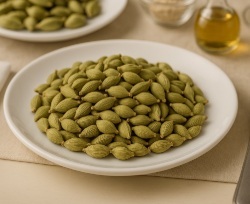
Cardamom seeds
Rating : 7
| Evaluation | N. Experts | Evaluation | N. Experts |
|---|---|---|---|
| 1 | 6 | ||
| 2 | 7 | ||
| 3 | 8 | ||
| 4 | 9 | ||
| 5 | 10 |
Pros:
Antioxidant (1)0 pts from Al222
| Sign up to vote this object, vote his reviews and to contribute to Tiiips.Evaluate | Where is this found? |
| "Descrizione" about Cardamom seeds by Al222 (23433 pt) | 2025-Nov-22 17:04 |
| Read the full Tiiip | (Send your comment) |
Cardamom seeds
(Seeds of Elettaria cardamomum and related species)
Cardamom seed is the dried, aromatic seed from the capsules of Elettaria cardamomum (green cardamom) or, less commonly, Amomum spp. (black cardamom).
The seeds are small, dark brown to black, contained inside trilocular capsules (pods).
They deliver an intense warm, spicy, fresh, slightly citrus and resinous flavour and are used as a culinary spice in sweet and savoury preparations, beverages and spice blends.
Cardamom seeds can be used whole, crushed or ground, and are often preferred over whole pods when a more concentrated and uniform flavour is needed.

(dried cardamom seeds; approximate values)
Energy: 300–320 kcal
Protein: 10–11 g
Carbohydrates: 65–70 g
sugars: 2–3 g
Lipids: 6–7 g
SFA (first occurrence): about 1–1.5 g
MUFA: ~1 g
PUFA: ~2–3 g
TFA: negligible
Dietary fibre: 20–30 g
Minerals: potassium, magnesium, phosphorus, calcium (variable amounts)
At typical culinary use levels (≈1–3 g per serving), the nutritional contribution is modest; the main value is aromatic and functional.
Essential oil (main active fraction), typically 3–8% of the seed:
1,8-cineole (eucalyptol)
α-terpinyl acetate
linalool
limonene and other monoterpenes
Phenolic compounds and tannins.
Carbohydrates and dietary fibre (structural polysaccharides).
Proteins in moderate amounts.
Minerals (K, Mg, Ca, P) in trace to moderate levels.
Cultivation and harvesting of cardamom plants in tropical, often high-altitude regions.
Harvest of capsules when still green or at the appropriate ripening stage.
Drying of capsules in the sun or mechanical dryers to stabilise moisture and preserve volatile oil.
Seed extraction (for “cardamom seed” products):
mechanical opening or splitting of dried capsules;
separation of seeds from the husk.
Cleaning and grading to remove foreign matter and undersized seeds.
Optional grinding under low-heat conditions to produce cardamom seed powder.
Packaging in aroma- and moisture-protective materials (bags, cans, jars).
Production under GMP/HACCP, with controls for microbiology, foreign bodies, pesticide residues and heavy metals.
Appearance: small, wrinkled, dark brown to black seeds; ground seed appears as a brown, fine powder.
Aroma: intense, spicy, warm, fresh, slightly mentholated and citrus-like.
Taste: warm, aromatic, slightly sweet and citrus, with balsamic notes.
Moisture: typically below 12% for stability.
Solubility: seeds are insoluble in water; essential oil components are extractable in hot water, fat and alcohol.
Bulk density: moderate, depending on particle size (lower for whole seeds, higher for powder).
Very high aroma impact: small amounts strongly characterise foods and beverages.
Can be used whole (for slow flavour release), cracked (for infusions) or finely ground (for uniform flavour distribution).
Essential oil provides a fresh, green, slightly camphoraceous note, typical of chai and Middle Eastern/Indian desserts.
Grinding increases surface area and improves flavour release but also accelerates aroma loss and oxidation.
Stable under moderate heat, though prolonged high-temperature cooking will reduce the top-note freshness.
Bakery and confectionery: cakes, biscuits/cookies, buns, sweet breads, pastries, fillings, creams and custards.
Beverages: chai tea, spiced teas, flavoured coffee, cocoa drinks, herbal infusions, winter punches.
Savoury dishes: curries, rice dishes (e.g. basmati pilaf, biryani), stews, marinades and rubs for poultry and lamb.
Dairy products: flavoured yoghurts, lassi, ice creams, milk desserts.
Spice blends: garam masala, curry blends, masala chai mixes, Middle Eastern spice mixes.
Industrial foods: aromatised snacks, bakery goods, syrups, ready-to-drink teas and functional beverages.
Cardamom seed is rich in volatile terpenes and phenolic compounds, which contribute to antioxidant activity in vitro, though real-life effects at culinary doses are modest.
The high fibre content is nutritionally positive but only relevant at higher intakes than typical culinary usage.
Traditionally associated with digestive comfort, breath freshness and gastrointestinal well-being in herbal medicine; such claims are usually regulated and cannot be freely used on standard food labels.
Generally well tolerated by healthy consumers when used in normal culinary amounts.
Typical uses:
1–3 g ground or crushed seed per recipe/serving (desserts, baked goods, curries).
1–2 g lightly crushed seeds per 200–250 mL of water for infusions and chai.
Higher inclusion levels strongly increase flavour intensity and can easily dominate other ingredients.
Cardamom seed is not a major listed allergen.
Rare idiosyncratic sensitivities to essential-oil components may occur in susceptible individuals.
Naturally gluten-free, unless cross-contaminated during processing.
In spice blends, other allergens (e.g., milk, soy, nuts, sesame) may be present and must be declared separately.
Store in a cool, dry place, away from heat, light and strong odours.
Prefer airtight containers to protect essential oils and limit moisture uptake.
Shelf-life:
whole seeds: typically 24–36 months with good aroma retention;
ground seed: typically 12–24 months, with faster aroma loss.
Main deterioration issues:
loss of aroma due to volatilisation and oxidation;
moisture uptake, leading to clumping and potential mould risk;
insect infestation if stored improperly.
Considered safe at normal culinary levels.
Subject to general regulations for spices and dried herbs:
limits for mycotoxins, pesticide residues, heavy metals;
microbiological criteria for dried products.
Production and trade should follow GMP/HACCP, with full traceability of origin and processing steps.
Concentrated extracts or high-dose preparations may fall under food supplement or flavouring regulations.
Typical designations:
“cardamom seed”
“cardamom (seed)”
In spice blends and processed foods: listed in the ingredients list in descending order of weight.
No intrinsic mandatory allergen from cardamom seed itself; any allergens from carriers or other ingredients must be declared.
Weak flavour in finished product:
seeds too old, poor-quality lot or insufficient dosage → use fresher/higher-quality seeds, grind just before use, adjust dosage.
Overly intense or “soapy/camphoraceous” taste:
over-dosage or very strong variety → reduce inclusion rate or blend with milder spices.
Loss of aroma during cooking:
long high-temperature exposure → add part of the cardamom later in the cooking process or as a finishing spice.
Clumping in powdered blends:
moisture uptake → improve packaging, control humidity, and consider flow aids where permitted.
Cardamom is typically grown in tropical, often mountainous regions, sometimes in agroforestry systems under shade.
Key sustainability aspects:
soil and biodiversity management;
water use and erosion control in hilly plantations;
fair labour conditions and income for smallholder farmers.
Processing facilities must manage drying, cleaning and grinding efficiently, with responsible handling of wastewater and cleaning effluents.
Certifications (organic, fair trade, sustainability labels) may support responsible sourcing and traceability.
(typically as “Elettaria Cardamomum Seed Extract” or “Elettaria Cardamomum Seed Oil”)
Fragrance component providing a spicy-fresh, aromatic note.
Skin-conditioning agent in some botanical formulations.
Used at low levels in creams, soaps, perfumes, deodorants and aromatherapy products to impart a warm, exotic scent.
Cardamom seed is a high-value spice ingredient with a unique, intense aromatic profile that enhances a wide range of sweet and savoury foods and beverages. It is used in small amounts yet has a strong sensory impact, making it a key component in many traditional cuisines and modern formulations. When sourced responsibly, processed under GMP/HACCP, and stored properly, cardamom seed offers a stable, aromatic and premium-quality ingredient for culinary and industrial applications.
SFA – Saturated fatty acids: part of the seed’s lipid fraction; nutritionally minor at normal use levels.
MUFA – Monounsaturated fatty acids: small proportion of total fats in the seeds.
PUFA – Polyunsaturated fatty acids: more oxidation-prone part of the lipid fraction, still present in modest amounts.
TFA – Trans fatty acids: not characteristic of cardamom seed.
GMP/HACCP – Good Manufacturing Practices / Hazard Analysis and Critical Control Points, systems ensuring hygiene, safety and quality in food production.
BOD/COD – Biological / Chemical Oxygen Demand, indicators of the environmental impact of processing wastewater.
Studies
It has antioxidant properties (1), contributes to lower blood pressure (2) and sedative properties (3).
Subs: Limonene, Fenchone, Valerianol (4), Kaempferol, Quercetin (5).
Cardamom oil serves as a grain protein potential by killing various life stages of wheat attacking insects, such as Tribolium castaneum and Sitophilus zeamais, through contact and fumigating action (6).
References_______________________________________________________
(1) Das I, Acharya A, Berry DL, Sen S, Williams E, Permaul E, Sengupta A, Bhattacharya S, Saha T. Antioxidative effects of the spice cardamom against non-melanoma skin cancer by modulating nuclear factor erythroid-2-related factor 2 and NF-κB signalling pathways. Br J Nutr. 2012 Sep 28;108(6):984-97. doi: 10.1017/S0007114511006283.
Abstract. The role of dietary factors in inhibiting or delaying the development of non-melanoma skin cancer (NMSC) has been investigated for many years. Cardamom, which is a dietary phytoproduct, has been commonly used in cuisines for flavour and has numerous health benefits, such as improving digestion and stimulating metabolism and having antitumorigenic effects. We have investigated the efficacy of dietary cardamom against 7,12-dimethylbenz[a]anthracene (DMBA)-induced skin papillomatogenesis in Swiss albino mice that closely resembles human NMSC. Mice were grouped into normal wild type (untreated), vehicle-treated (acetone), carcinogen-treated (DMBA), and DMBA and cardamom-treated (DMBA+CARD) to delineate the role of cardamom against DMBA-induced papillomatogenesis. Oral administration of cardamom to DMBA-treated mice up-regulated the phase II detoxification enzymes, such as glutathione-S-transferase and glutathione peroxidase, probably via activation of nuclear factor erythroid-2-related factor 2 transcription factor in 'DMBA+CARD' mice. Furthermore, reduced glutathione, glutathione reductase, superoxide dismutase and catalase were also up-regulated by cardamom in the same 'DMBA+CARD' group of mice compared with DMBA-treated mice. Cardamom ingestion in DMBA-treated mice blocked NF-κB activation and down-regulated cyclo-oxygenase-2 expression. As a consequence, both the size and the number of skin papillomas generated on the skin due to the DMBA treatment were reduced in the 'DMBA+CARD' group. Thus, the results from the present study suggest that cardamom has a potential to become a pivotal chemopreventive agent to prevent papillomagenesis on the skin.
(2) Verma SK, Jain V, Katewa SS. Blood pressure lowering, fibrinolysis enhancing and antioxidant activities of cardamom (Elettaria cardamomum). Indian J Biochem Biophys. 2009 Dec;46(6):503-6.
Abstract. Elettaria cardamomum (L.) Maton. (Small cardamom) fruit powder was evaluated for its antihypertensive potential and its effect on some of the cardiovascular risk factors in individuals with stage 1 hypertension. Twenty, newly diagnosed individuals with primary hypertension of stage 1 were administered 3 g of cardamom powder in two divided doses for 12 weeks. Blood pressure was recorded initially and at 4 weeks interval for 3 months. Blood samples were also collected initially and at 4 weeks interval for estimation of lipid profile, fibrinogen and fibrinolysis. Total antioxidant status, however, was assessed initially and at the end of the study. Administration of 3 g cardamom powder significantly (p<0.001) decreased systolic, diastolic and mean blood pressure and significantly (p<0.05) increased fibrinolytic activity at the end of 12th week. Total antioxidant status was also significantly (p<0.05) increased by 90% at the end of 3 months. However, fibrinogen and lipid levels were not significantly altered. All study subjects experienced a feeling of well being without any side-effects. Thus, the present study demonstrates that small cardamom effectively reduces blood pressure, enhances fibrinolysis and improves antioxidant status, without significantly altering blood lipids and fibrinogen levels in stage 1 hypertensive individuals.
(3) Gilani AH, Jabeen Q, Khan AU, Shah AJ. Gut modulatory, blood pressure lowering, diuretic and sedative activities of cardamom. J Ethnopharmacol. 2008 Feb 12;115(3):463-72.
Abstract. Ethnopharmacological relevance: Cardamom (Elettaria cardamomum) is traditionally used in various gastrointestinal, cardiovascular and neuronal disorders. Aim of the study: To rationalize cardamom use in constipation, colic, diarrhea, hypertension and as diuretic. Materials and methods: Cardamom crude extract (Ec.Cr) was studied using in vitro and in vivo techniques. Results: Ec.Cr caused atropine-sensitive stimulatory effect in isolated guinea-pig ileum at 3-10mg/ml. In rabbit jejunum preparations, Ec.Cr relaxed spontaneous and K+ (80 mM)-induced contractions as well as shifted Ca++ curves to right, like verapamil. Ec.Cr (3-100mg/kg) induced fall in the arterial blood pressure (BP) of anaesthetized rats, partially blocked in atropinized animals. In endothelium-intact rat aorta, Ec.Cr relaxed phenylephrine (1 microM)-induced contractions, partially antagonized by atropine and also inhibited K+ (80 mM) contractions. In guinea-pig atria, Ec.Cr exhibited a cardio-depressant effect. Ec.Cr (1-10mg/kg) produced diuresis in rats, accompanied by a saluretic effect. It enhanced pentobarbital-induced sleeping time in mice. Bio-assay directed fractionation revealed the separation of spasmogenic and spasmolytic components in the aqueous and organic fractions respectively. Conclusion: These results indicate that cardamom exhibits gut excitatory and inhibitory effects mediated through cholinergic and Ca++ antagonist mechanisms respectively and lowers BP via combination of both pathways. The diuretic and sedative effects may offer added value in its use in hypertension and epilepsy.
(4) Asakawa Y, Ludwiczuk A, Sakurai K, Tomiyama K, Kawakami Y, Yaguchi Y. Comparative Study on Volatile Compounds of Alpinia japonica and Elettaria cardamomum. J Oleo Sci. 2017 Aug 1;66(8):871-876. doi: 10.5650/jos.ess17048.
Abstract. The volatile compounds obtained from the ether extracts, headspace gases and steam distillates of Alpinia japonica and Elettaria cardamomum were analyzed by GC/MS. Both species were rich sources of naturally rare fenchane-type monoterpenoids, fenchene, fenchone, fenchyl alcohol and its acetate, together with 1,8-cineole. The distributions of volatile sesquiterpenoids were very poor in both species. Chiralities of fenchone in A. japonica and E. cardamomum were 99% of (1S,4R)-(+)-form. Camphor in A. japonica is composed of a mixture of (1R,4R)-(+)-form (94.3%) and (1S,4S)-(-)-form (5.7%). On the other hand, E. cardamomum produced only (1R,4R)-(+)-camphor (99%).
(5) Masoumi-Ardakani Y, Mandegary A, Esmaeilpour K, Najafipour H, Sharififar F, Pakravanan M, Ghazvini H. - Chemical Composition, Anticonvulsant Activity, and Toxicity of Essential Oil and Methanolic Extract of Elettaria cardamomum. - Planta Med. 2016 Nov;82(17):1482-1486.
Abstract. Elettaria cardamomum is an aromatic spice (cardamom) native to the humid Asian areas, which contains some compounds with a potential anticonvulsant activity. Various pharmacological properties such as anti-inflammatory, analgesic, antioxidant, and antimicrobial effects have been related to this plant. This research was conducted to examine the probable protective impact of the essential oil and methanolic extract of E. cardamomum against chemically (pentylentetrazole)- and electrically (maximal electroshock)-induced seizures in mice. In addition, neurotoxicity, acute lethality, and phytochemistry of the essential oil and methanolic extract were estimated. The TLC method showed the presence of kaempferol, rutin, and quercetin in the extract, and the concentration of quercetin in the extract was 0.5 µg/mL. The major compounds in the essential oil were 1,8-cineole (45.6 %), α-terpinyl acetate (33.7 %), sabinene (3.8 %), 4-terpinen-4-ol (2.4 %), and myrcene (2.2 %), respectively. The extract and essential oil showed significant neurotoxicity in the rotarod test at the doses of 1.5 g/kg and 0.75 mL/kg, respectively. No mortalities were observed up to the doses of 2 g/kg and 0.75 mL/kg for the extract and essential oil. The essential oil was effective in both the pentylentetrazole and maximal electroshock models; however, the extract was only effective in the pentylentetrazole model. The study suggested that E. cardamomum methanolic extract had no significant lethality in mice. Both the essential oil and methanolic extract showed movement toxicity. Anticonvulsant effects of E. cardamomum were negligible against the seizures induced by pentylentetrazole and maximal electroshock. Georg Thieme Verlag KG Stuttgart · New York.
(6) Abbasipour H, Mahmoudvand M, Rastegar F, Hosseinpour MH. - Fumigant toxicity and oviposition deterrency of the essential oil from cardamom, Elettaria cardamomum, against three stored–product insects. - J Insect Sci. 2011;11:165. doi: 10.1673/031.011.16501.
Abstract. Use of insecticides can have disruptive effects on the environment. Replacing the chemical compounds in these insecticides with plant materials, however, can be a safe method with low environmental risk. In the current study, chemical composition and insecticidal activities of the essential oil from cardamom, Elettaria cardamomum L. (Maton) (Zingiberales: Zingiberaceae) on the adults of three stored product pests was investigated. Results indicated that essential oil of E. cardamomum toxic to the bruchid beetle, Callosobruchus maculatus Fabricius (Coleoptera: Bruchidae), the red flour beetle, Tribolium castaneum Herbst (Coleoptera: Tenebrionidae), and the flour moth, Ephestia kuehniella Zeller (Lepidoptera: Pyralidae). Adults of E. kuehniella were more sensitive than the Coleoptera. Also, the highest mortality of these insects was seen after 12 hours. Results of the LT₅₀ tests showed that the lethal time of mortality occurred between 10-20 hours in various test concentrations. Essential oil of E. cardamomum had a good efficacy on oviposition deterrence of C. maculatus females, too. The chemical constituents of the essential oils were analyzed by gas chromatography-mass spectrometry. The major constituents of cardamom were identified as 1,8-cineol, α-terpinyl acetate, terpinene and fenchyl alcohol. These results suggest that essential oil of E. cardamomum is a good choice for control of stored product pests.
| Sign up to vote this object, vote his reviews and to contribute to Tiiips.EvaluateClose | (0 comments) |
Read other Tiiips about this object in __Italiano (1)
Content:   Last update:   2025-11-22 17:01:37 | Kcal/100g:   320 |

