

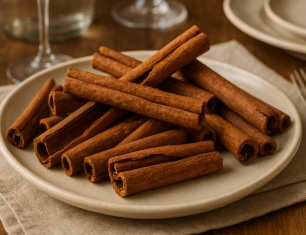
Cinnamon bark
Rating : 7
| Evaluation | N. Experts | Evaluation | N. Experts |
|---|---|---|---|
| 1 | 6 | ||
| 2 | 7 | ||
| 3 | 8 | ||
| 4 | 9 | ||
| 5 | 10 |
0 pts from Al222
| Sign up to vote this object, vote his reviews and to contribute to Tiiips.Evaluate | Where is this found? |
| "Descrizione" about Cinnamon bark by Al222 (23259 pt) | 2025-Nov-22 12:59 |
| Read the full Tiiip | (Send your comment) |
Cinnamon bark
(Dried bark of Cinnamomum spp., e.g., Cinnamomum verum, Cinnamomum cassia)
Description
Cinnamon bark is the dried inner bark of trees of the genus Cinnamomum, used as a spice and flavouring in sweet and savoury foods.
The main commercial types are usually referred to as “true” cinnamon (C. verum, often called Ceylon cinnamon) and cassia (C. cassia, C. burmannii, C. loureiroi), which differ in flavour intensity and coumarin content.
It is sold as whole sticks/quills, broken pieces (chips) or ground powder, and may be used directly or as part of spice blends.
Cinnamon bark contributes a warm, sweet, aromatic note and is widely used in bakery, beverages, confectionery, meat dishes and sauces.

Indicative nutritional values per 100 g
(Ground cinnamon bark; values vary with species and origin)
Energy: 240–270 kcal
Protein: 3–4 g
Carbohydrates: 50–60 g
sugars: 2–3 g
Lipids: 1–4 g
SFA (first occurrence): minor fraction of total fat
MUFA: traces
PUFA: traces
TFA: not significant
Dietary fibre: 30–50 g (very high)
Minerals: calcium, manganese, iron, potassium (trace–moderate)
In typical culinary use (1–5 g per portion), the nutritional contribution is modest, but the intake of bioactive compounds (e.g., cinnamaldehyde, polyphenols) can be relevant.
Key constituents
Cinnamaldehyde (main aromatic aldehyde, contributes characteristic flavour and aroma).
Eugenol (particularly in C. verum; clove-like note).
Coumarin (especially high in most cassia types, much lower in C. verum).
Phenolic compounds and condensed tannins (proanthocyanidins).
Essential oil fraction (1–4% typically), containing cinnamyl acetate, cinnamic acid derivatives and other terpenoids.
Dietary fibre (insoluble and soluble fractions) in the bark matrix.
Production process
Cultivation and harvesting of Cinnamomum trees in suitable tropical regions.
Peeling of bark from young branches or stems; the outer cork layer is removed, retaining the inner bark.
Rolling and shaping: thin strips of inner bark roll naturally into quills, often nested together.
Drying under controlled conditions (sun or mechanical dryers) to stabilise and develop flavour.
Sorting and grading based on thickness, colour, aroma and visual quality.
Cutting and grinding (for chips and powders) under low-heat conditions to preserve volatile oils.
Cleaning and sieving to remove foreign matter and control particle size.
Packaging in moisture- and aroma-protective materials.
Production under GMP/HACCP, with controls for foreign bodies, microbiology, mycotoxins and contaminants (e.g., heavy metals, pesticide residues).
Physical properties
Appearance:
whole: thin, rolled quills or thicker bark pieces; colour light to dark brown;
ground: fine, brown powder.
Aroma: warm, sweet, spicy, characteristic cinnamon scent.
Taste: sweet, aromatic, slightly pungent and astringent; cassia generally stronger and more pungent than Ceylon.
Bulk density: moderate for powder; lower and more variable for sticks/chips.
Moisture: typically 8–14% (must be controlled for stability).
Sensory and technological properties
Provides characteristic cinnamon flavour and aroma to foods and drinks.
The essential oil drives most sensory impact; small amounts can strongly influence flavour.
Contributes colour (warm brown tones) in some applications, especially in baked goods and sauces.
Mild antioxidant activity from phenolic compounds can help delay oxidative changes in some food systems.
In baked goods, interacts with sugars and fats to enhance perceived sweetness and complexity.
Food applications
Bakery and pastry: cakes, biscuits/cookies, rolls, buns, sweet breads, cinnamon swirls.
Breakfast products: muesli, granola, breakfast cereals, porridges.
Beverages: herbal infusions, chai and other spiced teas, mulled wine, cider, flavoured coffee, cocoa drinks.
Confectionery: chocolates, caramels, gums, sugar confectionery, dessert toppings.
Savory dishes: curries, stews, pilafs, tagines, meat rubs and marinades (often as whole sticks).
Processed foods: flavoured yoghurts, dairy desserts, puddings, ready meals, sauces and spice blends.
Flavouring systems: dry mixes, seasonings, “pumpkin spice” style blends.
Nutrition & health
Cinnamon bark is not consumed in large quantities, so its macronutrient contribution is small, but it delivers bioactive compounds (cinnamaldehyde, polyphenols).
It has been studied for potential effects on glycaemic control, lipid metabolism and antioxidant status, but evidence is heterogeneous and highly dependent on dose, extract type and species; such effects should not be overstated in standard food labelling.
The very high fibre content of the bark matrix is nutritionally beneficial in principle, though typical culinary doses are small.
Coumarin content is a safety consideration:
Cassia cinnamon can have high coumarin levels, and excessive long-term intake may pose a risk for liver in sensitive individuals.
Ceylon cinnamon (C. verum) typically has much lower coumarin levels and is often preferred when regular/high use is expected.
Overall, cinnamon is considered safe at culinary levels when used in moderation as part of a varied diet.
Portion note
Typical culinary use:
1–3 g ground cinnamon per portion for bakery/confectionery.
0.5–2 g per serving in breakfast cereals, porridges or beverages.
1–5 g per litre in infusions, mulled drinks and savoury stews (often as whole sticks).
For frequent or high use, especially of cassia cinnamon, total daily intake should be considered in relation to coumarin exposure recommendations.
Allergens and intolerances
Cinnamon bark itself is not a major allergen in standard allergen lists, but:
some individuals may experience contact or flavour-related sensitivity (oral itching, irritation, rare allergy).
cinnamon can cause oral or mucosal irritation at high concentrations, especially in strong flavourings or candies.
Naturally gluten-free, unless cross-contaminated during processing.
In mixtures, other allergens (e.g., milk, soy, nuts) may be present and must be declared separately.
Storage & shelf-life
Store in a cool, dry place, away from direct light and strong odours.
Use airtight containers to protect volatile oils and prevent moisture uptake.
Shelf-life:
whole sticks: typically 24–36 months with good flavour retention;
ground cinnamon: typically 12–24 months, with more rapid aroma loss.
Main deterioration issues:
loss of aroma due to volatilisation and oxidation of essential oil;
moisture uptake leading to clumping and risk of mould;
possible insect infestation if not stored properly.
Safety & regulatory
Regulated as a food spice/herb; subject to general food safety and contaminant limits.
Key regulatory considerations:
maximum levels for pesticide residues, mycotoxins, and heavy metals;
microbiological criteria for dried spices (total count, pathogens);
in some jurisdictions, guidance or limits regarding coumarin intake in foods containing cassia cinnamon.
Production and handling should follow GMP/HACCP, with traceability from origin to finished product.
For nutraceutical or high-dose preparations, specific supplement regulations may apply.
Labeling
Typical declarations:
“cinnamon” or “cinnamon bark”;
optionally with botanical name / type, e.g. “Ceylon cinnamon (Cinnamomum verum)” or “cassia cinnamon (C. cassia)”.
In blends: listed among ingredients according to descending weight.
Where relevant, manufacturers may highlight “Ceylon cinnamon” to distinguish from cassia in relation to coumarin concerns and flavour profile.
No intrinsic mandatory allergen from cinnamon itself, but any added carriers or co-ingredients must be declared.
Troubleshooting
Weak flavour in final product:
dosage too low, low-oil or old cinnamon → increase dosage, switch to fresher/higher-quality cinnamon, prefer sticks ground shortly before use.
Overly harsh or bitter taste:
over-dosage, prolonged heating, or very strong cassia → reduce dosage, shorten cooking time, or blend with milder Ceylon cinnamon.
Colour not as expected:
low-quality or over-aged spice → review supplier, use higher-grade material.
Clumping in powder:
moisture uptake → improve packaging, add flow aids where permitted, ensure low humidity storage.
Microbial issues (in high-moisture foods):
contamination from inadequately treated spice → use steam-sterilised/treated cinnamon with validated microbiological status.
Sustainability & supply chain
Cinnamon is produced mainly in tropical regions; sustainability aspects include:
agroforestry or mixed-crop systems vs monocultures;
soil and biodiversity management;
fair labour and smallholder livelihoods.
Post-harvest steps (drying, cleaning, grinding) require:
energy management;
responsible handling of wastewater and cleaning effluents, typically monitored with BOD/COD indicators where relevant.
Certification schemes (e.g., organic, fair trade, sustainability labels) may be used to document responsible sourcing for premium markets.
Main INCI functions (cosmetics)
(typically as “Cinnamomum Verum Bark Extract”, “Cinnamomum Cassia Bark Oil”, etc.)
Fragrance component (warm, spicy note).
Skin-conditioning (in some traditional or botanical formulations).
Used at low levels in creams, lotions, perfumes and oral care for warming/spicy aroma.
Must be carefully dosed to avoid skin irritation or sensitisation due to cinnamaldehyde and related compounds.
Conclusion
Cinnamon bark is a classic culinary spice with strong sensory impact and a long tradition of use in foods and beverages worldwide. It combines intense aroma, flavour and colour with a complex profile of bioactive compounds. At typical culinary doses it is considered safe, though particular attention should be paid to coumarin exposure when using cassia types regularly or at higher levels. Proper sourcing, processing, storage and labelling ensure a stable, aromatic and safe ingredient for a wide range of sweet and savoury applications.
Mini-glossary
SFA – Saturated fatty acids: minor part of cinnamon’s lipid fraction; nutritionally negligible at usual dosages.
MUFA – Monounsaturated fatty acids: small proportion of total fats in cinnamon bark.
PUFA – Polyunsaturated fatty acids: more oxidation-sensitive portion of its small lipid fraction.
TFA – Trans fatty acids: not a characteristic component of cinnamon bark.
GMP/HACCP – Good Manufacturing Practices / Hazard Analysis and Critical Control Points; systems to ensure hygiene, safety and quality in food production.
BOD/COD – Biological / Chemical Oxygen Demand, indicators of the environmental impact of processing wastewater.
Coumarin – A naturally occurring aromatic compound; in high amounts it can be hepatotoxic, and cassia cinnamon types typically contain more coumarin than Ceylon cinnamon.
Studi
La corteccia di questa pianta viene utilizzata per fare la cannella di spezie ed è stata da tempo utilizzata come medicina tradizionale a base di erbe cinesi per varie condizioni patologiche (1).
Recenti studi hanno individuato l'estratto di Cannella come un potenziale trattamento per l'iperplasia prostatica benigna (2) e di alcune tipologie di tumori (3).
Alcuni studi hanno dimostrato che la cannella è stata anche usata tradizionalmente nei disturbi cerebrali correlati all'età (4).
Tra i componenti utili dell'olio essenziale di Cannella figurano la transcinnamaldeide (72,81%), l'alcol benzilico (12,5%) e l'eugenolo (6,57%) (5).
Sicurezza
Occorre prestare attenzione alla quantità che non deve essere eccessiva.
Bibliografia_______________________________________________________________________
(1) Yang SM, Tsai KD, Wong HY, Liu YH, Chen TW, Cherng J, Hsu KC, Ang YU, Cherng JM. Molecular Mechanism of Cinnamomum verum Component Cuminaldehyde Inhibits Cell Growth and Induces Cell Death in Human Lung Squamous Cell Carcinoma NCI-H520 Cells In Vitro and In Vivo. J Cancer. 2016 Jan 5;7(3):251-61. doi: 10.7150/jca.13689. PMID: 26918037; PMCID: PMC4747878.
Abstract. Cinnamomum verum is used to make the spice cinnamon and has been used as a traditional Chinese herbal medicine. We evaluated the effects and the molecular mechanisms of cuminaldehyde (CuA), a constituent of the bark of Cinnamomum verum, on human lung squamous cell carcinoma NCI-H520 cells. Specifically, cell viability was evaluated by colorimetric assay; cytotoxicity by LDH release; apoptosis was determined by Western blotting, and morphological analysis with, acridine orange and neutral red stainings and comet assay; topoisomerase I activity was assessed using assay based upon DNA relaxation and topoisomerase II by DNA relaxation plus decatentation of kinetoplast DNA; lysosomal vacuolation and volume of acidic compartments (VAC) were evaluated with neutral red staining. The results show that CuA suppressed proliferation and induced apoptosis as indicated by an up-regulation of pro-apoptotic bax and bak genes and a down-regulation of anti-apoptotic bcl-2 and bcl-XL genes, mitochondrial membrane potential loss, cytochrome c release, activation of caspase 3 and 9, and morphological characteristics of apoptosis, including blebbing of the plasma membrane, nuclear condensation, fragmentation, apoptotic body formation, and comet with elevated tail intensity and moment. In addition, CuA also induced lysosomal vacuolation with increased VAC, cytotoxicity, as well as suppressions of both topoisomerase I and II activities in a dose-dependent manner. Further study revealed the growth-inhibitory effect of CuA was also evident in a nude mice model. Taken together, the data suggest that the growth-inhibitory effect of CuA against NCI-H520 cells is accompanied by downregulations of proliferative control involving apoptosis and both topoisomerase I and II activities, and upregulation of lysosomal with increased VAC and cytotoxicity. Similar effects were found in other cell lines, including human lung adenocarcinoma A549 cells and colorectal adenocarcinoma COLO 205 (results not shown). Our data suggest that CuA could be a potential agent for anticancer therapy.
(2) Choi HM, Jung Y, Park J, Kim HL, Youn DH, Kang J, Jeong MY, Lee JH, Yang WM, Lee SG, Ahn KS, Um JY. Cinnamomi Cortex (Cinnamomum verum) Suppresses Testosterone-induced Benign Prostatic Hyperplasia by Regulating 5α-reductase. Sci Rep. 2016 Aug 23;6:31906. doi: 10.1038/srep31906.
Abstract. Cinnamomi cortex (dried bark of Cinnamomum verum) is an important drug in Traditional Korean Medicine used to improve blood circulation and Yang Qi. Benign prostatic hyperplasia (BPH) is a common chronic disease in aging men. This study was conducted to determine the effect of Cinnamomi cortex water extract (CC) on BPH. BPH was induced by a pre-4-week daily injection of testosterone propionate (TP). Six weeks of further injection with (a) vehicle, (b) TP, (c) TP + CC, (d) TP + finasteride (Fi) was carried on. As a result, the prostate weight and prostatic index of the CC treatment group were reduced. Histological changes including epithelial thickness and lumen area were recovered as normal by CC treatment. The protein expressions of prostate specific antigen, estrogen receptor α (ERα), androgen receptor (AR), 5α-reductase (5AR), and steroid receptor coactivator 1 were suppressed by treatment of CC. Immunohistochemical assays supported the western blot results, as the expressions of AR and ERα were down-regulated by CC treatment as well. Further in vitro experiments showed CC was able to inhibit proliferation of RWPE-1 cells by suppressing 5AR and AR. These results all together suggest CC as a potential treatment for BPH.
(3) Perng DS, Tsai YH, Cherng J, Wang JS, Chou KS, Shih CW, Cherng JM. Discovery of a novel anticancer agent with both anti-topoisomerase I and II activities in hepatocellular carcinoma SK-Hep-1 cells in vitro and in vivo: Cinnamomum verum component 2-methoxycinnamaldehyde. Drug Des Devel Ther. 2016 Jan 5;10:141-53. doi: 10.2147/DDDT.S93599.
Abstract. Cinnamomum verum is used to make the spice cinnamon and has been used as a traditional Chinese herbal medicine for various applications. We evaluated the anticancer effect of 2-methoxycinnamaldehyde (2-MCA), a constituent of the bark of the plant, and its underlying molecular biomarkers associated with carcinogenesis in human hepatocellular carcinoma SK-Hep-1 cell line. The results show that 2-MCA suppressed proliferation and induced apoptosis as indicated by mitochondrial membrane potential loss, activation of caspase-3 and caspase-9, increase in the DNA content in sub-G1, and morphological characteristics of apoptosis, including blebbing of plasma membrane, nuclear condensation, fragmentation, apoptotic body formation, and long comet tail. In addition, 2-MCA also induced lysosomal vacuolation with increased volume of acidic compartments, suppressions of nuclear transcription factors NF-κB, cyclooxygenase-2, prostaglandin E2 (PGE2), and both topoisomerase I and II activities in a dose-dependent manner. Further study reveals the growth-inhibitory effect of 2-MCA was also evident in a nude mice model. Taken together, the data suggest that the growth-inhibitory effect of 2-MCA against SK-Hep-1 cells is accompanied by downregulations of NF-κB-binding activity, inflammatory responses involving cyclooxygenase-2 and PGE2, and proliferative control involving apoptosis, both topoisomerase I and II activities, together with an upregulation of lysosomal vacuolation and volume of acidic compartments. Similar effects (including all of the above-mentioned effects) were found in other tested cell lines, including human hepatocellular carcinoma Hep 3B, lung adenocarcinoma A549, squamous cell carcinoma NCI-H520, colorectal adenocarcinoma COLO 205, and T-lymphoblastic MOLT-3 (results not shown). Our data suggest that 2-MCA could be a potential agent for anticancer therapy.
(4) Peterson DW, George RC, Scaramozzino F, LaPointe NE, Anderson RA, Graves DJ, Lew J. Cinnamon extract inhibits tau aggregation associated with Alzheimer's disease in vitro. J Alzheimers Dis. 2009;17(3):585-97. doi: 10.3233/JAD-2009-1083.
Abstract. An aqueous extract of Ceylon cinnamon (C. zeylanicum) is found to inhibit tau aggregation and filament formation, hallmarks of Alzheimer's disease (AD). The extract can also promote complete disassembly of recombinant tau filaments and cause substantial alteration of the morphology of paired-helical filaments isolated from AD brain. Cinnamon extract (CE) was not deleterious to the normal cellular function of tau, namely the assembly of free tubulin into microtubules. An A-linked proanthocyanidin trimer molecule was purified from the extract and shown to contain a significant proportion of the inhibitory activity. Treatment with polyvinylpyrolidone effectively depleted all proanthocyanidins from the extract solution and removed the majority, but not all, of the inhibitory activity. The remainder inhibitory activity could be attributed to cinnamaldehyde. This work shows that compounds endogenous to cinnamon may be beneficial to AD themselves or may guide the discovery of other potential therapeutics if their mechanisms of action can be discerned.
(5) Yap PS, Krishnan T, Chan KG, Lim SH. Antibacterial Mode of Action of Cinnamomum verum Bark Essential Oil, Alone and in Combination with Piperacillin, Against a Multi-Drug-Resistant Escherichia coli Strain. J Microbiol Biotechnol. 2015 Aug;25(8):1299-306. doi: 10.4014/jmb.1407.07054.
| Sign up to vote this object, vote his reviews and to contribute to Tiiips.EvaluateClose | (0 comments) |
Read other Tiiips about this object in __Italiano (1)
Content:   Last update:   2025-11-22 12:57:09 | Kcal/100g:   270 |

