

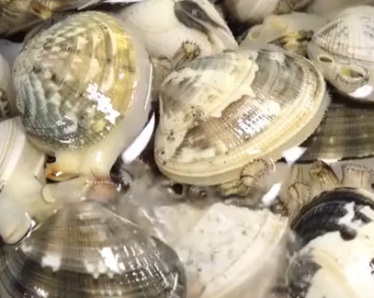
Clams
Rating : 7
| Evaluation | N. Experts | Evaluation | N. Experts |
|---|---|---|---|
| 1 | 6 | ||
| 2 | 7 | ||
| 3 | 8 | ||
| 4 | 9 | ||
| 5 | 10 |
Cons:
Allergen (1)0 pts from Al222
| Sign up to vote this object, vote his reviews and to contribute to Tiiips.Evaluate | Where is this found? |
| "Descrizione" about Clams by Al222 (23420 pt) | 2025-Nov-15 10:55 |
| Read the full Tiiip | (Send your comment) |
Clams
(marine bivalve molluscs; genera Ruditapes, Chamelea, Venerupis, family Veneridae)
Description
Small to medium marine bivalve molluscs with oval to triangular shells, often with radial or concentric markings and colour ranging from grey to cream with brownish patterns.
Live buried in sandy or sandy–muddy coastal sediments; marketed live, chilled, frozen (whole or shucked), cooked and frozen, or as clam meat in brine or broth (canned/jarred).
Widely used in Mediterranean and international cuisine (e.g. “spaghetti alle vongole”), valued for their iodised, marine flavour and tender texture.
![]() | ![]() |
Indicative nutritional values (per 100 g edible portion, raw or simply cooked)
(Average values; vary by species, fishing area, season and cooking method.)
Energy: 70–90 kcal
Water: 75–82 g
Protein: 11–15 g (high biological value)
Total fat: 1.0–2.5 g
SFA/MUFA/PUFA = saturated/mono-/polyunsaturated fatty acids; total fat is modest, with a useful share of omega-3 (n-3 PUFA) and relatively low SFA, generally favourable for cardiometabolic profile within a balanced diet
Carbohydrates: 2–5 g (mainly glycogen)
Cholesterol: 40–80 mg
Sodium: 100–300 mg (can be higher in brined products or salty recipes)
Potassium: 200–350 mg
Iron: 3–10 mg (species dependent)
Zinc: 1–3 mg
Iodine: present at nutritionally relevant levels (tens of µg)
Vitamins: excellent source of vitamin B₁₂, good levels of other B-vitamins (B₂, niacin), some vitamin A (retinoids)
Key constituents
High-quality proteins, rich in essential amino acids.
Low total lipids with a favourable fatty acid profile (meaningful amounts of n-3 PUFA such as EPA/DHA and a moderate share of SFA).
Glycogen as main carbohydrate reserve.
Marine minerals: iron, zinc, copper, selenium, iodine; traces of other trace elements (manganese, chromium).
Vitamins: especially B₁₂, plus other B-group vitamins and retinoids.
Typical mollusc components (e.g. taurine, free amino acids, nucleotides) contributing to umami taste.
Production process (fishing/farming and preparation)
Origin:
Wild fisheries on natural beds in authorised coastal areas;
or aquaculture (clam farming) in controlled coastal zones.
Harvesting and primary handling:
dredges or specific gear → sorting and removal of undersized or damaged individuals;
transport under controlled temperature conditions.
Purification (depuration):
holding in tanks with filtered and disinfected seawater to remove sand and reduce faecal contamination, according to strict hygiene standards.
Commercialisation:
live clams in nets or punnets;
chilled products, frozen (whole or shucked), cooked (usually steamed) and frozen;
canned/jarred clam meat in brine or broth (pasteurised or sterilised).
Physical properties
Hard shells typically 2–4 cm long, with right and left valves joined by a hinge.
Live clams have closed shells or shells that close quickly when tapped; clams that remain open and unresponsive should be discarded.
Flesh is small, cream–yellow, with darker portions (viscera).
Tissue pH: slightly acidic to neutral.
Sensory and technological properties
Aroma: marine, iodised, with sweet and slightly nutty notes in premium species.
Taste: balanced sweet, salty and umami profile; marked but clean sapidity when product is fresh and properly purified.
Texture: tender yet slightly elastic flesh; overcooking quickly leads to toughness and chewiness.
Technological aspects:
release a flavour-rich liquor/broth (amino acids, nucleotides, salts) that strongly enhances sauces and pasta dishes;
well suited to short, intense cooking (quick sauté, steaming) to preserve juiciness and aroma.
Food applications
Culinary/foodservice:
pasta dishes (e.g. clam pasta, seafood linguine);
fish soups and chowders;
hot starters (sautéed clams, steamed clams) and warm salads;
toppings for bruschetta, pizza, and fillings for vegetables or fish.
Food industry:
frozen seafood mixes;
canned/jarred clam meat for soups, sauces, ready meals;
ingredients in chilled or frozen ready-to-eat/ready-to-heat seafood dishes.
Nutrition & health
Clams provide high-quality protein with overall low fat content and a generally favourable fatty acid profile (including omega-3).
High vitamin B₁₂ and iron content supports red blood cell formation; iron from molluscs is partly in a highly bioavailable form.
Good source of iodine and selenium, important for thyroid function and antioxidant defence in the context of a balanced diet.
Cholesterol content is moderate: for most healthy individuals, occasional clam consumption fits easily within a heart-healthy diet; for people with hypercholesterolaemia or cardiovascular disease, the whole dietary pattern matters more than clams alone.
Sodium can be significant in brined or heavily salted preparations; using moderate added salt and pairing with whole grains and vegetables improves the overall profile.
There is potential risk of marine biotoxins (algal toxins) or heavy metals (e.g. cadmium) if the supply chain is not well controlled, which is why bivalve production is strictly regulated and monitored.
Serving note: a typical portion is 80–120 g cooked edible meat (≈ 250–400 g clams in shell) used in a pasta dish or soup.
Allergens and intolerances
Clams are molluscs and belong to the group of major food allergens: individuals with mollusc or crustacean allergy must avoid them completely.
Cross-reactivity between different molluscs (mussels, oysters, squid, cuttlefish) and crustaceans (shrimp, crab) is common in sensitised people.
Processed clam products (soups, sauces, ready meals) may contain other allergens (gluten, milk, celery, sulphites, etc.) from the recipe → always check the label.
Quality and specifications (typical themes)
For live clams:
animals must be alive, with intact shells, no off-odours;
limited sand content (effective depuration);
harvesting area classified and compliant with microbiological and chemical standards.
For shucked/frozen products:
good meat yield, low drip loss after thawing;
absence of off-odours, uniform colour and size;
conformity with microbiological criteria (absence of Salmonella in 25 g, controlled Listeria in RTE products, low total counts).
Rigorous control of algal biotoxins (DSP, PSP, ASP depending on area/species) and heavy metals as per regulations.
Storage and shelf-life
Live clams:
keep refrigerated at 0–4 °C in mesh bags or aerated containers;
do not immerse in water or store in closed plastic bags with no air;
discard clams with broken shells or that do not close when tapped;
best consumed within 24–48 hours of purchase.
Chilled cooked/shucked products:
store at the temperature indicated on the label (typically 0–4 °C);
short shelf-life (a few days), to be consumed within the stated use-by date.
Frozen products:
store at ≤ −18 °C;
typical shelf-life 6–24 months, depending on product and packaging;
thaw in the refrigerator or cook from frozen; avoid refreezing once thawed.
Safety and regulatory
Harvesting/farming and marketing of live bivalve molluscs are governed by specific regulations: classification of production areas, microbiological and chemical criteria, full traceability.
Mandatory depuration in approved centres or equivalent measures (e.g. industrial cooking) before placing on the market for human consumption.
Processing under GMP/HACCP, with control of:
algal biotoxins, chemical contaminants, pathogens;
hygiene in shucking, cooking and packaging steps.
Labeling
For live bivalve molluscs:
commercial and scientific name;
production method (wild-caught/farmed), FAO area or specific harvesting area, category, batch code;
indication that the product is live;
storage conditions.
For processed products:
full ingredient list with clear highlighting of the “molluscs” allergen;
any additives (antioxidants, acidity regulators, preservatives);
nutrition declaration, date marking (use-by or best-before), storage and preparation/ cooking instructions.
Troubleshooting
Ammoniac or unpleasant odour
Likely spoilage → discard product, review cold chain and storage time.
Excess sand/grit
Insufficient depuration or inadequate household purging → extend purging in cold salted water (frequent water changes) and/or source from better-performing suppliers.
Tough, rubbery flesh
Overcooking or excessive temperature → use high-heat, short-time cooking and remove clams from heat as soon as shells open.
High drip loss after thawing
Slow freezing or long storage → optimise industrial freezing (e.g. IQF, controlled temperature) and improve stock rotation.
Sustainability and supply chain
Farmed clams can be relatively low-impact because they are filter feeders, not requiring external feed inputs, but they are sensitive to water quality, eutrophication and sediment management.
For wild fisheries, key aspects include controlling fishing effort, protecting seabed habitats and respecting minimum sizes and closed seasons to preserve stocks.
At processing plants:
energy efficiency in chilling/freezing;
proper treatment of washing and depuration waters, with BOD/COD reduction;
use of recyclable or mono-material packaging and FIFO stock rotation to minimise waste and expiry.
Main INCI functions (cosmetics)
Clam-specific derivatives are uncommon as named cosmetic ingredients; more typical are generic marine/sea extracts such as “Sea Water”, “Sea Extract” or “Marine Extract”.
In principle, marine-derived protein/mineral extracts may act as skin conditioning or remineralising agents, but any use of clam-derived materials would require cosmetic grade production and dedicated safety assessment.
Conclusion
Clams are a nutrient-dense seafood providing high-quality protein, low overall fat with useful omega-3, and valuable levels of iron, vitamin B₁₂, iodine and selenium. They play a central role in many traditional and industrial seafood dishes. Safe consumption relies heavily on harvesting area control, depuration, cold chain and proper cooking. When these elements are well managed, clams can deliver excellent sensory quality and strong nutritional value while keeping microbiological and chemical risks under control and supporting sustainable use of coastal marine resources.
Mini-glossary
SFA/MUFA/PUFA – Saturated/monounsaturated/polyunsaturated fatty acids; in clams total fat is low, with a useful share of n-3 PUFA and moderate SFA, positive for cardiometabolic profile within a balanced diet.
GMP/HACCP – Good Manufacturing Practices / Hazard Analysis and Critical Control Points; core systems to ensure hygienic, safe and traceable food production.
BOD/COD – Biochemical/Chemical Oxygen Demand; indicators of organic load in wastewater, important for environmental management.
FIFO – First In, First Out; stock rotation principle ensuring older batches are used before newer ones, reducing waste and expiry risk.
References__________________________________________________________________________
Xu L, Cai J, Gao T, Ma A. Shellfish consumption and health: A comprehensive review of human studies and recommendations for enhanced public policy. Crit Rev Food Sci Nutr. 2022;62(17):4656-4668. doi: 10.1080/10408398.2021.1878098.
Abstract. Shellfish, including various species of mollusks (e.g., clams, oysters, and mussels) and crustaceans (e.g., shrimp and crab), have been a cornerstone of healthy dietary recommendations. However, beyond providing basic nutrition needs, their health-promoting effects have been suggested to include inflammation reduction and prevention of various chronic non-communicable diseases. Currently, studies on the association between shellfish consumption and health outcomes have reported conflicting results. The present comprehensive review summarized the latest studies on shellfish consumption and synthesized the available evidence on the potential health benefits or risks of shellfish consumption. The findings demonstrated that shellfish consumption may increase the risk of hyperuricemia and gout but may not increase the risk of type 2 diabetes, cardiovascular diseases, and thyroid cancer. Adequate evidence is lacking on the association between shellfish consumption and the risk of colorectal cancer, pancreatic cancer, oral cancer, endometriosis, hip fracture, cognitive function, wheeze, eczema and food allergy. Raw shellfish consumption may cause gastroenteritis and other diseases infected by bacteria or viruses. This review thus provides consumers and other relevant stakeholders with the latest evidence-based information on the potential benefits and risks of shellfish consumption.
Liu CW, Liang CP, Lin KH, Jang CS, Wang SW, Huang YK, Hsueh YM. Bioaccumulation of arsenic compounds in aquacultural clams (Meretrix lusoria) and assessment of potential carcinogenic risks to human health by ingestion. Chemosphere. 2007 Aug;69(1):128-34. doi: 10.1016/j.chemosphere.2007.04.038.
Abstract. This study surveyed the total arsenic (As) and As species contents in clams (Meretrix lusoria) farmed in areas of hyperendemic blackfoot disease (BFD) in southwestern Taiwan. Total As and As species in sediment and pond water were also analyzed to examine the bioaccumulation of As in clams in their exposure environment. Moreover, potential carcinogenic risks associated with the ingestion of As in aquacultural clams were evaluated probabilistically. The average total As contents in medium-sized and small clams were 7.62 and 10.71 microg/g (dry wt), respectively. The content of the As species in this study was approximately 61% of the total As content. The other unquantified As species are possibly arsenocholine, arsenosugar and arsenolipid. The average ratios of inorganic As contents to total As contents in clams ranged from 12.3% to 14.0% which are much higher than that found in the farmed oyster (Crassostrea gigas), indicating that humans may expose to larger quantities of inorganic As by ingesting the same amount of clam as oyster. Using different ingestion rates derived by the average consumption method and the questionnaire method, the estimated risks to human health associated with consuming clams from the BFD area ranging from slightly to largely exceed the standard target risk. Based on the estimation of the TR model, a 0.18g/day-person of the safe ingestion rate of clams in the BFD region is recommended.
Lewbart GA, Christian LS, Harms CA, Van Wettere AJ. A comparison of heavy metal concentrations and health assessment in Asian clams Corbicula fluminea from Florida and North Carolina. J Aquat Anim Health. 2010 Jun;22(2):73-7. doi: 10.1577/H09-041.1.
Abstract. The Asian clam Corbicula fluminea was introduced into the United States in 1938 and has since become established in much of the country. This invasive species can compete with native bivalves and compromise industrial water supply systems and power plants. Numerous studies have examined bivalves as bioindicators. The purpose of this study was to compare the heavy metal concentrations of the hard and soft tissues of specimens from Florida and North Carolina and to assess the clams' health by microscopic examination of their soft tissues. Although the sample size was small, this study suggests that the Asian clams from the watersheds examined are healthy and that they accumulate lower levels of heavy metals than have been reported for clams from other, more polluted aquatic environments.
Ceryes CA, Nussbaumer E, Moynihan EE, Moore ERH, Love DC, Agnew J, Neff R, Fry J. Health and Safety in U.S. Chesapeake Bay Oyster Aquaculture: A Qualitative Study. J Agromedicine. 2025 Apr;30(2):360-375. doi: 10.1080/1059924X.2025.2462321.
Abstract. Objectives: Aquaculture seafood production exists on every inhabited continent. Small-scale, bivalve shellfish farming is a growing industry on the East Coast of the United States. Aquaculture workers in the US experience high injury and illness rates relative to the average worker, and many small-scale aquaculture operations are exempted from national injury and illness reporting requirements. Given current evidence of occupational safety and health (OSH) risks, planned industry expansion, and limited systematic OSH data collection from small aquaculture farms, it is critical to understand challenges and opportunities to promote worker safety and health on these operations. Methods: We conducted in-depth interviews with nine oyster producers in Maryland (n = 8) and Virginia (n = 1) to document their perspectives on occupational safety and health (OSH) issues. Results: Respondents reported various hazards and safety interventions spanning the hierarchy of controls. Many desired better access to safety training and interventions. Conclusions: This study contributes to global efforts to improve safety and health in the fast-growing aquaculture sector. Like other developing aquaculture industries, Chesapeake Bay shellfish aquaculture producers face significant OSH challenges, with limited safety resources and guidance. Governmental industry development support should include funding for robust and industry-inclusive OSH surveillance and interventions, concentrating on the most effective hazard control measures, including elimination, substitution, and engineering controls.
Hayashi T, Yamaoka Y, Ito A, Kamaishi T, Sugiyama R, Estes MK, Muramatsu M, Murakami K. Evaluation of Heat Inactivation of Human Norovirus in Freshwater Clams Using Human Intestinal Enteroids. Viruses. 2022 May 10;14(5):1014. doi: 10.3390/v14051014.
Abstract. Foodborne disease attributed to the consumption of shellfish contaminated with human norovirus (HuNoV) is one of many global health concerns. Our study aimed to determine the conditions of the heat-inactivation of HuNoV in freshwater clams (Corbicula japonica) using a recently developed HuNoV cultivation system employing stem-cell derived human intestinal enteroids (HIEs). We first measured the internal temperature of the clam tissue in a water bath during boiling at 90 °C and found that approximately 2 min are required for the tissue to reach 90 °C. Next, GII.4 HuNoV was spiked into the center of the clam tissue, followed by boiling at 90 °C for 1, 2, 3, or 4 min. The infectivity of HuNoV in the clam tissue homogenates was evaluated using HIEs. We demonstrated that HuNoV in unboiled clam tissue homogenates replicated in HIEs, whereas infectivity was lost in all boiled samples, indicating that heat treatment at 90 °C for 1 min inactivates HuNoV in freshwater clams in our current HIE culture system. To our knowledge, this is the first study to determine the thermal tolerability of HuNoV in shellfish using HIEs, and our results could be informative for developing strategies to inactivate HuNoV in shellfish.
| Sign up to vote this object, vote his reviews and to contribute to Tiiips.EvaluateClose | (0 comments) |
Read other Tiiips about this object in __Italiano (1)
Kcal/100g:   70-90 Last update:   2025-11-15 10:38:55 |

