

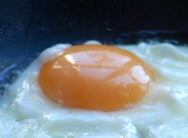
Whole egg
Rating : 7
| Evaluation | N. Experts | Evaluation | N. Experts |
|---|---|---|---|
| 1 | 6 | ||
| 2 | 7 | ||
| 3 | 8 | ||
| 4 | 9 | ||
| 5 | 10 |
Cons:
Allergen (1)0 pts from Al222
| Sign up to vote this object, vote his reviews and to contribute to Tiiips.Evaluate | Where is this found? |
| "Descrizione" about Whole egg by Al222 (24019 pt) | 2025-Nov-14 16:50 |
| Read the full Tiiip | (Send your comment) |
Whole egg
(liquid pasteurized, frozen, or dried powder; chicken origin unless otherwise specified)
Description
• Whole egg is the edible contents of the hen’s egg (albumen + yolk) offered as liquid pasteurized, frozen, or spray-dried powder for safe, standardized use in foods.
• Delivers multifunctionality: emulsification, foaming, coagulation/gelation, color, flavor, and browning.
• Available as standard or specialty grades (e.g., glucose-reduced powder to limit Maillard browning; salted/sugared liquid for freezing stability).

Indicative nutritional values (per 100 g; raw whole egg)
• Energy 140–150 kcal • Protein 12.0–13.0 g (high-quality; BV ≈ 100)
• Total fat 9.5–10.5 g — first mention lipids SFA/MUFA/PUFA (saturated/mono-/polyunsaturated fatty acids; moderating saturates is generally advised)
• Carbohydrates 0.7–1.1 g • Sugars ~0.7 g • Sodium 120–150 mg
• Cholesterol ~360–380 mg
• Key micronutrients (typical per 100 g): Choline ~250 mg; Vitamin A ~140 µg RAE; Vitamin D ~2 µg; B2 ~0.5 mg; B5 ~1.5 mg; B12 ~1.0 µg; Selenium ~25–35 µg; Folate ~45–55 µg.
• Dried whole egg powder (per 100 g): Energy 560–620 kcal; Protein 45–48 g; Fat 38–42 g; Carbs 3–5 g; Moisture ≤ 4–6%.
Key constituents
• Proteins: ovalbumin, ovotransferrin, ovomucin (foaming/structure), livetin and lipoproteins (emulsification).
• Lipids: triacylglycerols with lecithin and phospholipids from yolk; small amounts of long-chain n-3 (trace DHA/EPA) depending on feed.
• Pigments: carotenoids (lutein/zeaxanthin) → yellow color.
• Minerals & vitamins: choline, fat-soluble vitamins (A, D, E, K), selenium, B-complex.
Production process
• Egg reception → washing/candling → breaking and separation → recombination to whole egg → filtration/standardization (solids ~24–25%) → pasteurization (time/temperature per regulation) → chilled filling; or → concentration → spray drying (optionally glucose removal via glucose oxidase) → cooling, sieving/agglomeration → nitrogen-flushed packing (powders).
• Optional: salting/sugaring before freezing to protect functionality.
Physical properties
• pH (fresh whole egg): ~7.6–8.2 (rises during storage).
• High aw (water activity) in liquid; low aw in powder.
• Coagulation on heating: albumen begins ~62–65 °C; yolk ~65–70 °C (matrix-dependent).
Sensory and technological properties
• Emulsification: yolk phospholipids/lipoproteins stabilize oil-in-water systems (mayonnaise, sauces).
• Foaming: albumen proteins create stable foams; whole egg foams are richer but slightly less lofty than whites alone.
• Coagulation/gelation: heat-set networks provide structure in custards, cakes, and batters.
• Browning & flavor: Maillard via glucose with proteins; glucose-reduced powders mitigate excessive browning.
Food applications
• Bakery: cakes, muffins, sponge/genoise, cookies, enriched breads, pancakes/waffles.
• Culinary: omelets/scrambles (liquid), custards, quiches, pasta/fresh egg noodles, batters/breading, egg wash.
• Sauces & dressings: mayonnaise/aioli (often yolk-forward but whole egg variants common), hollandaise derivatives.
• Meat/seafood/plant analogs: binder for patties, nuggets, and formed products.
• Confectionery & desserts: flans, ice-cream bases, custards.
Nutrition & health
• Provides complete protein (high BV), choline, and fat-soluble vitamins.
• Dietary cholesterol is high per 100 g; current guidance emphasizes overall dietary pattern and saturated fat (SFA) moderation.
• Omega-3 enriched eggs (feed-dependent) can increase yolk DHA.
• For vulnerable groups (pregnancy, elderly, immunocompromised): prefer pasteurized liquids/powders; avoid raw/unpasteurized uses.
Serving note (formulation guidance)
• Cakes 8–16% whole egg (batter basis) or 10–20% powder+water equivalent; cookies 2–6%; custards 10–25%; mayonnaise with whole egg: ~5–12% egg phase depending on style.
• Reconstitution of powder: typical 1 part powder : 3–3.5 parts water (check supplier spec).
Allergens and intolerances
• Egg is a major allergen (ovalbumin, ovomucoid).
• Heat/pasteurization does not fully eliminate allergenicity.
• For mixed products (breaded, sauces), additional allergens may derive from recipe components (wheat, milk, mustard, etc.).
• Not suitable for vegetarian (ovo-excluded) or vegan diets.
Quality and specifications (typical)
• Liquid pasteurized whole egg: Egg solids 24–25%; pH 7.6–8.2; viscosity within spec; clean flavor/color.
• Dried whole egg: Moisture ≤ 4–6%; Protein 45–48%; Fat 38–42%; Ash 3–4%; Scorched particles low; excellent dispersibility (instant grades).
• Microbiology: Salmonella absent/25 g; low total counts; Listeria controlled in RTE processes.
• Functional tests: foaming capacity/stability, emulsifying activity index, gel strength.
• Contaminants: veterinary residues and heavy metals compliant; low residual glucose for “glucose-reduced” powders.
Storage and shelf-life
• Liquid pasteurized: 0–4 °C; typically 3–7 days unopened; avoid temperature abuse.
• Frozen: ≤ −18 °C; 6–12 months; thaw under refrigeration; do not refreeze.
• Powder: cool, dry, dark (≤ 25 °C; RH < 65%), oxygen-barrier packs; 12–24 months unopened; reseal promptly to prevent caking/oxidation.
Safety and regulatory
• Manufactured under GMP/HACCP; pasteurization parameters mandated by jurisdiction.
• Allergen labeling “contains egg” required; declare added salt/sugar/antioxidants/processing aids.
• Raw or undercooked applications should use pasteurized egg products; cook to safe temperatures where applicable.
Labeling
• Names: “Liquid Whole Egg (Pasteurized)”, “Frozen Whole Egg”, “Dried Whole Egg” (state “glucose-reduced/sugared/salted” when applicable).
• Include ingredient list, allergen statement, nutrition facts, lot/date, origin, storage/handling, and preparation instructions for powders.
Troubleshooting
• Curdling in custards/sauces → over-temperature/fast heating → use gentle heat, tempering, and starch buffers.
• Weak foam → fat contamination or low whipping shear → ensure grease-free equipment; increase shear/acidify slightly.
• Excess browning in bakery → residual glucose in powder → choose glucose-reduced grade; adjust bake profile.
• Sulphury/green ring (hard-cooked eggs) → overcooking/long hot hold → lower time/T; rapid cool.
• Caking in powder → moisture ingress → improve barrier packaging; use desiccants; control RH.
Sustainability and supply chain
• Egg product plants should manage effluents with BOD/COD reduction, recover heat, and minimize food waste (valorize shells as calcium carbonate and membranes as collagen-like materials).
• Animal welfare (cage-free systems), responsible feed sourcing (e.g., deforestation-free soy), and cold-chain integrity are key impact areas.
• Recyclable/mono-material packaging and FIFO rotation reduce losses.
Main INCI functions (cosmetics)
• Hydrolyzed Egg Protein — hair/skin conditioning, film-forming.
• Hydrolyzed Eggshell Membrane — skin conditioning/soothing (distinct safety specs).
• Eggshell Powder (Calcium Carbonate) — absorbent/opacifying. Use cosmetic-grade materials and consider egg allergen context.
Conclusion
Whole egg is a uniquely versatile ingredient that provides emulsification, foaming, and heat-set structure alongside high-quality protein, choline, and fat-soluble vitamins. Selecting the right format (liquid, frozen, or powder), controlling pasteurization and storage, and managing allergen labeling ensure reliable performance and safety across bakery, sauces, culinary, and RTE applications.
Mini-glossary
• BV — Biological value; index of protein quality based on amino-acid profile.
• SFA/MUFA/PUFA — Saturated/monounsaturated/polyunsaturated fatty acids; moderating SFA and balancing unsaturates supports cardiometabolic health.
• DHA/EPA — Docosahexaenoic/icosapentaenoic acids; long-chain n-3 fatty acids that may be present in small amounts in eggs depending on feed.
• aw — Water activity; available water for microbial growth (low in powders).
• GMP/HACCP — Good manufacturing practices / hazard analysis and critical control points; food-safety systems.
• BOD/COD — Biochemical/chemical oxygen demand; measures of organic load in wastewater.
• MAP — Modified atmosphere packaging; gas mixes used to extend shelf-life (mainly relevant to RTE egg dishes, less to liquid egg).
Regarding the intake of chicken eggs as its impact on human health, in recent decades, there are conflicting views.

Doubts focus on the cholesterol content and its potential role in cardio-metabolic outcomes.
A whole or boiled chicken egg contains about 15 micrograms of selenium and in addition iron, Vitamin B2, B12, D, E
It also contains lutein, a carotenoid that can be protective against diseases such as age-related macular degeneration (1) and choline, a cellular and nervous restructurer and anti-inflammatory.(2)
Recent studies have also shown that the egg, due to its vitamin D content, helps protect the eyes from cataracts and other degenerative diseases due to ageing.
On the other hand, health recommendations indicate that dietary cholesterol should be limited to less than 200 mg per day; a single large egg yolk contains about 275 mg of cholesterol (3), so taking even a single egg increases LDL cholesterol.

The consumption of whole egg in the middle-aged and elderly population has long been discussed in the scientific literature. The impact on the cardiovascular system with possibility of disease has been under observation for several years. However, this study considers that the intake of whole egg does not affect the risk of cardiovascular disease (4).
This study, on the other hand, considers that a high consumption of eggs is significantly associated with a higher risk of contracting incidental cardiovascular diseases (5).
References____________________________________________________________
(1) Chung HY, Rasmussen HM, Johnson EJ. Lutein bioavailability is higher from lutein-enriched eggs than from supplements and spinach in men. J Nutr. 2004 Aug;134(8):1887-93. 2004.
Abstract. Lutein may be protective against diseases such as age-related macular degeneration (ARMD). At present, data regarding bioavailability of lutein from various sources are insufficient. Healthy men (n = 10) participated in an intervention study with a crossover design. After a 2-wk washout period during which they consumed a low-carotenoid diet, the men were administered 1 of 4 lutein doses (lutein supplement, lutein ester supplement, spinach, and lutein-enriched egg) for 9 d. All lutein doses provided 6 mg lutein except for the lutein ester dose, which provided 5.5 mg lutein equivalents. Serum samples were collected from fasting subjects on d -14, 1 (baseline), 2, 3, and 10 and analyzed for changes in lutein concentration. Triacylglycerol-rich lipoproteins (TRL) were separated from postprandial blood samples (0-24 h) after the first lutein dose and analyzed for lutein concentration. Subjects completed all 4 treatments of the study in random order. Results from repeated-measures 1-way ANOVA showed that the baseline and dose-adjusted lutein response in serum was significantly higher after egg consumption than after lutein, lutein ester, and spinach consumption on d 10. There was no significant difference in TRL response. In conclusion, the lutein bioavailability from egg is higher than that from other sources such as lutein, lutein ester supplements, and spinach. The lutein bioavailability from lutein, lutein ester supplements, and spinach did not differ. This finding may have implications for dietary recommendations that may decrease the risk of certain diseases, e.g., ARMD.
(2) Zeisel SH. Choline: critical role during fetal development and dietary requirements in adults. Annu Rev Nutr. 2006;26:229-50. 2006.
Abstract. Choline is an essential nutrient needed for the structural integrity and signaling functions of cell membranes; for normal cholinergic neurotransmission; for normal muscle function; for lipid transport from liver; and it is the major source of methyl groups in the diet. Choline is critical during fetal development, when it influences stem cell proliferation and apoptosis, thereby altering brain and spinal cord structure and function and influencing risk for neural tube defects and lifelong memory function. Choline is derived not only from the diet, but from de novo synthesis as well. Though many foods contain choline, there is at least a twofold variation in dietary intake in humans. When deprived of dietary choline, most men and postmenopausal women developed signs of organ dysfunction (fatty liver or muscle damage), while less than half of premenopausal women developed such signs. Aside from gender differences, there is significant variation in the dietary requirement for choline that can be explained by very common genetic polymorphisms.
(3) Spence JD, Jenkins DJ, Davignon J. Dietary cholesterol and egg yolks: not for patients at risk of vascular disease Can J Cardiol. 2010 Nov;26(9):e336-9.
A widespread misconception has been developing among the Canadian public and among physicians. It is increasingly believed that consumption of dietary cholesterol and egg yolks is harmless. There are good reasons for long-standing recommendations that dietary cholesterol should be limited to less than 200 mg/day; a single large egg yolk contains approximately 275 mg of cholesterol (more than a day's worth of cholesterol). Although some studies showed no harm from consumption of eggs in healthy people, this outcome may have been due to lack of power to detect clinically relevant increases in a low-risk population. Moreover, the same studies showed that among participants who became diabetic during observation, consumption of one egg a day doubled their risk compared with less than one egg a week....
(4) Wang MX, Wong CH, Kim JE. Impact of whole egg intake on blood pressure, lipids and lipoproteins in middle-aged and older population: A systematic review and meta-analysis of randomized controlled trials. Nutr Metab Cardiovasc Dis. 2019 Jul;29(7):653-664. doi: 10.1016/j.numecd.2019.04.004.
(5) Zhong VW, Van Horn L, Cornelis MC, Wilkins JT, Ning H, Carnethon MR, Greenland P, Mentz RJ, Tucker KL, Zhao L, Norwood AF, Lloyd-Jones DM, Allen NB. Associations of Dietary Cholesterol or Egg Consumption With Incident Cardiovascular Disease and Mortality. JAMA. 2019 Mar 19;321(11):1081-1095. doi: 10.1001/jama.2019.1572.
Abstract. Importance: Cholesterol is a common nutrient in the human diet and eggs are a major source of dietary cholesterol. Whether dietary cholesterol or egg consumption is associated with cardiovascular disease (CVD) and mortality remains controversial. Objective: To determine the associations of dietary cholesterol or egg consumption with incident CVD and all-cause mortality. Design, setting, and participants: Individual participant data were pooled from 6 prospective US cohorts using data collected between March 25, 1985, and August 31, 2016. Self-reported diet data were harmonized using a standardized protocol. Exposures: Dietary cholesterol (mg/day) or egg consumption (number/day). Main outcomes and measures: Hazard ratio (HR) and absolute risk difference (ARD) over the entire follow-up for incident CVD (composite of fatal and nonfatal coronary heart disease, stroke, heart failure, and other CVD deaths) and all-cause mortality, adjusting for demographic, socioeconomic, and behavioral factors. Results: This analysis included 29 615 participants (mean [SD] age, 51.6 [13.5] years at baseline) of whom 13 299 (44.9%) were men and 9204 (31.1%) were black. During a median follow-up of 17.5 years (interquartile range, 13.0-21.7; maximum, 31.3), there were 5400 incident CVD events and 6132 all-cause deaths. The associations of dietary cholesterol or egg consumption with incident CVD and all-cause mortality were monotonic (all P values for nonlinear terms, .19-.83). Each additional 300 mg of dietary cholesterol consumed per day was significantly associated with higher risk of incident CVD (adjusted HR, 1.17 [95% CI, 1.09-1.26]; adjusted ARD, 3.24% [95% CI, 1.39%-5.08%]) and all-cause mortality (adjusted HR, 1.18 [95% CI, 1.10-1.26]; adjusted ARD, 4.43% [95% CI, 2.51%-6.36%]). Each additional half an egg consumed per day was significantly associated with higher risk of incident CVD (adjusted HR, 1.06 [95% CI, 1.03-1.10]; adjusted ARD, 1.11% [95% CI, 0.32%-1.89%]) and all-cause mortality (adjusted HR, 1.08 [95% CI, 1.04-1.11]; adjusted ARD, 1.93% [95% CI, 1.10%-2.76%]). The associations between egg consumption and incident CVD (adjusted HR, 0.99 [95% CI, 0.93-1.05]; adjusted ARD, -0.47% [95% CI, -1.83% to 0.88%]) and all-cause mortality (adjusted HR, 1.03 [95% CI, 0.97-1.09]; adjusted ARD, 0.71% [95% CI, -0.85% to 2.28%]) were no longer significant after adjusting for dietary cholesterol consumption. Conclusions and relevance: Among US adults, higher consumption of dietary cholesterol or eggs was significantly associated with higher risk of incident CVD and all-cause mortality in a dose-response manner. These results should be considered in the development of dietary guidelines and updates.
| Sign up to vote this object, vote his reviews and to contribute to Tiiips.EvaluateClose | (0 comments) |
Read other Tiiips about this object in __Italiano (1)
Content:   Last update:   2025-11-14 16:43:47 | Kcal/100g:   150 Family:   Threat factors:   |

