

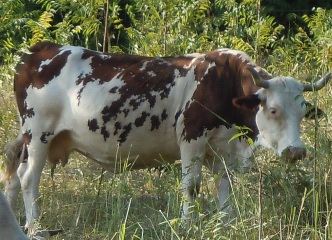
Heifer meat
Rating : 7
| Evaluation | N. Experts | Evaluation | N. Experts |
|---|---|---|---|
| 1 | 6 | ||
| 2 | 7 | ||
| 3 | 8 | ||
| 4 | 9 | ||
| 5 | 10 |
0 pts from Al222
| Sign up to vote this object, vote his reviews and to contribute to Tiiips.Evaluate | Where is this found? |
| "Descrizione" about Heifer meat by Al222 (23420 pt) | 2025-Nov-09 17:35 |
| Read the full Tiiip | (Send your comment) |
Heifer meat, Scottona beef
(young heifer, never calved; Bos taurus — fresh or aged/trimmed cuts)*
Description
• Commercial term for meat from a young female (typically 15–24 months), never pregnant, showing moderate marbling and greater tenderness than older cattle or entire males.
• Offered as steak cuts (striploin, ribeye, tenderloin), roasting joints (rump, top sirloin), braise/stew cuts (chuck, shoulder clod), and mince; frequently aged (dry/wet) for 10–30+ days to develop flavor and tenderness.

Indicative nutrition values (per 100 g raw, lean/medium cuts; typical ranges)
• Energy: 120–190 kcal
• Protein: 20–22 g (complete EAA profile; high leucine)
• Fat: 4–12 g — SFA (saturated fatty acids) ~1.5–5 g; MUFA ~1.5–5 g; PUFA ~0.2–0.6 g
• Carbohydrate: 0 g
• Cholesterol: ~60–75 mg
• Sodium: ~50–70 mg (intrinsic; ↑ with brines/seasonings)
• Micronutrients (per 100 g): heme iron ~1.8–2.7 mg; zinc ~3–5 mg; selenium ~7–12 μg; B vitamins (B12 ~1.5–2.5 μg; B3 ~5–9 mg; B6 ~0.4–0.6 mg)
Key constituents
• Myofibrillar (actin, myosin) and sarcoplasmic proteins; relatively low and less cross-linked collagen (tenderness).
• Intramuscular lipids (marbling) with predominance of MUFA over PUFA; SFA to be moderated within overall diet.
• Heme pigments (myoglobin) driving red color and contributing to antioxidant capacity vs lipid oxidation.
• Minerals (Fe, Zn, Se, P) and B vitamins.
Production process
• Rearing under nutrition and welfare plans; slaughter in approved facilities.
• Chilling and carcass maturation to initiate aging (endogenous proteolysis).
• Breaking into primals/subprimals → deboning → aging (vacuum or dry) → vacuum/MAP packing and chilled distribution.
Physical properties
• Ultimate pH 5.4–5.7; high aw.
• Color Lab*: bright red raw; browns on cooking via heme oxidation.
• Good WHC (water-holding capacity); tenderness linked to lower cross-linked collagen and aging.
• DFD (dark, firm, dry) risk with pre-slaughter stress → darker color, shorter shelf-life.
Sensory & technological properties
• Marbling enhances juiciness and savory notes; Maillard and controlled lipid oxidation generate roasted/meaty flavors.
• Cooking: high-heat sear for steaks, sous-vide for precision tenderness, slow/moist methods for connective cuts.
• Aging deepens nutty/buttery complexity and lowers shear force.
Food applications
• Foodservice & retail: sliced steak, ribeye/entrecôte, tenderloin, roast beef, braises/stews, premium burgers.
• Industry: ready-to-cook/ready-to-eat, cooked slices, ready sauces, chilled/frozen meals.
Nutrition & health
Scottona beef supplies high–biological value protein and highly bioavailable heme iron, supporting muscle maintenance and hematopoiesis. It also provides zinc, selenium, and B vitamins (B12, niacin, B6). Lipids vary by cut and marbling: sfa are present and should be balanced within the overall diet (choosing leaner cuts and dry-heat methods helps reduce fat and calories per dish).
Cholesterol is moderate; sodium is low unless added in recipes. For microbiological safety, whole-muscle steaks may be served rare if the exterior is well seared (surface contamination), whereas minced meat/tartare/carpaccio require controlled supply chains and strict hygiene; for vulnerable groups (pregnancy, elderly, immunocompromised) it is prudent to avoid raw or cook to ≥70 °C core.
Cardiometabolic perspective: include red meat in appropriate portions and moderate frequency, pair with fiber-rich vegetables, and favor cooking that limits potentially harmful thermal compounds (avoid excessive charring; use herb/spice/acid marinades).
Portion note: typical cooked serving 120–180 g (≈ 170–250 g raw) for steak/roast; 100–120 g cooked for braised/sauced dishes.
Quality & specifications (typical topics)
• Commercial “scottona” category (sex/age); marbling grade; pH; color; shear force; cook yield.
• Microbiology: low total counts; pathogens absent/25 g; vacuum/MAP shelf-life to spec.
• Residues/contaminants: compliant for veterinary drugs/metals.
• Packaging: vacuum/MAP (O₂/CO₂/N₂) for color/stability; seal integrity and documented cold chain.
• Aging: declared time/conditions (T/RH/airflow); free from defects (oxidative rancidity, brown edge).
Storage & shelf-life
• Chilled: 0–4 °C; vacuum 10–28 days by cut/aging; MAP typically 6–12 days.
• Frozen: ≤ −18 °C; shelf-life 8–12 months; thaw under refrigeration or vacuum in cold water; do not refreeze thawed meat.
• Avoid temperature fluctuation and prolonged light/O₂ (color/flavor oxidation).
Safety & regulatory
• Subject to beef hygiene rules and full traceability (born/raised/slaughtered).
• GMP/HACCP in production; meet microbiological and residue criteria.
• Allergens: none intrinsic; manage cross-contact in plant.
Labeling
• Name: “beef – scottona (young heifer)” with cut, physical state (chilled/frozen), origin (country of birth/raising/slaughter), lot, storage temperature, and cooking guidance where helpful.
• For aged products: indicate aging (dry/wet, days). For preparations (e.g., burgers): full ingredient/additive list and % salt.
Troubleshooting
• Tough/dry steak → overcooked or insufficient aging → choose suitable cuts, hot-and-fast sear + rest, consider sous-vide.
• Dark/DFD appearance → high pH → reduced shelf-life/yield → rotate stock, avoid long exposure, use mild acid marinades.
• Metallic/oxidized notes → excess O₂/light exposure → prefer vacuum, reduce display time.
• Excess purge during cooking → pan too cool/overcrowded → preheat adequately and cook in batches.
• Burnt/bitter notes → flare-ups/overfire → control heat, prevent fat flare-ups.
Sustainability & supply chain
• Beef carries a higher GHG footprint than many proteins; improvements via animal welfare, feed management (methane efficiency), manure valorization (biogas), waste reduction, and by-product utilization.
• In-plant: water/heat recovery, wastewater to BOD/COD targets, recyclable packaging, optimized logistics; supplier audits and farm-to-pack traceability.
Conclusion
Scottona beef combines tenderness, juiciness, and aromatic depth thanks to youth and moderate marbling. Success relies on proper aging, cut selection and cooking, rigorous cold chain, and portion/frequency choices aligned with a balanced diet.
Mini-glossary
• SFA/MUFA/PUFA: saturated/mono-/polyunsaturated fatty acids — sfa should be moderated overall.
• Aging: controlled meat maturation improving tenderness and flavor.
• Marbling: intramuscular fat that increases juiciness/flavor.
• WHC: water-holding capacity — retention of water during handling/cooking.
• MAP: modified atmosphere packaging.
• DFD: dark, firm, dry — high-pH defect with dark color and reduced shelf-life.
• GMP/HACCP: good manufacturing practice / hazard analysis and critical control points.
• BOD/COD: wastewater load metrics guiding treatment.
References__________________________________________________________________________
Johnston BC, Zeraatkar D, Han MA, Vernooij RWM, Valli C, El Dib R, Marshall C, Stover PJ, Fairweather-Taitt S, Wójcik G, Bhatia F, de Souza R, Brotons C, Meerpohl JJ, Patel CJ, Djulbegovic B, Alonso-Coello P, Bala MM, Guyatt GH. Unprocessed Red Meat and Processed Meat Consumption: Dietary Guideline Recommendations From the Nutritional Recommendations (NutriRECS) Consortium. Ann Intern Med. 2019 Nov 19;171(10):756-764. doi: 10.7326/M19-1621.
Abstract. This article has been corrected. The original version (PDF) is appended to this article as a Supplement. Description: Dietary guideline recommendations require consideration of the certainty in the evidence, the magnitude of potential benefits and harms, and explicit consideration of people's values and preferences. A set of recommendations on red meat and processed meat consumption was developed on the basis of 5 de novo systematic reviews that considered all of these issues. Methods: The recommendations were developed by using the Nutritional Recommendations (NutriRECS) guideline development process, which includes rigorous systematic review methodology, and GRADE methods to rate the certainty of evidence for each outcome and to move from evidence to recommendations. A panel of 14 members, including 3 community members, from 7 countries voted on the final recommendations. Strict criteria limited the conflicts of interest among panel members. Considerations of environmental impact or animal welfare did not bear on the recommendations. Four systematic reviews addressed the health effects associated with red meat and processed meat consumption, and 1 systematic review addressed people's health-related values and preferences regarding meat consumption. Recommendations: The panel suggests that adults continue current unprocessed red meat consumption (weak recommendation, low-certainty evidence). Similarly, the panel suggests adults continue current processed meat consumption (weak recommendation, low-certainty evidence).
Battaglia Richi E, Baumer B, Conrad B, Darioli R, Schmid A, Keller U. Health Risks Associated with Meat Consumption: A Review of Epidemiological Studies. Int J Vitam Nutr Res. 2015;85(1-2):70-8. doi: 10.1024/0300-9831/a000224.
Abstract. Recent evidence from large prospective US and European cohort studies and from meta-analyses of epidemiological studies indicates that the long-term consumption of increasing amounts of red meat and particularly of processed meat is associated with an increased risk of total mortality, cardiovascular disease, colorectal cancer and type 2 diabetes, in both men and women. The association persists after inclusion of known confounding factors, such as age, race, BMI, history, smoking, blood pressure, lipids, physical activity and multiple nutritional parameters in multivariate analysis. The association has not always been noted with red meat, and it has been absent with white meat. There is evidence of several mechanisms for the observed adverse effects that might be involved, however, their individual role is not defined at present. It is concluded that recommendations for the consumption of unprocessed red meat and particularly of processed red meat should be more restrictive than existing recommendations. Restrictive recommendations should not be applied to subjects above about 70 years of age, as the studies quoted herein did not examine this age group, and the inclusion of sufficient protein supply (e. g. in the form of meat) is particularly important in the elderly.
Paul TL, Fleming SA. Dietary consumption of beef and red meat: a scoping review and evidence map on cognitive outcomes across the lifespan. Public Health Nutr. 2023 Dec;26(12):2912-2926. doi: 10.1017/S1368980023001933.
Abstract. Objective: Mixed evidence exists on the impact of beef consumption on cognition. The goal was to create an evidence map capturing studies assessing beef consumption and cognition to reveal gaps and opportunities in the body of literature. Design: A scoping review was conducted to locate studies up to March 2022 using PubMed and backwards citation screening. Data were extracted by two independent reviewers with conflict resolution, and a database was created and made publicly available. Setting: Intervention and observational studies. Participants: Humans of any age, sex and/or health status, without moderate to severe cognitive impairment and/or abnormalities. Results: Twenty-two studies were identified that quantified beef or red meat intake and assessed cognition. Six studies assessed beef intake, with the remaining studies describing intake of red meat that may or may not include beef. Nine articles described randomised controlled trials (RCT), mostly conducted in children. Thirteen described observational studies, primarily conducted on adults and seniors. The most common cognitive domains measured included intelligence and general cognition, and memory. The majority of controlled studies were rated with high risk of bias, with the majority of observational trials rated with serious or greater risk of bias. Conclusions: Red meat and beef intake and cognition is largely understudied. There is a significant lack of replication across study designs, populations, exposures and outcomes measured. The quality of the research would be considerably enhanced by focused assessments of beef intake (and not red meat in general) and specific cognitive domains, along with improved adherence to reporting standards.
Elias Masiques N, De Vrieze J, Hemeryck LY, Vanhaecke L, De Smet S, Van Hecke T. Dietary fiber mitigates the differential impact of beef and chicken meat consumption on rat intestinal health. Food Funct. 2025 May 19;16(10):3949-3962. doi: 10.1039/d5fo00900f.
Abstract. In this rat feeding study, it was hypothesized that the impact of red (vs. white) meat consumption on gut health is more pronounced in fiber-deprived diets, whereas fiber-rich diets may attenuate meat-related differences. For this purpose, rats were fed a red (beef) or white (chicken) meat diet with and without fructo-oligosaccharides (FOS) for three weeks. Gut health was assessed through colonic microbiota, fermentation metabolites, oxidative stress, inflammation, DNA adducts and histology. In rats on the fiber-deprived diets, beef consumption resulted in higher abundance of mucin-degrading bacteria Akkermansia and lower blood glutathione levels compared to chicken-fed rats. Adding FOS to the meat diets modulated the gut microbiota and fermentation metabolites, affected oxidative stress and inflammation markers in tissues and blood, increased colon length, and reduced fat deposition and liver weight. Thus, results showed that the dietary context should be considered when evaluating the impact of red meat consumption on gut health.
Valli C, Rabassa M, Johnston BC, Kuijpers R, Prokop-Dorner A, Zajac J, Storman D, Storman M, Bala MM, Solà I, Zeraatkar D, Han MA, Vernooij RWM, Guyatt GH, Alonso-Coello P; NutriRECS Working Group. Health-Related Values and Preferences Regarding Meat Consumption: A Mixed-Methods Systematic Review. Ann Intern Med. 2019 Nov 19;171(10):742-755. doi: 10.7326/M19-1326.
Abstract. This article has been corrected. The original version (PDF) is appended to this article as a Supplement. Background: A person's meat consumption is often determined by their values and preferences. Purpose: To identify and evaluate evidence addressing health-related values and preferences regarding meat consumption. Data sources: MEDLINE, EMBASE, Web of Science, Centre for Agriculture and Biosciences Abstracts, International System for Agricultural Science and Technology, and Food Science and Technology Abstracts were searched from inception to July 2018 without language restrictions. Study selection: Pairs of reviewers independently screened search results and included quantitative and qualitative studies reporting adults' health-related values and preferences regarding meat consumption. Data extraction: Pairs of reviewers independently extracted data and assessed risk of bias. Data synthesis: Data were synthesized into narrative form, and summaries were tabulated and certainty of evidence was assessed using the GRADE (Grading of Recommendations Assessment, Development and Evaluation) approach. Of 19 172 initial citations, 41 quantitative studies (38 addressed reasons for meat consumption and 5 addressed willingness to reduce meat consumption) and 13 qualitative studies (10 addressed reasons for meat consumption and 4 addressed willingness to reduce meat consumption) were eligible for inclusion. Thirteen studies reported that omnivores enjoy eating meat, 18 reported that these persons consider meat an essential component of a healthy diet, and 7 reported that they believe they lack the skills needed to prepare satisfactory meals without meat. Omnivores are generally unwilling to change their meat consumption. The certainty of evidence was low for both "reasons for meat consumption" and "willingness to reduce meat consumption in the face of undesirable health effects." Limitation: Limited generalizability of findings to lower-income countries, low-certainty evidence for willingness to reduce meat consumption, and limited applicability to specific types of meat (red and processed meat). Conclusion: Low-certainty evidence suggests that omnivores are attached to meat and are unwilling to change this behavior when faced with potentially undesirable health effects.
Tesson V, Federighi M, Cummins E, de Oliveira Mota J, Guillou S, Boué G. A Systematic Review of Beef Meat Quantitative Microbial Risk Assessment Models. Int J Environ Res Public Health. 2020 Jan 21;17(3):688. doi: 10.3390/ijerph17030688.
Abstract. Each year in Europe, meat is associated with 2.3 million foodborne illnesses, with a high contribution from beef meat. Many of these illnesses are attributed to pathogenic bacterial contamination and inadequate operations leading to growth and/or insufficient inactivation occurring along the whole farm-to-fork chain. To ensure consumer health, decision-making processes in food safety rely on Quantitative Microbiological Risk Assessment (QMRA) with many applications in recent decades. The present study aims to conduct a critical analysis of beef QMRAs and to identify future challenges. A systematic approach, the Preferred Reporting Items for Systematic Reviews and Meta-Analyses (PRISMA) guidelines, was used to collate beef QMRA models, identify steps of the farm-to-fork chain considered, and analyze inputs and outputs included as well as modelling methods. A total of 2343 articles were collected and 67 were selected. These studies focused mainly on western countries and considered Escherichia coli (EHEC) and Salmonella spp. pathogens. Future challenges were identified and included the need of whole-chain assessments, centralization of data collection processes, and improvement of model interoperability through harmonization. The present analysis can serve as a source of data and information to inform QMRA framework for beef meat and will help the scientific community and food safety authorities to identify specific monitoring and research needs.
Lescinsky H, Afshin A, Ashbaugh C, Bisignano C, Brauer M, Ferrara G, Hay SI, He J, Iannucci V, Marczak LB, McLaughlin SA, Mullany EC, Parent MC, Serfes AL, Sorensen RJD, Aravkin AY, Zheng P, Murray CJL. Health effects associated with consumption of unprocessed red meat: a Burden of Proof study. Nat Med. 2022 Oct;28(10):2075-2082. doi: 10.1038/s41591-022-01968-z. Epub 2022 Oct 10. PMID: 36216940; PMCID: PMC9556326.
Shi W, Huang X, Schooling CM, Zhao JV. Red meat consumption, cardiovascular diseases, and diabetes: a systematic review and meta-analysis. Eur Heart J. 2023 Jul 21;44(28):2626-2635. doi: 10.1093/eurheartj/ehad336.
| Sign up to vote this object, vote his reviews and to contribute to Tiiips.EvaluateClose | (0 comments) |
Read other Tiiips about this object in __Italiano (1)
Kcal/100g:   Last update:   2025-11-09 17:26:47 |

