

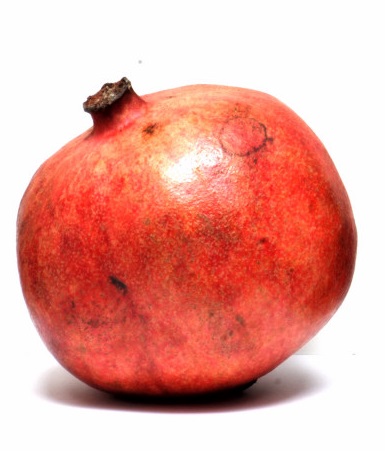
Pomegranate extract (Punica granatum, Lythraceae)
Description
Extract ingredient derived from fruit, juice, or peel of pomegranate, naturally rich in polyphenols (notably ellagitannins such as punicalagins) and—when juice-derived—anthocyanins.
Sensory profile: astringent, tart, with fruity notes; color ranges from ruby red (anthocyanin-rich) to brownish (tannin-rich peel extracts).
Positioning: natural antioxidant, functional color (for anthocyanin systems), clean-label addition for beverages, snacks, bakery, plant milks/creams, and dietary supplements.
Caloric value (per 100 g powder)
Standardized dry extract (40–80% polyphenols): ~220–330 kcal; carbohydrates 20–45 g (partly soluble fiber), protein 3–8 g, fat 0.5–3 g, sodium low.
Spray-dried juice extract with carriers (e.g., maltodextrin): closer to fruit powder values (higher sugar fraction). Typical use level in foods: ~0.1–2%.
Key constituents
Ellagitannins: punicalagins A/B (primary markers), punicalin, granatin.
Phenolic acids: ellagic acid (free/derived), gallic acid.
Anthocyanins (juice/pulp derivatives): glycosides of delphinidin, cyanidin, pelargonidin (sensitive to pH/temperature/light).
Organic acids: citric, malic; minerals (e.g., potassium).
Technological carriers where used: maltodextrins, fibers (must be declared).
Production process
Raw material: ripe pomegranates; optional separation of peel/arils/juice.
Extraction: aqueous or hydroalcoholic with controlled pH/temperature; acidic aqueous favored for anthocyanins; mild hydrolysis acceptable for ellagitannins.
Purification/concentration: clarification, ultrafiltration, adsorption resins, vacuum evaporation.
Drying: spray-dry or drum-dry; freeze-dry for premium quality; standardization to % punicalagins/ellagic acid/total polyphenols (Folin–Ciocalteu).
Quality controls: HPLC for punicalagins/anthocyanins, moisture, a_w, color (L*, a*, b*) pH, metals, residual solvents.
Sensory and technological properties
Color: anthocyanins yield red–purple at acidic pH; they fade/shift with higher pH, heat, and light.
Astringency: pronounced in peel extracts; can be moderated via dosage, sweetness/acid balance, fat addition, or microencapsulation.
Solubility: good in water for juice-based extracts; tannin-rich extracts may cause haze/precipitation with proteins (tannin effect).
Oxidative stability: improved by co-antioxidants (e.g., ascorbic acid), barrier packaging, and low a_w.
Food applications
Beverages/functional shots: color and fruity tartness; maintain acid pH for stability.
Snacks & bakery: antioxidant in bars/coatings; supports tart-fruity notes in sweet doughs.
Plant milks, yogurts, ice creams: swirls/toppings; check protein compatibility (tannins).
Sauces, glazes, marinades: color plus antioxidant support for meat/plant-based items.
Supplements: capsules, tablets, granules/gummies standardized to punicalagins/ellagic acid.
Nutrition and health
Polyphenols exhibit antioxidant and radical-scavenging activity; clinical relevance depends on dose and bioaccessibility.
EU health claims: most pomegranate-specific claims are not authorized; use only permitted claims (e.g., vitamin C if present from declared sources).
Interactions/tolerability: tannins may reduce iron absorption when taken with meals; potential drug interactions—exercise caution in polypharmacy. Introduce gradually in GI-sensitive consumers.
Fat profile
Fat is negligible in extracts (do not confuse with pomegranate seed oil). **PUFA**, **MUFA**, **SFA**, **TFA**, **MCT** are not nutritionally relevant here.
Quality and specifications (typical topics)
Identity/assay: total polyphenols (e.g., ≥40–80% GAE), punicalagins (HPLC, e.g., ≥20–40%), ellagic acid.
Physicochemical: moisture ≤5–8%, low a_w, declared pH, color stability; residual solvents within limits.
Microbiology: pathogens absent/25 g, TAMC/yeasts/molds low.
Contaminants: pesticides/metals compliant; PAHs/allergens not expected; carriers/sweeteners declared.
Storage and shelf life
Store cool, dry, dark, in oxygen/moisture-barrier packs.
Typical shelf life 18–24 months for well-packed powders; avoid heat, light, and oxygen to protect anthocyanins.
Allergens and safety
Not a major allergen; gluten-free by nature.
Verify cross-contact and carrier origin (e.g., maltodextrin from corn/potato).
In supplements, follow use limits and mandatory warnings.
INCI functions in cosmetics (where applicable)
INCI: Punica Granatum Extract, Punica Granatum Fruit Extract, Punica Granatum Peel Extract (distinct from Punica Granatum Seed Oil).
Roles: antioxidant, skin conditioning, astringent, soothing in serums, masks, cleansers; assess photostability and staining potential.
Troubleshooting
Excess astringency/bitterness: lower dosage, microencapsulate, add balancing sweetness/acid or fat; prefer juice-derived vs peel-only extracts.
Color loss in beverages: pH too high/thermal hold too long → acidify to pH 3–4, reduce hot-hold, add chelators, and use light-barrier packs.
Haze/precipitation with proteins: lower tannin content, use pectinase/clarification, or separate dairy phase.
Batch-to-batch variation: require HPLC with punicalagin assay and calibration; set spec ranges and blend plans.
Sustainability and supply chain
By-product valorization: using peel reduces waste and footprint; prioritize suppliers with traceability and sustainable agriculture.
In-plant: prefer food-grade solvents (water/ethanol), solvent recovery, wastewater managed toward **BOD/COD** targets, recyclable packaging, robust **GMP/HACCP**.
Labelling
Name: “pomegranate extract” with plant part (e.g., peel/fruit/juice) and assay (e.g., punicalagins ≥xx% or total polyphenols).
Declare carriers/additives; for supplements, show daily dose and warnings; for claims, follow EU rules.
Conclusion
Pomegranate extract is a polyphenol-rich ingredient delivering color, fruity tartness, and antioxidant function. Source choice (juice vs peel), marker standardization, and protection from pH/heat/light are critical to ensure stability, sensory acceptance, and regulatory compliance in foods and supplements.
Mini-glossary
Punicalagins: hallmark ellagitannins of pomegranate; primary assay markers in peel extracts.
Ellagitannins: hydrolyzable tannins yielding ellagic acid; contribute astringency and antioxidant capacity.
Anthocyanins: red–purple pigments sensitive to pH/light/heat, responsible for color in juice-derived extracts.
HPLC — high-performance liquid chromatography: analytical method to quantify punicalagins/anthocyanins.
**GMP/HACCP** — good manufacturing practice / hazard analysis and critical control points: preventive food-safety systems with validated CCPs.
**BOD/COD** — biochemical/chemical oxygen demand: wastewater metrics guiding treatment and environmental compliance.
**SFA** — saturated fatty acids: best kept moderate overall; irrelevant in pomegranate extracts.
**MUFA** — monounsaturated fatty acids: often neutral/beneficial; irrelevant here.
**PUFA** — polyunsaturated fatty acids: beneficial when balanced; irrelevant here.
**TFA** — trans fatty acids: negligible in non-hydrogenated extracts.
**MCT** — medium-chain triglycerides: not relevant to pomegranate extract (pertain to seed oil).


