


 Faba bean proteins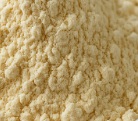


Faba bean proteins (Vicia faba)
Description
Protein ingredient derived from faba (broad/fava) beans, available as protein concentrate (~55–65% protein) or protein isolate (~80–90% protein).
Sensory profile: off-white to pale yellow powder with mild legume/herbaceous notes; refined/fermented grades are more neutral.
Key functionalities: emulsification, foaming, gelation/cross-linking, water- and oil-holding capacity (WHC/OHC), and texturization (via high-moisture extrusion).

Caloric value (per 100 g, powder)
Concentrate: ~350–390 kcal; protein 55–65 g, carbohydrates 20–30 g (with fiber 5–12 g), fat 4–8 g, sodium low.
Isolate: ~360–400 kcal; protein 80–90 g, carbohydrates 1–8 g (low fiber), fat 2–6 g, sodium low (may increase if functional salts are added).
Key constituents
Storage proteins (7S vicilin, 11S legumin): lysine-rich, with sulfur amino acids (methionine/cysteine) limiting → complement with cereals.
Process-modified proteins/peptides (from fermentation/mild enzymatic hydrolysis) to improve solubility and flavor.
Variable polysaccharide residues and saponins/phenolics (higher in concentrates).
Vicine/convicine: reduced by wet extraction; trace residues may remain (see safety).
Production process
Dry fractionation: milling + air classification → concentrate with good yield/low footprint, but more beany notes and variable solubility.
Wet extraction: alkaline solubilization → isoelectric precipitation/membranes → washing → spray-drying → isolate with higher purity and consistent functionality.
Optional refinements: deodorization, fermentation, light hydrolysis, or complexation with carbs/lipids to improve taste/solubility.
Sensory and technological properties
Solubility is pH-dependent (minimum near pI ~4.5; better at <3.5 or >7; hydrolysates widen the window).
Stable emulsions in dressings/beverages (optimize pH and homogenization); good foaming for whipped desserts.
Thermal/ionic gels for plant-based cheeses, batters, fillings; high WHC/OHC boosts juiciness in burgers.
High-moisture extrusion (HME) yields fibrous “meat-like” textures with defined bite.
Food applications
Meat analogues: burgers, nuggets, strips (blend with oils, hydrocolloids, starches).
Plant-based dairy: drinks, yogurts, cheese alternatives (with stabilizers and controlled pH/fermentation).
Bakery & pasta: protein enrichment (5–20%), improved structure and warm hue; supports pasta bite.
Protein beverages: require optimized solubility (hydrolysis/fermentation).
Sauces/emulsions: egg-free mayonnaise, dressings, spreads.
Nutrition and health
In general, fava is a food that can potentially be incorporated into dietary strategies to manage parkinsonian motor oscillations (1), however care should be taken with excessive consumption of fava beans. Some clinical cases have revealed its dangerousness under certain conditions (1).
High protein, fiber (especially in concentrates), and low sugars; GI typically low–moderate.
Amino-acid profile benefits from complementation with cereals/seeds to offset sulfur AA limitation.
Antinutrients (phytate, tannins, trypsin inhibitors) are reduced by wet extraction/fermentation; downstream soaking/cooking further mitigates effects.
Favism (G6PD deficiency): due to vicine/convicine, individuals with G6PD deficiency should avoid faba-based foods; prefer low-VC inputs and documented processing controls.
Fat profile
Very low total fat. Residual lipids are mostly PUFA — polyunsaturated fatty acids (potentially beneficial when balanced; more oxidation-prone) and MUFA — monounsaturated fatty acids (often neutral/beneficial), with minimal SFA — saturated fatty acids (best kept moderate overall). TFA — trans fatty acids negligible; MCT — medium-chain triglycerides not significant.
Quality and specifications (typical topics)
Composition: protein (N×6.25) ≥80% (isolate) / ≥55% (concentrate); moisture ≤8–10%; ash within spec.
Functionality: solubility curve (vs pH), emulsion/foam indices, gel strength, WHC/OHC, particle-size distribution, color (L, b)**.
Sensory off-notes: monitor beany/green, astringency, bitterness; reduce via refinement.
Micro/contaminants: pathogens absent/25 g, low yeasts/molds; metals/mycotoxins/pesticides compliant; vicine/convicine low if claimed.
Process safety: foreign-body control, metal detection, and allergen management.
Storage and shelf life
Store cool, dry, airtight, away from odors/light; protect from humidity (caking) and oxidation (especially concentrates with more lipids).
Typical shelf life: 18–24 months (isolate) and 12–18 months (concentrate) in barrier packs.
Allergens and safety
A legume ingredient: not a top major allergen in many regions, but legume allergies occur; possible cross-reactivity with peanut, lentil, pea, soy.
Favism/G6PD deficiency: exercise caution; favor low-VC materials with documentation.
Gluten-free by nature; manage cross-contact in mixed facilities under GMP/HACCP.
INCI functions in cosmetics (where applicable)
INCI: Vicia Faba Seed Protein, Hydrolyzed Faba Bean Protein, Vicia Faba Seed Extract.
Roles: light film-forming/conditioning, antioxidant claim support (extracts), mattifying in powders.
Troubleshooting
Beany/astringent flavor: use refined isolates, fermentation, or mild hydrolysis; mask with fats/acidic flavors.
Poor solubility/graininess in drinks: reduce particle size, set pH away from pI, apply gentle HTST, or switch to hydrolysates.
Gels too stiff or syneresis: balance with starches/hydrocolloids, tune ions/pH and thermal profile.
Dry texture in burgers: increase WHC (blend with fibers/hydrocolloids), add emulsified oil.
Sustainability and supply chain
Nitrogen-fixing crop: reduces synthetic fertilizer needs, improves rotations, and has a lower GHG footprint than animal proteins.
Prefer traceable, low-VC supply with strong water/energy efficiency; in-plant, aim for BOD/COD targets for effluents, recyclable packaging, and robust GMP/HACCP.
Labelling
Names: “faba bean protein”, “faba bean protein isolate”, “faba bean protein concentrate.”
State protein percentage (where required), any processing (e.g., fermented/hydrolyzed), legume allergen notice, and origin/lot.
Conclusion
Faba bean protein is a versatile protein toolbox for meat analogues, plant-based dairy, bakery, pasta, beverages, and sauces—combining emulsification, gelation, and water binding with a solid nutritional profile. The right process choice (dry vs wet), pH/solubility management, and sensory mitigation (fermentation/hydrolysis) are decisive for reliable performance and consumer acceptance.
Mini-glossary
PUFA — polyunsaturated fatty acids: Often beneficial when balanced; more oxidation-prone.
MUFA — monounsaturated fatty acids: Typically neutral/beneficial for lipid profile.
SFA — saturated fatty acids: Best kept moderate overall.
TFA — trans fatty acids: Negligible in faba protein.
MCT — medium-chain triglycerides: Not significant in faba protein.
GI — glycaemic index: Post-meal glucose impact; generally low–moderate here.
WHC/OHC — water/oil-holding capacity: Ability to retain water/oil, key for juiciness and stability.
GMP/HACCP — good manufacturing practice / hazard analysis and critical control points: Preventive food-safety systems with validated CCPs.
BOD/COD — biochemical/chemical oxygen demand: Effluent metrics guiding wastewater treatment and environmental impact.
G6PD — glucose-6-phosphate dehydrogenase: Enzyme deficient in favism; exposure to vicine/convicine can trigger hemolysis.


