

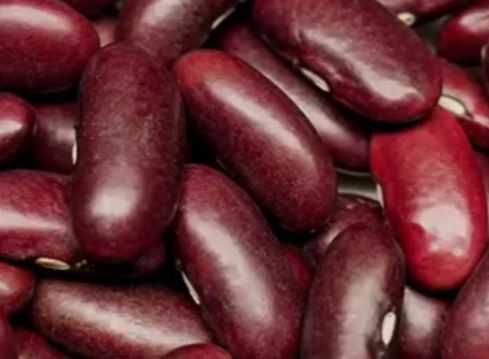
Kidney Beans
Rating : 7
| Evaluation | N. Experts | Evaluation | N. Experts |
|---|---|---|---|
| 1 | 6 | ||
| 2 | 7 | ||
| 3 | 8 | ||
| 4 | 9 | ||
| 5 | 10 |
0 pts from Al222
| Sign up to vote this object, vote his reviews and to contribute to Tiiips.Evaluate | Where is this found? |
| "Descrizione" about Kidney Beans by Al222 (23390 pt) | 2025-Nov-26 12:21 |
| Read the full Tiiip | (Send your comment) |
Kidney beans (Phaseolus vulgaris)
Description
Dried legume seeds with ruby/burgundy red kidney-shaped grains.
Sensory profile: earthy–nutty taste, full body, thicker skin than many beans; excellent shape retention when cooked; good purée-ability for soups and chili.

Common name: Red kidney bean
Kingdom: Plantae
Clade: Angiosperms
Clade: Eudicots
Order: Fabales
Family: Fabaceae
Genus: Phaseolus
Species: Phaseolus vulgaris L.
Note: “Red kidney beans” are cultivars of Phaseolus vulgaris with dark red, kidney-shaped seeds, widely used in American, Mexican and Indian cuisine.
Cultivation and growing conditions
Climate:
Prefers warm, temperate climates.
Sensitive to cold: damaged by late frosts and low temperatures at germination.
Usually grown as a spring–summer crop, once the soil has warmed up sufficiently.
Exposure:
Requires full sun for good vegetative growth, flowering and pod set.
Soil:
Thrives in medium-textured, well-drained soils with good organic matter.
Prefers slightly acidic to neutral pH.
Sensitive to waterlogging, which favors root rot and fungal diseases.
Watering:
Needs a regular water supply, especially during flowering and pod filling.
Avoid alternating severe drought and excess water, which can cause pod splitting and increase disease problems.
Temperature:
Optimal germination when soil temperature is around 15–20 °C.
Optimal growth roughly between 18 and 28 °C.
Excessive heat combined with drought during flowering can reduce pod set.
Fertilization:
As a legume, it can fix atmospheric nitrogen through root rhizobia; heavy applications of mineral nitrogen are usually unnecessary.
Phosphorus, potassium and micronutrients are more important to support flowering, pod set and seed filling.
The incorporation of compost or well-rotted manure before sowing is beneficial.
Crop management:
Early weed control is essential while plants are still small and non-competitive.
Climbing or semi-climbing types need stakes or other supports (canes, nets, wires).
Crop rotation helps reduce soil-borne diseases and pests.
Crop rotation:
Works very well in rotation with cereals and other non-legume crops.
Contributes to soil fertility via nitrogen fixation and crop residues.
Propagation:
By seed, with direct sowing in the field once frost risk has passed and the soil is warm enough.
Short food-use note:
Red kidney beans must always be eaten thoroughly cooked: raw or undercooked beans contain high levels of lectins (especially phytohaemagglutinin), which are potentially toxic.
Soaking in water followed by prolonged boiling destroys these lectins and makes the beans safe to eat.
Caloric value (per 100 g)
Dry (as sold): ~330–350 kcal.
Cooked in water, unsalted: ~110–130 kcal, protein 7–9 g, carbohydrates 20–23 g (of which fiber 6–8 g), fat 0.3–0.8 g.
Canned (drained): similar to cooked; sodium varies (rinsing lowers Na).
Key constituents
Complex carbohydrates: starch (share of resistant starch increases after cooling).
Proteins ~20–24% d.b. (sulfur amino acids are limiting → complement with cereals).
Dietary fiber (soluble/insoluble: pectins, hemicelluloses).
Oligosaccharides (raffinose, stachyose; FODMAP).
Phytochemicals: anthocyanins/proanthocyanidins in the seed coat (colour/antioxidants), phytates, saponins.
Minerals (potassium, magnesium, iron, phosphorus) and B-vitamins (folate, thiamin).
Production process
Selection, cleaning, sizing, and controlled drying → barrier packaging for dry beans.
Cooked/ready-to-eat: soaking (or quick hydration), boiling/pressure cooking to tenderness; for canned: brine, packing, retort sterilisation.
Pastes/flours: milling (sometimes cryogenic) and thermal treatments to inactivate inhibitors.
Sensory and technological properties
Structure: firm bean that holds shape in stews/chili; thicker skin → more pronounced texture.
Functionality: adds body/viscosity to soups and sauces; cooling → ↑ RS3 with slight gelation.
Red colour can bleed into cooking liquid (desirable in rustic dishes).
Food applications
Chili, stews, hearty soups, warm/cold salads; burritos/tacos, pilaf rice.
Veg burgers and fillings; purées/spreads.
Flours in pasta/extruded snacks to boost protein/fiber.
Nutrition and health
Source of plant protein, fiber, and folate; GI typically low–medium, further reduced by cooling (↑ RS) and pairing with fat/protein.
Other components: Salicylic acid (1), iron and zinc (2), The flavonol glycosides phenolic compounds found in common beans possess antimicrobial, anti-inflammatory and ultraviolet radiation (UVR) protective properties (3),
Fiber supports satiety and bowel regularity; glycemic index moderate–low, further attenuated by cooling (↑ RS3) and eating with fat/protein.
Antinutrients (phytates, lectins, enzyme inhibitors): soaking + cooking (preferably pressure cooking) and fermentation/sprouting reduce their impact and improve mineral bioavailability.
FODMAP: oligosaccharides may cause bloating → discard soak water and rinse canned beans to lower content.
Fat profile
Low total fat; residual lipids are mainly PUFA — polyunsaturated fatty acids (e.g., linoleic n-6; potentially beneficial when balanced but more oxidation-prone) and MUFA — monounsaturated fatty acids (e.g., oleic n-9; often neutral/beneficial), with minimal SFA — saturated fatty acids (best moderated in the overall diet).
Quality and specifications (typical topics)
Dry beans: moisture ≤ 14–16%, pest-free, uniform size, low breaks/foreign matter.
Canned: drained weight on spec, uniform texture (avoid overcook), declared sodium; optional CaCl₂ for firmness.
Microbiology: category-appropriate (commercial sterility for canned; pathogens absent/25 g).
Residues: pesticides/metals within limits; no foreign bodies.
Storage and shelf life
Dry: store cool/dry/dark; avoid high temperature/humidity (prevents hard-to-cook phenomenon).
Cooked/refrigerated: ≤ 4 °C, 3–4 days; freezeable after cooking and draining.
Allergens and safety
Gluten-free naturally; check cross-contact in shared facilities.
PHA — phytohaemagglutinin (lectin): toxic when raw/undercooked. Do not use a low-temp slow cooker without pre-boiling.
Soak 8–12 h → drain → vigorously boil at 100 °C for at least 10 minutes, then cook until tender (a pressure cooker is optimal).
Possible cross-reactivity in those allergic to soy/peanut.
INCI functions in cosmetics
Possible entries: Phaseolus Vulgaris (Bean) Extract / Seed Extract.
Roles: skin conditioning, antioxidant, masking in niche applications (limited use; subject to safety/claim review).
Troubleshooting
Excess cook time/firm texture: aged/HTC beans → longer soak (lightly salted water), pressure cook; small baking soda 0.1–0.2% can help.
Skins detaching: thermal shocks/alkalinity → keep a gentle boil, salt during/after; minimal CaCl₂ for extra firmness.
Bloating: discard soak water, rinse well, increase portion gradually; use carminative herbs (bay, fennel).
Flat flavour: insufficient salt/acid → balance with salt, acids (lemon/vinegar), and good fats (olive oil).
Sustainability and supply chain
Nitrogen-fixing legume: lowers need for synthetic fertilisers; GHG footprint lower than animal proteins.
Improve via crop rotations, efficient water/energy use in soaking/cooking, effluent management toward BOD/COD targets; recyclable packaging; full traceability under GMP/HACCP.
Labelling
Names: “red kidney beans”, “red beans”; for canned: declare drained weight, salt, optional CaCl₂.
Nutrition claims (e.g., source of fiber) when supported by analytical levels.
Conclusion
Red kidney beans are a hearty, versatile ingredient for stews, salads, and fillings. Proper preparation (soak, vigorous boiling/pressure cooking) maximises safety, digestibility, and sensory quality, leveraging their fiber, protein, and micronutrient value.
Mini-glossary
GI — glycemic index: blood-glucose response; lowered by fiber, fat, and cooling (↑ RS3).
RS3 — retrograded resistant starch: less digestible starch that blunts glucose spikes.
FODMAP — fermentable oligo-, di-, mono-saccharides and polyols: may cause bloating; soaking/rinsing reduces them.
PHA — phytohaemagglutinin: natural lectin in red kidney beans; inactivated by boiling.
SFA — saturated fatty acids: low share here; moderate in overall diet.
MUFA — monounsaturated fatty acids: e.g., oleic n-9; often neutral/beneficial.
PUFA — polyunsaturated fatty acids: e.g., linoleic n-6; beneficial when balanced, more oxidation-prone.
GMP/HACCP — good manufacturing practice / hazard analysis and critical control points: preventive hygiene systems with validated CCPs.
BOD/COD — biochemical/chemical oxygen demand: indicators of effluent impact across the supply chain.
References__________________________________________________________________________
(1) Mecha E, Erny GL, Guerreiro ACL, Feliciano RP, Barbosa I, Bento da Silva A, Leitão ST, Veloso MM, Rubiales D, Rodriguez-Mateos A, Figueira ME, Vaz Patto MC, Bronze MR. Metabolomics profile responses to changing environments in a common bean (Phaseolus vulgaris L.) germplasm collection. Food Chem. 2022 Feb 15;370:131003. doi: 10.1016/j.foodchem.2021.131003.
(2) Huertas R, William Allwood J, Hancock RD, Stewart D. Iron and zinc bioavailability in common bean (Phaseolus vulgaris) is dependent on chemical composition and cooking method. Food Chem. 2022 Sep 1;387:132900. doi: 10.1016/j.foodchem.2022.132900. Epub 2022 Apr 5. PMID: 35398678.
(3) Fonseca-Hernández D, Lugo-Cervantes EDC, Escobedo-Reyes A, Mojica L. Black Bean (Phaseolus vulgaris L.) Polyphenolic Extract Exerts Antioxidant and Antiaging Potential. Molecules. 2021 Nov 6;26(21):6716. doi: 10.3390/molecules26216716.
Abstract. Phenolic compounds present in common beans (Phaseolus vulgaris L.) have been reported to possess antimicrobial, anti-inflammatory and ultraviolet radiation (UVR) protective properties. UVR from sunlight, which consists of UV-B and UV-A radiations, induces reactive oxygen species (ROS) and free radical formation, consequently activating proteinases and enzymes such as elastase and tyrosinase, leading to premature skin aging. The objective of this work was to extract, characterize and evaluate the antioxidant and antiaging potential of polyphenols from a black bean endemic variety. The polyphenolic extract was obtained from black beans by supercritical fluid extraction (SFE) using CO2 with a mixture of water-ethanol as a cosolvent and conventional leaching with a mixture of water-ethanol as solvent. The polyphenolic extracts were purified and characterized, and antioxidant potential, tyrosinase and elastase inhibitory potentials were measured. The extract obtained using the SFE method using CO2 and H2O-Ethanol (50:50 v/v) as a cosolvent showed the highest total phenolic compounds yield, with 66.60 ± 7.41 mg GAE/g coat (p > 0.05) and 7.30 ± 0.64 mg C3GE/g coat (p < 0.05) of anthocyanins compared to conventional leaching. Nineteen tentative phenolic compounds were identified in leaching crude extract using ESI-QTOF. Quercetin-3-D-galactoside was identified in crude and purified extracts. The purified SFC extract showed IC50 0.05 ± 0.002 and IC50 0.21 ± 0.008 mg/mL for DPPH and ABTS, respectively. The lowest IC50 value of tyrosinase inhibition was 0.143 ± 0.02 mg/mL and 0.005 ± 0.003 mg/mL of elastase inhibition for leaching purified extract. Phenolic compounds presented theoretical free energy values ranging from -5.3 to -7.8 kcal/mol for tyrosinase and -2.5 to -6.8 kcal/mol for elastase in molecular docking (in silico) studies. The results suggest that the purified extracts obtained by SFE or conventional leaching extraction could act as antioxidant and antiaging ingredients for cosmeceutical applications.
Rodríguez Madrera R, Campa Negrillo A, Suárez Valles B, Ferreira Fernández JJ. Phenolic Content and Antioxidant Activity in Seeds of Common Bean (Phaseolus vulgaris L.). Foods. 2021 Apr 15;10(4):864. doi: 10.3390/foods10040864.
Abstract. Dry bean (Phaseolus vulgaris L.) is one of the most important pulses consumed in the world. Total phenolic content, total flavonoid content, total monomeric anthocyanin content and antioxidant capacity were determined, using ferric reducing antioxidant power and free radical scavenging activity, in 255 lines grown under the same environmental conditions. For all parameters analysed, there was a wide range of variability, with differences always above one order of magnitude. Phenolic compounds in beans with coloured coats were found to be more efficient antioxidants than those with completely white coats, and samples with more strongly coloured coats (red, cream, black, pink and brown) showed the highest antioxidant capacities. Based on the strong correlation detected between the variables, total phenolic content can be considered an appropriate indicator of antioxidant activity. The results provide a robust database for selecting those lines of greater functional and nutritional interest in terms of cultivation for direct consumption, for inclusions in food formulations or for use in future breeding programs.
Graziani D, Ribeiro JVV, Cruz VS, Gomes RM, Araújo EG, Santos Júnior ACM, Tomaz HCM, Castro CH, Fontes W, Batista KA, Fernandes KF, Xavier CH. Oxidonitrergic and antioxidant effects of a low molecular weight peptide fraction from hardened bean (Phaseolus vulgaris) on endothelium. Braz J Med Biol Res. 2021 Apr 19;54(6):e10423. doi: 10.1590/1414-431X202010423.
Abstract. About 3000 tons of beans are not used in human food due to hardening. Several studies on bean-derived bioactive peptides have shown potential to treat some diseases, including those relying on oxidative dysfunctions. We assessed the effects of peptides extracted from hardened bean Phaseolus vulgaris (PV) on reactive oxygen species (ROS) and nitric oxide (NO) production, cytotoxic and cytoprotective effects in endothelial cells, and oxidonitrergic-dependent vasodilating effects. Extract was composed by peptide fraction <3 kDa (PV3) from hardened common bean residue. PV3 sequences were obtained and analyzed with bioinformatics. Human umbilical vein endothelial cells were treated with 10, 20, 30, and 250 µg/mL PV3. Oxidative stress was provoked by 3% H2O2. Cytotoxicity and cytoprotective effects were evaluated by MTT assay, whereas, ROS and NO were quantified using DHE and DAF-FM fluorescent probes by confocal microscopy. NO- and endothelium-dependent vasodilating effects of PV3 were assessed in isolated aortic rings. We found 35 peptides with an average mass of 1.14 kDa. There were no cell deaths with 10 and 20 μg/mL PV3. PV3 at 30 μg/mL increased cell viability, while cytotoxicity was observed only with 250 μg/mL PV3. PV3 at 10 μg/mL was able to protect cells from oxidative stress. PV3 also increased NO release without causing cell death. It also reduced relative ROS production induced by H2O2. PV3 vasodilating effects relied on endothelium-dependent NO release. PV3 obtained from low-commercial-value bean displays little cytotoxicity and exerts antioxidant effects, whereas it increases endothelial NO release.
Pitura K, Arntfield SD. Characteristics of flavonol glycosides in bean (Phaseolus vulgaris L.) seed coats. Food Chem. 2019 Jan 30;272:26-32. doi: 10.1016/j.foodchem.2018.07.220.
| Sign up to vote this object, vote his reviews and to contribute to Tiiips.EvaluateClose | (0 comments) |
Read other Tiiips about this object in __Italiano (1)
Content:   Last update:   2025-11-04 12:20:34 | Kcal/100g:   350 Family:   Threat factors:   |

