

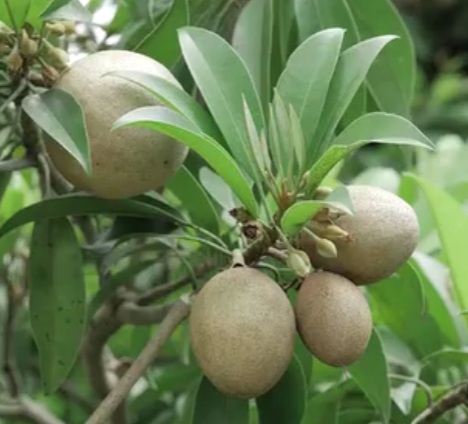
Monkfruit
Rating : 7
| Evaluation | N. Experts | Evaluation | N. Experts |
|---|---|---|---|
| 1 | 6 | ||
| 2 | 7 | ||
| 3 | 8 | ||
| 4 | 9 | ||
| 5 | 10 |
0 pts from Al222
| Sign up to vote this object, vote his reviews and to contribute to Tiiips.Evaluate | Where is this found? |
| "Descrizione" about Monkfruit by Al222 (23420 pt) | 2025-Oct-29 18:28 |
| Read the full Tiiip | (Send your comment) |
Monk fruit (luo han guo; Siraitia grosvenorii)
Description
Cucurbit fruit native to Southern China; the dried fruit and its high-intensity extracts are used as non-caloric sweeteners.
Sweetness derives from mogrosides (triterpene glycosides), chiefly mogroside V, with ~150–300× sucrose potency.
Sensory: clean sweetness with moderate persistence; low-purity grades can show light fruity–herbaceous/gourd-like notes.
Caloric value (per 100 g)
Fresh fruit: ~30–40 kcal/100 g (high water; intrinsic sugars are not responsible for the intense sweetness).
Dried fruit: ~250–320 kcal/100 g.
High-purity extract (mogroside V ≥20–50%): ~0–5 kcal/100 g (negligible at use levels).
Tabletop blends with carriers (e.g., erythritol/dextrose): depends on carrier (from ~0 up to ~380 kcal/100 g).

Key constituents
Mogrosides: V (principal), IV, III; cucurbitane triterpene glycosides.
Polysaccharides/pectins (in fruit), trace amino acids and organic acids.
Minor minerals and vitamin C (partly reduced by processing).
Analytical markers: mogroside V (%) by HPLC, moisture/aw, color (Lab*), solubility, ash.
Production process
Raw material: mature fruits → drying → milling.
Aqueous (± hydroalcoholic) extraction → filtration/clarification → adsorption on resins and desorption → optional decolorization/de-ionization → concentration → spray-drying or liquid standardization.
Controls under GMP/HACCP: mogroside V purity, microbiology, metals/pesticides, residual solvents (if used).
Sensory and technological properties
High-intensity sweetness with thermal and pH stability suitable for baking and beverages.
Synergistic with erythritol, allulose, stevia, or reduced sugars to tune onset, body, and aftertaste.
Provides sweetness, not bulk → typically needs bulking agents when replacing sugar.
Food uses
Beverages (including acidic), dairy/plant-based, bakery, reduced-sugar confectionery, sauces/syrups, supplements.
Indicative inclusions (extract): 50–400 ppm in finished product (purity/target dependent); confirm via pilot trials.
Labeling: “monk fruit extract”; declare carriers in blends.
Nutrition and health
Glycemic index/load ≈ 0 for pure extracts; helpful in sugar-reduction strategies.
GRAS in the U.S.; regulatory status varies by country—verify authorization and labeling category (sweetener vs flavoring) in the EU and other jurisdictions.
Avoid unauthorized health claims.
Lipid profile
Fat negligible; SFA, MUFA, PUFA only in traces with no meaningful impact.
Health note: diets with relatively higher MUFA/PUFA vs SFA are generally favorable/neutral for blood lipids; not material here.
Quality and specifications (typical topics)
Mogroside V (%) and total mogrosides (HPLC), moisture/aw, solubility, color (Lab*), bulk density (powders).
Microbiology (TVC, yeasts/molds), heavy metals, pesticide residues within limits; residual solvents per process.
Sensory: clean profile without excessive herbaceous/lingering notes; batch consistency.
Storage and shelf-life
Store cool, dry, away from light/odors in moisture-barrier packs; keep tightly closed.
Powders: risk of caking → consider desiccants; typical shelf-life 24–36 months when in spec (FIFO).
Allergens and safety
Not a major EU allergen; adverse reactions are rare.
Prevent cross-contact in facilities; manage CCP for hygiene, drying, and packing.
INCI functions in cosmetics
Listings: Siraitia Grosvenorii Fruit Extract / Monk Fruit Extract.
Roles: fragrance/flavor, antioxidant/skin conditioning in leave-on/rinse-off; follow good practice.
Troubleshooting
Herbaceous/lingering aftertaste: increase mogroside V purity; modulate with erythritol/allulose/stevia or organic acids (citric/lactic).
“Thin” sweetness/lack of body: add bulking (fibers, polyols) or small amounts of non-reducing sugars.
Haze in beverages: filter, choose high-solubility grades, adjust pH/ions.
Batch variability: tighten specs on mogroside V and verify with a sensory panel.
Sustainability and supply chain
Regional cultivation with potential upcycling of side streams; manage process effluents toward BOD/COD targets.
Recyclable packaging; supplier audits and traceability under GMP/HACCP.
Conclusion
Monk-fruit extract is a high-intensity, low-calorie sweetener effective across diverse matrices. Mogroside V purity, co-sweetener synergy, and robust process standardization are key to a clean, consistent sensory profile.
Mini-glossary
GI — Glycemic index: blood-glucose impact; ≈0 for pure monk-fruit extract.
ADI — Acceptable daily intake: regulatory safe-intake benchmark; confirm per jurisdiction.
GRAS — Generally recognized as safe: U.S. status indicating safety under intended uses.
SFA — Saturated fatty acids: excess may raise LDL; trace here.
MUFA — Monounsaturated fatty acids (e.g., oleic): generally neutral/favorable; trace here.
PUFA — Polyunsaturated fatty acids (n-6/n-3): beneficial when balanced; trace here.
TFA — Trans fatty acids: avoid industrial TFA; not relevant for monk-fruit extracts.
ALA — Alpha-linolenic acid (n-3): plant n-3; human conversion to EPA/DHA is limited (not relevant here).
EPA/DHA — Long-chain n-3 fatty acids; negligible in monk-fruit systems.
MCT — Medium-chain triglycerides: not characteristic of this ingredient.
GMP/HACCP — Good Manufacturing Practice / Hazard Analysis and Critical Control Points: hygiene and preventive-safety systems with defined CCP.
BOD/COD — Biochemical/Chemical oxygen demand: wastewater impact indicators for extraction processes.
FIFO — First in, first out: inventory rotation using older lots first.
References__________________________________________________________________________
Kaim U, Gawlik U, Lisiecka K. Why Does Monk Fruit Extract Remain Only Partially Approved in the EU? Regulatory Barriers and Policy Implications for Food Innovation. Foods. 2025 Aug 13;14(16):2810. doi: 10.3390/foods14162810.
Abstract. Monk fruit extract (Siraitia grosvenorii, MFE) is a natural, non-caloric sweetener known for its intense sweetness, antioxidant properties, and potential metabolic health benefits. While certain aqueous monk fruit decoctions are recognised as non-novel foods in the UK and Ireland due to significant pre-1997 consumption, the European Union (EU) has adopted a more cautious approach under the Novel Food Regulation (EU) 2015/2283. As of October 2024, only one specific aqueous extract of monk fruit has been authorised in the EU under Regulation (EU) 2024/2345, permitting its use in several food categories. However, highly purified mogrosides and non-aqueous extracts remain unapproved due to gaps in toxicological data and the absence of industry-led applications. This review systematically analyses the EU's regulatory barriers, comparing MFE's legal status with other approved non-caloric sweeteners such as steviol glycosides and erythritol, and examining regulatory frameworks in the EU, United States, United Kingdom, and China. Findings indicate that although 18 non-caloric sweeteners are currently authorised in the EU, regulatory constraints continue to hinder the broader approval of MFE, limiting innovation and the availability of natural sweeteners for consumers. Harmonising regulations, leveraging international safety assessments, and promoting industry engagement are recommended to advance MFE's authorisation and support sustainable food innovation in the EU. Addressing these challenges is crucial to ensure that European consumers and industry can benefit from safe, innovative, and health-promoting alternatives to sugar, aligning food policy with broader public health goals and sustainability commitments.
Kaim U, Labus K. Monk Fruit Extract and Sustainable Health: A PRISMA-Guided Systematic Review of Randomized Controlled Trials. Nutrients. 2025 Apr 24;17(9):1433. doi: 10.3390/nu17091433.
Abstract. Sustainable health approaches promote functional food alternatives that support metabolic well-being while reducing reliance on added sugars and artificial sweeteners. Monk fruit extract (MFE), a natural, non-caloric sweetener, is gaining interest for its potential metabolic benefits, but its effects and regulatory status require further evaluation. Objective: This PRISMA-guided systematic review synthesizes findings from randomized controlled trials (RCTs) assessing the impact of MFE on metabolic health, lipid profiles, inflammation, and regulatory considerations. Methods: The literature search was conducted across PubMed, Scopus, Web of Science, and Cochrane Library, covering studies published between 2015 and 2025. Inclusion criteria were human RCTs evaluating MFE's metabolic effects, while animal studies, reviews, and mixed-intervention trials were excluded. Study quality was assessed using the Cochrane risk of bias tool and the Jadad scale. Results: Five randomized controlled trials met the inclusion criteria, demonstrating that monk fruit extract (MFE) reduces postprandial glucose levels by 10-18% and insulin responses by 12-22%. No severe adverse effects were observed. Regulatory analysis indicated that MFE is approved for use in the United States and China, while its status remains under review in the European Union. Conclusions: MFE shows potential as a functional food ingredient for metabolic health. However, long-term clinical trials and a harmonized regulatory framework must confirm its safety and efficacy within sustainable health strategies.
Shivani, Thakur BK, Mallikarjun CP, Mahajan M, Kapoor P, Malhotra J, Dhiman R, Kumar D, Pal PK, Kumar S. Introduction, adaptation and characterization of monk fruit (Siraitia grosvenorii): a non-caloric new natural sweetener. Sci Rep. 2021 Mar 18;11(1):6205. doi: 10.1038/s41598-021-85689-2. PMID: 33737610;
Abstract. Siraitia grosvenorii, an herbaceous perennial plant, native to the southern parts of China, is commonly used as a low-calorie natural sweetener. It contains cucurbitane-type triterpene glycosides known as mogrosides. The extract from monk fruit is about 300 times sweeter than sucrose. In spite of its immense importance and International demand, Siraitia grosvenorii (Swingle) is not commercially cultivated outside China since scientific information for cultivation of this species is lacking. Planting material of monk fruit plant was not available in India. Thus, the seeds of monk fruit were introduced in India from China after following International norms. Then the experiments were conducted on different aspects such as seed germination, morphological and anatomical characterization, phenology, flowering and pollination behaviors, and dynamic of mogroside-V accumulation in fruit. The hydropriming at 40 °C for 24 h was found effective to reduce the germination time and to increase the germination rate (77.33%). The multicellular uniseriate trichomes were observed in both the leaf surfaces, however, higher trichomes density was observed in the ventral surface of males compared to females. The microscopic view revealed that the ovary was trilocular (ovary consists three chambers) having two ovules in each chamber or locule. Most of the fruits were globose or oblong type with 5-7 cm in length and 4-7 cm diameter. Mogroside-V content in fruit at 80 days after pollination was 0.69% on dry weight basis. The rate of increase of mogroside-V accumulation from 50 to 70 days was very slow, whereas a sharp increase was observed from 70 to 80 days. The higher receptivity of stigma was observed with fully open flowers. The floral diagram and formula have also been developed for both male and female flowers. Our results highlighted that monk fruit can be grown in Indian conditions.
Muñoz-Labrador A, Azcarate S, Lebrón-Aguilar R, Quintanilla-López JE, Galindo-Iranzo P, Kolida S, Methven L, Rastall RA, Moreno FJ, Hernandez-Hernandez O. High-Yield Synthesis of Transglycosylated Mogrosides Improves the Flavor Profile of Monk Fruit Extract Sweeteners. J Agric Food Chem. 2021 Jan 27;69(3):1011-1019. doi: 10.1021/acs.jafc.0c07267.
Abstract. Luo Han Guo fruit extract (Siraitia grosvenorii), mainly composed of mogroside V (50%), could be considered a suitable alternative to free sugars; however, its commercial applications are limited by its unpleasant off-notes. In the present work, a central composite design method was employed to optimize the transglycosylation of a mogroside extract using cyclodextrin glucosyltransferases (CGTases) from three different bacteriological sources (Paenibacillus macerans, Geobacillus sp., and Thermoanaerobacter sp.) considering various experimental parameters such as maltodextrin and mogroside concentration, temperature, time of reaction, enzymatic activity, and pH. Product structures were determined by liquid chromatography coupled to a diode-array detector (LC-DAD), liquid chromatography-electrospray ionization-mass spectrometry (LC-ESI-MS), and matrix-assisted laser desorption ionization time-of-flight mass spectrometry (MALDI-TOF MS). Sensory analysis of glucosylated mogrosides showed an improvement in flavor attributes relevant to licorice flavor and aftereffect. Consequently, an optimum methodology was developed to produce new modified mogrosides more suitable when formulating food products as free sugar substitutes.
Ban Q, Cheng J, Sun X, Jiang Y, Guo M. Effect of feeding type 2 diabetes mellitus rats with synbiotic yogurt sweetened with monk fruit extract on serum lipid levels and hepatic AMPK (5' adenosine monophosphate-activated protein kinase) signaling pathway. Food Funct. 2020 Sep 23;11(9):7696-7706. doi: 10.1039/d0fo01860k.
Abstract. Monk fruit extract (MFE) is a natural sweetener that has been used as an ingredient of food and pharmaceutical products. The effects of feeding synbiotic yogurt fortified with MFE to rats with type 2 diabetes induced by high-fat diet and streptozotocin on serum lipid levels and hepatic AMPK signaling pathway were evaluated. Results showed that oral administration of the synbiotic yogurt fortified with MFE could improve serum lipid levels, respiratory exchange rate, and heat level in type 2 diabetic rats. Transcriptome analysis showed that synbiotic yogurt fortified with MFE may affect the expression of genes involved in binding, catalytic activity, and transporter activity. The Kyoto Encyclopedia of Genes and Genomes enrichment analysis revealed that these differentially expressed genes were related to AMPK signaling pathway, linoleic acid metabolism, and α-linolenic acid metabolism. Western blotting confirmed that synbiotic yogurt fortified with MFE could activate AMPK signaling and improve the protein level of the hepatic gluconeogenic enzyme G6Pase in diabetic rats. The results indicated that MFE could be a novel sweetener for functional yogurt and related products.
| Sign up to vote this object, vote his reviews and to contribute to Tiiips.EvaluateClose | (0 comments) |
Read other Tiiips about this object in __Italiano (1)
Content:  
Last update:   2025-10-29 18:31:30 | Kcal/100g:   40 |

