

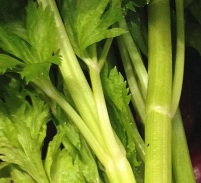
Succo di sedano concentrato
Rating : 7
| Evaluation | N. Experts | Evaluation | N. Experts |
|---|---|---|---|
| 1 | 6 | ||
| 2 | 7 | ||
| 3 | 8 | ||
| 4 | 9 | ||
| 5 | 10 |
Cons:
Allergen (1)0 pts from Al222
| Sign up to vote this object, vote his reviews and to contribute to Tiiips.Evaluate | Where is this found? |
| "Descrizione" about Succo di sedano concentrato by Al222 (23420 pt) | 2025-Nov-02 09:57 |
| Read the full Tiiip | (Send your comment) |
Celery juice concentrate (Apium graveolens; family Apiaceae)
Description
• Ingredient obtained by vacuum concentration of pressed celery juice, often clarified with pectolytic enzymes and fine filtration.
• Vegetal–herbaceous profile with lightly salty, spicy notes (phthalides, terpenes); intensity varies by cultivar, season, clarification, and target concentration.
• Used as a natural flavoring, a clean-label source of solids, and—in some applications—a natural source of sodium/nitrates (e.g., processed meats, sauces, dressings, ready meals, snacks).
Caloric value (per 100 g)
• Depends on °Brix (soluble solids):
– 40–50 °Brix: ~120–200 kcal.
– 55–65 °Brix: ~200–270 kcal.
– 70 °Brix: ~300 kcal.
• Typical at ~60 °Brix: carbohydrates 50–65 g (mostly sugars), protein ~1–2 g, fat <0.5 g. Sodium variable (can be notable); potassium generally present in good amount.

Key constituents
• Sugars: sucrose, glucose, fructose; TSS proportional to °Brix.
• Volatiles: phthalides (e.g., 3-n-butylphthalide), terpenes (limonene, selinene), lactones—drivers of “celery” aroma.
• Nitrates (NO₃⁻): levels depend on variety/season/soil; sometimes leveraged as a “natural” source in meat processing (must meet legal limits).
• Organic acids: malic, citric; typical pH ~4.8–6.0.
• Phenolics/flavonoids in traces (e.g., apigenin glycosides); chlorophyll reduced in clarified fractions.
• Minerals: potassium predominant; sodium variable; traces of calcium and magnesium.
• Analytical markers: °Brix/TSS, volatile profile (GC–MS), nitrates/nitrites (ion chromatography), color L, a, b***, viscosity.
Production process
• Raw material: fresh stalks/ribs, selected and washed; optional peeling/defiberizing.
• Extraction: crushing and pressing; deaeration to limit oxidation/oxidative enzymes.
• Clarification: pectolytic enzymes, flotation/filtration; optional enzyme stabilization.
• Concentration: low-temperature vacuum evaporation or cold (freeze) concentration to target °Brix.
• Finishing: pasteurization and aseptic or hot-fill; barrier packaging with full traceability under GMP/HACCP.
Sensory and technological properties
• Aroma/taste: vegetal–spicy, lightly saline; high concentrations may develop caramelized/Maillard nuances.
• Functionality: adds body and moderate sweetness, enhances umami/savoriness, promotes browning during cooking; can modulate acidity.
• Rheology: viscosity rises with °Brix; aw lower than single-strength juice.
• Compatibility: high doses in dairy/high-protein matrices may yield herbaceous off-notes.
Food uses
• Sauces and condiments, culinary bases, ready meals, soups and fillings.
• Processed meats: as a “natural” nitrate source (use within regulatory and good-practice limits).
• Snacks and savory bakery for aromatic lift and solids contribution.
• Typical inclusion: 0.2–3.0%, to be optimized via pilot trials.
Nutrition and health
• Energy primarily from sugars; fat negligible.
• Sodium/potassium may be significant → consider reduced-sodium targets in formulation.
• Nitrates contribute to dietary intake; ensure compliance with limits and processing to control residual nitrites.
• Any health benefit claims require specific authorization.
Quality and specifications (typical topics)
• °Brix/TSS, pH, density/viscosity in spec; color L, a, b***.
• Nitrates/nitrites within limits; pathogen-free; yeasts/molds controlled.
• Characteristic volatiles (phthalides/terpenes) in range; absence of “sulfidic” or oxidized vegetal notes.
• Pack integrity and validated thermal stability; transparent labeling (nitrates, sodium).
Storage and shelf-life
• Closed aseptic packs: store cool, protected from light/oxygen.
• After opening: refrigerate 0–4 °C and use within a few days.
• Avoid temperature cycling that triggers browning or localized crystallization; apply FIFO.
Allergens and safety
• Celery is a major EU allergen—mandatory labeling; possible cross-reactivity (e.g., birch/mugwort pollen).
• Verify nitrates/nitrites and sodium in recipe; hygiene under HACCP.
• Controls for plant fragments/foreign matter and package integrity.
INCI functions in cosmetics
• Typical entries: Apium Graveolens (Celery) Extract, Apium Graveolens (Celery) Juice (distinct from Apium Graveolens Seed Oil).
• Roles: skin conditioning, natural masking/aromatic; note potential furocoumarins in oily seed fractions (mainly in seed oils).
Troubleshooting
• Browning/dulled green (oxidation/enzymes): deaerate, clarify, use barrier packs, gentle heat curve.
• Herbaceous bitterness: overdosing or fibrous/oxidized raw material → reduce dose, improve clarification/blending.
• Haze/precipitates: insufficient clarification → fine/polish filtration, pectolytic enzymes.
• Unexpected residual nitrites in meat apps: review conversion/fermentation process and pH/time parameters.
• Localized sugar crystallization: temperature oscillations → stable storage, gentle remixing.
Sustainability and supply chain
• Valorize press cake (fiber) in feed/functional ingredients; extract flavones (apigenin) from leaves.
• Manage high-load effluents to BOD/COD targets; heat recovery on evaporators.
• Recyclable packaging and optimized logistics; compliance with GMP/HACCP across the chain.
Conclusion
Celery juice concentrate provides a distinctive aromatic note, contributes to savoriness/umami, and offers technological functions (body, color, browning). Performance and stability hinge on °Brix, raw-material quality, clarification, oxidative control, and proper pasteurization/packaging; tight specifications yield stable, repeatable profiles.
Mini-glossary
• °Brix — Percentage of TSS; guides concentration and perceived sweetness/savoriness.
• TSS — Total soluble solids: sugars, acids, salts; correlates with density and yield.
• pH — Acidity/alkalinity index; impacts aroma, color, and microbiology.
• aw — Water activity: decreases as solids increase; governs microbial stability.
• GC–MS — Gas chromatography–mass spectrometry: volatile profiling technique.
• GMP — Good Manufacturing Practice: hygiene and process-consistency standards.
• HACCP — Hazard Analysis and Critical Control Points: preventive safety system with defined CCP.
• BOD/COD — Biochemical/Chemical Oxygen Demand: effluent load indicators for wastewater impact.
• FIFO — First In, First Out: stock-rotation practice prioritizing older lots.
• CCP — Critical Control Point: process step where a control prevents/reduces a hazard.
Studies
Its seeds have an anti-inflammatory action and positive effects on arterial hypertension (1).
The results of this study confirm that the phenolic compounds and flavonoids present in the celery leaves, such as apigenin and luteolin, exert antioxidant activity (2).
An 8-month study with administration of celery leaf extract has been shown to reduce blood glucose levels, however a lack of association between blood glucose levels and plasma insulin levels in elderly pre-diabetics was found (3).
A mixture of celery and ajowan has been shown to be effective in reducing the frequency and symptoms of dyspepsia (4).
Allergy
The celery is one of the main foods that can trigger allergic reactions (5).
References_________________________________________________________________________
(1) Moghadam MH, Imenshahidi M, Mohajeri SA. Antihypertensive effect of celery seed on rat blood pressure in chronic administration. J Med Food. 2013 Jun;16(6):558-63. doi: 10.1089/jmf.2012.2664.
Abstract. This study investigated the effects of different celery (Apium graveolens) seed extracts on blood pressure (BP) in normotensive and deoxycorticosterone acetate-induced hypertensive rats. The hexanic, methanolic, and aqueous-ethanolic extracts were administered intraperitoneally and their effects on BP and heart rate (HR) were evaluated in comparison with spirnolactone as a diuretic and positive control. Also, the amount of n-butylphthalide (NBP), as an antihypertensive constituent, in each extract was determined by HPLC. The results indicated that all extracts decreased BP and increased the HR in hypertensive rats, but had no effect on normotensive rats. The data showed that administration of 300 mg/kg of hexanic, methanolic, and aqueous-ethanolic (20/80, v/v) extracts of the celery seed caused 38, 24, and 23 mmHg reduction in BP and 60, 25, and 27 beats per minute increase in the HR, respectively. Also, the HPLC analysis data revealed that the content of NBP in the hexanic extract was 3.7 and 4 times greater than methanolic and aqueous-ethanolic extracts. It can be concluded that celery seed extracts have antihypertensive properties, which appears to be attributable to the actions of its active hydrophobic constitutes such as NBP and can be considered as an antihypertensive agent in chronic treatment of elevated BP.
(2) Han L, Gao X, Xia T, Zhang X, Li X, Gao W. Effect of digestion on the phenolic content and antioxidant activity of celery leaf and the antioxidant mechanism via Nrf2/HO-1 signaling pathways against Dexamethasone. J Food Biochem. 2019 Jul;43(7):e12875. doi: 10.1111/jfbc.12875. Epub 2019 May 17. PMID: 31353732.
(3) Yusni Y, Zufry H, Meutia F, Sucipto KW. The effects of celery leaf (apium graveolens L.) treatment on blood glucose and insulin levels in elderly pre-diabetics. Saudi Med J. 2018 Feb;39(2):154-160. doi: 10.15537/smj.2018.2.21238.
Abstract. To analyze the effect of celery leaf extract on blood glucose and plasma insulin levels in elderly pre-diabetics. Methods: This study was conducted between March and November 2014 at the Faculty of Medicine, Syiah Kuala University, Banda Aceh, Indonesia. A quasi-experimental pretest-posttest with a control group was conducted with elderly pre-diabetic volunteers. The subjects included 16 elderly pre-diabetics older than 60 (6 males and 10 females). The subjects were randomly divided into 2 groups: a control group (placebo-treated) and a treatment group (celery-treated). The treatment consisted of celery leaf extract capsules at the dose of 250 mg, 3 times per day (morning, afternoon and evening), 30 minutes before a meal, for 12 days. Data analysis was performed using the t-test (p less than 0.05). Results: There was a significant decrease in pre-prandial plasma glucose levels (p=0.01) and post-prandial plasma glucose levels (p=0.00), but no significant increase in plasma insulin levels (p=0.15) after celery leaf treatment in elderly pre-diabetics. Conclusion: Celery was effective at reducing blood glucose levels, but there was a lack of association between blood glucose levels and plasma insulin levels in elderly pre-diabetics.
(4) Azimi M, Zahedi MJ, Mehrabani M, Tajadini H, Zolala F, Baneshi MR, Choopani R, Sharififar F, Asadipour A, Hayatbakhsh MM, Ahmadi B. Effect of Apium graveolens and Trachyspermum copticom on clinical symptoms of patients with functional dyspepsia. Avicenna J Phytomed. 2017 Nov-Dec;7(6):554-564.
Abstract. Objectives: This study aimed at investigating the effect of Iranian traditional remedy prepared from Apium graveolens and Trachyspermum copticom (AT) on the severity and frequency of symptoms in patients with functional dyspepsia (FD). Material and methods: In total, 150 FD patients were included in this randomized double-blind trial, based on the ROME III diagnostic criteria, and they were divided into three intervention groups namely, AT, Placebo and omeprazole. Then, severity and frequency of symptoms during this eight-week trial were measured. Obtained information was analyzed using Chi-square test and repeated measures test. Result: In general, the severity and frequency of symptoms after the 4th week significantly decreased in the AT group as compared to the omeprazole and placebo groups, and continued to reduce by the end of the eighth week. General reduction of symptom severity and frequency in the omeprazole group was significantly different from the placebo group by the end of the 4th and 8th weeks. With respect to each individual symptom, AT markedly improved symptoms, such as burning, pain, early satiation, fullness, bloating, belching and nausea, as compared to placebo-treated group. Moreover, AT significantly improved symptoms, like vomiting, and nausea, except for pain, as compared to omeprazole-treated subjects. Conclusion: According to the results, AT, as Iranian traditional remedy, was more effective than omeprazole and placebo in reducing the symptoms in FD patients.
(5) Daems D, Peeters B, Delport F, Remans T, Lammertyn J, Spasic D. Identification and Quantification of Celery Allergens Using Fiber Optic Surface Plasmon Resonance PCR. Sensors (Basel). 2017 Jul 31;17(8):1754. doi: 10.3390/s17081754.
Abstract: Accurate identification and quantification of allergens is key in healthcare, biotechnology and food quality and safety. Celery (Apium graveolens) is one of the most important elicitors of food allergic reactions in Europe. Currently, the golden standards to identify, quantify and discriminate celery in a biological sample are immunoassays and two-step molecular detection assays in which quantitative PCR (qPCR) is followed by a high-resolution melting analysis (HRM). In order to provide a DNA-based, rapid and simple detection method suitable for one-step quantification, a fiber optic PCR melting assay (FO-PCR-MA) was developed to determine different concentrations of celery DNA (1 pM-0.1 fM). The presented method is based on the hybridization and melting of DNA-coated gold nanoparticles to the FO sensor surface in the presence of the target gene (mannitol dehydrogenase, Mtd). The concept was not only able to reveal the presence of celery DNA, but also allowed for the cycle-to-cycle quantification of the target sequence through melting analysis. Furthermore, the developed bioassay was benchmarked against qPCR followed by HRM, showing excellent agreement (R² = 0.96). In conclusion, this innovative and sensitive diagnostic test could further improve food quality control and thus have a large impact on allergen induced healthcare problems.
| Sign up to vote this object, vote his reviews and to contribute to Tiiips.EvaluateClose | (0 comments) |
Read other Tiiips about this object in __Italiano (1)
Content:   Last update:   2025-10-28 09:00:37 | Kcal/100g:   |

