

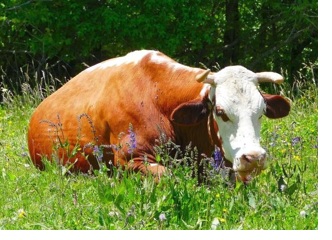
Cooked beef
Rating : 7
| Evaluation | N. Experts | Evaluation | N. Experts |
|---|---|---|---|
| 1 | 6 | ||
| 2 | 7 | ||
| 3 | 8 | ||
| 4 | 9 | ||
| 5 | 10 |
Cons:
Avoid excessive amounts (1)0 pts from Al222
| Sign up to vote this object, vote his reviews and to contribute to Tiiips.Evaluate | Where is this found? |
| "Descrizione" about Cooked beef by Al222 (23258 pt) | 2025-Oct-26 17:32 |
| Read the full Tiiip | (Send your comment) |
Cooked beef, Beef meat (Bos taurus)
Fresh cuts (muscle plus connective tissues with a variable fat cap) from slaughter cattle. Composition and sensory traits depend on breed/type, finishing age/weight, diet (grass- vs grain-fed), cut (tenderloin, striploin, ribeye, chuck, round, brisket, flank, etc.), and post-mortem handling (pH, chilling, aging). Used as whole-muscle steaks/roasts, ground beef, and for cooked or cured products (e.g., bresaola).
Caloric value (per 100 g edible portion, raw)
Lean cuts (tenderloin, well-trimmed topside/round): ~120–170 kcal; protein ~20–23 g; fat ~2–7 g.
Medium-fat cuts (trimmed chuck/loin): ~170–230 kcal; fat ~8–15 g.
Rich cuts (ribeye with cap, brisket, short rib): ~250–350+ kcal; fat >20 g.
Dry-heat cooking concentrates nutrients (water loss); moist/slow methods solubilize collagen and improve tenderness.
Composition and micronutrients (typical, raw)
Complete proteins with all essential amino acids (~20–23%).
B vitamins: notably B12, niacin (B3), B6, riboflavin (B2).
Minerals: high heme iron (very bioavailable), zinc, selenium, phosphorus.
Cholesterol: ~60–90 mg/100 g (higher in fattier cuts).
Lipid profile (of the fat fraction; absolute grams per 100 g depend on the cut)
SFA (saturated): ~40–52% (palmitic C16:0, stearic C18:0).
MUFA (↑ oleic C18:1): ~40–50%.
PUFA (total): ~2–5%
n-6 (linoleic C18:2, arachidonic C20:4): ~1.5–3.5%.
n-3 (ALA C18:3; EPA/DHA trace): ~0.3–1.0% (often higher in grass-fed).
Ruminant trans (e.g., vaccenic): ~2–6% of lipids.
CLA (conjugated linoleic acid): ~0.3–1.2% of lipids.
n-6/n-3 ratio: typically higher in grain-fed, lower in grass-fed systems.
Technological quality and parameters
Ultimate pH (pHᵤ) ~5.4–5.7 (optimal); >6.0 risks DFD (dark, firm, dry)—darker color, lower shelf life.
Color (L*a*b*): higher a* (redness) with more myoglobin (older animals, active muscles).
WHC (water-holding capacity) and drip loss: drive yield and juiciness.
Tenderness: measured by Warner–Bratzler shear force; improves with aging.
Marbling (IMF) correlates with juiciness and flavor; graded by conformation/fatness systems (e.g., SEUROP in the EU).
Aging and process
Wet aging (vacuum): typically 7–21 days at 0–2 °C.
Dry aging: 14–45+ days with controlled T/RH/airflow—intensifies flavor, reduces yield, forms a protective “crust.”
Supply chain: slaughter → breakdown/deboning → chilled packaging (film, vacuum, MAP) → cold-chain distribution.
Sensory and culinary uses
Fast, dry-heat: striploin, ribeye, sirloin, tenderloin—manage core temperature and resting.
Slow/moist or low & slow: chuck, brisket, short rib, shank, cheek—braises, stews, barbecue, sous-vide.
Ground beef: burgers, meatballs, ragù—balance lean/fat (e.g., 80/20) and binders as needed.
Promote Maillard by surface drying and adequate searing heat.
Food safety and internal temperatures
Key hazards: STEC (E. coli O157:H7)—especially in ground beef, Salmonella, Campylobacter; Listeria in RTE environments; parasites (e.g., Taenia saginata) controlled by inspection/cold chain.
Core temperatures (practical guides)
Intact steaks/roasts: ≥63 °C with 3-min rest.
Ground beef: 70–72 °C.
Hot holding: ≥60 °C.
Raw preparations (tartare/carpaccio): source from qualified supply, apply blast-chill where applicable, and maintain strict hygiene. Home storage 0–4 °C; use within 2–4 days (raw packs). Freeze at −18 °C: 6–12 months (cuts) / 3–4 months (ground).
Nutrition and health
Excellent source of high-quality protein, heme iron, zinc, and vitamin B12.
Selecting lean cuts and low-fat cooking methods reduces SFA and calories.
Processed beef can carry higher sodium—check labels. Beef itself is not a major allergen; sensitivities may relate to additives in processed items.
Quality and specifications (typical topics)
pH, L*a*b*, WHC/drip loss, IMF (%), shear force.
Microbiology: TVC, Enterobacteriaceae; Salmonella absent/25 g; Listeria compliant in RTE.
Residues/contaminants: metals and veterinary drugs within MRL.
Packaging: MAP (O₂/CO₂/N₂) or vacuum; seal integrity; transport temperature.
Sustainability and supply chain
Footprint driven by enteric emissions, land use, and feed. Improvements: regenerative grazing, co-product utilization, efficient FCR, renewable energy, effluent control to BOD/COD targets, recyclable packaging, and nose-to-tail waste reduction.
Troubleshooting (use/quality)
Tough texture → collagen not gelatinized (short cook on tough cut) or overcooked lean cut → match method to cut, control core temp and rest.
Poor browning/gray surface → wet surface/low pan heat → pat dry, increase initial heat.
Excess purge in vacuum packs → low WHC/pH → manage aging conditions; dry surfaces before cooking.
Warmed-over flavor (oxidized reheated notes) → lipid oxidation → rapid chilling, low oxygen storage, prompt consumption.
Conclusion
Beef meat is highly versatile, nutrient-dense, and—when properly selected and handled—delivers outstanding flavor, tenderness, and juiciness. Performance depends on cut, marbling, pH/WHC, and aging, while safety relies on correct core temperatures, hygiene, and a robust cold chain. The fat profile features prominent MUFA/SFA, low PUFA, and characteristic ruminant trans and CLA.
Mini-glossary
SFA/MUFA/PUFA — saturated/monounsaturated/polyunsaturated fatty acids
n-6 / n-3 — omega-6 / omega-3 families
CLA — conjugated linoleic acid
pHᵤ — ultimate post-mortem pH
WHC — water-holding capacity
DFD — dark, firm, dry (quality defect)
IMF — intramuscular fat (marbling)
L*a*b* — CIELAB color space
TVC — total viable count; RTE — ready to eat
MAP — modified-atmosphere packaging
MRL — maximum residue limits
FCR — feed conversion ratio
BOD/COD — biochemical/chemical oxygen demand (effluent load)
FIFO — first in, first out
References__________________________________________________________________________
Johnston BC, Zeraatkar D, Han MA, Vernooij RWM, Valli C, El Dib R, Marshall C, Stover PJ, Fairweather-Taitt S, Wójcik G, Bhatia F, de Souza R, Brotons C, Meerpohl JJ, Patel CJ, Djulbegovic B, Alonso-Coello P, Bala MM, Guyatt GH. Unprocessed Red Meat and Processed Meat Consumption: Dietary Guideline Recommendations From the Nutritional Recommendations (NutriRECS) Consortium. Ann Intern Med. 2019 Nov 19;171(10):756-764. doi: 10.7326/M19-1621.
Abstract. This article has been corrected. The original version (PDF) is appended to this article as a Supplement. Description: Dietary guideline recommendations require consideration of the certainty in the evidence, the magnitude of potential benefits and harms, and explicit consideration of people's values and preferences. A set of recommendations on red meat and processed meat consumption was developed on the basis of 5 de novo systematic reviews that considered all of these issues. Methods: The recommendations were developed by using the Nutritional Recommendations (NutriRECS) guideline development process, which includes rigorous systematic review methodology, and GRADE methods to rate the certainty of evidence for each outcome and to move from evidence to recommendations. A panel of 14 members, including 3 community members, from 7 countries voted on the final recommendations. Strict criteria limited the conflicts of interest among panel members. Considerations of environmental impact or animal welfare did not bear on the recommendations. Four systematic reviews addressed the health effects associated with red meat and processed meat consumption, and 1 systematic review addressed people's health-related values and preferences regarding meat consumption. Recommendations: The panel suggests that adults continue current unprocessed red meat consumption (weak recommendation, low-certainty evidence). Similarly, the panel suggests adults continue current processed meat consumption (weak recommendation, low-certainty evidence).
Battaglia Richi E, Baumer B, Conrad B, Darioli R, Schmid A, Keller U. Health Risks Associated with Meat Consumption: A Review of Epidemiological Studies. Int J Vitam Nutr Res. 2015;85(1-2):70-8. doi: 10.1024/0300-9831/a000224.
Abstract. Recent evidence from large prospective US and European cohort studies and from meta-analyses of epidemiological studies indicates that the long-term consumption of increasing amounts of red meat and particularly of processed meat is associated with an increased risk of total mortality, cardiovascular disease, colorectal cancer and type 2 diabetes, in both men and women. The association persists after inclusion of known confounding factors, such as age, race, BMI, history, smoking, blood pressure, lipids, physical activity and multiple nutritional parameters in multivariate analysis. The association has not always been noted with red meat, and it has been absent with white meat. There is evidence of several mechanisms for the observed adverse effects that might be involved, however, their individual role is not defined at present. It is concluded that recommendations for the consumption of unprocessed red meat and particularly of processed red meat should be more restrictive than existing recommendations. Restrictive recommendations should not be applied to subjects above about 70 years of age, as the studies quoted herein did not examine this age group, and the inclusion of sufficient protein supply (e. g. in the form of meat) is particularly important in the elderly.
Paul TL, Fleming SA. Dietary consumption of beef and red meat: a scoping review and evidence map on cognitive outcomes across the lifespan. Public Health Nutr. 2023 Dec;26(12):2912-2926. doi: 10.1017/S1368980023001933.
Abstract. Objective: Mixed evidence exists on the impact of beef consumption on cognition. The goal was to create an evidence map capturing studies assessing beef consumption and cognition to reveal gaps and opportunities in the body of literature. Design: A scoping review was conducted to locate studies up to March 2022 using PubMed and backwards citation screening. Data were extracted by two independent reviewers with conflict resolution, and a database was created and made publicly available. Setting: Intervention and observational studies. Participants: Humans of any age, sex and/or health status, without moderate to severe cognitive impairment and/or abnormalities. Results: Twenty-two studies were identified that quantified beef or red meat intake and assessed cognition. Six studies assessed beef intake, with the remaining studies describing intake of red meat that may or may not include beef. Nine articles described randomised controlled trials (RCT), mostly conducted in children. Thirteen described observational studies, primarily conducted on adults and seniors. The most common cognitive domains measured included intelligence and general cognition, and memory. The majority of controlled studies were rated with high risk of bias, with the majority of observational trials rated with serious or greater risk of bias. Conclusions: Red meat and beef intake and cognition is largely understudied. There is a significant lack of replication across study designs, populations, exposures and outcomes measured. The quality of the research would be considerably enhanced by focused assessments of beef intake (and not red meat in general) and specific cognitive domains, along with improved adherence to reporting standards.
Elias Masiques N, De Vrieze J, Hemeryck LY, Vanhaecke L, De Smet S, Van Hecke T. Dietary fiber mitigates the differential impact of beef and chicken meat consumption on rat intestinal health. Food Funct. 2025 May 19;16(10):3949-3962. doi: 10.1039/d5fo00900f.
Abstract. In this rat feeding study, it was hypothesized that the impact of red (vs. white) meat consumption on gut health is more pronounced in fiber-deprived diets, whereas fiber-rich diets may attenuate meat-related differences. For this purpose, rats were fed a red (beef) or white (chicken) meat diet with and without fructo-oligosaccharides (FOS) for three weeks. Gut health was assessed through colonic microbiota, fermentation metabolites, oxidative stress, inflammation, DNA adducts and histology. In rats on the fiber-deprived diets, beef consumption resulted in higher abundance of mucin-degrading bacteria Akkermansia and lower blood glutathione levels compared to chicken-fed rats. Adding FOS to the meat diets modulated the gut microbiota and fermentation metabolites, affected oxidative stress and inflammation markers in tissues and blood, increased colon length, and reduced fat deposition and liver weight. Thus, results showed that the dietary context should be considered when evaluating the impact of red meat consumption on gut health.
Valli C, Rabassa M, Johnston BC, Kuijpers R, Prokop-Dorner A, Zajac J, Storman D, Storman M, Bala MM, Solà I, Zeraatkar D, Han MA, Vernooij RWM, Guyatt GH, Alonso-Coello P; NutriRECS Working Group. Health-Related Values and Preferences Regarding Meat Consumption: A Mixed-Methods Systematic Review. Ann Intern Med. 2019 Nov 19;171(10):742-755. doi: 10.7326/M19-1326.
Abstract. This article has been corrected. The original version (PDF) is appended to this article as a Supplement. Background: A person's meat consumption is often determined by their values and preferences. Purpose: To identify and evaluate evidence addressing health-related values and preferences regarding meat consumption. Data sources: MEDLINE, EMBASE, Web of Science, Centre for Agriculture and Biosciences Abstracts, International System for Agricultural Science and Technology, and Food Science and Technology Abstracts were searched from inception to July 2018 without language restrictions. Study selection: Pairs of reviewers independently screened search results and included quantitative and qualitative studies reporting adults' health-related values and preferences regarding meat consumption. Data extraction: Pairs of reviewers independently extracted data and assessed risk of bias. Data synthesis: Data were synthesized into narrative form, and summaries were tabulated and certainty of evidence was assessed using the GRADE (Grading of Recommendations Assessment, Development and Evaluation) approach. Of 19 172 initial citations, 41 quantitative studies (38 addressed reasons for meat consumption and 5 addressed willingness to reduce meat consumption) and 13 qualitative studies (10 addressed reasons for meat consumption and 4 addressed willingness to reduce meat consumption) were eligible for inclusion. Thirteen studies reported that omnivores enjoy eating meat, 18 reported that these persons consider meat an essential component of a healthy diet, and 7 reported that they believe they lack the skills needed to prepare satisfactory meals without meat. Omnivores are generally unwilling to change their meat consumption. The certainty of evidence was low for both "reasons for meat consumption" and "willingness to reduce meat consumption in the face of undesirable health effects." Limitation: Limited generalizability of findings to lower-income countries, low-certainty evidence for willingness to reduce meat consumption, and limited applicability to specific types of meat (red and processed meat). Conclusion: Low-certainty evidence suggests that omnivores are attached to meat and are unwilling to change this behavior when faced with potentially undesirable health effects.
Tesson V, Federighi M, Cummins E, de Oliveira Mota J, Guillou S, Boué G. A Systematic Review of Beef Meat Quantitative Microbial Risk Assessment Models. Int J Environ Res Public Health. 2020 Jan 21;17(3):688. doi: 10.3390/ijerph17030688.
Abstract. Each year in Europe, meat is associated with 2.3 million foodborne illnesses, with a high contribution from beef meat. Many of these illnesses are attributed to pathogenic bacterial contamination and inadequate operations leading to growth and/or insufficient inactivation occurring along the whole farm-to-fork chain. To ensure consumer health, decision-making processes in food safety rely on Quantitative Microbiological Risk Assessment (QMRA) with many applications in recent decades. The present study aims to conduct a critical analysis of beef QMRAs and to identify future challenges. A systematic approach, the Preferred Reporting Items for Systematic Reviews and Meta-Analyses (PRISMA) guidelines, was used to collate beef QMRA models, identify steps of the farm-to-fork chain considered, and analyze inputs and outputs included as well as modelling methods. A total of 2343 articles were collected and 67 were selected. These studies focused mainly on western countries and considered Escherichia coli (EHEC) and Salmonella spp. pathogens. Future challenges were identified and included the need of whole-chain assessments, centralization of data collection processes, and improvement of model interoperability through harmonization. The present analysis can serve as a source of data and information to inform QMRA framework for beef meat and will help the scientific community and food safety authorities to identify specific monitoring and research needs.
Lescinsky H, Afshin A, Ashbaugh C, Bisignano C, Brauer M, Ferrara G, Hay SI, He J, Iannucci V, Marczak LB, McLaughlin SA, Mullany EC, Parent MC, Serfes AL, Sorensen RJD, Aravkin AY, Zheng P, Murray CJL. Health effects associated with consumption of unprocessed red meat: a Burden of Proof study. Nat Med. 2022 Oct;28(10):2075-2082. doi: 10.1038/s41591-022-01968-z. Epub 2022 Oct 10. PMID: 36216940; PMCID: PMC9556326.
Shi W, Huang X, Schooling CM, Zhao JV. Red meat consumption, cardiovascular diseases, and diabetes: a systematic review and meta-analysis. Eur Heart J. 2023 Jul 21;44(28):2626-2635. doi: 10.1093/eurheartj/ehad336.
| Sign up to vote this object, vote his reviews and to contribute to Tiiips.EvaluateClose | (0 comments) |
Read other Tiiips about this object in __Italiano (1)
Kcal/100g:   120-350 Last update:   2025-10-26 17:29:58 |

