

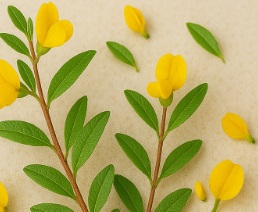
Honeybush
Rating : 7
| Evaluation | N. Experts | Evaluation | N. Experts |
|---|---|---|---|
| 1 | 6 | ||
| 2 | 7 | ||
| 3 | 8 | ||
| 4 | 9 | ||
| 5 | 10 |
0 pts from Al222
| Sign up to vote this object, vote his reviews and to contribute to Tiiips.Evaluate | Where is this found? |
| "Descrizione" about Honeybush by Al222 (23398 pt) | 2025-Dec-05 18:40 |
| Read the full Tiiip | (Send your comment) |
Honeybush (Cyclopia spp.)
Honeybush is a group of species belonging to the genus Cyclopia, native to southern South Africa, where they grow mainly in areas with a Mediterranean-type climate, characterized by dry summers and mild, rainy winters. These are perennial shrubs of the Fabaceae family, with a branched habit, trifoliate or linear leaves and bright yellow flowers with a delicate aroma, which contribute to the ornamental value of the plants. The different species within the genus differ in morphology, flowering time and habitat, while sharing a similar botanical and aromatic profile.
From an agronomic and ecological perspective, honeybush tends to grow in sandy or stony soils, well drained and generally acidic, in sunny, exposed and ventilated sites. It is considered a relatively hardy and adaptable group of species, suited to variable climatic conditions and with limited irrigation requirements, whereas prolonged waterlogging is unfavourable. The growth cycle, yield and final quality are influenced by species, altitude, exposure, soil characteristics and the climatic conditions of the growing season.
The composition of the plant parts destined for processing includes a substantial proportion of water, a fraction of carbohydrates, dietary fibre, polyphenols and natural aromatic compounds. Among the bioactive substances, several flavonoids and phenolic derivatives have been identified, which contribute to both the organoleptic properties of the infusion and its aromatic profile. Variable amounts of minerals such as potassium, calcium and magnesium are also present, with levels depending on species, soil type and crop management.
From a food and technological standpoint, honeybush is used mainly for the production of herbal teas and infusions, obtained by drying and controlled fermentation of the harvested aerial parts. The resulting products are characterised by a sweet, mild, slightly honey-like aroma, from which the common name is derived, and are employed as a flavour base in blends, beverages and other food formulations. In addition to use in infusions, extracts and plant fractions may be incorporated into herbal or technical preparations.
The quality assessment of plant material intended for processing takes into account the uniformity and integrity of the harvested parts, colour, aromatic intensity, polyphenol content and the absence of impurities or contaminants. Proper species selection, harvesting practices, drying conditions and post-harvest handling are crucial to preserving the sensory characteristics and technological properties of honeybush.
![]() | ![]() |
Common name: Honeybush
Botanical name: Cyclopia spp.
Kingdom: Plantae
Clade: Angiosperms → Eudicots → Rosids → Fabids
Order: Fabales
Family: Fabaceae
Genus: Cyclopia
Species: several species within the genus Cyclopia used for herbal infusions
(Honeybush does not refer to a single species, but to multiple species belonging to the genus Cyclopia.)
| Component | Approx. value per 100 g* |
|---|---|
| Energy | ~ 300–330 kcal |
| Total carbohydrates | ~ 60–70 g |
| — of which sugars | ~ 3–5 g |
| Dietary fibre | ~ 35–45 g |
| Proteins | ~ 8–12 g |
| Total fats | ~ 2–4 g |
| — of which saturated fatty acids (SFA) | part of total lipid fraction |
| Sodium | very low |
| Potassium | moderate amounts (varies with species) |
* Values refer to dried leaves. Data may vary significantly depending on species, soil, climate, processing, fermentation and drying conditions.
SFA = Saturated fatty acids. When they prevail over unsaturated fats in the diet, they are considered less favourable for cardiovascular balance.
MUFA = Monounsaturated fatty acids. Generally viewed as beneficial alternatives when replacing saturated fats.
PUFA = Polyunsaturated fatty acids. Include omega-6 and omega-3, essential in small quantities and involved in cell structure and inflammatory regulation.
Plant characteristics
Habit: Evergreen perennial shrub, 1–2.5 m tall, with numerous slender, woody stems.
Leaves: Trifoliate, linear or elliptical, leathery, sessile, entire margin, smooth surface, deep green color.
Flowers: Golden-yellow, sweet-scented, papilionaceous (typical of Fabaceae), grouped in terminal racemes; spring blooming.
Fruits: Dry pods containing hard brown seeds that dehisce naturally when mature.
Roots: Deep taproot system, adapted to poor, sandy soils.
Habitat: Sunny slopes, sandy or rocky soils at 200–1000 m altitude; Mediterranean-type dry climate.
Chemical composition (main constituents of leaves and stems)
Polyphenols and flavonoids: mangiferin, isomangiferin, isovitexin, orientin, luteolin, quercetin (antioxidant, anti-inflammatory, and soothing properties).
Xanthones: typical phenolic compounds of Cyclopia species, including mangiferin, which contributes to antioxidant and antidiabetic activity.
Phenolic acids: ferulic, caffeic, and p-coumaric acids.
Tannins and volatile aromatic compounds: responsible for the honey-like aroma and amber color of the infusion.
Caffeine and theine: absent — the beverage is naturally caffeine-free.
Cultivation and growing conditions
Climate: Mediterranean, with mild winters and seasonal rainfall; highly drought- and salt-tolerant.
Exposure: Full sun, essential for developing aromatic compounds.
Soil: Sandy, well-drained, slightly acidic to neutral, low in nutrients.
Propagation: By seed or cutting; germination improves with scarification or warm soaking.
Harvesting: Young stems cut during flowering for tea production.
Processing: Controlled fermentation (enzymatic oxidation) develops aroma and color, followed by air drying.
Uses and benefits (traditional and supported by preliminary scientific evidence)
Antioxidant: Polyphenols protect cells from oxidative stress.
Anti-inflammatory and calming: Traditionally used as a relaxing evening beverage and for mild inflammatory states.
Hypoglycemic and metabolic support: Studies suggest mangiferin may help improve glucose metabolism.
Digestive and detoxifying: The infusion supports healthy digestion and intestinal balance.
Tonic and caffeine-free: Suitable for children and adults sensitive to stimulants.
Scientific studies indicate promising antioxidant and potential cardioprotective effects, though further clinical confirmation is needed.
Applications
Food: Tea-like beverage with sweet, aromatic flavor, served hot or cold.
Herbal medicine: Infusions and extracts rich in polyphenols used for relaxation and digestive wellness.
Cosmetics: Antioxidant extracts included in anti-aging creams and products for sensitive skin.
Industrial: Residual plant material used for natural antioxidant-rich formulations.
Harvesting and processing
Harvesting: Leaves and stems collected during full bloom (spring–summer).
Fermentation: Key step that develops the honey-like aroma and golden-brown color of the infusion.
Drying: Slow air drying in ventilated areas to preserve aromatic compounds.
Storage: Airtight containers, protected from moisture and light.
Environmental considerations
Cyclopia species are endemic to the South African fynbos, a unique ecosystem of exceptional biodiversity. Sustainable harvesting and controlled cultivation are essential to prevent genetic erosion and protect wild populations. The plant contributes to soil stabilization and ecological balance in arid environments.
Safety, contraindications, interactions
Generally regarded as safe and well tolerated.
Side effects: None known at normal infusion doses.
Contraindications: None specific, except individual hypersensitivity.
Pregnancy and lactation: Light infusion considered safe.
Drug interactions: None documented, though caution is advised with hypoglycemic therapies.
Common preparations (general, non-therapeutic use)
Infusion: 1–2 teaspoons of fermented honeybush per 200 ml boiling water; steep for 5–10 minutes.
Cold beverage: Allow to cool and serve with honey or lemon.
Combinations: Often blended with rooibos (Aspalathus linearis) for a sweet and balanced flavor.
References__________________________________________________________________________
Ajuwon OR, Ayeleso AO, Adefolaju GA. The Potential of South African Herbal Tisanes, Rooibos and Honeybush in the Management of Type 2 Diabetes Mellitus. Molecules. 2018 Dec 5;23(12):3207. doi: 10.3390/molecules23123207.
Abstract. Diabetes mellitus is a metabolic disease that can lead to high morbidity, mortality and long-term complications. Available treatment strategies, which are mainly based on treating hyperglycemia, with insulin and other pharmacological agents are not completely efficient and can even lead to development of unwanted side effects. Scientific evidence suggests that bioactive compounds from teas and other plant-based foods, which are known source of natural antioxidants, could be an attractive strategy to preferentially treat and manage type 2 diabetes mellitus (T2DM) and thus, have significant therapeutic implications. In this review, we attempt an in-depth analysis and discussion of the current progress in our understanding of the antidiabetic potential of two commercialized South Africa herbal tisanes-Rooibos and Honeybush and their polyphenols.
Jack BU, Ramharack P, Malherbe C, Gabuza K, Joubert E, Pheiffer C. Cyclopia intermedia (Honeybush) Induces Uncoupling Protein 1 and Peroxisome Proliferator-Activated Receptor Alpha Expression in Obese Diabetic Female db/db Mice. Int J Mol Sci. 2023 Feb 15;24(4):3868. doi: 10.3390/ijms24043868.
Abstract. Previously, we reported that a crude polyphenol-enriched fraction of Cyclopia intermedia (CPEF), a plant consumed as the herbal tea, commonly known as honeybush, reduced lipid content in 3T3-L1 adipocytes and inhibited body weight gain in obese, diabetic female leptin receptor-deficient (db/db) mice. In the current study, the mechanisms underlying decreased body weight gain in db/db mice were further elucidated using western blot analysis and in silico approaches. CPEF induced uncoupling protein 1 (UCP1, 3.4-fold, p < 0.05) and peroxisome proliferator-activated receptor alpha (PPARα, 2.6-fold, p < 0.05) expression in brown adipose tissue. In the liver, CPEF induced PPARα expression (2.2-fold, p < 0.05), which was accompanied by a 31.9% decrease in fat droplets in Hematoxylin and Eosin (H&E)-stained liver sections (p < 0.001). Molecular docking analysis revealed that the CPEF compounds, hesperidin and neoponcirin, had the highest binding affinities for UCP1 and PPARα, respectively. This was validated with stabilising intermolecular interactions within the active sites of UCP1 and PPARα when complexed with these compounds. This study suggests that CPEF may exert its anti-obesity effects by promoting thermogenesis and fatty acid oxidation via inducing UCP1 and PPARα expression, and that hesperidin and neoponcirin may be responsible for these effects. Findings from this study could pave the way for designing target-specific anti-obesity therapeutics from C. intermedia.
Kokotkiewicz A, Luczkiewicz M. Honeybush (Cyclopia sp.) - a rich source of compounds with high antimutagenic properties. Fitoterapia. 2009 Jan;80(1):3-11. doi: 10.1016/j.fitote.2008.11.001.
Abstract. The genus Cyclopia (Fabaceae family) includes a number of shrubs endemic to Cape Fynbos region of South Africa. The most common of these plants is Cyclopia intermedia E. Mey., used together with other Cyclopia species (mainly C. subternata and C. sessiliflora) to manufacture the honeybush herbal tea which has been produced in South Africa roughly since the beginning of the 19th century. Honeybush infusions are gaining popularity due to their characteristic honey-like flavour, low tannin content, absence of caffeine and potential health effects related to their antimutagenic and antioxidant properties. The presented review summarizes information concerning botany, chemistry, biological activity and application of Cyclopia plants.
McKay DL, Blumberg JB. A review of the bioactivity of South African herbal teas: rooibos (Aspalathus linearis) and honeybush (Cyclopia intermedia). Phytother Res. 2007 Jan;21(1):1-16. doi: 10.1002/ptr.1992.
Abstract. Rooibos (Aspalathus linearis) and honeybush (Cyclopia intermedia) are popular tisanes in their native South Africa and have a growing worldwide market. Both herbal teas are used traditionally for medicinal purposes and are rich in polyphenols with rooibos a rare source of the dietary dihydrochalcones, aspalathin and nothofagin. The principal polyphenols in honeybush include the xanthone mangiferin and the flavonones hesperitin and isokuranetin. Despite their divergent phytochemical and nutrient compositions, rooibos and honeybush share potent antioxidant and antimutagenic activities in vitro. Animal model studies indicate both herbal teas possess potent antioxidant, immune-modulating and chemopreventive actions. However, human studies of rooibos are limited and of honeybush are absent. No adverse effects of rooibos or honeybush consumption as tisanes have been reported.
Kamara BI, Brand DJ, Brandt EV, Joubert E. Phenolic metabolites from honeybush tea (Cyclopia subternata). J Agric Food Chem. 2004 Aug 25;52(17):5391-5. doi: 10.1021/jf040097z.
Abstract. Cyclopia subternata is one of the 24 Cyclopia species that are used to brew honeybush tea, a unique South African herbal beverage with a pleasant taste and flavor. It contains various antioxidants, very low tannin content, and no caffeine. Many health properties are associated with regular consumption of the tea. Honeybush infusions have been noted as a tonic for colds and influenza, catarrh, and pulmonic tuberculosis and is becoming well-known for its effectiveness in alleviating menopausal symptoms in women. "Unfermented" leaves of C. subternata contain pinitol, shikimic acid, p-coumaric acid, 4-glucosyltyrosol, epigallocatechin gallate, the isoflavone orobol, the flavanones hesperedin, narirutin, and eriocitrin, a glycosylated flavan, the flavones luteolin, 5-deoxyluteolin, and scolymoside, the xanthone mangiferin, and the flavonol C-6-glucosylkaempferol. The structures were elucidated by spectroscopic and spectrometric analysis.
Im AR, Song JH, Lee MY, Yeon SH, Um KA, Chae S. Anti-wrinkle effects of fermented and non-fermented Cyclopia intermedia in hairless mice. BMC Complement Altern Med. 2014 Oct 29;14:424. doi: 10.1186/1472-6882-14-424.
Abstract. Background: The fermented leaves and stems of Cyclopia intermedia are used to brew honeybush tea, an herbal tea indigenous to South Africa with reported anti-wrinkle effects. Wrinkle formation caused by photoaging clearly involves changes in extracellular matrix components and mechanical properties of the skin. Methods: The inhibitory effects of honeybush extract and fermented honeybush on wrinkle formation were determined by analyzing skin replicas, histologically examining epidermal thickness, and identifying damage to collagen fibers. Results: Honeybush extract and fermented honeybush reduced the length and depth of skin winkles caused by UV irradiation and inhibited thickening of the epidermal layer, in addition to suppressing collagen tissue breakdown reactions, indicating its potential use as a skin wrinkle prevention agent. Conclusions: This in vivo study demonstrates that honeybush produces significant anti-wrinkle effects and is therefore of interest in anti-aging skin care products.
Hering A, Ochocka JR, Baranska H, Cal K, Stefanowicz-Hajduk J. Mangiferin and Hesperidin Transdermal Distribution and Permeability through the Skin from Solutions and Honeybush Extracts (Cyclopia sp.)-A Comparison Ex Vivo Study. Molecules. 2021 Oct 29;26(21):6547. doi: 10.3390/molecules26216547.
Abstract. Polyphenolic compounds-mangiferin and hesperidin-are, among others, the most important secondary metabolites of African shrub Cyclopia sp. (honeybush). The aim of this study was to compare the percutaneous absorption of mangiferin and hesperidin from solutions (water, ethanol 50%, (v/v)) and extracts obtained from green and fermented honeybush (water, ethanol 50%, (v/v)). Research was performed with the Bronaugh cells, on human dorsal skin. The mangiferin and hesperidin distributions in skin layers (stratum corneum, epidermis, and dermis) and in acceptor fluid (in every 2, 4, 6, and 24 h) were evaluated by HPLC-Photodiode Array Coulometric and Coulometric Electrochemical Array Detection. The transdermal distribution of hesperidin was also demonstrated by fluorescence microscopy. Results indicated that mangiferin and hesperidin were able to cross the stratum corneum and penetrate into the epidermis and dermis. An advantage of hesperidin penetration into the skin from the water over ethanol solution was observed (451.02 ± 14.50 vs. 357.39 ± 4.51 ng/cm2), as well as in the mangiferin study (127.56 ± 9.49 vs. 97.23 ± 2.92 ng/cm2). Furthermore, mangiferin penetration was more evident from nonfermented honeybush ethanol extract (189.85 ± 4.11 ng/cm2) than from solutions. The permeation of mangiferin and hesperidin through the skin to the acceptor fluid was observed regardless of whether the solution or the honeybush extract was applied. The highest ability to permeate the skin was demonstrated for the water solution of hesperidin (250.92 ± 16.01 ng/cm2), while the hesperidin occurring in the extracts permeated in a very low capacity. Mangiferin from nonfermented honeybush ethanol extract had the highest ability to permeate to the acceptor fluid within 24 h (152.36 ± 8.57 ng/cm2).
| Sign up to vote this object, vote his reviews and to contribute to Tiiips.EvaluateClose | (0 comments) |
Read other Tiiips about this object in __Italiano (1)
Hardiness:   Hardiness:   Natural fertilizer:   Hazards/diseases:   Last update:   2025-10-24 12:05:11 | Sun exposure:   Family:   Commercial fertilizer:   Main substances contained:   |

