

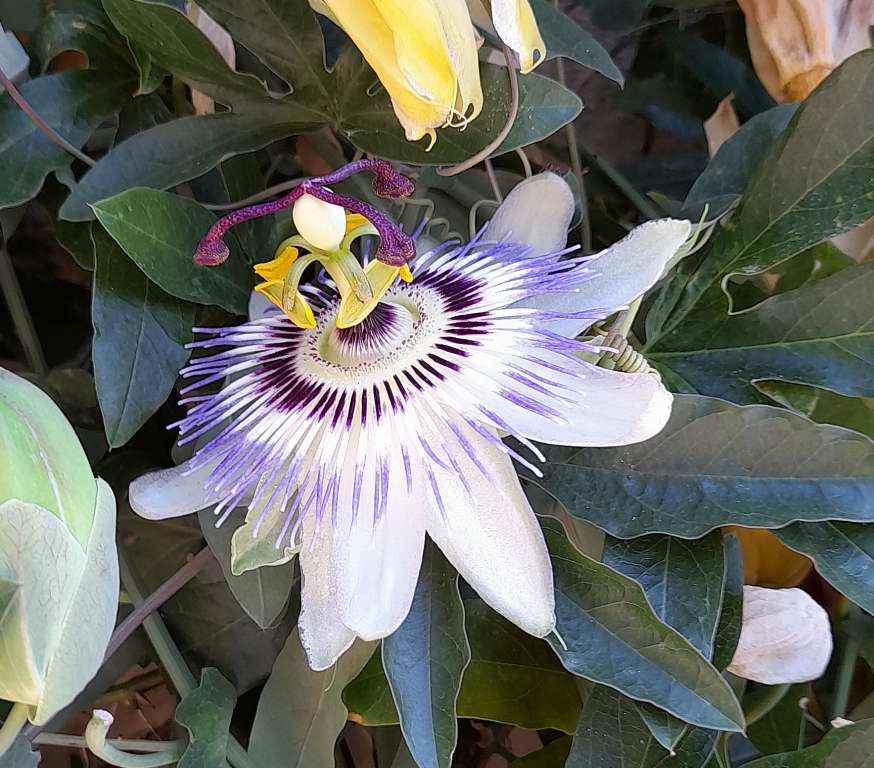
Maracuja
Rating : 7
| Evaluation | N. Experts | Evaluation | N. Experts |
|---|---|---|---|
| 1 | 6 | ||
| 2 | 7 | ||
| 3 | 8 | ||
| 4 | 9 | ||
| 5 | 10 |
Cons:
To be taken in controlled quantity (1)0 pts from Al222
| Sign up to vote this object, vote his reviews and to contribute to Tiiips.Evaluate | Where is this found? |
| "Descrizione" about Maracuja by Al222 (23254 pt) | 2025-Oct-23 19:12 |
| Read the full Tiiip | (Send your comment) |
Maracuja
Description
Passiflora incarnata (family Passifloraceae), commonly known as passion flower, is a perennial climbing vine native to the southeastern United States and now cultivated in many temperate and subtropical regions. It is admired for its spectacular, intricate, and aromatic flowers with violet filaments, and for its edible fruits. In herbal medicine, the aerial parts are used for their mild sedative, anxiolytic, and antispasmodic properties. Symbolically associated with calm and harmony, passion flower has long been valued as a natural remedy to ease insomnia and stress.
Botanical classification
Kingdom: Plantae
Clade: Angiosperms
Order: Malpighiales
Family: Passifloraceae
Genus: Passiflora
Species: P. incarnata
Plant characteristics
Habit: Perennial climbing vine with slender, flexible stems and axillary tendrils for support; can reach 6–9 m in length.
Leaves: Alternate, trilobed, finely toothed margins; glossy green above and lighter beneath; 6–12 cm long.
Flowers: June–September; large (5–9 cm in diameter), white to violet, with a distinctive corona of blue-purple filaments; highly ornamental and lightly fragrant.
Fruits: Oval yellow-orange berries (“maypops”), containing numerous seeds embedded in a gelatinous, aromatic pulp.
Roots: Woody and fibrous, deep and resilient.
Longevity: Perennial; requires support structures for proper growth.
Chemical composition (key constituents in the aerial parts)
Flavonoids: vitexin, isovitexin, orientin, apigenin, luteolin (responsible for sedative and anxiolytic effects).
Indole alkaloids: harman, harmol, harmine, harmaline (trace amounts; enhance calming effects).
Phytosterols: β-sitosterol, stigmasterol.
Glycosides and saponins: contribute to muscle-relaxant and antispasmodic actions.
Mucilages and phenolic acids: soothing and antioxidant.
Cultivation and growing conditions
Climate: Prefers warm temperate climates; hardy to about –10 °C; requires sunny exposure and protection from cold winds.
Exposure: Full sun or bright partial shade.
Soil: Fertile, loose, well-drained soil; tolerates sandy or slightly clayey substrates.
Planting: In spring; provide vertical supports such as trellises or pergolas.
Irrigation: Regular watering during establishment; moderate afterward, tolerating short droughts.
Pruning: Annual, after flowering, to encourage new productive shoots.
Pests and diseases: Susceptible to aphids, mealybugs, and spider mites; avoid waterlogging to prevent root rot.
Uses and benefits (traditional and supported by preliminary evidence)
Sedative and anxiolytic: Used to relieve nervous tension, restlessness, and mild insomnia.
Antispasmodic: Helpful for gastrointestinal spasms and muscular tension.
Mild hypnotic: Promotes sleep without causing dependence.
Antioxidant: Flavonoids help counter oxidative stress.
Mild cardiotonic: May help regulate heart rhythm during anxiety episodes.
Preliminary clinical studies support Passiflora incarnata for reducing anxiety and improving sleep quality, though its use remains complementary and not a substitute for medical treatment. Ask doctor.
Applications
Herbal medicine: Infusions, dry extracts, tinctures, and capsules.
Modern phytotherapy: Combined with Valeriana officinalis, Melissa officinalis, and Tilia spp. for mild anxiety and sleep disorders.
Cosmetics: Extracts used in soothing creams and toners for sensitive skin.
Ornamental: Popular climbing plant for gardens and balconies due to its striking flowers and pollinator attraction.
Harvesting and processing
Harvesting: Aerial parts (stems, leaves, flowers) collected at full bloom in summer.
Drying: Rapid, in shade and well-ventilated areas to preserve flavonoid content.
Storage: In airtight containers, away from light and humidity.
Extraction: Hydroalcoholic maceration or infusion for herbal preparations.
Environmental considerations
Passiflora incarnata supports biodiversity by providing nectar-rich flowers for bees and butterflies. It is a hardy, low-maintenance species suited for sustainable cultivation. Its edible fruits allow full plant utilization, minimizing waste and promoting eco-friendly practices.
Safety, contraindications, interactions
Generally regarded as safe at standard herbal doses.
Side effects: Rare; may cause mild drowsiness or dizziness in sensitive individuals.
Contraindications: Avoid combining with sedatives, anxiolytics, or hypnotics due to potential additive effects.
Pregnancy/lactation: Prolonged use not recommended without medical advice.
Allergies: Rare, related to individual sensitivity.
Common preparations (general, non-therapeutic use)
Infusion: 1.5–2 g of dried aerial parts in 200 ml hot water, 1–3 times daily, preferably in the evening.
Tincture: 30–40 drops in a little water, 2–3 times daily.
Dry extract: Standardized to flavonoids, 200–400 mg per day.
Combinations: With Valeriana and Melissa for synergistic calming effects.
References__________________________________________________________________________
Akhondzadeh S, Naghavi HR, Vazirian M, Shayeganpour A, Rashidi H, Khani M. Passionflower in the treatment of generalized anxiety: a pilot double-blind randomized controlled trial with oxazepam. J Clin Pharm Ther. 2001 Oct;26(5):363-7. doi: 10.1046/j.1365-2710.2001.00367.x.
Abstract. Objective: Passionflower (Passiflora incarnata) is a folk remedy for anxiety. A double-blind randomized trial compared the efficacy of Passiflora incarnata extract with oxazepam in the treatment of generalized anxiety disorder. Methods: The study was performed on 36 out-patients diagnosed with GAD using DSM IV criteria. Patients were allocated in a random fashion: 18 to the Passiflora extract 45 drops/day plus placebo tablet group, and 18 to oxazepam 30 mg/day plus placebo drops for a 4-week trial. Results: Passiflora extract and oxazepam were effective in the treatment of generalized anxiety disorder. No significant difference was observed between the two protocols at the end of trial. Oxazepam showed a rapid onset of action. On the other hand, significantly more problems relating to impairment of job performance were encountered with subjects on oxazepam. Conclusion: The results suggest that Passiflora extract is an effective drug for the management of generalized anxiety disorder, and the low incidence of impairment of job performance with Passiflora extract compared to oxazepam is an advantage. A large-scale trial is justified.
Janda K, Wojtkowska K, Jakubczyk K, Antoniewicz J, Skonieczna-Żydecka K. Passiflora incarnata in Neuropsychiatric Disorders-A Systematic Review. Nutrients. 2020 Dec 19;12(12):3894. doi: 10.3390/nu12123894. P
Abstract. Background: Stress is a natural response of the body, induced by factors of a physical (hunger, thirst, and infection) and/or psychological (perceived threat, anxiety, or concern) nature. Chronic, long-term stress may cause problems with sleep, concentration, and memory, as well as affective disorders. The passionflower (Passiflora incarnata) is a perennial plant with documented therapeutic properties. The literature data suggest that the passionflower itself, as well as its preparations, helps reduce stress and can therefore be helpful in the treatment of insomnia, anxiety, and depression. The objective of this systematic review was to evaluate Passiflora incarnata in terms of its neuropsychiatric effects. Methods: The scientific databases PubMed, ClinTrials.gov, and Embase were searched up to 22 October 2019. The search identified randomized clinical trials describing the effects of Passiflora incarnata in neuropsychiatric disorders. Results: The systematic review included nine clinical trials. The duration of the studies included in the analysis varied widely, from one day up to 30 days. Study participants were no less than 18 years old. In each of the papers, the effects of passionflower were measured by using a number of different tests and scales. The majority of studies reported reduced anxiety levels following the administration of Passiflora incarnata preparations, with the effect less evident in people with mild anxiety symptoms. No adverse effects, including memory loss or collapse of psychometric functions, were observed. Conclusion: Passiflora incarnata may be helpful in treating some symptoms in neuropsychiatric patients.
Lee J, Jung HY, Lee SI, Choi JH, Kim SG. Effects of Passiflora incarnata Linnaeus on polysomnographic sleep parameters in subjects with insomnia disorder: a double-blind randomized placebo-controlled study. Int Clin Psychopharmacol. 2020 Jan;35(1):29-35. doi: 10.1097/YIC.0000000000000291.
Abstract. The purpose of the present double-blind randomized placebo-controlled clinical study was to investigate the effects of Passionflower on polysomnographic sleep parameters in subjects with insomnia disorder. A total number 110 adult participants (mean age = 40.47 ± 11.68, Female = 53.6%) met the inclusion criteria of insomnia disorder according to the DSM-5 (Diagnostic and Statistical Manual of Mental Disorders). After randomization, patients received either the Passionflower extract or the placebo for 2 weeks. Patients underwent an overnight polysomnography and completed sleep diaries, Insomnia Severity Index, and Pittsburgh Sleep Quality Index. Within group comparisons were analyzed with paired t-tests or Wilcoxon's signed rank tests, and between-group comparisons were analyzed with independent t-tests or Mann-Whitney U Tests, as appropriate. Total sleep time (TST) was significantly increased in the Passionflower group compared with placebo (Passionflower vs placebo, 23.05 ± 54.26 vs -0.16 ± 53.12; P = 0.049). Sleep efficiency and wake after sleep onset (WASO) significantly improved after 2 weeks in the Passionflower group but there was no difference compared with the placebo group. The current study demonstrated the positive effects of Passionflower on objective sleep parameters including TST on polysomnography in adults with insomnia disorder. Further study is needed to investigate the clinical efficacy of Passionflower on insomnia.
Mourvaki E, Gizzi S, Rossi R, Rufini S. Passionflower fruit-a "new" source of lycopene? J Med Food. 2005 Spring;8(1):104-6. doi: 10.1089/jmf.2005.8.104.
Abstract. Many population studies have established a link between dietary intake of the carotenoid antioxidant lycopene and a reduced risk of chronic diseases. Unlike most carotenoids, lycopene occurs in a few places in the diet. Besides tomatoes and tomato products, major sources of lycopene, other lycopene-rich foods include watermelon, pink grapefruit, pink guava, and papaya. Dried apricots and pureed rosehips contain relatively large amounts, too. In our study we found that passionflower fruit (skin and pericarp) contains a great amount of lycopene, whereas the content of other carotenoids is very low, and almost inexistent. This edible fruit could be an alternative source of a potential important nutrient for those people who do not eat tomatoes and tomato products.
Wohlmuth H, Penman KG, Pearson T, Lehmann RP. Pharmacognosy and chemotypes of passionflower (Passiflora incarnata L.). Biol Pharm Bull. 2010;33(6):1015-8. doi: 10.1248/bpb.33.1015.
Abstract. Passionflower (Passiflora incarnata L.) is used in phytotherapy as a mild sedative and anxiolytic agent. In the literature it is clear this plant shows considerable qualitative and quantitative variability with respect to its content of C-glycosyl flavones, some of which are used as marker compounds for extracts. Analysis of plant material cultivated in Australia revealed two chemically distinct groups; hence an investigation was carried out to determine whether distinct intraspecific chemotypes exist in this species. Eleven P. incarnata samples were analysed by HPLC, LC-MS and two different TLC methods. The samples fell into two distinct groups with respect to their C-glycosyl flavone profile, with little within-group variation. One chemotype was dominated by isovitexin and schaftoside/isoschaftoside, as is most widely reported in the literature for this species. The other chemotype was characterized by a high level of swertisin, with low levels of schaftoside/isoschaftoside. The two chemotypes are readily identified by both HPLC and TLC. Although the compounds responsible for the therapeutic activity of P. incarnata are yet to be identified, phytomedicines should be made with the accepted isovitexin chemotype until the pharmacological implications of chemotypical differences are understood.
Dhawan K, Dhawan S, Sharma A. Passiflora: a review update. J Ethnopharmacol. 2004 Sep;94(1):1-23. doi: 10.1016/j.jep.2004.02.023.
Abstract. This review describes the morphology, microscopy, traditional and folklore uses, phyto-constituents, pharmacological reports, clinical applications and toxicological reports of the prominent species of the genus Passiflora. Flavonoids, glycosides, alkaloids, phenolic compounds and volatile constituents have been reported as the major phyto-constituents of the Passiflora species. A few species of Passiflora have been used for curing various ailments, the most important being Passiflora incarnata Linneaus which possesses significant CNS depressant properties. The studies performed by the authors with the newly isolated benzoflavone (BZF) moiety from P. incarnata have been discussed. In the concluding part, various virgin areas of research on the species of this genus have been highlighted with a view to explore, isolate and identify the medicinally important phyto-constituents which could be utilized to alleviate various diseases affecting the mankind.
Leite MMR, Bobrowski Rodrigues D, Brison R, Nepomuceno F, Bento ML, Oliveira LL. A Scoping Review on Carotenoid Profiling in Passiflora spp.: A Vast Avenue for Expanding the Knowledge on the Species. Molecules. 2024 Apr 2;29(7):1585. doi: 10.3390/molecules29071585.
Abstract. The Passiflora genus is recognised for its ethnopharmacological, sensorial, and nutritional significance. Yet, the screening of its dietary and bioactive molecules has mainly targeted hydrophilic metabolites. Following the PRISMA-P protocol, this review assessed the current knowledge on carotenoid composition and analysis within Passiflora, examining 968 records from seven databases and including 17 studies focusing on carotenoid separation and identification in plant parts. Those publications originated in America and Asia. P. edulis was the most frequently examined species of a total of ten, while pulp was the most studied plant part (16 studies). Carotenoid analysis involved primarily high-performance liquid chromatography separation on C18 columns and detection using diode array detectors (64.71%). Most studies identified the provitamin A β-carotene and xanthophylls lutein and zeaxanthin, with their geometric configuration often neglected. Only one study described carotenoid esters. Besides the methodology's insufficient description, the lack of use of more accurate techniques and practices led to a high risk of bias in the carotenoid assignment in 17.65% of the articles. This review highlights the opportunity to broaden carotenoid studies to other species and parts within the diverse Passiflora genus, especially to wild, locally available fruits, which may have a strategic role in enhancing food diversity and security amidst climatic changes. Additionally, it urges the use of more accurate and efficient analytical methods based on green chemistry to better identify Passiflora carotenoids.
| Sign up to vote this object, vote his reviews and to contribute to Tiiips.EvaluateClose | (0 comments) |
Read other Tiiips about this object in __Italiano (1)
Content:   Last update:   2025-10-23 19:00:59 | Kcal/100g:   97 Family:   Threat factors:   |

