

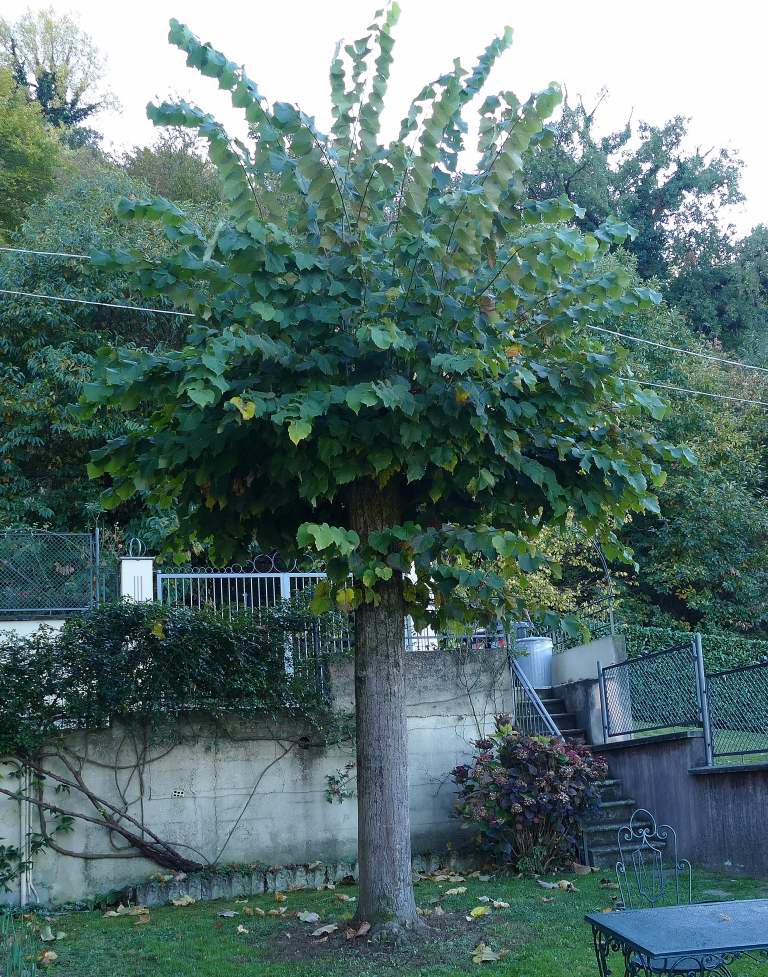
Linden flowers
Rating : 6
| Evaluation | N. Experts | Evaluation | N. Experts |
|---|---|---|---|
| 1 | 6 | ||
| 2 | 7 | ||
| 3 | 8 | ||
| 4 | 9 | ||
| 5 | 10 |
0 pts from Al222
| Sign up to vote this object, vote his reviews and to contribute to Tiiips.Evaluate | Where is this found? |
| "Descrizione" about Linden flowers by Al222 (23254 pt) | 2025-Nov-26 19:39 |
| Read the full Tiiip | (Send your comment) |
Linden flowers
“Linden” refers to several species in the genus Tilia (family Malvaceae), long-lived, nectar-rich broadleaf trees typical of European parks and avenues. In Italy and much of Europe, the most common are Tilia platyphyllos (large-leaved linden) and Tilia cordata (small-leaved linden); the hybrid Tilia × europaea is frequent. Valued for their wide shade canopies and intensely fragrant early-summer blossoms, lindens are well known in herbalism for their calming, diaphoretic flower heads (capitula).

Kingdom: Plantae
Clade: Angiosperms
Order: Malvales
Family: Malvaceae
Genus: Tilia
Key species: T. platyphyllos, T. cordata, T. × europaea
Habit: large deciduous tree (20–35 m), straight trunk; gray-brown bark smooth in youth, fissured with age; flexible branches.
Leaves: alternate, heart-shaped, serrate margin. Larger (8–15 cm) in T. platyphyllos; smaller (4–8 cm) in T. cordata, which shows rusty hair tufts in vein axils beneath.
Flowers: June–July; small, cream-yellow, very fragrant, in pendulous cymes borne on a pale, membranous, elliptical bract.
Fruits: woody nutlets with 1–3 seeds; thicker, tougher in T. platyphyllos, thinner in T. cordata.
Longevity: centuries; deep, sturdy root system, well suited to urban planting.
Melliferous: abundant nectar → distinctive linden honey with balsamic/menthol notes.
Flavonoids: tiliroside, quercetin, kaempferol (antioxidant, spasmolytic, mildly sedative).
Mucilages and polyphenols (soothing, emollient to mucosae).
Essential oil (trace amounts) giving the characteristic perfume.
Coumarins (in some taxa) and tannins (mild astringency).
Buds: complex phytochemicals used in gemmotherapy (often Tilia tomentosa).
Climate: temperate; hardy to cold winters.
Exposure: full sun to light shade.
Soil: deep, fertile, from slightly acidic to slightly alkaline; tolerates clay but dislikes prolonged waterlogging and severe early-years drought.
Planting: autumn or late winter; stake in windy sites.
Irrigation: regular during the first 2–3 years; thereafter only in prolonged droughts.
Pruning: light formative pruning; avoid large cuts (decay risk).
Pests/diseases: aphids (honeydew → sooty mold), some defoliating lepidopterans; generally tolerant of urban pollution.
Mild sedative/anxiolytic & sleep aid: evening teas from flowers/bracts.
Spasmolytic & diaphoretic: supportive in colds with low-grade fever, dry/irritative cough.
Soothing to GI/oropharyngeal mucosae: mucilages calm irritation.
Light vasoprotective/antioxidant effects via flavonoids.
Buds (Tilia tomentosa): used in gemmotherapy for nervous tension (herbal practice).
Herbalism: infusion/decoction of inflorescences; fluid/solid extracts; balsamic syrups.
Apiculture: monofloral linden honey.
Ornamental/urban forestry: broad shade tree for streets and parks; copes with light pruning and pollutants.
Wood: soft, even-grained basswood/limewood prized for carving, sculpture, instrument making, modeling.
Harvest: flower heads at early to full bloom (dry weather), with bract attached.
Drying: quickly, in shade, in thin layers; store away from light/moisture (around 1 year shelf life).
Urban biodiversity: excellent for pollinators; aphid honeydew may soil pavements/vehicles under canopy.
Roots & infrastructure: vigorous system—allow clearance from paving and utilities.
General safety: good at customary tea/extract doses.
Precautions: with prolonged high intake, those with cardiac/renal insufficiency or on diuretics should consult a clinician (mild diaphoretic/diuretic effects).
Pregnancy/lactation & young children: occasional light teas generally considered safe, but seek medical advice.
Allergies: rare reactions in people sensitive to pollen/Malvaceae.
References__________________________________________________________________________
De Simone M, De Feo R, Choucha A, Ciaglia E, Fezeu F. Enhancing Sleep Quality: Assessing the Efficacy of a Fixed Combination of Linden, Hawthorn, Vitamin B1, and Melatonin. Med Sci (Basel). 2023 Dec 28;12(1):2. doi: 10.3390/medsci12010002.
Abstract. Sleep is essential for overall health, yet various sleep disorders disrupt normal sleep patterns, affecting duration, quality, and timing. This pilot study investigate the impact of a food supplement (SPINOFF®) on both sleep quality and mental well-being in 41 participants (mean age: 45.3 years). Initial assessments revealed sleep disturbances (Pittsburgh Sleep Quality Index-PSQ-mean score: 8.2) and insomnia symptoms (Insomnia Severity Index-ISI- mean score: 12.7). Mental health assessments showed psychological distress (Dass-21 Depression mean score: 4.2, Anxiety mean score: 6.9, Stress mean score: 11.6, Total mean score: 22.7). This study assessed sleep continuity using Awakenings per Night (ApN) via a smartwatch (HELO HEALTH®) and conducted the study in two phases: baseline (T0) and after 30 days of treatment (T1) (Phase A). No placebo-control was used in this study. After 30 days (Phase B), 21 patients were selected for reassessment. Eleven continued treatment for another 30 days (T2), while ten discontinued. Following the intervention, we observed remarkable improvements in sleep quality and mental distress. The SPINOFF® supplement significantly reduced the PSQI scores (22.4%), indicating enhanced sleep quality. Additionally, there was a 19.6% decrease in ISI scores, demonstrating a reduction in insomnia symptoms. Moreover, overall psychological distress decreased by 19.5% signifying improved psychological well-being. In the second phase, participants who continued treatment experienced more substantial improvements, with a mean decrease of 0.8 points in PSQI scores (±0.9) and a mean decrease of 0.9 points in ISI scores. Our findings suggest that the SPINOFF® supplement has the potential to effectively address both sleep disturbances and psychological distress in our study population.
Lande C, Rao S, Morré JT, Galindo G, Kirby J, Reardon PN, Bobe G, Stevens JF. Linden (Tilia cordata) associated bumble bee mortality: Metabolomic analysis of nectar and bee muscle. PLoS One. 2019 Jul 10;14(7):e0218406. doi: 10.1371/journal.pone.0218406.
Abstract. Linden (Tilia spp.), a profusely flowering temperate tree that provides bees with vital pollen and nectar, has been associated with bumble bee (Bombus spp.) mortality in Europe and North America. Bee deaths have been attributed, with inadequate evidence, to toxicity from mannose in nectar or starvation due to low nectar in late blooming linden. Here, we investigated both factors via untargeted metabolomic analyses of nectar from five T. cordata trees beneath which crawling/dead bumble bees (B. vosnesenskii) were observed, and of thoracic muscle of 28 healthy foraging and 29 crawling bees collected from linden trees on cool mornings (< 30°C). Nectar contained the pyridine alkaloid trigonelline, a weak acetylcholinesterase inhibitor, but no mannose. Principal component analysis of muscle metabolites produced distinct clustering of healthy and crawling bees, with significant differences (P<0.05) in 34 of 123 identified metabolites. Of these, TCA (Krebs) cycle intermediates were strongly represented (pathway analysis; P<0.01), suggesting that the central metabolism is affected in crawling bees. Hence, we propose the following explanation: when ambient temperature is low, bees with energy deficit are unable to maintain the thoracic temperature required for flight, and consequently fall, crawl, and ultimately, die. Energy deficit could occur when bees continue to forage on linden despite limited nectar availability either due to loyalty to a previously energy-rich source or trigonelline-triggered memory/learning impairment, documented earlier with other alkaloids. Thus, the combination of low temperature and nectar volume, resource fidelity, and alkaloids in nectar could explain the unique phenomenon of bumble bee mortality associated with linden.
Ferreira T, Nascimento-Gonçalves E, Macedo S, Borges I, Gama A, M Gil da Costa R, Neuparth MJ, Lanzarin G, Venâncio C, Félix L, Gaivão I, Alvarado A, Pires MJ, Bastos MMSM, Medeiros R, Nogueira A, Barros L, Ferreira ICFR, Rosa E, Oliveira PA. Toxicological and anti-tumor effects of a linden extract (Tilia platyphyllos Scop.) in a HPV16-transgenic mouse model. Food Funct. 2021 May 11;12(9):4005-4014. doi: 10.1039/d1fo00225b.
Abstract. Tilia platyphyllos Scop. is a popular broad-leaved tree, native to Central and Southern Europe. Hydroethanolic extracts rich in phenolic compounds obtained from T. platyphyllos Scop. have shown in vitro antioxidant, anti-inflammatory and antitumor properties. The aim of this work was to evaluate the therapeutic properties of a hydroethanolic extract obtained from T. platyphyllos in HPV16-transgenic mice. The animals were divided into eight groups according to their sex and phenotype. Four groups of female: HPV+ exposed to linden (HPV linden; n = 6), HPV+ (HPV water; n = 4), HPV- exposed to linden (WT linden; n = 5) and HPV- (WT water; n = 4) and four groups of male: HPV+ exposed to linden (HPV linden; n = 5), HPV+ (HPV water; n = 5), HPV- exposed to linden (WT linden; n = 5) and HPV- (WT water; n = 7). The linden (Tilia platyphyllos Scop.) extract was orally administered at a dose of 4.5 mg/10 mL per animal (dissolved in water) and changed daily for 33 days. The hydroethanolic extract of T. platyphyllos consisted of protocatechuic acid and (-)-epicatechin as the most abundant phenolic acid and flavonoid, respectively, and was found to be stable during the studied period. In two male groups a significant positive weight gain was observed but without association with the linden extract. Histological, biochemical, and oxidative stress analyses for the evaluation of kidney and liver damage support the hypothesis that the linden extract is safe and well-tolerated under the present experimental conditions. Skin histopathology does not demonstrate the chemopreventive effect of the linden extract against HPV16-induced lesions. The linden extract has revealed a favourable toxicological profile; however, additional studies are required to determine the chemopreventive potential of the linden extract.
Yankova-Nikolova A, Vlahova-Vangelova D, Balev D, Kolev N, Dragoev S, Lowndes-Nikolova B. Comparative Study of Bulgarian Linden Honey (Tilia sp.). Foods. 2025 Jan 8;14(2):175. doi: 10.3390/foods14020175.
Abstract. The present study aims to evaluate and compare some of the main indicators characterizing Bulgarian linden honey depending on the geographical origin. A total of 18 samples were collected from the six regions of Bulgaria, with 3 samples from each region taken from different producers during the 2023 harvest. The physicochemical indicators: hydroxymethylfurfural content, diastase activity, pH, color, water content and electrical conductivity, as well as organoleptic and pollen characteristics, were analyzed. Antioxidant activity was also investigated by several methods: total phenolic content (TPC), phenolic compounds by the Glories method, 2,2-diphenyl-1-picrylhydrazyl (DPPH) radical activity, CUPRAC (Cupric Reducing Antioxidant Capacity), iron-reducing antioxidant capacity (FRAP) assay, and radical scavenging capacity in terms of ABTS•+, ORAC (oxygen radical antioxidant capacity). Differences were found depending on the region. All the studied honeys from the Northern Central Region contained higher Tilia sp. pollen. In the Southwestern Region, Tilia sp. pollen was not detected in any of the honey samples. The highest sensory score was awarded to linden honey from the Northern Central Region. An overall assessment ranks linden honey from the Northern Central region, the richest in linden forests, as the highest quality among the six studied regions. Another key finding was that 39% of linden honey labeled or declared as monofloral linden honey on the Bulgarian market does not meet the established criteria for monofloral honey.
Qiao J, Chen L, Kong L, Dong J, Zhou Z, Zhang H. Characteristic Components and Authenticity Evaluation of Rape, Acacia, and Linden Honey. J Agric Food Chem. 2020 Sep 9;68(36):9776-9788. doi: 10.1021/acs.jafc.0c05070.
Abstract. Honey fraud has an extensive global magnitude and impacts both honey price and beekeeper viability. This study aimed at investigating the characteristic phytochemicals of rape, acacia, and linden honey to verify honey authenticity. We discovered methyl syringate, phaseic acid, and lindenin (4-(2-hydroxypropan-2-yl) cyclohexa-1,3-diene-1-carboxylic acid) as particular or unique phytochemicals of rape, acacia, and linden honey. Methyl syringate and lindenin were the most abundant components in rape and linden honey; moreover, their average contents reached up to 10.44 and 21.25 mg/kg, respectively. The average content of phaseic acid was 0.63 mg/kg in acacia honey. To our knowledge, the presence of phaseic acid in honey is a novel finding. Furthermore, we established the HPLC fingerprints of three monofloral honeys. We offered assessment criteria and combined characteristic components with standard fingerprints to evaluate the authenticity of commercial rape, acacia, and linden honeys. For uncertain commercial honey samples, genuine pure honeys constituted nearly 70%. We differentiate the adulteration of acacia and linden honeys with low-price rape honey. Our results reveal that 10% of commercial honeys were pure syrups. Overall, we seem to propose a novel and reliable solution to assess the authenticity of monofloral honey.
Bianco MI, Lúquez C, De Jong LI, Fernández RA. Linden flower (Tilia spp.) as potential vehicle of Clostridium botulinum spores in the transmission of infant botulism. Rev Argent Microbiol. 2009 Oct-Dec;41(4):232-6.
Abstract. Infant botulism is an intestinal toxemia caused principally by Clostridium botulinum. Since the infection occurs in the intestinal tract, numerous food products have been investigated for the presence of C. botulinum and its neurotoxins. In many countries, people use linden flower (Tilia spp) tea as a household remedy and give it to infants as a sedative. Therefore, to help provide a clear picture of this disease transmission, we investigated the presence of botulinum spores in linden flowers. In this study, we analyzed 100 samples of unwrapped linden flowers and 100 samples of linden flowers in tea bags to determine the prevalence and spore-load of C. botulinum. Results were analyzed by the Fisher test. We detected a prevalence of 3% of botulinum spores in the unwrapped linden flowers analyzed and a spore load of 30 spores per 100 grams. None of the industrialized linden flowers analyzed were contaminated with botulinum spores. C. botulinum type A was identified in two samples and type B in one sample. Linden flowers must be considered a potential vehicle of C. botulinum, and the ingestion of linden flower tea can represent a risk factor for infant botulism.
| Sign up to vote this object, vote his reviews and to contribute to Tiiips.EvaluateClose | (0 comments) |
Read other Tiiips about this object in __Italiano (1)
Content:   Last update:   2025-10-23 16:32:37 | Kcal/100g:   Family:   Threat factors:   |

