

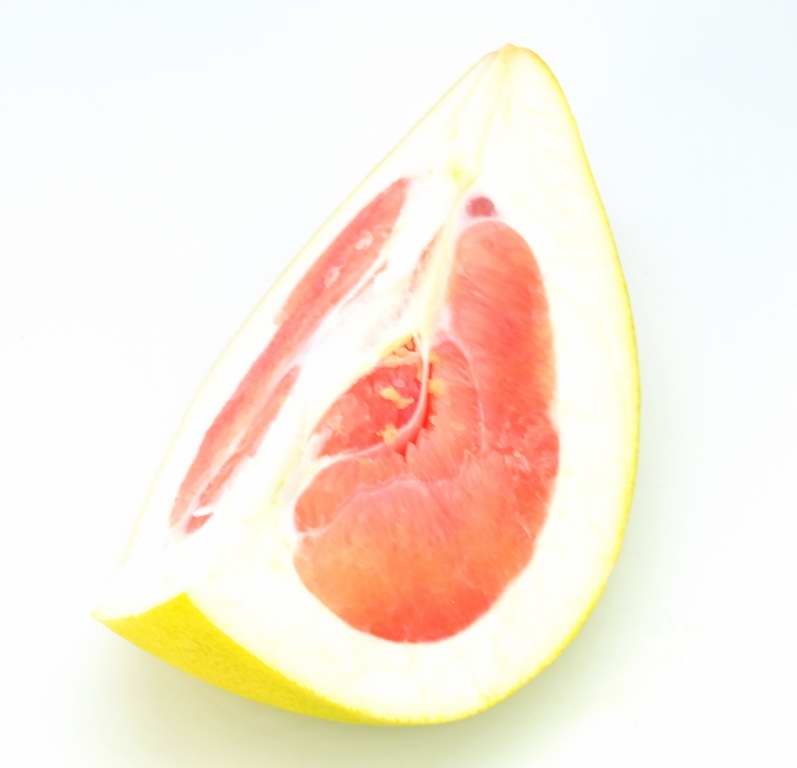
Pomelo
Rating : 6
| Evaluation | N. Experts | Evaluation | N. Experts |
|---|---|---|---|
| 1 | 6 | ||
| 2 | 7 | ||
| 3 | 8 | ||
| 4 | 9 | ||
| 5 | 10 |
0 pts from Al222
| Sign up to vote this object, vote his reviews and to contribute to Tiiips.Evaluate | Where is this found? |
| "Descrizione" about Pomelo by Al222 (24812 pt) | 2025-Nov-27 11:03 |
| Read the full Tiiip | (Send your comment) |
Pomelo (Citrus maxima / Citrus grandis)
Pomelo is a Southeast Asian citrus, the ancestral parent of grapefruit (a hybrid of C. maxima and sweet orange). Fruits are very large with thick peel and a voluminous albedo; the pulp ranges from pale yellow to pink depending on cultivar.

Common name: Pomelo (or pummelo)
Parent plant: Citrus maxima (Burm.) Merr. / Citrus grandis (L.) Osbeck
(the two names are considered botanical synonyms)
Kingdom: Plantae
Clade: Angiosperms
Clade: Eudicots
Order: Sapindales
Family: Rutaceae
Genus: Citrus
Species: Citrus maxima / Citrus grandis
Climate:
Pomelo is typical of tropical and subtropical climates.
It prefers warm temperatures throughout the year.
It does not tolerate frost and can be damaged already around 0 °C.
In warm–temperate climates it can be grown in sheltered sites protected from cold winds.
It needs hot, humid summers and very mild winters.
Sun exposure:
Pomelo requires full sun to ensure:
vigorous vegetative growth,
regular flowering,
development of large, juicy fruits.
In very arid environments, light summer shading can help reduce heat stress.
Soil:
Pomelo grows best in soils that are:
well drained,
medium-textured or sandy–loam,
rich in organic matter,
slightly acidic to neutral (pH 6.0–7.0).
Heavy, waterlogged soils favor root rot and fungal diseases and should be avoided.
Irrigation:
It has a medium-to-high water requirement, especially during:
flowering,
fruit set,
fruit enlargement.
Soil moisture should be kept fairly constant without excess. Irregular watering may lead to flower drop, rind splitting, and uneven fruit development.
Temperature:
Ideal growth: 22–30 °C
Sensitive below 5–7 °C
Vulnerable to prolonged heat waves above 38–40 °C
Relatively high air humidity supports good fruit growth
Fertilization:
Pomelo responds well to balanced fertilization:
Nitrogen for vegetative growth (without overdoing it).
Phosphorus to support flowering and root health.
Potassium to improve fruit quality, sugar content, and stress resistance.
Organic amendments (compost, well-rotted manure) improve soil structure and long-term fertility.
Crop care:
Light pruning to open the canopy, improve air circulation, and maintain a balanced shape.
Removal of basal suckers and overly vigorous water sprouts.
Control of typical citrus pests such as:
scale insects,
aphids,
leaf miner,
whiteflies.
Monitoring for diseases such as gummosis, dry root, and leaf or fruit fungal spots.
Mulching around the trunk helps conserve soil moisture in dry areas.
Harvest:
Harvest usually takes place from late autumn to winter, depending on cultivar and climate.
Ripe fruits:
reach large size,
have a thick, slightly spongy rind,
show yellow, pale, pink, or red pulp depending on variety.
Pomelo does not ripen further after harvest, so fruits must be picked only when fully mature on the tree.
Propagation:
Pomelo is propagated mainly by grafting onto citrus rootstocks (bitter orange, Citrus macrophylla, Poncirus trifoliata and hybrids) to improve vigor, adaptation to soil conditions, and disease resistance.
Seed propagation is possible but:
is slow,
does not preserve varietal traits,
and requires several years before fruiting.
Commercial forms
Whole fresh fruit; peeled “ready-to-eat” segments; juices and nectars; candied peel and marmalades; dried zest; expressed peel essential oil for flavoring.
Caloric value (edible pulp, 100 g)
About 35–45 kcal per 100 g (typical ≈ 38–40 kcal/100 g; varies by cultivar and maturity).
Average composition (pulp, 100 g)
Water ~88–91 g.
Total carbohydrates ~8–10 g (predominantly simple sugars).
Dietary fiber ~1–2 g.
Protein ~0.6–0.9 g.
Fat ~0.1 g (negligible).
Minerals and vitamins: potassium ~200–220 mg; small amounts of magnesium and calcium; vitamin C ~45–60 mg; folates in minor amounts.
Phytochemicals: flavanones (naringin, neohesperidin), limonoids (limonin), variable furanocoumarins (e.g., bergamottin), and minor polyphenols; pink types show more carotenoids.
Sensory and technological properties
Clean citrus aroma with floral notes; flavor spans sweet-tart to lightly bitter (naringin in segment membranes). The thick rind aids transport and storage. “Supreme” peeled segments reduce bitterness for ready-to-eat products. Zest and essential oil deliver limonene-rich notes valuable for bakery and beverages.
Food applications
Fresh consumption (segments, salads, poke, seafood carpaccio); juices and blends; jams/marmalades and candied peel; dessert and yogurt toppings; zest for first courses, light marinades, and zero-alcohol cocktails.
Nutrition and health
Pomelo provides hydration, vitamin C, and potassium with modest energy. Fiber contributes to satiety. Lipid content is negligible; in this context MUFA, PUFA, and SFA are quantitatively irrelevant but are included in the mini-glossary for editorial consistency.
Interactions, allergens, and safety
Possible drug interactions: some cultivars contain furanocoumarins (akin to grapefruit) that may affect metabolism of sensitive drugs (notably CYP3A4 substrates and certain transporters); magnitude varies by cultivar and processing. Patients on critical therapies should seek professional advice. Citrus allergy is uncommon but documented; consider cross-reactivity in sensitive individuals. Always check fruit integrity (no mold, deep bruising).
Quality and specification themes
Heavy fruit for size, firm and fragrant peel, free of soft spots. °Brix and titratable acidity define the sweet-tart balance. For processed products: pH, turbidity, color, aroma profile, and microbiology should meet category expectations.
Storage and shelf life
Whole fruit: 10–15 °C in a dry, ventilated environment; avoid warm storage that accelerates desiccation and aroma loss. Once peeled, keep segments refrigerated in airtight containers and consume within 2–3 days. Protect juices from light and oxygen to limit browning and vitamin C loss.
Troubleshooting
Excess bitterness: remove membranes thoroughly; choose sweeter cultivars or fully mature fruit.
Dry or fibrous pulp: often indicates aged fruit or storage at excessive temperature.
“Cooked” notes in juice: likely over-processing; optimize thermal profile or consider HPP where applicable.
Hard candied peels: overly rapid concentration; use gradual osmotic steps.
Sustainability and supply chain
Major sources include China, Thailand, Vietnam, Malaysia, Israel, and suitable Mediterranean sites. The robust rind reduces mechanical damage and waste during logistics. Valorizing by-products (peel for candy/oil, pulp residues for feed) improves overall efficiency.
Conclusion
Pomelo combines impressive size, good keeping quality, and a distinctive sensory profile adaptable from fresh use to processing. Proper control of maturity, peeling, and storage maximizes quality, safety, and culinary yield.
Mini-glossary of lipid acronyms (English)
MUFA — MonoUnsaturated Fatty Acids: Generally favorable for heart and lipid profile (e.g., oleic acid).
PUFA — PolyUnsaturated Fatty Acids: Include omega-3 and omega-6; beneficial, but keep a balanced omega-6:omega-3 ratio.
SFA — Saturated Fatty Acids: To moderate; impact depends on overall diet and the replacement nutrient.
ALA/EPA/DHA (omega-3) — Alpha-linolenic acid / Eicosapentaenoic acid / Docosahexaenoic acid: Support heart and brain health, with stronger evidence for EPA/DHA.
TFA — Trans Fatty Acids: To avoid; associated with increased cardiovascular risk.
MCT — Medium-Chain Triglycerides: Rapidly absorbed; useful in specific contexts, but still count toward total calories.
References__________________________________________________________________________
Yu X, Meng X, Yan Y, Wang H, Zhang L. Extraction of Naringin from Pomelo and Its Therapeutic Potentials against Hyperlipidemia. Molecules. 2022 Dec 18;27(24):9033. doi: 10.3390/molecules27249033.
Abstract. Pomelo peel is a natural plant product with numerous pharmacological effects and is used in traditional Chinese medicine. In the present study, we extracted naringin from pomelo peel and aimed to decipher its therapeutic potential against hyperlipidemia. We used ultrasonic-assisted extraction to obtain naringin prior to identifying its structure, to evaluate its ability in binding sodium glycine cholate and sodium bovine cholate in vitro by simulating the gastrointestinal environment, so as to evaluate its blood lipid-lowering activity. The hyperlipidemia mouse model was established. Following the intragastric administration of naringin for 5 weeks, we measured the weight change, organ index, high-density lipoprotein cholesterol (HDL-C), serum total cholesterol (TC), serum triglycerides (TG), liver superoxide dismutase (SOD), glutathione peroxidase (GSH-Px), low-density lipoprotein cholesterol (LDL-C) level, malondialdehyde (MDA), alanine aminotransferase (ALT), and aspartate aminotransferase (AST) level of mice in the normal control and high-fat diet groups in addition to the high-, medium-, and low-dose naringin groups. The pathological changes in the liver were observed under a light microscope. The total RNA of the liver was extracted, and the mRNA expression level of lipid metabolism-related factors in mouse liver was detected via a fluorescence quantitative polymerase chain reaction (PCR). Naringin significantly (p < 0.01) reduced the body weight, organ index, serum TG, LDL-C, and TC levels of hyperlipidemic mice, but increased the serum HDL-C levels (p < 0.01). Furthermore, naringin increased GSH Px and SOD activity (p < 0.01), while decreasing MDA, ALT, and AST levels, as well as the liver index (p < 0.01). There was no statistically significant difference in the brain, heart, spleen, kidney, and other indicators (p > 0.05). A histopathological analysis of mouse liver showed that naringin could alleviate the degenerative damage of fatty liver cells in hyperlipidemic mice. Naringin could significantly (p < 0.01) reduce the expression of FAS and SREBP-1c mRNA, and simultaneously increase PPARα mRNA expression. This study shows that naringin has the strong effect of lowering lipids and protecting the liver in hyperlipidemic mice. Our findings underscore the anti-hyperlipidemia potential of naringin and increase the scientific understanding of its anti-hyperlipidemia effects, that may lead to its potential application as a dietary strategy for hyperlipidemia management in the future.
Chen X, Chen J, Peng J, Yu Y, Wu J, Wen J, Kang Z, Wang Y, Xu Y, Li L. Pomelo (Citrus grandis (L.) Osbeck) sponge layers as a potential source of soluble dietary fiber: Evaluation of its physicochemical, structural and functional properties. J Food Drug Anal. 2024 Mar 15;32(1):39-53. doi: 10.38212/2224-6614.3489.
Abstract. Pomelo sponge layer (PSL) had been considered as a potential source of soluble dietary fiber (SDF), while they were mostly disposed of as waste. To promote high-value utilization of pomelo wastes, this study extracted SDF from PSL of six varieties of pomelo, and their physicochemical, structural and functional properties were investigated. Results indicated that all PSL-SDFs showed good physicochemical and functional properties. Among them, PSL-SDF from grapefruit (GRSDF) showed better water holding capacity and swelling capacity, whereas Shatian pomelo PSL-SDF and Guanxi pomelo PSL-SDF had the highest thermal stability and oil holding capacity, respectively. Furthermore, compared with other PSL-SDFs, GRSDF displayed the lowest hydrolysis degree coupled with the best antioxidant and probiotic growth-promoting abilities. Finally, the correlation analysis showed that multiple beneficial effects of PSL-SDFs were markedly associated with their molecular weight and the concentrations of total phenolic, total flavonoids, rhamnose, galacturonic acid, glucose and arabinose. Collectively, these findings contributed to a better understanding of the physicochemical and functional properties of SDFs extracted from different PSLs, which provided a scientific basis for the development of PSL-SDFs into functional foods.
Dahan A, Altman H. Food-drug interaction: grapefruit juice augments drug bioavailability--mechanism, extent and relevance. Eur J Clin Nutr. 2004 Jan;58(1):1-9. doi: 10.1038/sj.ejcn.1601736.
Abstract. More than a decade has passed since it was unintentionally discovered that grapefruit juice interacts with certain drugs. The coadministration of these drugs with grapefruit juice can markedly elevate drug bioavailability, and can alter pharmacokinetic and pharmacodynamic parameters of the drug. The predominant mechanism for this interaction is the inhibition of cytochrome P-450 3A4 in the small intestine, resulting in a significant reduction of drug presystemic metabolism. An additional mechanism is, presumably, the inhibition of P-glycoprotein, a transporter that carries drug from the enterocyte back to the gut lumen, resulting in a further increase in the fraction of drug absorbed. Some calcium channel antagonists, benzodiazepines, HMG-CoA reductase inhibitors and cyclosporine are the most affected drugs. A single exposure to one glass of the juice can usually produce the maximal magnitude of the interaction. The data available so far, concerning this interaction and its clinical implications, are reviewed in this article. It is likely that more information regarding this interaction will accumulate in the future, and awareness of such is necessary for achieving optimal drug therapy.
Lama T A. Grapefruit juice interaction with drugs. Rev Med Chil. 2006 May;134(5):665-6. Spanish. doi: 10.4067/s0034-98872006000500017. Epub 2006 Jun 19. PMID: 16802061.
Palumbo G, Bacchi S, Palumbo P, Primavera LG, Sponta AM. II succo di pompelmo: una potenziale interazione con i farmaci [Grapefruit juice: potential drug interaction]. Clin Ter. 2005 May-Jun;156(3):97-103.
Abstract. More than a decade has passed since it was unintentionally discovered that grapefruit juice interacts with certain drugs. The coadministration of these drugs with grapefruit juice can markedly elevate drug bioavailability, and can alter pharmacokinetic and pharmacodynamic parameters of the drug. The predominant mechanism for this interaction is the inhibition of cytochrome P-450 3A4 in the small intestine, resulting in a significant reduction of drug presystemic metabolism. An additional mechanism is the inhibition of P-glycoprotein, a transporter that carries drug from the enterocyte back to the gut lumen, resulting in a further increase in the fraction of drug absorbed. Some calcium channel antagonists, benzodiazepines, HMG-CoA reductase inhibitors and cyclosporine are the most affected drugs. A single exposure to one glass of the grapefruit juice can usually produce the maximal magnitude of the interaction. The data available so far, concerning this interaction and its clinical implications, are reviewed in this article. It is likely that more information regarding this interaction will accumulate in the future, and awareness of such is necessary for achieving optimal drug therapy.
Tocmo R, Pena-Fronteras J, Calumba KF, Mendoza M, Johnson JJ. Valorization of pomelo (Citrus grandis Osbeck) peel: A review of current utilization, phytochemistry, bioactivities, and mechanisms of action. Compr Rev Food Sci Food Saf. 2020 Jul;19(4):1969-2012. doi: 10.1111/1541-4337.12561. Epub 2020 May 31. PMID: 33337092.
Ni J, Shangguan Y, Jiang L, He C, Ma Y, Xiong H. Pomelo peel dietary fiber ameliorates alterations in obesity-related features and gut microbiota dysbiosis in mice fed on a high-fat diet. Food Chem X. 2023 Nov 14;20:100993. doi: 10.1016/j.fochx.2023.100993. PMID: 38144811; PMCID: PMC10740135.
Godziuk K, Forhan M, Vieira FT, Mota JF, Werle J, Batsis JA, Donini LM, Siervo M, Prado CM. Improving Muscle Function Through a Multimodal Behavioural Intervention for Knee Osteoarthritis and Obesity: The POMELO Trial. J Cachexia Sarcopenia Muscle. 2025 Aug;16(4):e70025. doi: 10.1002/jcsm.70025. PMID: 40746030; PMCID: PMC12314308.
Deng M, Dong L, Jia X, Huang F, Chi J, Muhammad Z, Ma Q, Zhao D, Zhang M, Zhang R. The flavonoid profiles in the pulp of different pomelo (Citrus grandis L. Osbeck) and grapefruit (Citrus paradisi Mcfad) cultivars and their in vitro bioactivity. Food Chem X. 2022 Jun 16;15:100368. doi: 10.1016/j.fochx.2022.100368.
| Sign up to vote this object, vote his reviews and to contribute to Tiiips.EvaluateClose | (0 comments) |
Read other Tiiips about this object in __Italiano (1)
Content:   Family:   Last update:   2025-10-20 09:06:13 | Kcal/100g:   45 Threat factors:   |

