

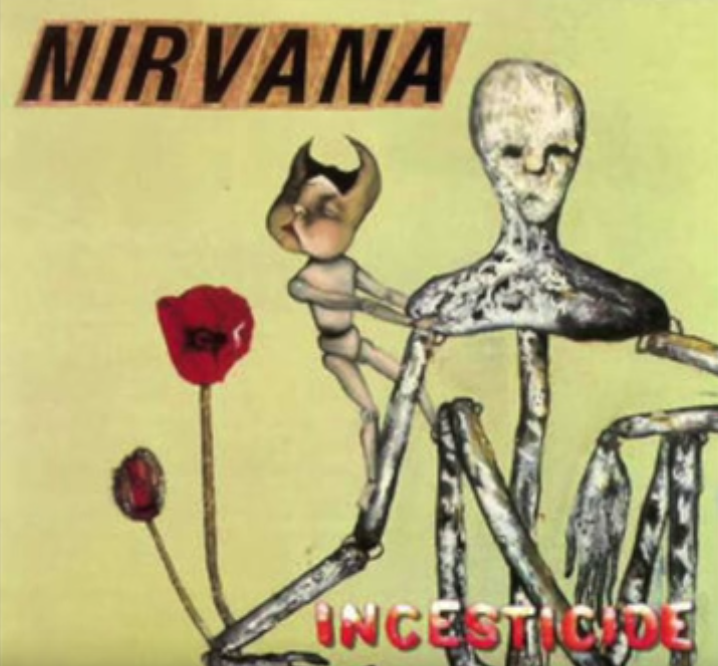
Nirvana, complete biography, grunge, alternative revolution, concerts, and discography
Profile
Nirvana was an American rock band formed in Aberdeen, Washington, in the late 1980s. The best-known and historically defining lineup consisted of Kurt Cobain (vocals, guitar), Krist Novoselic (bass), and Dave Grohl (drums).
Nirvana is widely recognized as the band that brought grunge and alternative rock into the center of global musical culture, triggering a structural shift in the record industry and in the aesthetics of early-1990s rock.

Cultural and geographic context
Nirvana emerged in the Pacific Northwest, an area peripheral to the main hubs of the music industry. The Seattle-area scene was shaped by:
geographic isolation,
rejection of the polished 1980s hard-rock aesthetic,
strong ties to punk, hardcore, and independent rock.
This context favored music that was rawer, more introspective, and anti-spectacle, in clear opposition to the era’s mainstream.
Origins and formation of the band (1986–1988)
Kurt Cobain and Krist Novoselic met in the Aberdeen area. Both shared:
an interest in punk rock,
frustration with the local social environment,
attraction to noisy yet emotionally direct sounds.
After several drummer changes, the project took shape under the name Nirvana, a deliberately ambiguous and ironic choice relative to the music they were making.
Early years and the underground scene (1989–1990)
Their recording debut came with Bleach (1989), released by an independent label.
The album shows:
punk and sludge influences,
simple, aggressive structures,
dark, often cryptic lyrics.
At this stage Nirvana was an underground cult band, with a small but intensely loyal audience. The shows were intense, physical, and often chaotic.
Dave Grohl’s arrival and the sonic turning point (1990)
Dave Grohl’s arrival on drums marked a decisive turning point. The new rhythm section brought:
greater dynamic power,
structural precision,
a broader sonic impact.
This lineup enabled the band to develop a more accessible language without losing its expressive urgency.
Nevermind and the global breakthrough (1991)
With Nevermind (1991), Nirvana achieved unexpected and overwhelming success. The album quickly became a global phenomenon.
Key elements behind its impact:
balance between melody and noise,
cleaner production without becoming sanitized,
lyrics expressing alienation, discomfort, and generational sarcasm.
Songs like Smells Like Teen Spirit became symbols of a generation, even as Cobain himself related to that role with ambivalence.
Cultural impact and rejection of a media role
The success of Nevermind extended beyond music into broader popular culture. Nirvana was perceived as:
involuntary spokespeople for a generation,
a credible alternative to commercial rock,
a symbol of authenticity.
Cobain, in particular, increasingly struggled with this exposure, rejecting the idea of cultural leadership and resisting any form of spectacle or commodification.
In Utero and the artistic counter-move (1993)
With In Utero (1993), the band responded consciously to its earlier breakthrough.
The album features:
This direction functioned as a form of artistic self-defense, intended to restore distance from the mainstream market.
Live activity and Unplugged
At the same time, Nirvana proved to be a compelling live act. The acoustic performance MTV Unplugged in New York (1993) revealed:
melodic sensitivity,
attention to folk and blues influences,
an ability to reframe their own repertoire with emotional clarity.
That concert helped reshape the band’s public image, highlighting fragility and expressive depth.
Personal crisis and the end of the band (1994)
In 1994 Kurt Cobain’s personal situation deteriorated, amid health issues, addiction, and psychological pressure. His death in April of that year marked the definitive end of Nirvana.
The band ended without attempts at continuation or replacement, reinforcing the perception of a project inseparable from its principal author and focal figure.
Musical style (Discursive analysis)
Nirvana’s style is built on:
alternation between quiet and explosive sound,
simple structures with high emotional charge,
lyrics that are ambiguous, ironic, and often contradictory,
rejection of virtuosity for its own sake.
Their aesthetic is deliberately imperfect, consistent with a view of rock as a direct expressive tool, not as a technical demonstration.
Studio discography
1989 – Bleach
1991 – Nevermind
1993 – In Utero
In addition, major posthumous and live releases contributed to consolidating their legacy and mythos.
Legacy and influence
Nirvana’s legacy is deep and measurable:
redefinition of alternative rock,
opening the mainstream to nonconventional sounds,
lasting influence on generations of musicians,
a changed relationship between authenticity and success.
Their impact extends beyond music into fashion, language, and cultural attitudes.
Nirvana broke up in 1974 with the death by suicide of Kurt Cobain, but still remains the site http://www.nirvana.com/
Nirvana has sold about 75 million records.
Formation and underground scene (1987–1990)
Studio albums
| Year | Album | Main tracks |
|---|
| 1989 | Bleach | Blew · About a Girl · Negative Creep |
Global breakthrough and grunge mainstream success (1991–1992)
Studio albums
| Year | Album | Main tracks |
|---|
| 1991 | Nevermind | Smells Like Teen Spirit · Come as You Are · Lithium |
Artistic maturity and experimentation (1993)
Studio albums
| Year | Album | Main tracks |
|---|
| 1993 | In Utero | Heart-Shaped Box · Rape Me · All Apologies |
Live albums and special projects (1994)
Live albums
| Year | Album | Main tracks |
|---|
| 1994 | MTV Unplugged in New York | About a Girl · The Man Who Sold the World · All Apologies |
Posthumous releases and major compilations (1996–2004)
Key albums
| Year | Album | Main content |
|---|
| 1996 | From the Muddy Banks of the Wishkah(live) | School · Drain You (live) |
| 2002 | Nirvana(best of) | You Know You’re Right · Lithium |
| 2004 | With the Lights Out(box set) | Demos · B-sides · Unreleased versions |
Career note
Nirvana were the defining band of the Seattle grunge movement, with a decisive impact on 1990s rock music. Despite a relatively short studio discography, the band left a historically significant cultural and musical legacy, influencing generations of alternative and mainstream artists.