

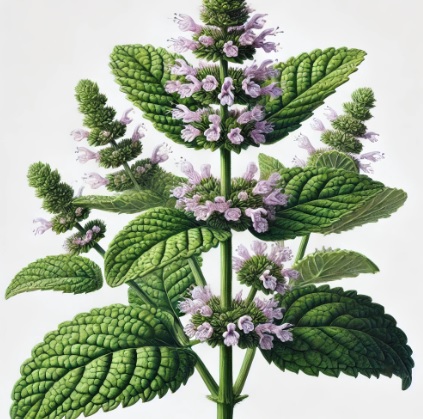
Mentha Citrata
Rating : 7
| Evaluation | N. Experts | Evaluation | N. Experts |
|---|---|---|---|
| 1 | 6 | ||
| 2 | 7 | ||
| 3 | 8 | ||
| 4 | 9 | ||
| 5 | 10 |
0 pts from admin
| Sign up to vote this object, vote his reviews and to contribute to Tiiips.Evaluate | Where is this found? |
| "Descrizione" about Mentha Citrata by admin (19545 pt) | 2025-Dec-08 12:17 |
| Read the full Tiiip | (Send your comment) |
Mentha citrata (Lamiaceae) Eau de Cologne mint
Mentha citrata, commonly known as bergamot mint or Eau de Cologne mint, is a perennial aromatic mint in the family Lamiaceae, closely related to peppermint and water mint. From a taxonomic standpoint it has been variously treated as a hybrid between Mentha aquatica and Mentha spicata, as a form of Mentha × piperita (for example Mentha × piperita f. citrata), or as a variety of Mentha aquatica itself. Regardless of the nomenclatural nuances, it is consistently recognised for its distinctive aromatic profile, which combines citrus-like and floral notes with a soft mint background, giving rise to its historical association with Eau de Cologne and its common name bergamot mint.
Morphologically, bergamot mint is a vigorous, fast-growing herb with quadrangular stems, often tinged purple, that spread by rhizomes and stolons to form dense patches. The leaves are opposite, ovate with a finely serrated margin, dark green and frequently suffused with violaceous tones along the veins and edges. They are rich in glandular trichomes that accumulate the essential oil. When crushed, the foliage releases a sweet, citrus–floral scent with lavender-like nuances, clearly different from the sharper “cold” aroma of classic peppermint. The flowers are small, lilac to pale purple, borne in dense terminal spikes in summer; they offer abundant nectar and attract bees and other pollinators.
![]() | ![]() |
Ecologically, Mentha citrata behaves like many cultivated mints. It prefers fresh to moderately moist soils, reasonably rich in organic matter, in full sun to partial shade. It tolerates temperate and some subtropical climates, as long as prolonged drought is avoided. Because of its strong vegetative spread, it is easy to grow in gardens and herb beds, but often requires containment (for example in buried containers) to prevent excessive expansion. In regions where it is cultivated on a larger scale, particularly in parts of India and China, bergamot mint is managed in repeated cutting and distillation cycles, exploiting its capacity to regrow vigorously after harvest for essential-oil production.
The most distinctive feature of Mentha citrata is its phytochemical profile, dominated by an essential oil rich in linalool and linalyl acetate. In many chemotypes, these two acyclic monoterpenes together account for roughly 70–90% of the total oil, with proportions that can approach parity between the alcohol linalool and its ester linalyl acetate. Minor components may include limonene, geranyl acetate, neranyl acetate, 1,8-cineole and traces of menthol-type constituents, but the strong prevalence of linalool–linalyl acetate gives the oil an odour reminiscent of lavender and bergamot, with a floral–citrus–mint character much sought after in perfumery and gentle aromatherapy.
In terms of traditional and modern uses, bergamot mint occupies an intermediate position between culinary mints and perfumery plants. In some local traditions, the fresh leaves are used to prepare refreshing herbal teas with a light citrus flavour, or to aromatise beverages, fruit salads, desserts and fish dishes, in a manner similar to “bergamot mint” or “lemon mint”. Nevertheless, its culinary use is more limited than that of Mentha spicata or Mentha × piperita, and the main commercial value of Mentha citrata today lies in its essential oil, employed in fragrances, colognes, soaps, bath products, hygiene items and, to a lesser extent, in massage blends and aromatic bath preparations.
From a health and aromatherapeutic perspective, bergamot mint oil is appreciated for its soft and generally non-aggressive character, often considered gentler than strongly mentholated or pulegone-rich mints. The predominance of linalool and linalyl acetate is associated, in experimental and aromatherapy literature, with mild sedative, anxiolytic and muscle-relaxant effects, broadly comparable to those described for lavender oil, as well as spasmolytic, digestive, mild antiseptic and deodorant properties. However, the clinical evidence in humans is still limited, and many conclusions are extrapolated from studies on individual components rather than on standardised Mentha citrata preparations. As with all essential oils, prudent use is required: proper dilution in carrier oils or finished products, avoidance of undiluted application on sensitive skin, and caution with oral use unless under professional supervision. Particular care is advised in pregnancy, in young children and in individuals with specific sensitivities to monoterpenes, following general essential oil safety guidelines.
From a nutritional standpoint, the contribution of Mentha citrata is modest and mainly linked to its role as a flavouring herb rather than a significant source of macro- or micronutrients, since the amounts typically consumed are small. Fresh leaves nevertheless contain fibre, small amounts of vitamin C, carotenoids and various phenolic compounds with potential antioxidant properties, in line with observations on other Mentha species.
Botanical classification (APG IV system)
| Category | Data |
|---|---|
| Common name | bergamot mint, orange mint, eau-de-Cologne mint |
| Botanical name | Mentha citrata Ehrh. (often treated as Mentha aquatica var. citrata or as a form of Mentha × piperita) |
| Kingdom | Plantae |
| Clade | Angiosperms → eudicots → asterids (lamiids) |
| Order | Lamiales |
| Family | Lamiaceae |
| Subfamily | Nepetoideae |
| Tribe | Mentheae |
| Genus | Mentha |
| Species | Mentha citrata Ehrh. (taxonomically sometimes included in Mentha aquatica) |
Indicative nutritional values per 100 g (fresh aerial parts of Mentha citrata)
Values refer to fresh herb (leaves and tender stems). Data are extrapolated from analytical tables for fresh culinary mints (Mentha spp.). In real culinary use, portions are much smaller than 100 g.
| Component | Approximate value per 100 g |
|---|---|
| Energy | ~ 45–50 kcal |
| Water | ~ 85–86 g |
| Total carbohydrates | ~ 5–9 g |
| — of which sugars | ~ 5–6 g (order of magnitude) |
| Dietary fiber | ~ 4–7 g |
| Proteins | ~ 3–4 g |
| Total lipids | ~ 0.7–1.0 g |
| — of which saturated fatty acids (SFA) | ~ 0.18–0.25 g |
| — monounsaturated fatty acids (MUFA) | ~ 0.02–0.03 g |
| — polyunsaturated fatty acids (PUFA) | ~ 0.35–0.40 g |
| Sodium | ~ 15–30 mg (low) |
| Main minerals | potassium (≈ 250–450 mg), calcium (≈ 180–210 mg), phosphorus, magnesium, iron (small–moderate amounts) |
| Relevant vitamins | vitamin C (order of 10–30 mg), provitamin A (carotenoids), small amounts of B-group vitamins |
At typical culinary serving sizes (about 2–5 g of fresh leaves in teas, syrups, desserts or savoury dishes), the caloric contribution is negligible; the practical nutritional impact (fiber, vitamin C, vitamin A, minerals) is small in quantity, even if qualitatively favourable within the overall diet.
Lipid profile note
Like other mints, Mentha citrata has a very low fat content:
Saturated fatty acids (SFA) are present only in small amounts; when SFA dominate over unsaturated fats in the overall diet, they are generally considered less favourable for cardiovascular health.
MUFA and PUFA occur in minor amounts and do not materially affect daily lipid intake at realistic use levels.
From a nutritional perspective, interest in bergamot mint is linked mainly to its essential oil profile (rich in linalool and linalyl acetate, with a citrus/bergamot-like note), aromatic contribution, and micronutrients, rather than to calories or fats.
Mentha citrata is a cultivated aromatic mint, often called bergamot mint because its scent recalls bergamot and lavender more than classic peppermint. It is grown in temperate climates on well-drained soils, in full sun or light shade. Harvesting takes place at full flowering, when leaves and flowering tops contain the highest level of essential oil.
After cutting, the aerial parts are dried in thin layers, in the shade and in well-ventilated rooms. Moderate temperatures are important to preserve the more delicate constituents, especially linalool and linalyl acetate, which dominate the essential-oil profile. The dried herb can be used directly in herbal tea blends or as raw material for distillation.
The essential oil is obtained by steam distillation of the fresh or dried herb. The distillate is separated into an aromatic water (hydrolat) and an essential-oil phase, which is then filtered and, if needed, rectified or standardized. Typical analyses show a high content of linalyl acetate and linalool, with smaller amounts of 1,8-cineole, α-terpineol, geranyl and neranyl esters, and only modest levels of menthol; this explains the softer, floral-citrus character compared with menthol-rich mints.
The main field of use of Mentha citrata is aromatherapy, perfumery and cosmetics. Its scent is often described as sweet, herbal, slightly citrusy and gently minty, somewhere between mint and lavender. The essential oil is used in:
Relaxing and “evening” products such as massage blends, bath oils, pillow sprays and room diffusers, where it supports a calming, comfortable atmosphere.
Body-care cosmetics (lotions, creams, shower products) when a fresh but non-aggressive mint note is desired, softer than the impact of peppermint or cornmint.
In gentle herbal cosmetics, hydroalcoholic extracts or hydrolats of bergamot mint can appear in toners, mild cleansers and “relax” body products. As a flavouring, where authorised, it may be used in herbal teas and confectionery, but this is a niche application compared with other mints.
From an energy perspective, the typical amounts used (few drops of oil or a small quantity of herb in infusion) provide a negligible caloric contribution; Mentha citrata is used for its aroma and sensory/functional role, not as a source of calories.
The dried plant contains a modest amount of fibre and phenolic compounds, but in real-world use the nutritional impact is minimal. Interest focuses on the volatile fraction, dominated by linalool and linalyl acetate. In aromatherapy, these molecules are associated with relaxing and mood-supportive effects when used by inhalation or in well-diluted topical blends.
In vitro studies on Mentha citrata essential oil indicate antimicrobial and antioxidant activities, and some authors discuss potential soothing or spasmolytic properties. However, these results are experimental and do not justify direct therapeutic claims in humans. Use should remain within the scope of well-being, hygiene and cosmetic care, not as a substitute for medical treatment.
Internal intake of the pure essential oil is not recommended outside regulated products and professional supervision. As with other mints, caution is advised in people with hepatic or gastric disorders, those on complex pharmacotherapy, and in pregnancy, breastfeeding and childhood.
Mentha citrata oil naturally contains linalool, linalyl acetate, limonene and other substances classified as potential fragrance allergens. In cosmetics and perfumed products, these may cause skin irritation or allergic contact dermatitis in predisposed individuals, especially at higher concentrations or in leave-on formulations.
People with fragrance allergy, atopic dermatitis or very sensitive skin may prefer fragrance-free products or formulations specifically designed for reactive skin. According to cosmetics regulations, any listed fragrance allergens derived from Mentha citrata (or the overall perfume blend) must be declared on the label when their concentration exceeds the defined limits.
Dried Mentha citrata herb should be kept in a cool, dry, dark place, in tightly closed containers. Under suitable conditions it typically maintains acceptable aroma for about 1–2 years, with gradual loss of intensity.
The essential oil is more sensitive to oxidation and volatilisation. It must be stored in dark glass bottles or suitable metal containers, tightly closed and protected from heat and light. Proper storage helps preserve the characteristic linalool/linalyl-acetate profile and limits the formation of oxidation products, which can modify both odour and irritancy. Producers generally indicate a shelf-life of around 2–3 years when stored correctly.
Compared with menthol- or pulegone-rich mints, Mentha citrata usually shows very low levels of pulegone and menthofuran, so the main safety concern in cosmetics and aromatherapy is fragrance-allergen sensitisation rather than systemic toxicity. Nevertheless, trace levels of regulated constituents should be kept as low as reasonably achievable.
In the European Union and similar jurisdictions, Mentha citrata essential oil falls under the category of perfuming cosmetic ingredients (e.g. Mentha Citrata Herb Oil) and must comply with cosmetics regulation, fragrance-safety recommendations and allergen-labelling rules. When used as a food flavouring, general flavour regulations apply, including attention to any limits for specific constituents.
Producers are expected to follow GMP, with control of botanical identity, chromatographic profile, levels of key constituents (e.g. linalool, linalyl acetate), possible contaminants (pesticides, heavy metals, residual solvents) and stability parameters.
In herbal products, the plant may appear as Menta citrata, menta bergamotto, or Mentha citrata (herb / leaves / flowering tops), depending on local conventions.
In cosmetics, typical INCI names include:
Mentha Citrata Herb Oil
Mentha Citrata Oil
On ingredient lists, the oil may be declared directly or be part of a generic “Parfum” entry. Where present above threshold, fragrance allergens such as Linalool, Limonene and others must be listed separately.
In cosmetic formulations, Mentha citrata derivatives are mainly valued for their olfactory and sensorial properties:
Fragrance / perfuming agent – provides a fresh, herbal, citrus-mint, slightly floral note, often used in relaxing or “comfort” accords.
Secondary skin-conditioning role – in some body and massage products, contributes to a subjective sensation of comfort and well-being on the skin.
Masking – helps to soften or mask unwanted base odours from other raw materials, integrating into the overall perfume structure.
Mentha citrata (bergamot mint / citrus mint) is a “soft” mint with a chemical profile dominated by linalool and linalyl acetate, and an aromatic character positioned between mint and lavender. Its natural field of application is cosmetics, aromatherapy and well-being products, where it offers a gentle freshness and relaxing olfactory profile, while its nutritional and caloric role is negligible at real use levels.
Careful management of cultivation, harvesting, drying, distillation and quality control allows the production of stable, safe and compliant oils and extracts, making full use of the aromatic qualities of Mentha citrata and keeping under control both fragrance-allergen risks and any regulated constituents.
References__________________________________________________________________________
Al-Okbi, S. Y., Fadel, H. H., & Mohamed, D. A. (2015). Phytochemical constituents, antioxidant and anticancer activity of Mentha citrata and Mentha longifolia.
Abstract. The aim of the present work was to study the anti-cancer and antioxidant activity of two nutraceuticals (mixtures of different extracts) prepared from Mentha citrata and Mentha longifolia aerial parts separately. The anti-cancer activity was evaluated in three cancer cell lines. Antioxidant Activity was carried out adopting thiocyanate and b-carotene bleaching method. Total phenolic contents were determined in the methanol extracts of both plants. Fatty acids and phytosterols were assessed in petroleum ether extracts by GC. Bioactive constituents of the essential oil were determined by GC-MS. Results showed inhibition of the three tested cancer cells (liver, cervix and colon carcinoma) by the tested nutraceuticals with variable degrees. Both nutraceuticals showed comparable antioxidant activity. Total phenolic content of the ethanol extract of Mentha longifolia was less than that of Mentha citrata. Mentha citrata petroleum ether extract contained higher percentage of unsaturated fatty acids and total phytosterol than that of Mentha longifolia. The major volatile components were Linalyl acetate and linalool in Mentha citrata and Piperitone oxide in Mentha longifolia. Both nutraceuticals of Mentha citrata and Mentha longifolia possess antioxidant and anticancer effect that could be attributed to the presence of phytosterols, phenolic compounds, unsaturated fatty acids and specific volatile constituents.
Ouakouak, H., Benchikha, N., Hassani, A., & Ashour, M. L. (2019). Chemical composition and biological activity of Mentha citrata Ehrh., essential oils growing in southern Algeria. Journal of food science and technology, 56(12), 5346-5353.
Abstract. Three techniques, hydro distillation, steam distillation and microwave-assisted distillation, was used in this work to extract volatile secondary metabolites essential oils (EOs), from the aerial part of Mentha citrata Ehrh., plant (steams, leaves and flowers). The plant material was collected from a location called El-kobna in El-Oued province, southern Algeria during June 2018. The extracted Mentha citrata EOs, were analyzed using both gas chromatography coupled with flame ionization detector and gas chromatography attached with mass spectrometry detector techniques. The antioxidant activity of these EOs were evaluated in vitro using DPPH (2,2-diphenyl-1-picrylhydrazyl) free radicals scavenging activity and cytotoxic test. The results of the EOs analysis showed large variability of the chemical compositions for all techniques. Moreover, a promising cytotoxic activity on colon cancer cells was found.
Verma, S. K., Goswami, P., Verma, R. S., Padalia, R. C., Chauhan, A., Singh, V. R., & Darokar, M. P. (2016). Chemical composition and antimicrobial activity of bergamot-mint (Mentha citrata Ehrh.) essential oils isolated from the herbage and aqueous distillate using different methods. Industrial Crops and Products, 91, 152-160.
Abstract. In this study, chemical composition and antibacterial activity of the primary essential oil (PEO) and secondary essential oil (SEO) derived from steam distillation (SD) and hydro distillation (HD) of Mentha citrata Ehrh. were investigated using gas chromatography-flame ionization detector (GC-FID), GCmass spectrometry (GCMS), disc diffusion assay and micro dilution broth assay. The oils isolated from herb and aqueous distillate using different methods showed substantial variations in their composition and antibacterial activity profile. Major constituents of the oils were linalool (33.977.1%), linalyl acetate (2.245.4%), α-terpineol (2.324.9%), β-caryophyllene (0.03.2%) and nerol (0.53.1%). The SEOs showed activity against all eight tested bacterial strains (MIC: 2501000 μg/mL), while PEOs were active against seven strains (MIC: 250 >1000 μg/mL).
Hendawy, S. F., Hussein, M. S., El-Gohary, A. E., & Ibrahim, M. E. (2015). Effect of foliar organic fertilization on the growth, yield and oil content of Mentha piperita var. citrata. Asian J. Agric. Res, 9(5), 237-248.
Abstract. This study was carried out to evaluate the response of Mintha piperita var. citrata (Eau de Cologne mint) to foliar fertilization under Egyptian conditions. This study was carried out on Mintha piperita var. citrata (Eau de Cologne mint) at Sekem Experimental field. Fresh, healthy, insect and disease free suckers were transplanted in furrow at a depth of 4-5 cm as per the treatments. Three weeks later after transplanting, the plants were sprayed with aqueous solution of the test nutrient compounds humic acid (0. 2.5 and 5 g LG1) and amino spot (0, 1 and 1.5 mL LG1). The crop was harvested in mid-May (First cutting) and mid-August (Second cutting). Growth and yield characters were measure. The essential oil percentage was determined in both cuts from fresh herb. The essential oil was analyzed by GC/Mass. It can be observed that, humic acid and/or amino spot fertilizer (Algae extract) had a significant effect on growth characters during both cuts. Increasing amino spot doses increased growth characters (plant height, herb fresh and dry weight) at all doses in the two cuts. The results show that there were clear significantly positive trend in increasing growth characters by spraying of humic acid. The interaction effect was significant in both cuts, the highest values of plant height, herb fresh and dry weight (g plantG1) were produced from the treatment sprayed with humic acid at 5 g LG1+amino spot at 1.5 mL LG1, followed by the treatment sprayed with 2.5 g LG1 humic acid+1.5 mL LG1 amino spot at the two cuts. During the 1st cut, humic acid or amino spot fertilizer had a significant effect on essential oil percentage and yield (mL plantG1) while, all treatments produced significant effect on oil percentage and oil yield (mL plantG1) except the interaction treatments, which had no significant effect on essential oil percentage during second cut. Linalool and linalyl acetate were the main constituents of essential oil of this plant. All treatments or cuttings had a pronounced effect on essential oil constituents. Based on the experimental results it is recommended to treat Mintha piperita var. citrata (Eau de Cologne mint) plants with humic acid at 5 g LG1+amino spot at 1.5 mL LG1 to produce high mass production and oil yield.
| Sign up to vote this object, vote his reviews and to contribute to Tiiips.EvaluateClose | (0 comments) |
Read other Tiiips about this object in __Italiano (1)
Hardiness:   Hardiness:   Natural fertilizer:   Hazards/diseases:   Last update:   2025-12-08 11:54:33 | Sun exposure:   Family:   Commercial fertilizer:   Main substances contained:   |

