

Juniper
Rating : 7
| Evaluation | N. Experts | Evaluation | N. Experts |
|---|---|---|---|
| 1 | 6 | ||
| 2 | 7 | ||
| 3 | 8 | ||
| 4 | 9 | ||
| 5 | 10 |
Pros:
Antioxidant (1) Possible anti-cancer (1)0 pts from Al222
| Sign up to vote this object, vote his reviews and to contribute to Tiiips.Evaluate | Where is this found? |
| "Descrizione" about Juniper by Al222 (24068 pt) | 2025-Dec-05 18:06 |
| Read the full Tiiip | (Send your comment) |
Juniper (Juniperus communis L.)
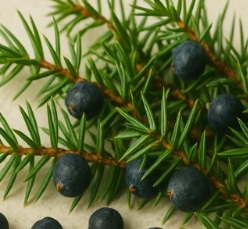
Juniper is an evergreen shrub belonging to the genus Juniperus, occurring naturally across large areas of Europe, northern Asia and North America, especially in regions with temperate to cold climates. It typically shows a bushy or prostrate habit, with a more or less dense crown, woody branches and needle-like leaves, rigid and sharp, arranged in whorls. Female reproductive structures give rise to the characteristic galbules (commonly referred to as “berries”), which are green when immature and turn blue–black at full ripeness, with a waxy surface and a distinctly resinous aroma.
From an ecological and cultivation standpoint, juniper is a hardy and adaptable species, able to grow on dry, stony or sandy soils, often low in nutrients, provided they are well-drained. It tolerates low temperatures, full sun exposure and cold winds, while it is sensitive to waterlogging, which can promote root rot. Growth is generally slow, and galbules usually require two to three growing seasons to reach full maturity. Yield and quality of the fruit depend on exposure, substrate, water availability and the climatic conditions of the season.
The composition of juniper galbules includes a substantial proportion of water, along with simple sugars, organic acids, tannins and phenolic phytochemicals, as well as traces of minerals such as potassium and calcium. Particularly important is the content of essential oil, located in secretory structures within the berries and characterised by monoterpenes such as α-pinene, sabinene, limonene and other compounds responsible for the aromatic, balsamic and resinous notes. The quality and yield of the oil vary according to geographical origin, ripening stage, soil and climate conditions, and extraction technique.
From a food and technological perspective, juniper galbules are used as a spice and flavouring agent in meat dishes, traditional preparations and brines, imparting distinct resinous and balsamic nuances. They are employed in the production of distilled spirits, most notably gin, where they are a key ingredient for the aromatic profile. Extracts and oil fractions are also used in herbal products and various technical formulations, while juniper wood, compact and aromatic, is sometimes used for smoking and for craftwork.
The quality evaluation of juniper galbules takes into account size, colour uniformity, aromatic intensity, integrity of the berries and the absence of defects or contamination. Careful attention to origin, harvesting method and drying conditions is essential to preserve the organoleptic characteristics and technological properties of the berries.
![]() | ![]() |
Common name: Juniper (Common juniper)
Botanical name: Juniperus communis L.
Kingdom: Plantae
Division/Phylum: Pinophyta
Class: Pinopsida
Order: Pinales
Family: Cupressaceae
Genus: Juniperus
Species: Juniperus communis L.
| Component | Approx. value per 100 g* |
|---|---|
| Energy | ~ 360–385 kcal |
| Total carbohydrates | ~ 33–37 g |
| — of which sugars | ~ 7–8 g |
| Dietary fibre | ~ 12 g |
| Proteins | ~ 19–20 g |
| Total fats | ~ 13–15 g |
| — of which saturated fatty acids (SFA) | part of total lipid fraction |
| Sodium | negligible |
* Values refer to dried berries and may vary depending on origin, degree of ripeness, and drying methods.
SFA = Saturated fatty acids. When they prevail over unsaturated fats in the diet, they are generally considered less favourable for cardiovascular balance.
MUFA = Monounsaturated fatty acids. Regarded as more beneficial when replacing saturated fats.
PUFA = Polyunsaturated fatty acids. Include omega-6 and omega-3; essential in small amounts and involved in cell membranes and inflammatory balance.
Plant characteristics
Habit: Evergreen shrub (0.5–4 m) or small tree with conical or irregular crown.
Leaves: Needle-like, rigid, pointed, 1–2 cm long, arranged in whorls of three; upper surface with a white stomatal band.
Flowers: Dioecious — male plants with yellowish cones, female plants with green cones developing into fleshy berries (galbuli).
Fruits (galbuli): Fleshy, spherical, 6–10 mm, green in the first year and bluish-black when mature (after 18–24 months).
Roots: Deep and strong, providing excellent anchorage and drought resistance.
Habitat: Dry slopes, heaths, grasslands, and rocky areas, from sea level up to 2500 m altitude.
Chemical composition (main constituents of berries and essential oil)
Essential oil (1–2%): α-pinene, sabinene, β-pinene, limonene, myrcene, terpinene-4-ol, borneol, and cadinene.
Flavonoids: juniperin, apigenin, rutin — with antioxidant and vasoprotective properties.
Tannins and phenolic acids: astringent and anti-inflammatory activity.
Sugars and aromatic resins: contribute to the sweet, resinous flavor of ripe fruits.
Vitamin C and bitter compounds: tonic and immunostimulant effects.
Cultivation and growing conditions
Climate: Temperate to cold; highly tolerant to frost, wind, and poor soils.
Exposure: Full sun; partial shade reduces fruit production.
Soil: Prefers sandy, calcareous, or rocky soils with good drainage; avoids heavy, waterlogged soils.
Irrigation: Minimal; xerophytic plant adapted to drought.
Propagation: By seeds (slow germination) or hardwood cuttings.
Harvesting: Ripe berries collected by hand in the second autumn after pollination.
Pruning: Minimal, only to maintain shape; avoid heavy cutting.
Uses and benefits (traditional and supported by preliminary scientific evidence)
Diuretic and depurative: Promotes urine flow, aiding toxin and fluid elimination.
Digestive and carminative: Stimulates appetite, digestion, and reduces bloating.
Urinary antiseptic: Used in herbal medicine to support mild urinary tract infections.
Expectorant and balsamic: Helpful in mild respiratory congestion.
Tonic and stimulant: Traditionally used to improve circulation and appetite.
Scientific studies confirm the diuretic and antiseptic activity of juniper essential oil, but internal use should be limited and monitored due to potential renal irritation.
Applications
Herbal medicine: Infusions and decoctions of berries; tinctures, fluid extracts, and essential oil for topical use.
Culinary: Aromatic spice for meats (especially game), sauces, and sausages.
Distillation: Principal aromatic ingredient in gin and digestive liqueurs (e.g., juniper grappa).
Cosmetics: Essential oil used in toning, antiseptic, and massage formulations.
INCI functions
Skin conditioning agent. It is the mainstay of topical skin treatment as it has the function of restoring, increasing or improving skin tolerance to external factors, including melanocyte tolerance. The most important function of the conditioning agent is to prevent skin dehydration, but the subject is rather complex and involves emollients and humectants that can be added in the formulation.
Aromatherapy: Balsamic and purifying aroma ideal for indoor diffusion and winter blends.
Harvesting and processing
Harvesting: Fully ripe berries (blue-black) collected between September and November by gently shaking branches over nets.
Drying: In shaded, well-ventilated areas for 10–15 days.
Distillation: Steam distillation to obtain essential oil.
Storage: Dried berries and essential oil kept in airtight containers, protected from light and humidity.
Environmental considerations
Juniperus communis is a hardy pioneer species that stabilizes soil and colonizes degraded land. It provides shelter and food for wildlife (birds and small mammals). Sustainable harvesting of berries is essential to preserve regeneration and natural populations, especially in mountainous ecosystems.
Safety, contraindications, interactions
Culinary and aromatic use is generally safe.
Prolonged or high-dose internal use: May irritate kidneys and urinary tract.
Contraindicated: In pregnancy, breastfeeding, and kidney disease.
Essential oil: Use only diluted and for short periods; may irritate sensitive skin.
Interactions: May enhance the effects of diuretics or hypoglycemic drugs.
Common preparations (general, non-therapeutic use)
Berry infusion: 1–2 g in 200 ml boiling water; steep 10 minutes — mild digestive or depurative use.
Decoction: 2–3 g of berries in 250 ml water, boiled for 5 minutes — used externally as skin tonic.
Essential oil: Few drops diluted in carrier oil for massage or air diffusion.
Culinary use: Crushed berries as a spice for meat dishes and sauces.
References__________________________________________________________________________
Gonçalves AC, Flores-Félix JD, Coutinho P, Alves G, Silva LR. Zimbro (Juniperus communis L.) as a Promising Source of Bioactive Compounds and Biomedical Activities: A Review on Recent Trends. Int J Mol Sci. 2022 Mar 16;23(6):3197. doi: 10.3390/ijms23063197.
Abstract. Plant-derived products and their extracted compounds have been used in folk medicine since early times. Zimbro or common juniper (Juniperus communis) is traditionally used to treat renal suppression, acute and chronic cystitis, bladder catarrh, albuminuria, leucorrhea, and amenorrhea. These uses are mainly attributed to its bioactive composition, which is very rich in phenolics, terpenoids, organic acids, alkaloids, and volatile compounds. In the last few years, several studies have analyzed the huge potential of this evergreen shrub, describing a wide range of activities with relevance in different biomedical discipline areas, namely antimicrobial potential against human pathogens and foodborne microorganisms, notorious antioxidant and anti-inflammatory activities, antidiabetic, antihypercholesterolemic and antihyperlipidemic effects, and neuroprotective action, as well as antiproliferative ability against cancer cells and the ability to activate inductive hepato-, renal- and gastroprotective mechanisms. Owing to these promising activities, extracts and bioactive compounds of juniper could be useful for the development of new pharmacological applications in the treatment of several acute and chronic human diseases.
Final report on the safety assessment of Juniperus communis Extract, Juniperus oxycedrus Extract, Juniperus oxycedrus Tar, Juniperus phoenicea extract, and Juniperus virginiana Extract. Int J Toxicol. 2001;20 Suppl 2:41-56. doi: 10.1080/10915810160233758.
Abstract. The common juniper is a tree that grows in Europe, Asia, and North America. The ripe fruit of Juniperus communis and Juniperus oxycedrus is alcohol extracted to produce Juniperus Communis Extract and Juniperus Oxycedrus Extract, respectively. Juniperus Oxycedrus Tar is the volatile oil from the wood of J. oxycedrus. Juniperus Phoenicea Extract comes from the gum of Juniperus phoenicea, and Juniperus Virginiana Extract is extracted from the wood of Juniperus virginiana. Although Juniperus Oxycedrus Tar is produced as a by-product of distillation, no information was available on the manufacturing process for any of the Extracts. Oils derived from these varieties of juniper are used solely as fragrance ingredients; they are commonly produced using steam distillation of the source material, but it is not known if that procedure is used to produce extracts. One report does state that the chemical composition of Juniper Communis Oil and Juniperus Communis Extract is similar, each containing a wide variety of terpenoids and aromatic compounds, with the occasional aliphatic alcohols and aldehydes, and, more rarely, alkanes. The principle component of Juniperus Oxycedrus Tar is cadinene, a sesquiterpene, but cresol and guaiacol are also found. No data were available, however, indicating the extent to which there would be variations in composition that may occur as a result of extraction differences or any other factor such as plant growth conditions. Information on the composition of the other ingredients was not available. All of the Extracts function as biological additives in cosmetic formulations, and Juniperus Oxycedrus Tar is used as a hair-conditioning agent and a fragrance component. Most of the available safety test data are from studies using oils derived from the various varieties of juniper. Because of the expected similarity in composition to the extract, these data were considered. Acute studies using animals show little toxicity of the oil or tar. The oils derived from J. communis and J. virginiana and Juniperus Oxycedrus Tar were not skin irritants in animals. The oil from J. virginiana was not a sensitizer, and the oil from J. communis was not phototoxic in animal tests. Juniperus Oxycedrus Tar was genotoxic in several assays. No genotoxicity data were available for any of the extracts. Juniperus Communis Extract did affect fertility and was abortifacient in studies using albino rats. Clinical tests showed no evidence of irritation or sensitization with any of the tested oils, but some evidence of sensitization to the tar. These data were not considered sufficient to assess the safety of these ingredients. Additional data needs include current concentration of use data; function in cosmetics; methods of manufacturing and impurities data, especially pesticides; ultraviolet (UV) absorption data; if absorption occurs in the UVA or UVB range, photosensitization data are needed; dermal reproductive/developmental toxicity data (to include determination of a no-effect level); two genotoxicity assays (one in a mammalian system) for each extract; if positive, a 2-year dermal carcinogenicity assay performed using National Toxicology Program (NTP) methods is needed; a 2-year dermal carcinogenicity assay performed using NTP methods on Juniperus Oxycedrus Tar; and irritation and sensitization data on each extract and the tar (these data are needed because the available data on the oils cannot be extrapolated). Until these data are available, it is concluded that the available data are insufficient to support the safety of these ingredients in cosmetic formulations.
Jegal J, Park SA, Chung K, Chung HY, Lee J, Jeong EJ, Kim KH, Yang MH. Tyrosinase inhibitory flavonoid from Juniperus communis fruits. Biosci Biotechnol Biochem. 2016 Dec;80(12):2311-2317. doi: 10.1080/09168451.2016.1217146.
Abstract. The fruits of Juniperus communis have been traditionally used in the treatment of skin diseases. In our preliminary experiment, the MeOH extract of J. communis effectively suppressed mushroom tyrosinase activity. Three monoflavonoids and five biflavonoids were isolated from J. communis by bioassay-guided isolation and their inhibitory effect against tyrosinase was evaluated. According to the results of all isolates, hypolaetin 7-O-β-xylopyranoside isolated from J. communis exhibited most potent effect of decreasing mushroom tyrosinase activity with an IC50 value of 45.15 μM. Further study provided direct experimental evidence for hypolaetin 7-O-β-D-xylopyranoside-attenuated tyrosinase activity in α-MSH-stimulated B16F10 murine melanoma cell. Hypolaetin 7-O-β-D-xylopyranoside from the EtOAc fraction of J. communis was also effective at suppressing α-MSH-induced melanin synthesis. This is the first report of the enzyme tyrosinase inhibition by J. communis and its constituent. Therapeutic attempts with J. communis and its active component, hypolaetin 7-O-β-D-xylopyranoside, might be useful in treating melanin pigmentary disorders.
Benzina S, Harquail J, Jean S, Beauregard AP, Colquhoun CD, Carroll M, Bos A, Gray CA, Robichaud GA. Deoxypodophyllotoxin isolated from Juniperus communis induces apoptosis in breast cancer cells. Anticancer Agents Med Chem. 2015;15(1):79-88. doi: 10.2174/1871520614666140608150448.
Abstract. The study of anticancer properties from natural products has regained popularity as natural molecules provide a high diversity of chemical structures with specific biological and medicinal activity. Based on a documented library of the most common medicinal plants used by the indigenous people of North America, we screened and isolated compounds with anti-breast cancer properties from Juniperus communis (common Juniper). Using bioassay-guided fractionation of a crude plant extract, we identified the diterpene isocupressic acid and the aryltetralin lignan deoxypodophyllotoxin (DPT) as potent inducers of caspase-dependent programmed cell death (apoptosis) in malignant MB231 breast cancer cells. Further elucidation revealed that DPT, in contrast to isocupressic acid, also concomitantly inhibited cell survival pathways mediated by the MAPK/ERK and NFκB signaling pathways within hours of treatment. Our findings emphasize the potential and importance of natural product screening for new chemical entities with novel anticancer activities. Natural products research complemented with the wealth of information available through the ethnobotanical and ethnopharmacological knowledge of the indigenous peoples of North America can provide new candidate entities with desirable bioactivities to develop new cancer therapies.
Çavuş İ, Özel Y, Tunalı V, Kayalar H, Yereli K, Özbilgin A. Investigation of Antiparasitic Effect of Juniperus communis L. Fruits Extracts. Turkiye Parazitol Derg. 2025 Sep 8;49(3):115-119. doi: 10.4274/tpd.galenos.2025.27928.
Abstract. Objective: Juniperus communis (J. communis) (common juniper) is a plant that has been used for medicinal purposes for centuries. This study aims to evaluate the antiparasitic effects of ethanol, methanol, chloroform, and water extracts of J. communis fruits against Plasmodium falciparum, Leishmania tropica, Trichomonas vaginalis, and Blastocystis. Methods: The antiparasitic activities of fruit extracts prepared at room temperature using the shaking maceration method were tested against Plasmodium falciparum using the ring stage survival test, and against Leishmania tropica, Trichomonas vaginalis, and Blastocystis using the broth microdilution method. Results: The chloroform extract of J. communis fruits was found to be effective on Plasmodium falciparum, Leishmania tropica, Trichomonas vaginalis, and Blastocystis parasites at concentrations of 15, 10, 30 and 30 µg/mL, respectively. Conclusion: The chloroform extract of J. communis fruits has shown strong antiparasitic activity against the investigated parasite species. These findings support the plant's antiparasitic potential and hold promise for future medical applications. Especially its effectiveness against metronidazole-resistant Trichomonas vaginalis strains is important for the development of alternative treatment options. This study highlights the potential use of J. communis as a medicinal plant and will contribute to the literature on research related to the isolation and structural determination of its active compounds.
Gao HW, Huang XF, Yang TP, Chang KF, Yeh LW, Hsieh MC, Weng JC, Tsai NM. Juniperus communis Suppresses Melanoma Tumorigenesis by Inhibiting Tumor Growth and Inducing Apoptosis. Am J Chin Med. 2019;47(5):1171-1191. doi: 10.1142/S0192415X19500605.
Abstract. Melanoma, which has a high metastatic capacity and death rate, is a common skin cancer in Western countries. The purpose of this study was to address whether Juniperus communis (JCo) extract is effective in the suppression of melanoma and to elucidate the anticancer mechanisms involved in vitro and in vivo. The antitumor capacities of JCo extract on tumor suppression and toxicity were evaluated and the results demonstrated that the tumor burden was reduced via mediation of cell cycle, reduction of autocrine signaling, and induction of apoptosis. Moreover, JCo extract significantly prolonged the survival rate of the test subjects with only low pathological and physiological toxicity. Additionally, JCo extract also reduced cancer stem cell-related angiogenic and metastatic proteins in the process of tumor elimination. Based on these results, this study suggests that JCo extract suppresses tumor growth and induces apoptosis, and JCo extract may be useful for the prevention of melanoma tumorigenesis.
Tsai; Tsai NM, Chang KF, Wang JC. Juniperus Communis Extract Exerts Antitumor Effects in Human Glioblastomas Through Blood-Brain Barrier. Cell Physiol Biochem. 2018;49(6):2443-2462. doi: 10.1159/000493842.
Huang NC, Huang RL, Huang XF, Chang KF, Lee CJ, Hsiao CY, Lee SC, Tsai NM. Evaluation of anticancer effects of Juniperus communis extract on hepatocellular carcinoma cells in vitro and in vivo. Biosci Rep. 2021 Jul 30;41(7):BSR20211143. doi: 10.1042/BSR20211143.
| Sign up to vote this object, vote his reviews and to contribute to Tiiips.EvaluateClose | (0 comments) |
Read other Tiiips about this object in __Italiano (1)
Hardiness:   Hardiness:   Natural fertilizer:   Hazards/diseases:   Last update:   2025-10-26 11:19:40 | Sun exposure:   Family:   Commercial fertilizer:   Main substances contained:   |

