

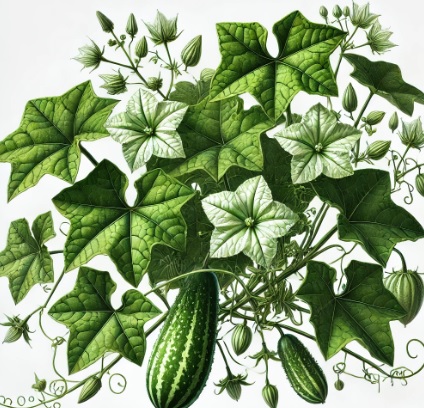
Coccinia Indica
Rating : 7
| Evaluation | N. Experts | Evaluation | N. Experts |
|---|---|---|---|
| 1 | 6 | ||
| 2 | 7 | ||
| 3 | 8 | ||
| 4 | 9 | ||
| 5 | 10 |
0 pts from Al222
| Sign up to vote this object, vote his reviews and to contribute to Tiiips.Evaluate | Where is this found? |
| "Descrizione" about Coccinia Indica by Al222 (23403 pt) | 2025-Dec-07 11:59 |
| Read the full Tiiip | (Send your comment) |
Coccinia indica (Coccinia grandis)
Coccinia indica, more correctly referred to in current botany as Coccinia grandis and commonly known as ivy gourd or scarlet gourd, is a perennial climbing vine in the family Cucurbitaceae. Native to South and Southeast Asia, it thrives in warm, humid tropical climates, where it grows vigorously over shrubs, trees and man-made structures by means of its simple tendrils. The slender, green, flexible stems support palmately lobed leaves of a deep green colour, with a slightly rough surface and irregularly toothed margins, giving the plant a characteristic “small tropical vine” appearance that makes it easy to recognise in rural and peri-urban landscapes.
![]() | ![]() |
The flowers are typically small, white to whitish-yellow, with a tubular corolla that opens into distinct lobes, reflecting the typical floral structure of cucurbits. The species is predominantly dioecious, with male and female flowers borne on separate plants. The fruit is a pepo (peponide), initially green and often marked by pale longitudinal stripes, turning a vivid red upon full ripening. The flesh is soft and juicy, containing numerous flattened seeds. Immature fruits are commonly eaten as a vegetable, while mature red fruits, sweeter in taste, are attractive to frugivorous animals, contributing to natural seed dispersal.
From an ecological standpoint, Coccinia grandis has a dual character. Within its native range it is integrated into traditional agroecosystems and hedgerows as a useful vegetable plant that is kept under control by cultivation practices and natural enemies. However, after introduction to new regions such as Hawaiʻi, Guam, parts of Australia and the southern United States, ivy gourd has proven to be a highly invasive vine, forming dense mats that smother native vegetation, fences and utility structures. Its rapid growth, combined with propagation by both seeds and vegetative fragments, makes eradication difficult once well established, and it is listed as a noxious weed in several jurisdictions. For this reason, it is the target of integrated management programmes that may include mechanical removal, herbicide use and classical biological control using introduced natural enemies.
From a health and phytotherapeutic perspective, Coccinia grandis holds a prominent place in traditional medicine systems of South Asia, particularly Ayurvedic and local folk practices in India and Sri Lanka. Young fruits are eaten as a vegetable, while leaves, tender shoots and roots are used in various preparations. Modern pharmacognostic research has identified a rich profile of bioactive compounds, including flavonoids, phenolic acids, terpenoids, triterpenes and phytosterols, which contribute to its complex phytochemistry.
A major focus of contemporary research is the plant’s potential antidiabetic and antihyperglycaemic activity. Experimental studies in animal models and preliminary human trials suggest that extracts of leaves and fruits may improve glucose tolerance, lower postprandial blood glucose, and modulate key carbohydrate-metabolising enzymes, providing a mechanistic basis for traditional use in the management of elevated blood sugar. In addition, leaf and fruit extracts have shown antioxidant activity in vitro and in vivo, probably related to their phenolic and flavonoid content, as well as indications of anti-inflammatory and hypolipidaemic effects. These findings support the classification of ivy gourd as a plant of interest for the development of functional foods or adjunct phytotherapeutic approaches in metabolic disorders, although robust, large-scale clinical evidence in humans is still limited and further well-designed trials are needed.
It is essential to distinguish between the traditional culinary use of the plant as a vegetable, generally regarded as compatible with a balanced diet, and the use of concentrated extracts or supplements, which require careful evaluation in terms of standardisation, dose, safety profile and potential interactions with conventional antidiabetic drugs. In a medical context, any use of Coccinia grandis preparations should occur under professional supervision and should not replace established therapies for diabetes or other chronic conditions.
Culturally, Coccinia indica is deeply woven into the everyday life of rural communities in India, Sri Lanka and neighbouring countries, where it is appreciated as a versatile vegetable and as a supportive medicinal plant. This dual role, spanning food and medicine, mirrors a common pattern in tropical agrarian societies, in which many cultivated species are valued simultaneously for their nutritional and health-related contributions.
Botanical classification (APG IV system)
| Category | Data |
|---|---|
| Common name | ivy gourd, scarlet gourd, baby watermelon |
| Accepted botanical name | Coccinia grandis (L.) Voigt |
| Main synonym | Coccinia indica Wight & Arn. |
| Kingdom | Plantae |
| Clade | Angiosperms → eudicots → rosids |
| Order | Cucurbitales |
| Family | Cucurbitaceae |
| Genus | Coccinia |
| Species | Coccinia grandis (L.) Voigt |
Indicative nutritional values per 100 g (immature fresh fruit of Coccinia grandis)
Values refer to the green, immature fruit eaten as a vegetable; they may vary with variety, growing conditions and maturity stage.
| Component | Approximate value per 100 g |
|---|---|
| Energy | ~ 18–21 kcal |
| Water | ~ 93–94 g |
| Total carbohydrates | ~ 3.0–3.5 g |
| — of which sugars | ~ 2–3 g (estimate) |
| Dietary fiber | ~ 1.5–2.0 g |
| Proteins | ~ 1.0–1.5 g |
| Total lipids | ~ 0.1–0.3 g |
| — of which saturated fatty acids (SFA) | traces (≈ 0.05–0.1 g) |
| — monounsaturated fatty acids (MUFA) | traces |
| — polyunsaturated fatty acids (PUFA) | traces (small fraction of the very low fat content) |
| Sodium | very low (~ 2–5 mg) |
| Main minerals | calcium (~ 25–40 mg), iron (~ 0.9–1.4 mg), phosphorus (~ 30 mg), potassium (moderate amount) |
| Relevant vitamins | vitamin C (~ 15–30 mg), provitamin A (β-carotene) in modest amounts, small amounts of B-group vitamins |
At typical serving sizes (for example 50–80 g of cooked fruit as a side dish or in curries), the caloric contribution is very low, while fiber and vitamin C provide a modest but useful contribution within the overall diet. The impact of fats is nutritionally negligible because of the extremely low lipid content and small absolute serving size.
Lipid profile note
Fresh Coccinia grandis fruits have an extremely low fat content, so almost all their energy comes from carbohydrates. Saturated fatty acids (SFA) are present only in trace amounts; when SFA predominate over unsaturated fats in the overall diet, they are generally considered less favourable for cardiovascular health. Monounsaturated fatty acids (MUFA) and polyunsaturated fatty acids (PUFA) are present only in very small quantities in ivy gourd, but in general are regarded as more favourable when they replace part of SFA in the diet. In this vegetable, however, the absolute lipid contribution is practically negligible.
Plant Characteristics:
Chemical Composition and Structure:
How to Cultivate It:
Uses and Benefits:
Applications:
INCI Functions:
Skin conditioning agent. It is the mainstay of topical skin treatment as it has the function of restoring, increasing or improving skin tolerance to external factors, including melanocyte tolerance. The most important function of the conditioning agent is to prevent skin dehydration, but the subject is rather complex and involves emollients and humectants that can be added in the formulation.
Environmental and Safety Considerations:
References___________________________________________________________________________
(1) Nitharwal RK, Patel H, Karchuli MS, Ugale RR. Chemoprotective potential of Coccinia indica against cyclophosphamide-induced toxicity. Indian J Pharmacol. 2013 Sep-Oct;45(5):502-7. doi: 10.4103/0253-7613.117783. PMID: 24130387; PMCID: PMC3793523.
Abstract. Objective: Although cyclophosphamide (CP), an alkylating agent, is used in the treatment of cancer owing to its broad-spectrum efficacy, its metabolites exhibit severe undesired toxicities in normal cells. The present study was aimed to investigate the chemoprotective potential of Coccinia indica against CP-induced oxidative stress, genotoxicity, and hepatotoxicity. Conclusion: Thus, the present results indicate the protective effect of Coccinia indica extract against CP-induced oxidative stress, genotoxicity, as well as hepatotoxicity.
Gurukar MS, Mahadevamma S, Chilkunda ND. Renoprotective effect of Coccinia indica fruits and leaves in experimentally induced diabetic rats. J Med Food. 2013 Sep;16(9):839-46. doi: 10.1089/jmf.2012.2689.
Abstract. Diabetic nephropathy is one of the secondary complications of diabetes mellitus that is marked by changes in extracellular matrix components leading to end-stage renal failure. Diet plays an important role in managing diabetes. In the present study, the effect of Coccinia indica consumption on diabetes-mediated kidney damage was determined. Both control and diabetic rats were fed with AIN-76 diet supplemented with C. indica fruits and leaves individually at 10% and 5%, respectively, for a period of 2 months. Various parameters, such as fasting blood glucose, urine sugar, albumin excretion, kidney index, and glomerular filtration rate, were ameliorated to various extents by the supplementation of C. indica in the diet. Additionally, diabetic rats fed with diet supplemented with C. indica fruits or leaves showed improvement in glucose tolerance compared to control diabetic rats. They also exhibited beneficial effects on key antioxidant enzymes of the kidney. Furthermore, an increase in laminin and fibronectin as a result of diabetes was alleviated in C. indica-fed rats. These results indicate that the consumption of C. indica is beneficial in partially containing diabetes-mediated deleterious effects on the kidney.
Kumar GP, Sudheesh S, Vijayalakshmi NR. Hypoglycaemic effect of Coccinia indica: mechanism of action. Planta Med. 1993 Aug;59(4):330-2. doi: 10.1055/s-2006-959693.
Abstract. The hypoglycaemic effect of orally administered extracts of leaves and roots of Coccinia indica has been reported earlier. The oral administration of the pectin isolated from the fruit of the above plant at a dose of 200 mg/100 g BW/day showed a significant hypoglycaemic action in normal rats. Pectins isolated from many other plants have also been reported to have hypoglycaemic actions. The pectin administration resulted in a significant reduction in blood glucose and an increase in the liver glycogen. Glycogen synthetase activity was highly significant. Incorporation of labelled glucose into hepatic glycogen was also found to be higher. A significant reduction in phosphorylase activity was noted in the pectin-administered groups.
| Sign up to vote this object, vote his reviews and to contribute to Tiiips.EvaluateClose | (0 comments) |
Read other Tiiips about this object in __Italiano (1)
Hardiness:   Hardiness:   Natural fertilizer:   Hazards/diseases:   Last update:   2025-01-17 10:41:28 | Sun exposure:   Family:   Commercial fertilizer:   Main substances contained:   |

