

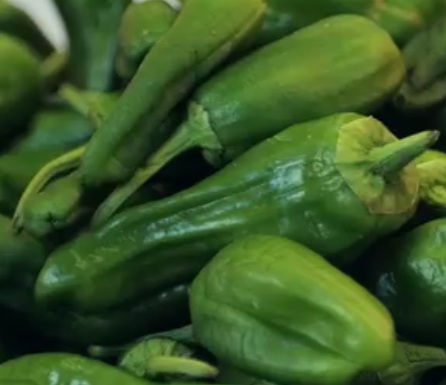
Jalapeno chili pepper
Rating : 6
| Evaluation | N. Experts | Evaluation | N. Experts |
|---|---|---|---|
| 1 | 6 | ||
| 2 | 7 | ||
| 3 | 8 | ||
| 4 | 9 | ||
| 5 | 10 |
10 pts from Frank123
| Sign up to vote this object, vote his reviews and to contribute to Tiiips.Evaluate | Where is this found? |
| "Descrizione" about Jalapeno chili pepper Review Consensus 10 by Frank123 (12488 pt) | 2025-Nov-26 18:03 |
| Read the full Tiiip | (Send your comment) |
Jalapeño chili pepper (Capsicum annuum L., family Solanaceae)
(when smoked/dried: “chipotle”)
Description
Mexican cultivar with moderate heat (~2,500–8,000 SHU), typically green when unripe, turning red at full maturity; conical/cylindrical fruit with thick, crisp walls.
Sensory profile: green/herbaceous, lightly fruity; clean, persistent pungency concentrated in the placenta/seeds; smoky notes when roasted.

Common name: Jalapeño chili pepper
Source plant: Capsicum annuum L. (family Solanaceae)
Kingdom: Plantae
Clade: Angiosperms
Clade: Eudicots
Order: Solanales
Family: Solanaceae
Genus: Capsicum
Species: Capsicum annuum L.
Note: Jalapeño is a cultivar of Capsicum annuum characterized by fleshy fruits, usually harvested green, of medium pungency, with a conical shape. At full maturity they turn red and are the raw material for chipotle (smoked jalapeño).
Climate:
Prefers warm, temperate climates.
Sensitive to cold and frost, especially at germination and transplant stages.
Mainly grown as a spring–summer crop in temperate regions.
Exposure:
Requires full sun (6–8 hours per day) for good vegetative growth and abundant fruiting.
Excess shade reduces yield, pungency and color development.
Soil:
Thrives in fertile, well-drained, medium-textured soils.
Ideal pH: slightly acidic to neutral (around 6–7).
Sensitive to waterlogging, which favors fungal diseases and root rot.
Watering:
Needs regular irrigation, keeping the soil moist but not saturated.
Strong alternation between drought and heavy watering can cause:
flower drop
fruit cracking
irregular development
In the final stages, more moderate watering favors uniform ripening.
Temperature:
Optimal seed germination: 20–25 °C.
Optimal growth: 20–30 °C.
Below about 12–14 °C growth slows markedly.
Fertilization:
Requires a good supply of organic matter (compost or well-rotted manure).
Phosphorus and potassium are important to support flowering, fruit set and fruit quality.
Nitrogen must be balanced: too much nitrogen → lush foliage, fewer fruits.
Crop management:
Early weed control during the initial growth stages.
Mulching helps conserve soil moisture and reduce weed pressure.
Staking may be useful for taller or very productive varieties.
Light pinching or topping can promote branching and more uniform production.
Harvest:
Jalapeños are mainly harvested green, when fruits have reached full size but are not yet mature.
If left to ripen, they turn red, becoming sweeter and more aromatic.
Fully red fruits intended for drying and smoking are processed into chipotle.
Propagation:
By seed, usually started in protected seedbeds.
Transplanting is carried out when minimum temperatures are consistently mild (late spring).
Caloric value (per 100 g)
Fresh: ~25–35 kcal; carbs ~6 g, sugars ~3–4 g, fiber ~2–3 g, protein ~1 g, fat ~0.3–0.5 g; sodium naturally low.
Dried/powder: ~250–320 kcal, due to solids concentration.
Key constituents
Capsaicinoids (mainly capsaicin and dihydrocapsaicin) at medium levels.
Vitamin C high when fresh; provitamin A (carotenoids) higher in red fruits; chlorophylls in green fruits (prone to pheophytinization with heat).
Carotenoids (capsanthin/capsorubin in red stage), minor polyphenols, potassium.
Analytical markers: SHU (Scoville), capsaicinoids by HPLC, color (CIE L*a*b* or ASTA for powders), moisture/aw for dried goods.
Production process
Fresh: harvest green or red → sorting/grading → pack MAP or ventilated bulk.
Roasted/grilled: char skin → peel → remove placenta/seeds.
Pickled (rings/strips): cut, optional blanch, acidify (vinegar/lime) with target pH ≤4.1, add salt/spices, pasteurize and hot-fill; for shelf-stable, meet commercial sterility.
Dried/powder: low-temperature drying (or smoking → chipotle), milling/sieving → barrier packing.
Operate under GMP/HACCP with CCP on pH, time–temperature, and foreign bodies.
Sensory and technological properties
Heat can be tuned by removing placenta/seeds; acids/fats soften perceived burn; dairy buffers further.
Crisp texture of fresh fruit suits toppings; in pickles, CaCl₂ and gentle heat help retain crunch.
Color is light/oxygen sensitive; roasting develops Maillard/smoky notes.
Food uses
Salsas (pico de gallo, roja/verde), tacos/burritos/quesadillas, nachos, eggs, grilled meats/fish, marinades, and pickles (jalapeños en escabeche).
Typical dosages: fresh minced to taste; powder 0.1–0.5% in dry blends; pickles 5–20% in compound sauces (confirm via pilot trials).
Nutrition and health
Low caloric contribution at culinary portions; vitamin C is heat-labile—prefer raw or brief cooking.
Capsaicin may irritate sensitive skin/mucosa.
For pickled products, monitor sodium. Avoid unauthorized health claims.
Lipid profile
Total fat negligible; only trace SFA, MUFA, PUFA—no meaningful nutritional impact at use levels.
Health note: diets relatively higher in MUFA/PUFA than SFA are generally favorable/neutral for blood lipids; effect here is not material.
Quality and specifications (typical topics)
Fresh: size, turgor, uniform color, absence of defects (sunscald, molds), residues within limits.
Pickled: pH (3.2–4.1), declared salt, texture (crispness), drained weight, commercial sterility.
Dried/powder: moisture ≤10–12%, aw ≤0.60–0.65, ASTA color, capsaicinoids by HPLC, freedom from pests/foreign matter; mycotoxins monitored.
Storage and shelf-life
Fresh: 4–7 °C, high RH; use within 7–10 days.
Shelf-stable pickles: cool/dry/dark, 12–24 months unopened; after opening refrigerate and use in 5–7 days.
Powder/dried: cool/dry/dark in barrier packs; 12–24 months; reseal to limit oxidation. Apply FIFO.
Allergens and safety
Capsicum is not a major EU allergen, though individual cross-reactivity can occur.
Capsaicin is irritant: use PPE in production; label heat level; prevent cross-contact with other allergens in seasoning lines.
INCI functions in cosmetics
Listings: Capsicum Annuum Fruit Extract / Capsicum Annuum (Pepper) Extract.
Roles: rubefacient/warming, fragrance; manage formula pH and concentration due to irritancy risk.
Troubleshooting
Soft pickles: overprocessing or high pH → add CaCl₂, optimize hot-fill and acidity; select firm fruit.
Inconsistent heat: assay capsaicinoids and standardize chile blend; remove placenta/seeds to reduce.
Raw-green bitterness: roast/toast briefly; balance with acid (lime/vinegar) and salt.
Color fade: limit light/oxygen; use amber/barrier packs; add some jalapeño late in cooking.
Sustainability and supply chain
Favor IPM cultivation and efficient water use; valorize cores/seeds for seed oil or feed.
In-plant: treat effluents to BOD/COD targets; optimize thermal energy; use recyclable packs; full traceability under GMP/HACCP.
Conclusion
Jalapeño offers versatility, crunch, and moderate heat, suitable fresh, pickled, or roasted. Tight control of pH/time–temperature, pungency standardization, and protection from light/oxygen ensures safe, stable, and sensory-consistent products.
Mini-glossary
SHU — Scoville heat units: pungency scale (jalapeño ~2,500–8,000).
HPLC — High-performance liquid chromatography: quantifies capsaicinoids and identity markers.
ASTA — American Spice Trade Association color: standardized color index for spices/chiles.
aw — Water activity: ≤0.60–0.65 in dried products limits microbial growth/molds.
SFA — Saturated fatty acids: excess may raise LDL; trace here.
MUFA — Monounsaturated fatty acids (e.g., oleic): generally favorable/neutral for blood lipids; trace here.
PUFA — Polyunsaturated fatty acids (n-6/n-3): beneficial when balanced; trace here.
TFA — Trans fatty acids: avoid industrial TFA; absent in non-hydrogenated produce.
MCT — Medium-chain triglycerides: not characteristic of peppers.
GMP/HACCP — Good Manufacturing Practice / Hazard Analysis and Critical Control Points: hygiene and preventive-safety frameworks with defined CCP.
CCP — Critical control point: step where a control prevents/reduces a hazard.
BOD/COD — Biochemical/Chemical oxygen demand: indicators of effluent impact.
FIFO — First in, first out: stock rotation using older lots first.
References__________________________________________________________________________
Sandoval-Castro CJ, Valdez-Morales M, Oomah BD, Gutiérrez-Dorado R, Medina-Godoy S, Espinosa-Alonso LG. Bioactive compounds and antioxidant activity in scalded Jalapeño pepper industrial byproduct (Capsicum annuum). J Food Sci Technol. 2017 Jun;54(7):1999-2010. doi: 10.1007/s13197-017-2636-2.
Abstract. Bioactive compounds and antioxidant activity were evaluated from industrial Jalapeño pepper byproducts and simulated non processed byproducts from two Mexican states (Chihuahua and Sinaloa) to determine their value added potential as commercial food ingredients. Aqueous 80% ethanol produced about 13% of dry extract of polar compounds. Total phenolic content increased and capsaicin and dihydrocapsaicin decreased on scalding samples (80 °C, 2 min) without affecting ascorbic acid. The major phenolic compounds, rutin, epicatechin and catechin comprised 90% of the total compounds detected by HPLC of each Jalapeño pepper byproducts. ORAC analysis showed that the origin and scalding process affected the antioxidant activity which correlated strongly with capsaicin content. Although scalding decreased capsaicinoids (up to 42%), phenolic content by (up to 16%), and the antioxidant activity (variable). Jalapeño pepper byproduct is a good source of compounds with antioxidant activity, and still an attractive ingredient to develop useful innovative products with potential food/non-food applications simultaneously reducing food loss and waste.
Sánchez-Toledano BI, Cuevas-Reyes V, Kallas Z, Zegbe JA. Preferences in 'Jalapeño' Pepper Attributes: A Choice Study in Mexico. Foods. 2021 Dec 15;10(12):3111. doi: 10.3390/foods10123111.
Abstract. Background: According to Mexican growers of 'Jalapeño' peppers, its commercialization is the primary limitation. Thus, consumer knowledge is critical to develop added-value strategies. The objective of this study was to identify 'Jalapeño' quality attributes to determine consumer preferences and willingness to pay, based on socioeconomic characteristics. Methods: A nationwide face-to-face survey was carried out using the discrete choice experiment method. The survey included 1200 consumers stratified by gender, age and region. Results: Heterogeneity analysis using the probabilistic segmentation model revealed three types of consumers: A price-sensitive segment, non-demanding consumers without specific preferences and selective consumers with a preference shifted toward specific 'Jalapeño' characteristics. Thus, detail-oriented producers must compete through price strategies, based on the marketplace (markets on wheels, grocery stores, or supermarkets) and through some quality attributes preferred by selective consumers. Therefore, results suggest that farmers should grow the correct varieties with appropriate agronomic management to cope consumer preferences. Conclusions: This paper contributes to the growing body of the 'Jalapeño' literature by explicitly investigating consumer preferences and willingness to pay for them.
Graham DY, Anderson SY, Lang T. Garlic or jalapeño peppers for treatment of Helicobacter pylori infection. Am J Gastroenterol. 1999 May;94(5):1200-2. doi: 10.1111/j.1572-0241.1999.01066.x.
Abstract. Objective: There have been a number of reports that natural foods such as garlic, honey, and capsaicin can inhibit Helicobacter pylori in vitro and each report has suggested the natural ingredient be used for treatment of the infection. We investigated whether garlic or capsaicin-containing peppers would actually inhibit H. pylori in vivo. Methods: We performed a prospective crossover study in healthy H. pylori-infected adults. We used the urea breath test to assess the status of the H. pylori infection. On separate days subjects received three test meals consisting of beef, tortillas, and salad with one of the following: fresh garlic (10 sliced cloves), capsaicin (six sliced fresh jalapeños), two tablets of bismuth subsalicylate (Pepto-Bismol, positive control), or nothing added (negative control). Breath testing was done before the first meal, the evening meal, and the following morning. At least 2 days elapsed between the test substances. Results: Twelve subjects participated (seven men, five women), with an average age of 41.4 yr, range 27-51 yr. Ten subjects received garlic, six received jalapeños, and 11 received bismuth. Neither garlic nor capsaicin had any in vivo effect on H. pylori (median urease activity 28.5 vs 39.8 and 43.7 vs 46.6 before and after garlic and jalapeños, respectively) (p > 0.8). Bismuth had a marked inhibitory effect (median 55.8 vs 14.3 before and after bismuth) (p < 0.001), respectively. Conclusions: This study did not support a role for either garlic or jalapeños in the treatment of H. pylori infection. Caution must be used when attempting to extrapolate data from in vitro studies to the in vivo condition.
Lozada DN, Pulicherla SR, Holguin FO. Widely Targeted Metabolomics Reveals Metabolite Diversity in Jalapeño and Serrano Chile Peppers (Capsicum annuum L.). Metabolites. 2023 Feb 16;13(2):288. doi: 10.3390/metabo13020288.
Abstract. Chile peppers (Capsicum annuum L.) are good sources of vitamins and minerals that can be included in the diet to mitigate nutritional deficiencies. Metabolomics examines the metabolites involved in biological pathways to understand the genes related to complex phenotypes such as the nutritional quality traits. The current study surveys the different metabolites present in jalapeño ('NuMex Pumpkin Spice') and serrano ('NuMex LotaLutein') type chile peppers grown in New Mexico using a widely targeted metabolomics approach, with the 'NuMex LotaLutein' as control. A total of 1088 different metabolites were detected, where 345 metabolites were differentially expressed; 203 (59%) were downregulated and 142 (41%) were upregulated (i.e., relative metabolite content is higher in 'NuMex Pumpkin Spice'). The upregulated metabolites comprised mostly of phenolic acids (42), flavonoids (22), and organic acids (13). Analyses of principal component (PC) and orthogonal partial least squares demonstrated clustering based on cultivars, where at least 60% of variation was attributed to the first two PCs. Pathway annotation identified 89 metabolites which are involved in metabolic pathways and the biosynthesis of secondary metabolites. Altogether, metabolomics provided insights into the different metabolites present which can be targeted for breeding and selection towards the improvement of nutritional quality traits in Capsicum.
| Sign up to vote this object, vote his reviews and to contribute to Tiiips.EvaluateClose | (0 comments) |
Read other Tiiips about this object in __Italiano (1)
Content:   Last update:   2025-10-31 16:55:33 | Kcal/100g:   35 Family:   Threat factors:   |

