

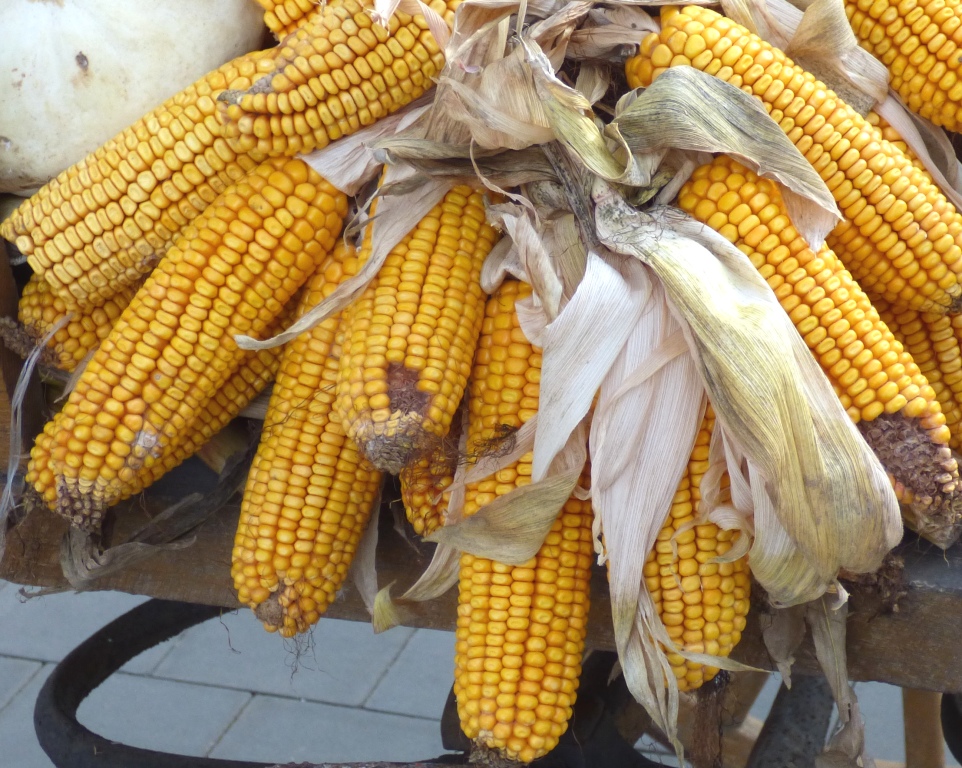
Corn meal (Zea mays)
Corn meal is produced mainly by dry milling of maize kernels and can be whole-ground (germ and pericarp retained) or degermed (germ largely removed). Commercial forms include yellow or white corn meal, stone-ground vs steel-milled, and various grinds (coarse/medium/fine). It is distinct from nixtamalized flours (masa harina), which undergo alkaline cooking and have different functionality.
Caloric value (dry product, 100 g)
Approximately 350–380 kcal per 100 g (typical ≈ 365 kcal/100 g; varies with moisture, particle size, and degree of degermination).
Average composition (indicative, per 100 g)
Total carbohydrates: ~73–79 g (predominantly starch).
Protein: ~7–9 g (lysine and tryptophan limiting).
Fat: ~1–6 g (lower in degermed, higher in whole-ground).
Dietary fiber: ~2–9 g (higher in whole-ground).
Micronutrients: potassium, magnesium, phosphorus; traces of iron and zinc; carotenoids (lutein, zeaxanthin) especially in yellow varieties. “Enriched” products may contain thiamin, niacin, folate, and iron per local standards.
Residual lipid profile (intrinsic corn oil, % of total fat)
PUFA: predominantly linoleic (omega-6).
MUFA: substantial oleic fraction.
SFA: smaller palmitic/stearic fraction.
ALA: traces. Because total fat in corn meal is low, the lipid contribution per 100 g is modest; degermination further reduces rancidity risk.
Process technology and particle sizes
Dry milling with tempering, degermination, and sifting yields grits, meal, and flour cuts in fine/medium/coarse classes. Particle size governs water absorption, viscosity, and texture (coarser cuts give more structured porridge/polenta). Thermal pre-cooking (instant/pregelatinized) partially gelatinizes starch and shortens cook time. Stone-ground meal retains more germ/bran and flavor but has a shorter shelf life.
Sensory and functional properties
Golden color from xanthophylls; sweet-cereal aroma with light toasted notes in pre-cooked or flaked materials.
Predictable thermal viscosity (corn starch gelatinization typically ~62–72 °C), good water absorption, and granular structure that promotes crispness in coatings and baked snacks.
Light and oxygen can fade carotenoids; whole-ground meal is more prone to oxidative staling than degermed.
Nixtamalization versus conventional meal (note)
Masa from alkaline treatment (cal) is not equivalent to conventional corn meal: it develops unique doughability and flavor for tortillas/tamales that are not replicated by non-nixtamalized meal.
Food applications
Polenta and porridges; cornbread, muffins, and quick breads; hushpuppies and Johnnycakes; breadings/coatings; crackers, grissini, and extruded snacks; batters and enriched pastas. It is not a substitute for masa in tortilla/tamale production.
Nutrition and health
Corn meal provides mainly starch-based energy with moderate protein quality; pairing with legumes, dairy, or eggs improves the amino-acid profile.
Carotenoids (lutein/zeaxanthin) contribute color and minor antioxidant capacity.
Residual lipids are low; when present, they are largely PUFA/MUFA with limited SFA.
Naturally gluten-free, but cross-contact with gluten can occur in non-dedicated mills.
Quality and specifications (typical themes)
Moisture: ≤13.5–14.0% for storability.
Ash/bran: aligned with degree of degermination.
Total fat: ~1–3% in degermed; higher in stone-ground whole-meal.
Particle size: distribution per application (reference sieves).
Color: consistent yellow (or white) hue; absence of specks and foreign matter.
Microbiology: appropriate to category (TPC/yeasts–molds).
Mycotoxins: verify corn lots (for example fumonisins, aflatoxins, DON/zearalenone) per regulation.
Residues: pesticides and heavy metals within legal limits.
Storage and shelf life
Store cool, dry, and protected from light/odors in barrier packaging. Degermed meal commonly holds 6–12 months; whole-ground/stone-ground has shorter life due to higher oil. Moisture uptake leads to caking and quality loss; use FIFO rotation and reseal tightly after opening.
Allergens and safety
Maize does not contain gluten, but cross-contact with wheat/rye/barley is possible in shared facilities; label accordingly or use certified gluten-free lines. Manage dust and foreign-body controls per good manufacturing practice.
Troubleshooting
Dense or gluey porridge: grind too fine or water too low; increase granulation or adjust hydration/cook time.
Stale/paint-like notes: oxidative aging—check age, storage, and prefer lower-fat degermed cuts for long shelf life.
Faded color: carotenoid degradation from light/oxygen—improve packaging barrier.
Lumping in dough/batter: inadequate dispersion—improve dry premix, hydrate progressively, or increase agitation.
Sustainability and supply chain
Dry milling requires relatively little process water and yields co-products (bran, grits) for feed or other value streams. Quality reflects agronomy (hybrids, rapid post-harvest drying) and robust in-field and storage mycotoxin risk management.
Conclusion
Corn meal delivers color, mild sweetness, and versatile functionality, with degermed variants offering superior oxidative stability. Appropriate grind selection, moisture control, and disciplined raw-material quality and hygiene enable consistent, safe products across a wide range of applications.
Mini-glossary of lipid acronyms
MUFA — MonoUnsaturated Fatty Acids: Generally favorable for heart and lipid profile (for example oleic acid).
PUFA — PolyUnsaturated Fatty Acids: Include omega-3 and omega-6; beneficial, but keep a balanced omega-6:omega-3 ratio.
SFA — Saturated Fatty Acids: To moderate; impact depends on overall diet and the replacement nutrient.
ALA/EPA/DHA (omega-3) — Alpha-linolenic acid / Eicosapentaenoic acid / Docosahexaenoic acid: Support heart and brain health, with stronger evidence for EPA/DHA.
TFA — Trans Fatty Acids: To avoid; associated with increased cardiovascular risk.
MCT — Medium-Chain Triglycerides: Rapidly absorbed; useful in specific contexts, but still count toward total calories.