

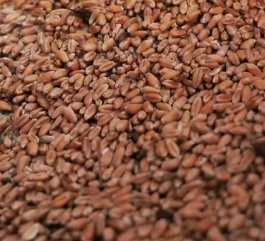
Wheat bran and wheat middlings (Triticum aestivum)
Definition
Wheat bran and wheat middlings are fractions obtained from milling wheat (Triticum aestivum, family Poaceae) and subsequent sifting/bolting. They mainly represent the outer kernel layers, with variable amounts of adhering endosperm. In practice:
Bran: the coarser fraction, richer in outer layers, with high fiber content and larger particles.
Wheat middlings: a finer and more “mixed” fraction, with more residual endosperm than bran, therefore slightly higher in starch and with different technological behavior.
Main application fields: food (fiber enrichment, rustic baking, baked goods, cereals, snacks), cosmetics (limited use as a gentle mechanical exfoliant or functional powder only if meeting cosmetic specifications), medical/pharmaceutical (indirect use in nutrition-oriented foods, subject to requirements), industrial use (fiber-rich ingredient supply, component extraction, feed where applicable).

Production process
During roller milling, the kernel is separated into fractions: flour (endosperm) and outer fractions. Through sifting, different cuts are obtained by particle size and residual endosperm content. Wheat middlings typically come from finer sifting steps, where a higher share of endosperm remains attached. Critical quality parameters include particle size distribution, moisture, microbial load, foreign bodies, and control of supply-chain contaminants (e.g., mycotoxins, metals, residues), as well as oxidative stability linked to any residual lipid fraction (more relevant when germ fractions are present).
Identification data and specifications
| Characteristic | Value | Note |
|---|
| Ingredient name | Wheat bran / wheat middlings | Outer milling fractions |
| Botanical name | Triticum aestivum | Family: Poaceae |
| Plant part | Kernel outer layers + residual endosperm | Varies by cut |
| Nature | Fibrous fraction | Fiber, minerals, phenolic compounds |
| Key parameters | Fiber; particle size; ash; moisture; contaminants | Drive functionality and safety |
| Caloric value | Typically ~200–260 kcal/100 g | Variable: middlings tend to be higher due to more starch |
Physicochemical properties (indicative)
| Characteristic | Indicative value | Note |
|---|
| Physical state | Powder/flakes | Bran coarser; middlings finer |
| Color | Beige → brown | Depends on variety and residual endosperm |
| Odor | Cereal-like | Rancid notes indicate oxidation |
| Water solubility | Not soluble | High hydration/swelling capacity |
| Water absorption capacity | High | Increases with fiber and fineness |
| Dough impact | Increases water absorption and can disrupt the gluten network | Requires hydration and process adjustment |
| Key constituents (representative) | Fibers (arabinoxylans, cellulose); minerals; phenolics (e.g., ferulic acid); phytates | Profile varies by cut and lot |
Main uses
Food
Used to increase fiber in breads, biscuits, breadsticks, cereals, and snacks. Bran gives a more “rustic” effect and can reduce loaf volume and crumb openness if not managed; wheat middlings, being finer and containing more endosperm, may be easier to integrate and deliver a less aggressive texture. In baking, controlled percentages are typically used and compensated with higher hydration and resting times.
Serving note
Use levels vary: even small recipe percentages can significantly raise finished-product fiber. Nutritional impact depends on overall portion size and individual tolerance to fiber.
Safety (allergens, food)
They contain gluten (wheat) and are therefore contraindicated for people with celiac disease. In addition, as outer-layer fractions, they tend to concentrate certain supply-chain contaminants compared with white flour, so controls for mycotoxins and residues are important within quality plans.
Storage and shelf-life
Store in a cool, dry environment, protected from humidity and pests. Shelf-life depends on moisture and oxidative stability; barrier packaging and fast stock rotation help prevent rancid off-notes.
Industrial use
Used as fibrous ingredients in semi-finished products, in component extraction (fiber fractions) or, where permitted, in feed; use depends on sector specifications and regulations.
Functional role and use rationale
The main value of bran and wheat middlings is increasing fiber and providing bioactive fractions associated with the outer kernel layers (phenolics, minerals). Technologically, they introduce a particulate phase that increases water absorption and modifies dough structure: particles can disrupt the continuity of the gluten network, reducing volume if formulation is not compensated. Wheat middlings tend to be more manageable because they are finer and contain more residual endosperm.
Formulation compatibility
In leavened doughs, it is often useful to increase hydration, introduce autolyse or preferments, and modulate mixing times to avoid excessive oxidation and gluten tearing. In biscuits and short products, fiber can increase crumbliness and reduce cohesion, requiring adjustments in fats and binders. In extruded products, fiber affects expansion and texture, so moisture and thermal profile should be controlled.
Pros and cons
Pros
Effective increase in fiber and “whole-grain” positioning.
Adds rustic sensorial character and, if well managed, can improve perceived satiety.
Functional raw material for high-fiber products with broad application versatility.
Cons
Contains gluten and is contraindicated for people with celiac disease.
Can reduce loaf volume and crumb openness if not compensated (hydration/process).
Greater attention needed for supply-chain contaminants and oxidative stability compared with highly refined flours.
Safety, regulatory, and environment
Allergen
Yes: gluten (wheat).
Contraindications
Not suitable for gluten-free diets. In individuals with sensitive digestion, a sudden increase in fiber may cause discomfort; gradual introduction and adequate dietary hydration are advisable.
Regulatory/quality note
GMP/HACCP management is essential. Controls on contaminants (especially mycotoxins) are critical because outer fractions can be more exposed. Labelling and fiber claims must be consistent with applicable requirements.
Storage and shelf-life
Wheat bran and wheat middlings should be stored away from humidity and heat, in closed containers and preferably barrier packaging. In industrial settings, faster stock rotation than highly refined flours is often useful, with monitoring of odor and key quality parameters (moisture, peroxide value if applicable).
Conclusion
Wheat bran and wheat middlings (Triticum aestivum) are fibrous milling fractions used to enrich baked goods and snacks with fiber and a “whole-grain” character. The key practical difference is technological: bran is coarser and more impactful on loaf volume and texture, while wheat middlings are finer and often easier to manage. To obtain reproducible results, it is decisive to control particle size, hydration, and process, along with safety management (presence of gluten and supply-chain contaminant control).
Mini-glossary
Bolting/sifting (abburattamento): sifting of milled fractions to separate flours and outer layers.
Bran: coarser, outer-layer-rich fraction with high fiber content.
Wheat middlings: finer fraction with higher residual endosperm content than bran, used as an intermediate milling cut.
GMP/HACCP: good manufacturing practices and a food safety management system for food safety and contamination prevention.