

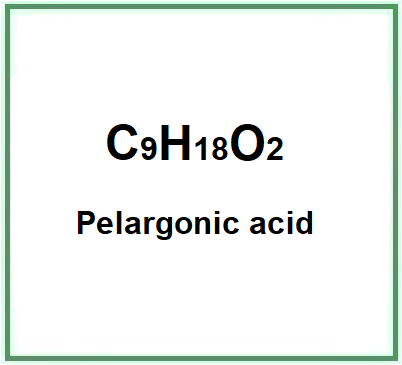
Acido pelargonico
Media gradimento : 7
| Valutazione | N. Esperti | Valutazione | N. Esperti |
|---|---|---|---|
| 1 | 6 | ||
| 2 | 7 | ||
| 3 | 8 | ||
| 4 | 9 | ||
| 5 | 10 |
Pro:
Antimicrobico (1) Antifungino (1)10 pt da Whiz35
| Iscriviti per poter valutare questo oggetto, le sue recensioni e per contribuire a Tiiips.Valuta | Dove si trova? |
| "Acido pelargonico studi" su Acido pelargonico Consenso relazione 10 di Whiz35 (11969 pt) | 20-dic-2022 09:58 |
| Leggi il Tiiip completo | (Invia il tuo commento) |
Compendio degli studi più significativi con riferimento a proprietà, assunzione, effetti.
Dev Kumar G, Mis Solval K, Mishra A, Macarisin D. Antimicrobial Efficacy of Pelargonic Acid Micelles against Salmonella varies by Surfactant, Serotype and Stress Response. Sci Rep. 2020 Jun 24;10(1):10287. doi: 10.1038/s41598-020-67223-y.
Abstract. The antimicrobial properties of Pelargonic acid (PA), a component of tomatoes, makes it an attractive candidate as a food additive and sanitizer. The antimicrobial efficacy of PA emulsions generated using surfactants: Tween 80, Triton X100, Sodium Dodecyl Sulfate (SDS) and Quillaja Saponin was evaluated against Salmonella serotypes Newport, Oranienburg and Typhimurium. Micelle/dropletsize, and minimal inhibitory concentrations (MIC) were determined. Surfactant type and concentration significantly influenced the antimicrobial efficacy of PA (p < 0.05). Overall, Salmonella Newport was the most (p < 0.05) susceptible serotype to PA emulsions. PA emulsions generated with 1.00% SDS had the highest (p < 0.05) antimicrobial activity, with MIC of 7.82 mM against S. Newport and 15.62 mM against S. Oranienburg/S. Typhimurium, respectively. Addition of PA to Trypticase Soy Broth resulted in a decreased growth rate and an increased lag phase duration. Cells exposed to PA formed elongated filaments (>5 µm). Additionally, Salmonella serotypes Typhimurium and Newport also formed floccular biofilms. PA emulsions at a concentration of 31.25 mM generated using 1% SDS and 1% Quillaja saponin resulted in >6 log CFU/ml reduction in Salmonella population. Althought all PA emulsions evalauted inhibited Salmonella, morphological changes to this antimicrobial varied substantially among the Salmonella serotypes tested.
Chadeganipour M, Haims A. Antifungal activities of pelargonic and capric acid on Microsporum gypseum. Mycoses. 2001 May;44(3-4):109-12. doi: 10.1046/j.1439-0507.2001.00609.x.
Abstract. The inhibitory effects of pelargonic and capric acid on Microsporum gypseum were examined. Solid and liquid Sabouraud glucose media containing different concentrations of pelargonic and capric acid were separately prepared and inoculated with the suspension of mycelium and spores of M. gypseum and incubated at 25 degrees C for 1 month. The culture media were examined periodically for fungal growth and the minimum inhibitory concentration (MIC) of each fatty acid was determined. The MIC for capric acid was 0.02 mg ml-1 and for pelargonic acid 0.04 mg ml-1 on solid media and 0.075 mg ml-1 for capric acid and 0.05 mg ml-1 for pelargonic acid in the liquid media.
Wahlberg JE, Wrangsjö K, Hietasalo A. Skin irritancy from nonanoic acid. Contact Dermatitis. 1985 Oct;13(4):266-9. doi: 10.1111/j.1600-0536.1985.tb02561.x.
Abstract. 100 hospitalized patients with skin disease were patch tested with graded dilutions of nonanoic acid (NON), sodium lauryl sulfate (SLS) and benzalkonium chloride (BENZ). Smooth dose-response curves were obtained. The concentration needed to produce a discernible irritant reaction in 50% of the population (ID50) was found to be lower in cases of irritant than of allergic contact dermatitis; this finding warrants further study. Björnberg's observation that it is not possible to predict the strength of the reaction to one irritant by knowing the strength of the reaction to another was confirmed. Benzalkonium chloride caused a high frequency of pustular and/or bullous reactions with scarring as a sequela. It is suggested that this irritant could be replaced by nonanoic acid in experimental studies of topical irritancy, since the test reactions from nonanoic acid were reproducible, easy to read and left no staining or scarring.
Johnson W Jr, Heldreth B, Bergfeld WF, Belsito DV, Klaassen CD, Hill R, Liebler D, Marks JG Jr, Shank RC, Slaga TJ, Snyder PW, Andersen FA. Final report of the Cosmetic Ingredient Review Expert Panel on the safety assessment of pelargonic acid (nonanoic acid) and nonanoate esters. Int J Toxicol. 2011 Dec;30(6 Suppl):228S-69S. doi: 10.1177/1091581811428980.
Abstract. Pelargonic acid and its esters function as skin-conditioning agents in cosmetics. Molecular weight (mw) and octanol-water partition coefficient data suggest that dermal penetration is possible. The biohandling of branched-chain fatty acids is not the same as for straight-chain fatty acids, but the differences are not significant to the conclusion that they all are readily metabolized to nontoxic moieties. Limited data suggested that the penetration of other ingredients may be enhanced if these ingredients are present in the same formulation. These ingredients are not significant oral or dermal toxicants in animal studies. They are not reproductive/developmental toxicants or genotoxic/carcinogenic in animal studies. The available data suggested that product formulations containing these ingredients would be nonirritating and nonsensitizing to human skin, but formulators were cautioned to consider the penetration enhancement potential. The Cosmetic Ingredient Review (CIR) Expert Panel concluded that these ingredients are safe in the present practices of use and concentration.
Johnson W Jr, Heldreth B, Bergfeld WF, Belsito DV, Klaassen CD, Hill R, Liebler D, Marks JG Jr, Shank RC, Slaga TJ, Snyder PW, Andersen FA. Final report of the Cosmetic Ingredient Review Expert Panel on the safety assessment of pelargonic acid (nonanoic acid) and nonanoate esters. Int J Toxicol. 2011 Dec;30(6 Suppl):228S-69S. doi: 10.1177/1091581811428980.
Abstract. Pelargonic acid and its esters function as skin-conditioning agents in cosmetics. Molecular weight (mw) and octanol-water partition coefficient data suggest that dermal penetration is possible. The biohandling of branched-chain fatty acids is not the same as for straight-chain fatty acids, but the differences are not significant to the conclusion that they all are readily metabolized to nontoxic moieties. Limited data suggested that the penetration of other ingredients may be enhanced if these ingredients are present in the same formulation. These ingredients are not significant oral or dermal toxicants in animal studies. They are not reproductive/developmental toxicants or genotoxic/carcinogenic in animal studies. The available data suggested that product formulations containing these ingredients would be nonirritating and nonsensitizing to human skin, but formulators were cautioned to consider the penetration enhancement potential. The Cosmetic Ingredient Review (CIR) Expert Panel concluded that these ingredients are safe in the present practices of use and concentration.
Aneja, M., Gianfagna, T. J., & Hebbar, P. K. (2005). Trichoderma harzianum produces nonanoic acid, an inhibitor of spore germination and mycelial growth of two cacao pathogens. Physiological and Molecular Plant Pathology, 67(6), 304-307.
Abstract. An isolate of Trichoderma harzianum Rifai from an infected cacao pod produces and secretes nonanoic (pelargonic) acid into a liquid culture medium. Nonanoic acid (NA) was very inhibitory to spore germination and mycelial growth of two cacao pathogens, Crinipellis perniciosa Stahel and Moniliophthora roreri Cif. H.C. Evans. It was highly active causing 75% inhibition of spore germination in an in vitro assay at a rate as low as 0.09 μM for M. roreri and 0.92 μM for C. perniciosa. Mycelial growth was comparatively less sensitive to inhibition, but still there was a 75% reduction in growth with 0.62 μM in M. roreri and 151 μM NA in C. perniciosa. In contrast, NA did not affect Trichoderma mycelial growth or spore germination at concentrations that were inhibitory to the pathogens. 6-pentyl-α-pyrone was also produced and secreted into the medium by T. harzianum, however; it was not antagonistic to the cacao pathogens. Although a number of metabolites produced by Trichoderma spp. have been identified in the past, this is the first report of NA production and secretion by any Trichoderma. The results suggest that NA may play a role in the successful use of some Trichoderma spp. isolates in the biocontrol of fungal diseases of plants.
Breeuwer P, De Reu JC, Drocourt J, Rombouts FM, Abee T. Nonanoic Acid, a Fungal Self-Inhibitor, Prevents Germination of Rhizopus oligosporus Sporangiospores by Dissipation of the pH Gradient. Appl Environ Microbiol. 1997 Jan;63(1):178-85. doi: 10.1128/aem.63.1.178-185.1997.
Abstract. Germination of Rhizopus oligosporus sporangiospores is characterized by swelling of the spores and subsequent emergence of germ tubes. Changes in spore morphology and alterations in intracellular pH (pH(infin)) of the sporangiospores were assessed during the germination process by flow cytometry. Sporangiospores were stained with carboxyfluorescein by incubation with carboxyfluorescein diacetate. The nonfluorescent carboxyfluorescein diacetate is passively transported into intact cells and subsequently cleaved by esterases, which results in intracellular accumulation of the fluorescent carboxyfluorescein. Given that the fluorescence of carboxyfluorescein is pH dependent, the pH(infin) of the individual spores could be assessed simultaneously with spore size. For R. oligosporus, swelling of the sporangiospores was accompanied by an increase of pH(infin). In the presence of nonanoic acid, a self-inhibitor produced by various fungi, increase of the pH(infin) was prevented and swelling was inhibited at concentrations of less than 1 mM. Octanoic acid and decanoic acid were equally effective. Acetic acid also inhibited germination but at much higher concentrations (>8 mM). The mechanism of action of these fatty acids is most likely dissipation of the pH gradient. A model is proposed in which the pH(infin) plays a crucial role in the germination of R. oligosporus sporangiospores.
Badban S, Hyde AE, Phan CM. Hydrophilicity of Nonanoic Acid and Its Conjugate Base at the Air/Water Interface. ACS Omega. 2017 Sep 7;2(9):5565-5573. doi: 10.1021/acsomega.7b00960.
Abstract. A general adsorption model based on partial dissociation was developed for carboxylic acids. The model was applied to the adsorption of nonanoic acid at the air/water interface. Two cases were selected for experimental verification: acid-only and acid with a constant Na+OH- concentration. The model was applied simultaneously at both conditions, and the hydrophilicity of the ionic states was quantified by the adsorption constants, K A and K AH. It was found that the adsorption constant for the acidic group is significantly higher than that for the carboxylate group, K AH /K A ∼ 272. The model lays important groundwork for modeling and predicting carboxylic/carboxylate adsorption.
| Iscriviti per poter valutare questo oggetto, le sue recensioni e per contribuire a Tiiips.ValutaChiudi | (0 commenti) |
| "Descrizione" su Acido pelargonico Consenso relazione 10 di Whiz35 (11969 pt) | 19-lug-2023 13:50 |
| Leggi il Tiiip completo | (Invia il tuo commento) |
L'acido pelargonico o acido nonanoico è un acido grasso saturo naturale a catena media, nove atomi di carbonio, che si trova in piante commestibili, nell'esometaboloma del pomodoro, in alcuni rododendri (Rhododendron mucronulatum), in ranuncoli (Staphisagria macrosperma), in piante della famiglia delle Malvaceae, in animali.
Descrizione delle materie prime utilizzate nella sua produzione:
Sintesi industriale del processo:
Si presenta in forma di liquido oleoso incolore insolubile in acqua, solubile in etere, etanolo e cloroformio.

A cosa serve e dove si usa
Cosmetica
L'acido pelargonico e i suoi esteri hanno varie funzioni come agenti condizionanti della pelle piuttosto sicuri e non tossici, tuttavia la penetrazione cutanea è possibile. Non si sono dimostrati irritanti e non sensibilizzanti per la pelle umana in prove di laboratorio, ma alcuni formulatori possono migliorarne la penetrazione nello strato corneo.
Tensioattivo
Agente di pulizia
I prodotti cosmetici utilizzati per detergere la pelle utilizzano l'azione tensioattiva che produce un abbassamento della tensione superficiale dello strato corneo facilitando la rimozione di sporco e impurità.
Tensioattivo
Agente emulsionante
Le emulsioni sono termodinamicamente instabili. Gli emulsionanti hanno la proprietà di ridurre la tensione interfacciale olio/acqua o acqua/olio, migliorare la stabilità dell'emulsione e anche di influenzare direttamente stabilità, proprietà sensoriali e la tensione superficiale dei filtri solari, modulando le loro prestazioni filmometriche.
Medicina
Agente antifungino e disinfettante comunemente riconosciuto come sicuro (GRAS), possiede anche attività antimicrobica (1) ed è utilizzato come trattamento antimicrobico acquoso per preservare prodotti freschi compresa la possibile internalizzazione di agenti patogeni da parte dei tessuti vegetali (2). E' registrato all'EPA (3).
Alimentazione
Fragranza. Utilizzato nella preparazione di aromi di cocco e bacche. Additivo alimentare approvato dalla FDA. E' accreditato di proprietà antimicrobiche.
Altri usi
Unitamente ad altri componenti chimici, come il glifosato (Roundup) è un ingrediente nelle formulazioni di erbicidi, diserbanti.
Lubrificante sintetico, plastificante, essiccante per vernici.
Sicurezza
Non ha dimostrato tossicità per l'uomo a basse quantità.
Su questo acido sono stati selezionati gli studi più rilevanti con una sintesi dei contenuti:
Caratteristiche tipiche del prodotto commerciale Pelargonic acid
| Appearance | Colorless oily liquid |
| Boiling Point | 269°C 516.20°F litre |
| Melting Point | 9°C 48.20°F litre |
| Flash Point | 100°C 212°F |
| Density | 0.906 g/mL at 25°C |
| Refraction Index | n20/D 1.432(lit.) |
| Vapor Pressure | <0.1 mm Hg at 20°C |
| Vapor density | 5.5 |
| PSA | 37.30000 |
| LogP | 2.82160 |
| Purity | ≥99% |
| Water | ≤0.5% |
| Total acid | 97.5%-100% |
| Acid value | 345.00-355.00 mg KOH/g |
| Iodine value | 0.00-0.50 gl2/100g |
| Iron | 0-2 ppm |
| Transmittance | 95-100% 440nm |
| Transmittance | 99-100% 5500nm |
| Storage | 2-8°C |
| Shelf Life | 2 years |
| Chemical Safety | ![]() |
![]() | ![]() |
![]() | ![]() |
Sinonimi
Bibliografia_____________________________________________________________________
(1) Dev Kumar G, Mis Solval K, Mishra A, Macarisin D. Antimicrobial Efficacy of Pelargonic Acid Micelles against Salmonella varies by Surfactant, Serotype and Stress Response. Sci Rep. 2020 Jun 24;10(1):10287. doi: 10.1038/s41598-020-67223-y.
(2) Herdt J., Feng H. Aqueous antimicrobial treatments to improve fresh and fresh-cut produce safety. In: Fan X., Niemira B.A., Doona C.J., Feeherry F.E., Gravani R.B., editors. Microbial Safety of Fresh Produce. Blackwell Publishing and the Institute of Food Technologists; Ames, IA, USA: 2009. pp. 169–190.
(3) Biopesticides Fact Sheet for Pelargonic acid (epa.gov)
| Iscriviti per poter valutare questo oggetto, le sue recensioni e per contribuire a Tiiips.ValutaChiudi | (0 commenti) |
Leggi altri Tiiips su questo oggetto in Inglese (2)
Tipologia:   Natural Principali sostanze contenute:   Ultimo aggiornamento:   2022-12-20 08:08:34 | Rischio chimico:   |

