

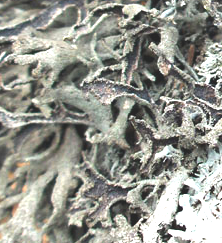
Tree moss
Rating : 5
| Evaluation | N. Experts | Evaluation | N. Experts |
|---|---|---|---|
| 1 | 6 | ||
| 2 | 7 | ||
| 3 | 8 | ||
| 4 | 9 | ||
| 5 | 10 |
Cons:
Possible specific allergy (1)10 pts from Whiz35
| Sign up to vote this object, vote his reviews and to contribute to Tiiips.Evaluate | Where is this found? |
| "Descrizione" about Tree moss Review Consensus 10 by Whiz35 (11988 pt) | 2025-Dec-07 11:10 |
| Read the full Tiiip | (Send your comment) |
Tree moss, Evernia furfuracea (Pseudevernia furfuracea)
Evernia furfuracea, currently classified more accurately as Pseudevernia furfuracea and commonly known as tree moss, is an epiphytic lichen widely distributed in temperate coniferous forests of the Northern Hemisphere. It typically colonises the bark of spruce and pine trees in relatively cool, humid and well-ventilated environments, where its presence is often interpreted as an indicator of good air quality. Like all lichens, it is a tight symbiosis between a mycobiont (fungal partner) and a photobiont (green alga) of the genus Trebouxia, an association that allows the organism to live without roots in the soil, relying mainly on atmospheric sources of water and nutrients.
![]() | ![]() |
From a morphological point of view, Pseudevernia furfuracea develops a foliose–fruticose thallus, somewhat flattened yet distinctly branched, forming small hanging tufts. The thallus is typically grey-green to pale green, with a marked contrast between the dry state, in which it appears lighter and more rigid, and the hydrated state, in which it becomes darker, more flexible and physiologically more active. The surface can appear finely farinose, a feature reflected in the epithet “furfuracea”. The species reproduces mainly by vegetative propagules such as isidia, small outgrowths that contain both partners of the symbiosis and detach easily, thereby facilitating colonisation of new substrates.
Because of its physiology and anatomy, Pseudevernia furfuracea has become a recognised model in applied ecology as both a bioindicator and a biomonitor of air pollution. The absence of a cuticle and root system, combined with a high surface-to-volume ratio, makes the thallus highly exposed to and capable of accumulating airborne pollutants, including heavy metals and various organic contaminants. For this reason tree moss is used in numerous environmental monitoring programmes, either by sampling natural populations or by deploying transplanted thalli in industrial, urban or roadside areas, in order to obtain an integrated picture of medium-term atmospheric contamination.
One of the most practically relevant aspects concerns the use of Evernia furfuracea in perfumery. From the dried lichen biomass, manufacturers obtain extracts such as treemoss absolute and treemoss resinoid, which function as base-note fragrance ingredients and fixatives. The odour is generally described as woody, earthy and mossy, with a dark, “forest-like” character often compared to, but distinct from, that of oakmoss (Evernia prunastri). These extracts are classical constituents of chypre and fougère accords and are also employed in woody, leathery and incense-like compositions, where they enhance diffusion and longevity of the perfume on skin and textiles.
Chemically, Pseudevernia furfuracea contains a complex mixture of secondary metabolites, notably depsides, depsidones, triterpenes, sterols and various aromatic compounds. Some of these substances, and especially their oxidation products, have been associated with a relevant sensitisation potential. From a dermatological perspective, treemoss derivatives are therefore recognised among the possible fragrance allergens, particularly in individuals with pre-existing fragrance allergy or high skin reactivity. Numerous cases of allergic contact dermatitis have been documented in association with products containing oakmoss and treemoss extracts, sometimes even at relatively low concentrations in sensitised subjects.
As a consequence, the use of Evernia furfuracea extract / Pseudevernia furfuracea extract as a fragrance ingredient is now subject to specific regulation, especially within European cosmetic legislation and the IFRA (International Fragrance Association) standards. These regulatory frameworks set concentration limits, require the reduction or removal of certain constituents considered to be of higher allergenic concern, and impose labelling obligations when relevant. Modern extraction and purification processes aim to obtain chemically more controlled extracts, with a lower proportion of potentially sensitising molecules, thereby improving the safety profile of the ingredient. Nonetheless, for consumers with known fragrance sensitivity or a history of allergic contact dermatitis, careful reading of ingredient lists and, when appropriate, the choice of fragrance-free or low-allergen formulations remain prudent strategies.
Beyond perfumery and toxicity assessment, Pseudevernia furfuracea has attracted interest in pharmacognosy for its potential antimicrobial and antioxidant activities, demonstrated mainly in in vitro models. While these findings are scientifically interesting, they do not currently support direct clinical use of raw lichen preparations, which must always be evaluated in the context of regulatory requirements, standardisation and risk–benefit assessment. In practical terms, the most relevant health-related issue remains the management of allergic risk associated with treemoss extracts in cosmetic and perfumery products.
Overall, Evernia furfuracea/Pseudevernia furfuracea is a species of substantial multidisciplinary interest. It is a characteristic component of well-preserved forest ecosystems, a refined tool for environmental biomonitoring, and a traditional aromatic resource in perfumery, while at the same time being a potential source of contact allergens that requires careful control and regulated use. This convergence of ecological, chemical, regulatory and dermatological dimensions explains why tree moss continues to be the focus of intensive scientific and applied research.
Taxonomic classification (lichens)
| Category | Data |
|---|---|
| Common name | treemoss, tree moss (lichen) |
| Current scientific name | Pseudevernia furfuracea (L.) Zopf |
| Main synonym | Evernia furfuracea (L.) W. Mann |
| Kingdom | Fungi |
| Phylum | Ascomycota |
| Class | Lecanoromycetes |
| Order | Lecanorales |
| Family | Parmeliaceae |
| Genus | Pseudevernia |
| Species | Pseudevernia furfuracea (L.) Zopf |
Production process
Lichen raw material and harvesting
Evernia furfuracea (often referred to as tree moss / treemoss) is a fruticose lichen that grows mainly on the bark of conifers (fir, pine) and sometimes on deciduous trees in temperate regions.
Harvesting is carried out on branches and trunks in relatively unpolluted forest areas, where the lichen is abundant and air quality is good.
Lichen thalli are manually detached, removing as much bark, needles, and foreign plant material as possible.
Raw material preparation
Mechanical cleaning to remove wood fragments, leaves, sand, and other debris.
Optional sorting to group lots by geographical origin or substrate type.
If needed, gentle drying (ventilated air, moderate temperature) to stabilize moisture prior to extraction and improve storage stability.
Extraction (treemoss resinoid / absolute)
The dried lichen is subjected to organic solvent extraction (e.g. hydrocarbons, alcohols) to obtain a resinoid rich in aromatic secondary metabolites.
The resinoid may be further purified by decantation, filtration, and sometimes decolorization.
For treemoss absolute, the resinoid is treated with an alcoholic solvent; after extraction, the alcohol is removed under vacuum to yield a viscous or semi-solid material with an intense, characteristic odor.
For cosmetic use, the commercial product may be supplied:
as a concentrated resinoid/absolute, or
pre-diluted in cosmetic solvents (ethanol, esters, etc.) to facilitate handling and dosage in fragrances and perfumes.
Basic quality control
Confirmation of identity (chromatographic fingerprint, odor profile).
Determination of moisture, ash, and relevant contaminants (heavy metals, pesticides, PAHs, residual solvents).
Evaluation of sensory parameters (color, odor intensity, odor quality).
Applications
Perfumery
Evernia furfuracea is traditionally used as a base note in perfumery:
provides woody, mossy, earthy nuances with balsamic undertones.
acts as a fixative, extending the longevity of fragrances on skin and textiles.
Treemoss absolute is employed in:
chypre and fougère accords,
woody, “forest”, and “green” compositions,
masculine and unisex fragrances with mossy or leathery facets.
Cosmetics
In cosmetics, Evernia furfuracea is used primarily as a fragrance ingredient in:
body creams and lotions,
deodorants and aftershaves,
shampoos, shower gels, and hair-care products with woody/green fragrance profiles.
In many finished products, it is part of a complex perfume blend declared as “Parfum”; its presence and level are managed within the fragrance concentrate according to safety and regulatory constraints.
Other technical uses
Tree moss extracts and related lichen extracts (oakmoss/treemoss) are used as fixatives and aromatic components in:
perfumed household and cleaning products,
room fragrances and scented candles (where permitted).
As a lichen species, Pseudevernia furfuracea is also studied as a bioindicator of air pollution and, experimentally, as a biosorbent for certain pollutants (technical/environmental uses, not cosmetic).
Food use
Evernia furfuracea is not intended as a food ingredient.
It is not approved for flavor use in standard food regulations; any historical or experimental uses do not belong to current regulated food practice.
Nutrition & health
Tree moss extracts are not used for nutritional purposes; they play no role as macronutrient or micronutrient sources.
Health considerations are mainly toxicological and dermatological, related to use as fragrance allergens in cosmetic and fragrance products:
Evernia furfuracea is recognized as a contact allergen, capable of inducing allergic contact dermatitis in sensitized individuals.
Contact allergy often manifests on areas where perfumes or fragranced cosmetics are applied (neck, wrists, face, axillae, etc.).
Consequently, these extracts are subject to:
cosmetic safety assessment, with consideration of sensitization potential,
limitations and recommendations on concentration and use conditions from regulatory bodies and industry guidelines.
Allergens and intolerances
Evernia furfuracea (tree moss / treemoss) is a well-known fragrance contact allergen:
Patch-test studies show a measurable proportion of patients with positive reactions to treemoss extracts.
Sensitization can co-occur or cross-react with oakmoss and potentially with colophonium (rosin), depending on the individual.
It can contribute to allergic contact dermatitis in individuals with fragrance allergy, especially with repeated exposure.
In multi-ingredient fragrance blends, the overall allergenic risk depends on the combined presence of multiple fragrance allergens; treemoss is often one among several contributors.
For subjects with known fragrance allergy or eczema, dermatologists frequently recommend:
fragrance-free products, or
products confirmed to be free of oakmoss/treemoss and related lichen extracts.
Storage and shelf-life
Resinoids/absolutes of Evernia furfuracea:
store in tightly closed containers, preferably dark glass or stainless steel, protected from light, heat, and air.
maintain a cool, stable storage temperature (e.g. 10–20 °C), unless otherwise specified by the supplier.
avoid prolonged oxygen exposure to limit oxidation and unwanted changes in odor and color.
Under appropriate conditions, treemoss extracts can retain acceptable olfactory quality for several years; practical shelf-life is defined by the manufacturer based on:
chemical profile,
solvent system and any antioxidants or stabilizers,
oxidation indices and sensory changes over time.
Safety and regulatory aspects
Use of Evernia furfuracea in cosmetics is governed by cosmetics legislation (e.g. EU Cosmetics Regulation) and by industry standards for fragrance safety.
Tree moss belongs to the group of perfume lichens, which have been the focus of regulatory attention due to:
persistence of contact allergy cases in the population,
presence of highly sensitizing constituents (notably atranol and chloroatranol) that are now tightly restricted or effectively banned in finished products.
Manufacturers of fragrance bases and cosmetic products must:
perform a safety assessment for the intended use level,
comply with any concentration limits and purity requirements (e.g. “low atranol” qualities),
ensure traceability of raw materials and control for contaminants and marker sensitizers.
Production sites are expected to operate under good manufacturing practices (GMP) and to maintain robust documentation and quality systems; for the fragrance/cosmetic industry, this focuses on:
batch traceability,
control of contaminants (metals, pesticides, PAHs, residual solvents),
consistency of the extract’s composition over time.
Labeling
In cosmetic ingredient listings (INCI), treemoss extract typically appears as:
Evernia Furfuracea Extract or Evernia Furfuracea (Lichen) Extract.
In finished cosmetic products, it is often included within the generic term “Parfum”, while individual regulated allergens (when present above threshold) must be declared separately according to applicable rules.
Technical and safety data sheets (TDS/SDS) for treemoss raw materials and fragrance blends should specify:
INCI name,
CAS and EC numbers,
hazard classification (if applicable),
recommended use levels and restrictions,
warnings related to allergic contact dermatitis in sensitized individuals.
INCI functions (cosmetics)
In cosmetic and perfumery applications, Evernia furfuracea is used mainly for:
Fragrance / perfuming agent
Provides a characteristic woody–mossy, earthy odor to finished products.
Acts as a base note and fixative, enhancing depth and persistence of the fragrance.
Masking / background note
In some formulas, helps to soften or mask unwanted notes from other raw materials, while contributing to the overall “forest” or “mossy” character.
The primary role remains olfactory, with no functional effect on skin or hair beyond its scent.
Conclusion
Evernia furfuracea (tree moss) is an aromatic lichen of major importance for perfumery and cosmetic fragrance design, valued for its deep woody, mossy, earthy profile and fixative properties.
It is not intended for food use; attention focuses on olfactory quality, chemical stability, and dermatological safety, particularly regarding its role as a fragrance allergen.
Through careful control of harvesting, extraction, purification, and regulatory compliance (including reduction of key sensitizers and adherence to concentration limits), treemoss extracts can be used as perfuming ingredients in a safe and compliant manner, while respecting the needs of consumers with sensitive or allergy-prone skin.
Evernia furfuracea extract is an extract obtained by a chemical process.
Production method: maceration in hot or cold water for 3 days, crushing, extraction using isopropanol and cyclohexane, washing, filtration and evaporation of solvents. After this stage, a rough moss product is obtained, which must then be washed with alcohol to remove the waxes, which are insoluble in alcohol.
In the composition of Evernia furfuracea there are two components that have created cases of sensitisation: atranol (2,6-Dihydroxy-4-methyl-benzladehyde) and chloroatranol (3-Chloro -2,6-Dihydroxy-4-methyl-benzladehyde). These two chemical compounds were banned by European Commission Regulation (EU) 2017/1410 on 2 August 2017:

EC Number 200-578-6 289-860-8 CAS 90028-67-4
References__________________________________________________________________________
Uter W, Schmidt E, Lessmann H, Schnuch A. Contact sensitization to tree moss (Evernia furfuracea extract, INCI) is heterogeneous. Contact Dermatitis. 2012 Jul;67(1):36-41. doi: 10.1111/j.1600-0536.2012.02064.x. Epub 2012 Apr 4. PMID: 22486592.
Sokmen, B. B., Kınalıoglu, K., & Aydın, S. (2012). Antimicrobial and antioxidant activities of pseudevernia furfuracea (L.) Zopf var. furfuracea and evernia prunastri lichens collected from black sea region. Gazi University Journal of Science, 25(3), 557-565.
Abstract. The antimicrobial and antioxidant activities of the acetone extracts of lichen Pseudevernia furfuracea var. furfuracea (PF) and Evernia prunastri (EP) were investigated. Different antioxidant tests were applied such as ABTS (2,2'-azino-bis (3-ethylbenzthiazoline-6-sulfonic acid) radical scavenging activity and reducing power. Antimicrobial activities of lichen extracts were determined by agar well diffusion method and micro-well dilution assay. All lichen extracts exhibited antimicrobial activity against test bacteria. Antioxidant activity of PF extract is higher than EP extract. Acetone extracts of PF and EP could be considered as a source of natural antioxidant and antimicrobial agent.
Vartia, K. O. (1973). Antibiotics in lichens. In The lichens (pp. 547-561). Academic Press.
Abstract. . This chapter discusses lichen substances, their studies from the pharmaceutical point of view, and the antibiotics present in them. Lichens have often been mentioned in cattle breeding, for instance, as a remedy against inflammation of udders. The use of lichens for coughs or expressly for pulmonary tuberculosis in old folklore exists from different parts of the globe. Further, present-day science, too, has found fairly strong antibiotics against the tuberculosis bacillus in the same species to some extent. All lichen substances proper are crystalline in nature, and in most cases, acidic in character. Moreover, in the form of alkaline salts, their solubility in water is very poor.The amount of lichen substances contained in different species varies significantly. The chlorine-containing lichen substance diploicin, previously isolated from Buelliacanescens, inhibited the growth of human tuberculosis and diphtheria bacillus 1:100,000, and that of Mycobacterium smegmatis 1:70,000 in vitro. The only compound of the diphenyl ether type occurring in a normal organism is thyroxine. The phenols and their derivatives, components of lichen depsides and depsidones, possess remarkably strong antiseptic qualities.
| Sign up to vote this object, vote his reviews and to contribute to Tiiips.EvaluateClose | (0 comments) |
Read other Tiiips about this object in __Italiano (1)
Hardiness:   Hardiness:   Natural fertilizer:   Hazards/diseases:   Last update:   2025-12-07 11:11:56 | Sun exposure:   Family:   Commercial fertilizer:   Main substances contained:   |

