

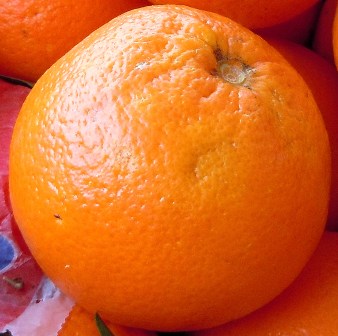
Sweet orange
Rating : 7
| Evaluation | N. Experts | Evaluation | N. Experts |
|---|---|---|---|
| 1 | 6 | ||
| 2 | 7 | ||
| 3 | 8 | ||
| 4 | 9 | ||
| 5 | 10 |
Pros:
Fatigue (1) Cooling diseases (1) Antioxidant (1)8 pts from A_Partyns
| Sign up to vote this object, vote his reviews and to contribute to Tiiips.Evaluate | Where is this found? |
| "Orange studies " about Sweet orange Review Consensus 8 by A_Partyns (13031 pt) | 2019-Sep-29 19:03 |
| Read the full Tiiip | (Send your comment) |
Antibacterial activity, optical, mechanical, and barrier properties of corn starch films containing orange essential oil.
do Evangelho JA, da Silva Dannenberg G, Biduski B, El Halal SLM, Kringel DH, Gularte MA, Fiorentini AM, da Rosa Zavareze E.
Carbohydr Polym. 2019 Oct 15;222:114981. doi: 10.1016/j.carbpol.2019.114981.
Human TRPA1 activation by terpenes derived from the essential oil of daidai, Citrus aurantium L. var. daidai Makino.
Terada Y, Yamashita R, Ihara N, Yamazaki-Ito T, Takahashi Y, Masuda H, Sakuragawa S, Ito S, Ito K, Watanabe T.
Biosci Biotechnol Biochem. 2019 Sep;83(9):1721-1728. doi: 10.1080/09168451.2019.1611405.
Consumption of Raw Orange, 100% Fresh Orange Juice, and Nectar- Sweetened Orange Juice-Effects on Blood Glucose and Insulin Levels on Healthy Subjects.
Papandreou D, Magriplis E, Abboud M, Taha Z, Karavolia E, Karavolias C, Zampelas A.
Nutrients. 2019 Sep 10;11(9). pii: E2171. doi: 10.3390/nu11092171.
Comparing the effects of conventional and microwave roasting methods for bioactive composition and the sensory quality of cold-pressed orange seed oil.
Aydeniz Güneşer B, Yilmaz E.
J Food Sci Technol. 2019 Feb;56(2):634-642. doi: 10.1007/s13197-018-3518-y.
Weight loss effect of sweet orange essential oil microcapsules on obese SD rats induced by high-fat diet.
Li D, Wu H, Dou H.
Biosci Biotechnol Biochem. 2019 May;83(5):923-932. doi: 10.1080/09168451.2019.1578640.
Does red orange juice supplementation has a protective effect on performance, cardiovascular parameters, muscle damage and oxidative stress markers following the Yo-Yo Intermittent Recovery Test Level-1 under polluted air?
Boussetta N, Abedelmalek S, Khouloud A, Ben Anes A, Souissi N.
Int J Environ Health Res. 2019 May 13:1-13. doi: 10.1080/09603123.2019.1614155
Effect of daily intake of a low-alcohol orange beverage on cardiovascular risk factors in hypercholesterolemic humans.
Cerrillo I, Escudero-López B, Ortega A, Martín F, Fernández-Pachón MS.
Food Res Int. 2019 Feb;116:168-174. doi: 10.1016/j.foodres.2018.08.008.
Effect of the flavonoid hesperidin on glucose and fructose transport, sucrase activity and glycaemic response to orange juice in a crossover trial on healthy volunteers.
Kerimi A, Gauer JS, Crabbe S, Cheah JW, Lau J, Walsh R, Cancalon PF, Williamson G.
Br J Nutr. 2019 Apr;121(7):782-792. doi: 10.1017/S0007114519000084. Epub 2019 Jan 23.
| Sign up to vote this object, vote his reviews and to contribute to Tiiips.EvaluateClose | (0 comments) |
| "Descrizione" about Sweet orange Review Consensus 8 by A_Partyns (13031 pt) | 2025-Oct-21 11:12 |
| Read the full Tiiip | (Send your comment) |
Orange (Citrus aurantium dulcis) seems to have originated in China and was brought to the Mediterranean by Italian navigators around 1450. The tree belongs to the Rutaceae family and the fruit is used industrially by food, cosmetic and pharmaceutical companies. It contains numerous components of interest to human health such as flavonoids, terpenes, linalool, vitamin C, folic acid, with antioxidant properties.

Citrus aurantium dulcis, commonly known as the sweet orange, is a widely cultivated fruit tree renowned for its juicy, sweet-tasting citrus fruit. Native to Southeast Asia, it is now grown in tropical and subtropical regions around the world. The sweet orange is a major commercial crop and is used in a variety of culinary, medicinal, and cosmetic applications.
Botanical Classification:
Plant Characteristics:
Chemical Composition and Structure:
How to Cultivate It:
Uses and Benefits:
Applications:
Environmental and Safety Considerations:
Studies
An orange contains on average:
Almost everything is used in the plant:
In the medical field used against:
From the orange peel we obtain an essential oil that is interesting for health, the Citrus aurantium dulcis peel oil.
Citrus aurantium dulcis peel oil is an oil obtained with a chemical process from the orange peel, it is a sesquiterpene with antioxidant properties.
It is used as aroma in food, beverages, in cosmetics and in body cleansers with a function:
Extraction and antioxidant activity
The current method used in most countries for the production of cold-pressed orange oil is the simultaneous extraction of an emulsion of juice and oil from the whole fruit. Cold pressed orange oil contains waxes, pesticide residues and carotenoids (1). The current method used in most countries for manufacturing cold-pressed orange oil is simultaneous extraction of a juice and oil emulsion from the whole fruit. Cold-Pressed orange oil contains waxes, pesticide residues and carotenoids. For this reason it would be appropriate to adopt a molecular distillation method to remove them as this oil can be used in the clinical treatment of patients with malignant brain tumors (2), to inhibit angiogenesis, metastasis and cell death in human colon cancer cells (3).
In this study, the orange peel of 12 cultivars of Citrus sinensis from central-eastern Sicily was employed to obtain essential oils and extracts. The ones were extracted through steam distillation, the others through extraction in hexane. Chemical constituents were evaluated in terms of qualitative and quantitative analyses by gas chromatography/mass spectrometry. Fifty-four components were identified in the steam essential oils and 44 in the extracts. In all the cultivars, the main component is d-limonene (73.9-97%); discrete percentages of linalool, geraniol and nerol were also found. Cluster analysis based on essential oils composition showed a certain degree of affinity between cultivars of the same type. The antimicrobial activity was investigated against three micro-organisms (Staphylococcus aureus, Listeria monocytogens and Pseudomonas aeruginosa). 'Sanguinello' and 'Solarino Moro' essential oils are significantly active against L. monocytogenes, while 'Valencia' hexanic extract against all the tested micro-organisms(4).
Acute otitis media (AOM) animal model was built and diet containing orange peel essential oil microcapsules were administrated to AOM animals. Pharmacological test showed that orange peel essential oil treatment could decrease serum and cochlea malondialdehyde (MDA), immunoglobulins A (IgA), immunoglobulins G (IgG), immunoglobulins M (IgM) levels and increase antioxidant enzymes activities. It can be concluded that orange peel essential oil treatment could decrease oxidative injury in acute otitis media rats.
Typical chemical composition of an orange essential oil
Twenty four compounds, accounting for 97.9% of the total oil, were identified based on their mass spectra. The main components were terpenic molecules, and the oil was composed of 97.3% monoterpenes (which include 19.0% oxygenated monoterpenes) and 0.5% sesquiterpenes. The main constituents were limonene (74.6%), limonene 1,2-epoxide (3.5%), cis-p-mentha-2,8-dien-1-ol (3.2%) and (E)-carveol (2.4%) (6).
CAS: 8008-57-9 Orange peel oil
References________________________________________________________________________
(1) Yang C, Chen H, Chen H, Zhong B, Luo X, Chun J. Antioxidant and Anticancer Activities of Essential Oil from Gannan Navel Orange Peel. Molecules. 2017 Aug 22;22(8):1391. doi: 10.3390/molecules22081391.
Abstract. China is one of the leading producers of citrus in the world. Gannan in Jiangxi Province is the top navel orange producing area in China. In the present study, an essential oil was prepared by cold pressing of Gannan navel orange peel followed by molecular distillation. Its chemical composition was analyzed by GC-MS. Twenty four constituents were identified, representing 97.9% of the total oil. The predominant constituent was limonene (74.6%). The anticancer activities of this orange essential oil, as well as some of its major constituents, were investigated by MTT assay. This essential oil showed a positive effect on the inhibition of the proliferation of a human lung cancer cell line A549 and prostate cancer cell line 22RV-1. Some of the oil constituents displayed high anticancer potential and deserve further study.
(2) Chen TC, Fonseca CO, Schönthal AH. Preclinical development and clinical use of perillyl alcohol for chemoprevention and cancer therapy. Am J Cancer Res. 2015 Apr 15;5(5):1580-93.
Abstract. Perillyl alcohol (POH) is a naturally occurring dietary monoterpene isolated from the essential oils of lavender, peppermint, and other plants. Medical interest in this compound was generated by research findings showing that POH was able to inhibit the growth of tumor cells in cell culture and exert cancer preventive and therapeutic activity in a variety of animal tumor models. Based on this promising preclinical work, POH was formulated in soft gelatine capsules and orally administered to cancer patients several times a day on a continuous basis. However, such clinical trials in humans yielded disappointing results, also because the large number of capsules that had to be swallowed caused hard-to-tolerate intestinal side effects, causing many patients to withdraw from treatment due to unrelenting nausea, fatigue, and vomiting. As a result, efforts to treat cancer patients with oral POH were abandoned and did not enter clinical practice. Intriguingly, clinical trials in Brazil have explored intranasal POH delivery as an alternative to circumvent the toxic limitations of oral administration. In these trials, patients with recurrent malignant gliomas were given comparatively small doses of POH via simple inhalation through the nose. Results from these studies show this type of long-term, daily chemotherapy to be well tolerated and effective. In this review, we will present the vicissitudes of POH's evaluation as an anticancer agent, and its most recent success in therapy of patients with malignant brain tumors.
(3) Chidambara Murthy KN, Jayaprakasha GK, Patil BS. D-limonene rich volatile oil from blood oranges inhibits angiogenesis, metastasis and cell death in human colon cancer cells. Life Sci. 2012 Oct 5;91(11-12):429-439. doi: 10.1016/j.lfs.2012.08.016. Epub 2012 Aug 20. PMID: 22935404.
(4) Geraci A, Di Stefano V, Di Martino E, Schillaci D, Schicchi R. Essential oil components of orange peels and antimicrobial activity. Nat Prod Res. 2017 Mar;31(6):653-659. doi: 10.1080/14786419.2016.1219860.
Abstract. In this study, the orange peel of 12 cultivars of Citrus sinensis from central-eastern Sicily was employed to obtain essential oils and extracts. The ones were extracted through steam distillation, the others through extraction in hexane. Chemical constituents were evaluated in terms of qualitative and quantitative analyses by gas chromatography/mass spectrometry. Fifty-four components were identified in the steam essential oils and 44 in the extracts. In all the cultivars, the main component is d-limonene (73.9-97%); discrete percentages of linalool, geraniol and nerol were also found. Cluster analysis based on essential oils composition showed a certain degree of affinity between cultivars of the same type. The antimicrobial activity was investigated against three micro-organisms (Staphylococcus aureus, Listeria monocytogens and Pseudomonas aeruginosa). 'Sanguinello' and 'Solarino Moro' essential oils are significantly active against L. monocytogenes, while 'Valencia' hexanic extract against all the tested micro-organisms.
(5) Lv YX, Zhao SP, Zhang JY, Zhang H, Xie ZH, Cai GM, Jiang WH. Effect of orange peel essential oil on oxidative stress in AOM animals. Int J Biol Macromol. 2012 May 1;50(4):1144-50. doi: 10.1016/j.ijbiomac.2012.02.002. Epub 2012 Feb 10.
(6) Yang C, Chen H, Chen H, Zhong B, Luo X, Chun J. Antioxidant and Anticancer Activities of Essential Oil from Gannan Navel Orange Peel. Molecules. 2017 Aug 22;22(8). pii: E1391. doi: 10.3390/molecules22081391.
Abstract.China is one of the leading producers of citrus in the world. Gannan in Jiangxi Province is the top navel orange producing area in China. In the present study, an essential oil was prepared by cold pressing of Gannan navel orange peel followed by molecular distillation. Its chemical composition was analyzed by GC-MS. Twenty four constituents were identified, representing 97.9% of the total oil. The predominant constituent was limonene (74.6%). The anticancer activities of this orange essential oil, as well as some of its major constituents, were investigated by MTT assay. This essential oil showed a positive effect on the inhibition of the proliferation of a human lung cancer cell line A549 and prostate cancer cell line 22RV-1. Some of the oil constituents displayed high anticancer potential and deserve further study.
| Sign up to vote this object, vote his reviews and to contribute to Tiiips.EvaluateClose | (0 comments) |
Read other Tiiips about this object in __Italiano (3)
Content:   Last update:   2022-11-08 11:37:36 | Kcal/100g:   43 Family:   Threat factors:   |

