

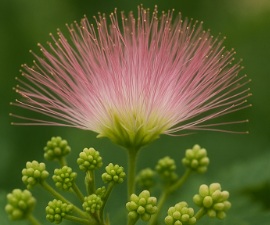
Silk tree
Rating : 7
| Evaluation | N. Experts | Evaluation | N. Experts |
|---|---|---|---|
| 1 | 6 | ||
| 2 | 7 | ||
| 3 | 8 | ||
| 4 | 9 | ||
| 5 | 10 |
Pros:
Anti-stress (1) Anti-inflammatory (1)8 pts from Al222
| Sign up to vote this object, vote his reviews and to contribute to Tiiips.Evaluate | Where is this found? |
| "Albizia julibrissin studies" about Silk tree Review Consensus 8 by Al222 (23249 pt) | 2021-Oct-31 17:46 |
| Read the full Tiiip | (Send your comment) |
Compendium of the most significant studies with reference to properties, intake, effects.
Jung MJ, Chung HY, Kang SS, Choi JH, Bae KS, Choi JS. Antioxidant activity from the stem bark of Albizzia julibrissin. Arch Pharm Res. 2003 Jun;26(6):458-62. doi: 10.1007/BF02976862.
Chang JS, Liu HP, Cheng J, Chen CJ, Hwang SL, Tseng CC, Hsu LF, Lin WY. Albizia julibrissin Ameliorates Memory Loss Induced by Insomnia in Drosophila. Evid Based Complement Alternat Med. 2019 Apr 1;2019:7395962. doi: 10.1155/2019/7395962.
Liang H, Tong WY, Zhao YY, Cui JR, Tu GZ. An antitumor compound julibroside J28 from Albizia julibrissin. Bioorg Med Chem Lett. 2005 Oct 15;15(20):4493-5. doi: 10.1016/j.bmcl.2005.07.015.
Zou K, Tong WY, Liang H, Cui JR, Tu GZ, Zhao YY, Zhang RY. Diastereoisomeric saponins from Albizia julibrissin. Carbohydr Res. 2005 May 23;340(7):1329-34. doi: 10.1016/j.carres.2004.10.027.
Han L, Pan G, Wang Y, Song X, Gao X, Ma B, Kang L. Rapid profiling and identification of triterpenoid saponins in crude extracts from Albizia julibrissin Durazz. by ultra high-performance liquid chromatography coupled with electrospray ionization quadrupole time-of-flight tandem mass spectrometry. J Pharm Biomed Anal. 2011 Jul 15;55(5):996-1009. doi: 10.1016/j.jpba.2011.04.002.
Hua H, Feng L, Zhang XP, Zhang LF, Jin J. Anti-angiogenic activity of julibroside J8, a natural product isolated from Albizia julibrissin. Phytomedicine. 2009 Aug;16(8):703-11. doi: 10.1016/j.phymed.2009.01.002.
Qiao SY, Yu DH, Guo JF, Zhao YM. Studies on bioassay-guided anti-inflammatory fraction in bark of Albizia julibrissin combined determination with LC-MS-MS. Zhongguo Zhong Yao Za Zhi. 2007 Oct;32(19):2021-5.
Jung JW, Cho JH, Ahn NY, Oh HR, Kim SY, Jang CG, Ryu JH. Effect of chronic Albizzia julibrissin treatment on 5-hydroxytryptamine1A receptors in rat brain. Pharmacol Biochem Behav. 2005 May;81(1):205-10. doi: 10.1016/j.pbb.2005.03.014.
Jung MJ, Kang SS, Choi JS. A new (E)4-hydroxy-dodec-2-enedioic acid from the stem bark of Albizzia julibrissin. Arch Pharm Res. 2003 Mar;26(3):207-9. doi: 10.1007/BF02976831.
Jung MJ, Kang SS, Jung HA, Kim GJ, Choi JS. Isolation of flavonoids and a cerebroside from the stem bark of Albizzia julibrissin. Arch Pharm Res. 2004 Jun;27(6):593-9. doi: 10.1007/BF02980155.
| Sign up to vote this object, vote his reviews and to contribute to Tiiips.EvaluateClose | (0 comments) |
| "Descrizione" about Silk tree Review Consensus 8 by Al222 (23249 pt) | 2025-Dec-02 09:34 |
| Read the full Tiiip | (Send your comment) |
The silk tree (Albizia julibrissin), also known as Persian silk tree, mimosa tree or Constantinople acacia, is a deciduous ornamental species belonging to the Fabaceae family. Native to a broad region stretching from the Middle East to parts of Eastern Asia, it has been widely cultivated in Europe and temperate climates since the eighteenth century due to its elegant appearance, rapid growth and high decorative value.
The plant typically develops a broad, umbrella-like canopy supported by a main trunk and numerous arching lateral branches. Its leaves are distinctly bipinnate, composed of many tiny oval leaflets arranged geometrically along slender ribs. This finely divided pattern produces a soft, feathery texture. A peculiarity of the species is the nightly nyctinastic closure of the leaflets: foliage folds toward the central axis at dusk or in low light, contributing to the light, animated aesthetic of the canopy.
Flowering occurs in summer and is the most recognisable feature of the species. The inflorescences are spherical or hemispherical clusters composed of numerous long, silky pink stamens. These give the flowers a plume-like, almost ethereal look, reminiscent of delicate tassels of coloured thread. Blossoms are often lightly perfumed and highly attractive to pollinators. After pollination, the plant develops flattened pods, thin and elongated, containing angular hard seeds.
The bark is generally smooth, grey-brown, sometimes marked with shallow fissures as the tree matures. The species thrives in full sun, in light, fertile and well-drained soils; after establishment, it shows good tolerance to moderate drought and urban settings. Thanks to its elegant foliage, exotic floral display and filtering shade, Albizia julibrissin is frequently used in gardens, avenues, light shading of courtyards, and decorative landscaping.
![]() | ![]() |
Botanical classification
Common name: Albizia julibrissin (silk tree)
Clade: Angiospermae
Order: Fabales
Family: Fabaceae
Genus: Albizia
Species: Albizia julibrissin Durazz.
Climate
Albizia julibrissin prefers temperate to warm climates, with long, sunny summers and relatively mild winters. It tolerates periods of drought and high temperatures well, while it is sensitive to intense, prolonged frost, especially in the juvenile stages. In cold–winter areas it may lose part of the canopy or suffer damage to exposed branches, but it often sprouts back with the return of favourable conditions.
Exposure
The plant requires full sun, which is essential for developing an elegant, open canopy and for producing abundant flowering. In positions that are too shaded, growth is weaker and the production of the characteristic pink, silky flowers is markedly reduced.
Soil
Albizia julibrissin adapts to various soil types, as long as they are well drained. It prefers light or medium–textured soils, even relatively poor, with neutral to slightly subalkaline pH. It tolerates drought and the presence of lime quite well, while waterlogging and compact soils are unfavourable and increase the risk of root rot.
Irrigation
Once well established, albizia needs only limited irrigation and can grow mainly on natural rainfall. During the establishment phase, and in particularly dry summers, occasional watering supports better canopy development. It is important to avoid excess water, allowing the soil to dry out between waterings.
Temperature
The optimal temperature range for growth is roughly between 18 and 28 °C. Albizia tolerates summer heat and direct sunlight well, while very low temperatures, especially below 0 °C, can damage young branches and buds. In areas with persistent frost risk, it is advisable to choose sheltered positions and to check plant condition at the beginning of spring.
Fertilization
Albizia julibrissin is not particularly demanding in terms of nutrients, but it benefits from a moderate supply of well–matured organic matter or slow–release balanced fertilizer in spring, especially in the first years after planting. Excess nitrogen may promote overly soft vegetation that is more susceptible to stress and pests.
Crop care
Crop care is limited but important. The soil should be kept well drained, and weeds controlled during the early growth stages. Pruning is usually carried out at the end of winter, removing dead or damaged branches and maintaining a balanced, airy crown. In very humid environments, it is useful to monitor for fungal diseases and to improve air circulation through targeted pruning.
Harvest
For ornamental use, “harvest” concerns essentially the management of the plant rather than fruit for consumption. Mature pods may be collected for propagation when they turn brown and begin to open naturally. Well–developed, dry seeds ensure good germination capacity.
Propagation
Propagation is usually by seed. Seeds can be taken from mature pods, then scarified or soaked in warm water to promote germination and sown in light, well–drained substrates. Young seedlings should be raised in containers until they have developed a sufficiently strong root system for transplanting. Propagation by semi–hardwood cuttings in summer is also possible, provided they are kept in warm, slightly humid but well–aerated conditions to encourage rooting.
(dried plant material – approximate and highly variable)
Energy: ~ 260–290 kcal
Carbohydrates: main component of dry matter
Dietary fiber: relevant proportion
Proteins: minor amounts
Total fats: very low
Minerals: traces (small variable amounts of potassium, magnesium, iron)
Phytochemicals: phenolic compounds, flavonoids, antioxidant molecules depending on part and processing
Note: the silk tree is not considered an edible species; nutritional interest is marginal and mainly analytical.
Structural carbohydrates (cellulose, hemicellulose)
Dietary fiber
Phenolic compounds and natural antioxidants
Flavonoids
Trace alkaloids (depending on vegetative part and stage)
Variable mineral traces
The quantitative profile depends strongly on whether leaves, flowers, bark or wood are analysed.
(referenced to ornamental cultivation and botanical harvesting)
Propagation
mainly from seeds; occasionally from young stem cuttings
Cultivation
prefers full sun, permeable soils, moderate fertility
irrigation recommended only during establishment; relatively drought-tolerant when mature
Growth management
light pruning for structure, canopy shaping and removal of weak or crossing branches
Harvesting of botanical material
leaves, flowers or bark harvested during active vegetative periods depending on intended use
material is gently dried in ventilated, shaded areas
Sorting and storage
dried material stored airtight, protected from humidity, light and oxidative deterioration
medium-sized ornamental tree (commonly 4–6 m, capable of exceeding 10 m in favourable conditions)
broad, open canopy architecture
bipinnate leaves with numerous micro-leaflets, giving a soft, feathery appearance
inflorescences with long silky pink stamens
flat, elongated pods as fruits
smooth greyish bark with shallow markings over time
very high ornamental impact: delicate foliage, exotic summer blossoms
lightly fragrant flowering heads
creates filtered shade, ideal for aesthetic landscaping without deep dark under-canopy
adaptable to urban environments, coping with moderate drought and varied soils
suitable for integration in landscape design, garden composition and soil stabilisation in light decorative contexts
The silk tree is not used as a food source.
Occasional use may include:
dried botanical material for herbal infusions or aromatic blends
minor traditional uses unrelated to nutrition
No culinary role is established, and it is not classified as an edible plant.
Albizia julibrissin has no primary role in human nutrition. However, leaves and flowers may contain:
polyphenols
flavonoids
natural antioxidant compounds
These characteristics make it an object of botanical and phytochemical interest in herbal contexts. Extracts have been used in traditional herbal preparations, but such uses should not be interpreted as nutritional intake.
No portion recommendation applies, as the species is not used as food.
may cause hypersensitivity reactions in individuals allergic to plants of the Fabaceae family
seasonal airborne pollen can trigger respiratory allergy in predisposed individuals
topical cosmetic extracts should be tested cautiously on sensitive skin
(for dried material intended for botanical or cosmetic sourcing)
store in cool, dry, dark conditions
airtight containers recommended to protect from humidity and oxidation
potential shelf-life: many months, depending on drying quality and environment
Albizia julibrissin is fundamentally an ornamental tree
any botanical extracts must be sourced from correctly identified material and handled according to hygiene standards
the plant has no regulated food use
cosmetic or herbal applications must comply with applicable regulations, purity criteria, contaminant limits and microbiological safety
On botanical dried material or extracts, a basic label should indicate:
correct name: Silk tree (Albizia julibrissin)
plant part used (leaves, flowers, bark)
handling and storage instructions
origin or batch identification if required
any cautionary notes for sensitive individuals
Botanical material quality
colour loss → poor drying or excess light during storage
earthy or stale smell → moisture contamination or ageing
easily crumbled material → overdrying or excessive mechanical handling
In gardens/landscapes
poor flowering → lack of sunlight, nutrient imbalance, pruning errors
reduced growth or foliage loss → water stress, compacted soils, insufficient drainage
root rot → waterlogged soil or excessive irrigation
Cosmetic ingredients derived from Albizia julibrissin (leaf, flower or bark extracts) may be used for:
skin conditioning: maintaining softness, comfort and general cutaneous wellbeing
supportive antioxidant action thanks to phenolic and flavonoid compounds
plant-based extract value for natural or botanical formulation concepts
These uses are niche and remain secondary compared with the species’ primary role in ornamental horticulture.
Silk tree (Albizia julibrissin) is an ornamental species of notable landscape value. Its finely divided foliage, elegant canopy, and striking summer blossoms with silky pink stamens make it a refined and distinctive presence in gardens and urban green spaces.
Although not an edible plant, its leaves and flowers contain phenolic compounds, flavonoids and other phytonutrients that give it botanical and herbal interest. In cosmetics, extracts are occasionally used for skin conditioning and mild antioxidant support, but these applications remain limited.
Overall, Albizia julibrissin stands out as a decorative, resilient and botanically interesting tree, combining aesthetic appeal with secondary phytochemical and cosmetic potential.
Fabaceae: botanical family that includes legumes, mimosa-type species and numerous ornamental plants
Nyctinasty: leaf movement linked to light variation, with closure at night or in low light
Skin conditioning: cosmetic function indicating ingredients that help maintain softness, comfort and good condition of the skin
Polyphenols: plant-derived molecules with antioxidant properties related to cellular defence mechanisms
Flavonoids: phenolic phytochemicals widespread in leaves and flowers, often linked to antioxidant potential
Studies
Recently, it has been credited as an anti-inflammatory and sedative drug to treat swelling and pain in the lungs, wounds, and for the removal of carbuncles. It has also demonstrated marked inhibitory activity against some cancer cell lines in vitro (1).
Its dried bark has been used for centuries in He Huan traditional Chinese medicine to treat depression, anxiety, insomnia.
The saponin fraction contained in Albizzia julibrissin could enhance humoral and cellular antigen-specific immune responses and simultaneously trigger a Th1/Th2 response to avian influenza IH9V. Therefore, it could be a safe and effective adjuvant candidate for H9N2 avian influenza vaccine (2).
The purpose of this study was to characterize the putative anxiolytic effects of the aqueous extract of Albizzia julibrissin bark using the elevated plus maze in rats, and results suggest that Albizzia julibrissin might prove to be an effective anxiolytic agent and that it acts through the serotonergic nervous system (3).
In the composition of Albizzia julibrissin bark, saponins, natural glycosides, possess a wide range of pharmacological properties including cytotoxic activity. In this review, recent studies (2005-2009) regarding the cytotoxic activity of saponins were summarized. Correlations between the structure and cytotoxicity of steroid and triterpenoid saponins and the most common mechanisms of action were described (4).
References____________________________________________________________________
(1) Won HJ, Han CH, Kim YH, Kwon HJ, Kim BW, Choi JS, Kim KH. Induction of apoptosis in human acute leukemia Jurkat T cells by Albizzia julibrissin extract is mediated via mitochondria-dependent caspase-3 activation. J Ethnopharmacol. 2006 Jul 19;106(3):383-9. doi: 10.1016/j.jep.2006.01.027.
Abstract. To understand antitumor activity of Albizzia julibrissin Durazz (Leguminosae), which has been used as a traditional oriental medicine, the mechanism underlying cytotoxic effect of its extract on human acute leukemia Jurkat T cells were investigated. The methanol extract of the stripped barks (3kg) of Albizzia julibrissin was evaporated, dissolved in water, and then sequentially extracted by chloroform, ethyl acetate, and n-butanol. The substance in the butanol extract containing the most cytotoxic activity was further purified by a series of preparative column chromatography. The active substance obtained (723mg) was designated as HaBC18. When Jurkat T cells were treated with HaBC18 (0.5-2microg/ml), apoptosis along with several biochemical events such as mitochondrial cytochrome c release, activation of caspase-9 and -3, degradation of PARP, and DNA fragmentation was induced in a dose-dependent manner. However, the HaBC18-induced apoptosis was abrogated by an ectopic overexpression of Bcl-xL, which is known to block mitochondrial cytochrome c release. Primary cultures of human PBMC were less sensitive to the cytotoxicity relative to Jurkat T cells. These results demonstrate that the cytotoxicity of HaBC18 toward Jurkat T cells is attributable to apoptosis mediated by mitochondria-dependent death-signaling pathway regulated by Bcl-xL.
(2) Sun H, Fei L, Zhu B, Shi M. Quick and improved immune responses to inactivated H9N2 avian influenza vaccine by purified active fraction of Albizia julibrissin saponins. BMC Vet Res. 2020 Nov 7;16(1):427. doi: 10.1186/s12917-020-02648-1.
Abstract. Background: H9N2 Low pathogenic avian influenza virus (LPAIV) raises public health concerns and its eradication in poultry becomes even more important in preventing influenza. AJSAF is a purified active saponin fraction from the stem bark of Albizzia julibrissin. In this study, AJSAF was evaluated for the adjuvant potentials on immune responses to inactivated H9N2 avian influenza virus vaccine (IH9V) in mice and chicken in comparison with commercially oil-adjuvant. Results: AJSAF significantly induced faster and higher H9 subtype avian influenza virus antigen (H9-Ag)-specific IgG, IgG1, IgG2a and IgG2b antibody titers in mice and haemagglutination inhibition (HI) and IgY antibody levels in chicken immunized with IH9V. AJSAF also markedly promoted Con A-, LPS- and H9-Ag-stimulated splenocyte proliferation and natural killer cell activity. Furthermore, AJSAF significantly induced the production of both Th1 (IL-2 and IFN-γ) and Th2 (IL-10) cytokines, and up-regulated the mRNA expression levels of Th1 and Th2 cytokines and transcription factors in splenocytes from the IH9V-immunized mice. Although oil-formulated inactivated H9N2 avian influenza vaccine (CH9V) also elicited higher H9-Ag-specific IgG and IgG1 in mice and HI antibody titer in chicken, this robust humoral response was later produced. Moreover, serum IgG2a and IgG2b antibody titers in CH9V-immunized mice were significantly lower than those of IH9V alone group. Conclusions: AJSAF could improve antigen-specific humoral and cellular immune responses, and simultaneously trigger a Th1/Th2 response to IH9V. AJSAF might be a safe and efficacious adjuvant candidate for H9N2 avian influenza vaccine.
(3) Kim WK, Jung JW, Ahn NY, Oh HR, Lee BK, Oh JK, Cheong JH, Chun HS, Ryu JH. Anxiolytic-like effects of extracts from Albizzia julibrissin bark in the elevated plus-maze in rats. Life Sci. 2004 Oct 22;75(23):2787-95. doi: 10.1016/j.lfs.2004.05.024.
(4) Podolak I, Galanty A, Sobolewska D. Saponins as cytotoxic agents: a review. Phytochem Rev. 2010 Sep;9(3):425-474. doi: 10.1007/s11101-010-9183-z.
Abstract. Saponins are natural glycosides which possess a wide range of pharmacological properties including cytotoxic activity. In this review, the recent studies (2005-2009) concerning the cytotoxic activity of saponins have been summarized. The correlations between the structure and the cytotoxicity of both steroid and triterpenoid saponins have been described as well as the most common mechanisms of action.
| Sign up to vote this object, vote his reviews and to contribute to Tiiips.EvaluateClose | (0 comments) |
Read other Tiiips about this object in __Italiano (2)
Content:  
Last update:   2025-12-02 09:36:08 | Kcal/100g:   5 Family:   Threat factors:   |

