

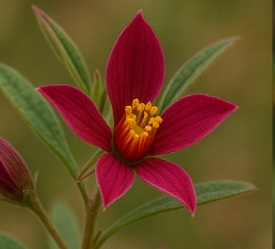
Rhatany
Rating : 7
| Evaluation | N. Experts | Evaluation | N. Experts |
|---|---|---|---|
| 1 | 6 | ||
| 2 | 7 | ||
| 3 | 8 | ||
| 4 | 9 | ||
| 5 | 10 |
10 pts from A_Partyns
| Sign up to vote this object, vote his reviews and to contribute to Tiiips.Evaluate | Where is this found? |
| "Descrizione" about Rhatany Review Consensus 10 by A_Partyns (13031 pt) | 2025-Dec-02 09:59 |
| Read the full Tiiip | (Send your comment) |
Rhatany (Krameria triandra),
The rhatany is a perennial plant of South American origin, belonging to the Krameriaceae family, best known for its woody, reddish roots, rich in astringent substances. It grows wild in the arid environments of the Andean regions, especially in Peru and Bolivia, where it sinks long, sturdy roots into dry soil. The aerial parts are modest: small, slender branches, reduced grey-green leaves, and elegant pinkish flowers that stand out against the essential habit of the plant.
What makes rhatany particularly valued is the root, characterised by a strongly tannic taste and a compact texture. The natural presence of tannins, together with other phenolic molecules, gives a marked astringent effect and a woody, dry aroma with earthy nuances. Since ancient times, the dried root was used in the form of decoctions, powders or extracts, and it is still found today as an ingredient in traditional products, especially those related to oral cavity care.
The plant prefers dry climates, sandy soils and full sun exposure. Its physiology is adapted to harsh conditions: reduced leaves to limit water loss and deep roots capable of reaching residual moisture even in very poor soils. During harvesting, the root is carefully extracted, cleaned and dried, gradually taking on an intense reddish-brown colour and a penetrating scent.
The taste of rhatany is unmistakable: bitter, dry, slightly resinous, with a persistent note that reflects the strength of its natural habitat. Even today it is considered a plant with a very clear identity, closely linked to the mountain landscapes of South America and local traditions. Its image remains a symbol of essentiality, deep rooting and a direct relationship with a rugged yet remarkably generous nature.
It was discovered by Hipólito Ruiz López (1754 - 1815), a Spanish botanist who discovered the plant in 1799 in Huánuco, a town in the Peruvian Andes.
![]() | ![]() |
Botanical classification
Common name: Rhatany
Clade: Angiospermae
Order: Fabales
Family: Krameriaceae
Genus: Krameria
Species: Krameria triandra Ruiz & Pav.
Climate
Rhatany is a species native to arid and semi–arid regions of South America and prefers dry climates, with mild winters and hot, sunny summers. It tolerates drought fairly well and only marginally withstands cold: intense or prolonged frosts can seriously damage the aerial parts and reduce its ability to regrow.
Exposure
The ideal exposure is full sun, which promotes good accumulation of compounds in the woody root system, the part of greatest interest in medicinal cultivation. In shaded positions, growth decreases and the plant tends to become weaker and less productive.
Soil
Rhatany grows well in sandy, gravelly or stony soils that are poor in organic matter but very well drained. It prefers soils with neutral to slightly alkaline pH, even moderately dry, where many other crops would struggle. Waterlogging is highly unfavourable and increases the risk of root rot.
Irrigation
In cultivation, irrigation should be rather sparingly applied, aiming to imitate conditions in dry environments. During establishment and early development, it can be useful to provide water at wide intervals, allowing the soil to dry between waterings. Once well established, rhatany requires only emergency irrigation in periods of prolonged drought.
Temperature
The optimal temperature range for growth is generally between 18 and 28 °C. The plant tolerates heat and direct sunlight well, while temperatures close to or below 0 °C, especially if prolonged, can damage the more tender tissues and reduce stand longevity.
Fertilization
This is a species with low nutritional requirements, adapted to poor soils. Usually a modest application of well–matured organic matter before planting is sufficient, avoiding excessive nitrogen fertilization, which would favour overly soft vegetation poorly suited to dry environments. On extremely poor soils, low doses of slow–release mineral fertilizers may be used.
Crop care
Crop care focuses mainly on the early stages, with control of weeds by light hoeing or mineral mulching (gravel, pumice) that does not hinder drainage. It is important to keep the topsoil loose and to limit excess moisture. In particularly rainy environments, attention must be paid to possible root rot or fungal diseases of the root system, reducing irrigation and improving water runoff.
Harvest
In medicinal cultivation, the main harvested part is the root/woody underground portion, which is rich in tannins. Harvest is usually carried out on plants several years old, when the root system has reached sufficient development. Roots are dug up, cleaned, cut if necessary and dried in a dry, well–ventilated place to best preserve their chemical and organoleptic characteristics.
Propagation
Propagation is mainly by seed, sown in light, well–drained soils, preferably in spring in cooler areas or in autumn where winters are mild. In some cases, propagation by cuttings or division of root portions is also possible, but it requires careful management of moderate moisture, always avoiding waterlogging, until rooting is achieved. Once established, plants are generally long–lived and relatively undemanding in terms of management.
(dried roots)
Rhatany is not an edible plant, and its root is not intended for dietary consumption. Nutritional values are therefore not meaningful and are not typically referenced in scientific or industrial documentation.
Tannins (main active fraction responsible for the notable astringent action)
Phenolic compounds and various polyphenols
Minor flavonoid fractions
Structural carbohydrates (cellulose and hemicellulose)
Trace minerals in small amounts depending on soil composition
Possible presence of low-level alkaloidal components (not of dietary significance)
Harvesting
mature plants are collected, often from controlled botanical sourcing areas
roots are excavated carefully to avoid damage and preserve their structure
Cleaning
removal of soil, fibrous residues and external impurities
Drying
performed in shaded, ventilated spaces or controlled dryers
final goal: stable humidity level, preservation of colour and active compounds
Grinding or cutting
dried roots may be reduced into coarse fragments, fine powder or processed into hydroalcoholic extracts
Standardisation
in industrial extracts, tannin content may be monitored to ensure consistency and quality
hard, dense root structure
external bark: dark brown to reddish-brown
inner tissues: paler, fibrous
powder form: brown, dry, slightly resinous in aroma
low moisture content when properly dried
strongly astringent taste due to tannin concentration
aroma: woody, dry, slightly resinous, with earthy undertones
technological behaviour:
easily extractable with water-alcohol solvents
good stability under controlled storage
suitable for liquid, solid or semi-solid formulations
contributes tactile “tightening” sensation on soft tissue contact
Rhatany is not used in food.
Its role belongs strictly to botanical, herbal and oral care contexts.
Although not nutritionally relevant, the powdered or extracted root of rhatany has been used for oral mucosa well-being due to:
the natural astringent capacity of tannins
the presence of phenolic compounds that assist in tissue tone and cleansing
secondary antimicrobial effects associated with polyphenolic fractions
These uses are topical and cosmetic-hygienic rather than nutritive.
possible reactions in individuals sensitive to tannins or phenolic botanical substances
irritation of delicate mucosae can occur if used in excessive concentrations or in individuals with heightened sensitivity
any cosmetic extract should be patch-tested on vulnerable subjects before prolonged exposure
dried roots or powders should be kept in airtight containers, protected from humidity, light and heat
botanical extracts should be stored according to manufacturer specifications (dark packaging, controlled temperature)
shelf-life is generally long if drying, handling and storage conditions are optimal
rhatany is permitted in cosmetic, oral hygiene and botanical preparations
use must comply with regulatory standards for botanical extracts, including purity criteria and contaminant controls
not intended as a food ingredient and not regulated as such
concentration in oral care products should respect internal safety evaluation guidelines
Products containing rhatany should report:
botanical name: Rhatany (Krameria triandra)
plant part used: root, root extract, or powdered root
handling and storage instructions
warnings for hypersensitive individuals
batch references or origin if required by legislation
Material quality
colour fading → inadequate drying or exposure to light
musty smell → humidity infiltration; product may be compromised
excess powder dryness and brittleness → overly aggressive drying or extended time in storage
Formulation issues
overly strong astringency → reduce active concentration
sediment formation in liquids → adjust extract filtration or solvent ratio
colour darkening in formulations → light-induced oxidation; use protective packaging
Rhatany-derived ingredients are mainly adopted for:
astringent action on tissues
antimicrobial support thanks to tannin and phenolic composition
oral conditioning, assisting the tone, reassurance and hygiene of gums and oral mucosa
inclusion in botanical-based cosmetic lines with a phytotherapeutic background
Applications are mostly found in toothpastes, mouthwashes, gingival tonics, and traditional botanical oral preparations.
Rhatany (Krameria triandra) remains a distinctive botanical species valued not for its nutritional role but for the unique properties of its root: strong astringency, concentrated tannins and a characteristic wood-resin profile. Its identity is closely tied to the Andean landscapes that shaped its morphology and chemical composition, and to historical uses rooted in local knowledge. Today, rhatany continues to be used as a specialised ingredient in oral hygiene, where its plant-derived actives contribute to tissue tone, topical cleansing and balance of the oral environment.
It stands as an example of a plant whose value does not lie in alimentation but in its functional herbal and cosmetic applications, reflecting the ability of natural botanical matrices to influence health and well-being in non-nutritive ways.
Krameriaceae: botanical family to which Krameria triandra belongs
Tannins: plant molecules with astringent properties that bind proteins and affect tissue tone
Polyphenols: phytochemicals associated with antioxidant potential and antimicrobial support
Astringent: action that tightens tissue structure and reduces surface permeability
Oral conditioning: cosmetic function related to the comfort, tone and maintenance of oral soft tissues
Studies
The dried root of the plant is used. The roots consist of a main root that can grow up to 10 centimetres in length from which much longer secondary branching roots branch off. The flowers have four deep purple red petals.
Among the constituents of the root, benzofurans 1, 4-11 and 7,7′-epoxylignans 2 and 3 and ratanhiaphenol III have been isolated, which has the property of significantly increasing insulin-stimulated glucose uptake and is an inhibitor of protein tyrosine phosphatase 1B, which is considered a valuable strategy to combat insulin resistance and type II diabetes (1).
The roots are extracted from both Ratania Krameria triandra and Krameria lappacea (Dombey) and are traditionally used against oropharyngeal inflammation (2)
References__________________________________________________________________
(1) Heiss EH, Baumgartner L, Schwaiger S, Heredia RJ, Atanasov AG, Rollinger JM, Stuppner H, Dirsch VM. Ratanhiaphenol III from Ratanhiae radix is a PTP1B inhibitor. Planta Med. 2012 May;78(7):678-81. doi: 10.1055/s-0031-1298242.
(2) Baumgartner L, Schwaiger S, Stuppner H. Quantitative analysis of anti-inflammatory lignan derivatives in Ratanhiae radix and its tincture by HPLC-PDA and HPLC-MS. J Pharm Biomed Anal. 2011 Nov 1;56(3):546-52. doi: 10.1016/j.jpba.2011.06.016.
Carini M, Aldini G, Orioli M, Facino RM. Antioxidant and photoprotective activity of a lipophilic extract containing neolignans from Krameria triandra roots. Planta Med. 2002 Mar;68(3):193-7. doi: 10.1055/s-2002-23167.
Abstract. The antioxidant/photoprotective potential of a standardized Krameria triandra (KT) root extract (15% neolignans) has been evaluated in different cell models, rat erythrocytes and human keratinocytes cell lines, exposed to chemical (cumene hydroperoxide, CuOOH) and physical (UVB radiation) free radical inducers. The extract was significantly more active (IC50 0.28 +/- 0.04 microg/ml) than the typical chain-breaking antioxidant alpha-tocopherol (IC50 = 6.37 +/- 0.41 microg/ml) in inhibiting the CuOOH-induced hemolysis in rat blood cells. The KT constituent 2-(2,4-dihydroxyphenyl)-5-(E)-propenylbenzofuran, was the most active (IC50 = 0.03 +/- 0.005 microg/ml), followed by eupomatenoid 6 (IC50 = 0.29 +/- 0.06 microg/ml) and conocarpan (IC50 = 0.77 +/- 0.08 microg/ml). The same order of potency was observed in red blood cells exposed to UVB irradiation in continuo, with IC50 values 0.78 +/- 0.08 microg/ml for KT extract, 0.18 +/- 0.02 microg/ml for 2-(2,4-dihydroxyphenyl)-5-(E)-propenylbenzofuran, 0.95 +/- 0.11 microg/ml for eupomatenoid 6, and 3.8 +/- 0.39 microg/ml for conocarpan. In cultured human keratinocytes exposed to UVB radiation (50 mJ/cm2), KT extract (2.5-20 microg/ml) significantly and dose-dependently restrained the loss in cell viability and the intracellular oxidative damage: glutathione (GSH) depletion and the rise in dichlorofluorescein (DCF), marker of peroxide accumulation, were suppressed by 20 microg/ml KT and in parallel cell morphology maintained. The cytoprotective effect of the extract was confirmed in a more severe model of cell damage: exposure of keratinocytes to higher UVB doses (300 mJ/cm2), which induce a 50% cell death. In keratinocyte cultures supplemented with 10 microg/ml, cell viability was almost completely preserved and more efficiently than with (-)-epigallocatechin 3-gallate and green tea. The results of this study indicate the potential use of Rhatany extracts, standardized in neolignans, as topical antioxidants/radical scavengers against skin photodamage.
| Sign up to vote this object, vote his reviews and to contribute to Tiiips.EvaluateClose | (0 comments) |
| "Rathania studies" about Rhatany Review Consensus 10 by A_Partyns (13031 pt) | 2021-Sep-23 21:26 |
| Read the full Tiiip | (Send your comment) |
Compendium of the most significant studies with reference to properties, effects.
Baumgartner L, Sosa S, Atanasov AG, Bodensieck A, Fakhrudin N, Bauer J, Del Favero G, Ponti C, Heiss EH, Schwaiger S, Ladurner A, Widowitz U, Della Loggia R, Rollinger JM, Werz O, Bauer R, Dirsch VM, Tubaro A, Stuppner H. Lignan derivatives from Krameria lappacea roots inhibit acute inflammation in vivo and proinflammatory mediators in vitro. J Nat Prod. 2011;74:1779–1786. Abstract The roots of Krameria lappacea are used traditionally against oropharyngeal inflammation. So far, the astringent and antimicrobial properties of its proanthocyanidin constituents are considered to account for the anti-inflammatory effect...
Dixit M, Saeed U, Kumar A, Siddigi M, Tamrakar AK, Srivastava AK, Goel A. Synthesis, molecular docking and PTP1B inhibitory activity of functionalized 4,5-dihydronaphtofurans and dibenzofurans. Med Chem. 2010;20:3329–3337. Abstract Protein tyrosine phosphatase 1B (PTP1B) is an enzyme that plays a critical role in down-regulating insulin signaling through dephosphorylation of the insulin receptor. Inhibitors of PTP1B showed increased insulin sensitivity and normalize plasma glucose level and thus are useful therapeutic agents for the treatment of diabetes. A series of functionalized 4,5-dihydronaphthofurans and dibenzofurans were synthesized, studied through molecular docking and evaluated for their PTP1B inhibitory activity.
Choi HD, Seo PJ, Son BW. Total synthesis of a norneolignan from Ratanhia radix. Arch Pharm Res. 2002 Dec;25(6):786-9. doi: 10.1007/BF02976992. Abstract The total synthesis of a norneolignan isolated from Ratanhia, 5-(3-hydroxypropyl)-2-(2-methoxy-4'-hydroxyphenyl)benzofuran (8), is described. The key steps contain the one-pot reaction for a 2-arylbenzofuran 6 from methyl 3-(4-hydroxyphenyl)propionate with 2-chloro-2-methylthio-(2'-methoxy-4'-acetoxy)acetophenone (5) in the presence of ZnCl2, and reductive desulfurization of the resulting product 6.
Stahl E, Ittel I. Neue, lipophile Benzofuranderivate aus Ratanhiawurzel. Planta Med. 1981 Jun;42(6):144-54. doi: 10.1055/s-2007-971618. Abstract Two phenols have been isolated from the petroleum-ether extract of Ratanhiae radix Ph. Eur.; structure elucidation has been made by means of the following chemico-physical methods: UV, IR, (1)H-NMR, (13)C-NMR-spectroscopy and mass spectrometry, microhydrogenation and thermofractography. Structures are: 2-(p-methoxy-o-hydroxyphenyl) -5-propenyl (trans)-benzofurane; 2-(p-hydroxyphenyl)-3-methyl-5-propenyl-(trans)-benzofurane. Both compounds - newly discovered in Ratanhiae radix - proved to be effective UV-light filters. They could be useful in sun protection preparations.
Al-Oqail MM. Anticancer efficacies of Krameria lappacea extracts against human breast cancer cell line (MCF-7): Role of oxidative stress and ROS generation. Saudi Pharm J. 2021 Mar;29(3):244-251. doi: 10.1016/j.jsps.2021.01.008. Abstract Breast cancer is a growing health issue globally and accounts as a second most cause of mortality. Natural products have been a fundamental of health care for long. Plants derived natural products have gained considerable attention over synthetic medicines, since they are safe and non-toxic. Krameria lappacea (Dombey) Burdet and B.B. Simpson plant belonging to Krameriaceae family, has been known for its beneficial effects against diseases. Herein, firstly, cytotoxic potential of petroleum ether (KLH), chloroform (KLC), ethyl acetate (KLEA), and ethanolic (KLET) extracts of K. lappacea was screened against MCF-7 cells exposed to 10-1000 μg/mL for 24 h. Secondly, the most cytotoxic extract (KLH) was used to explore the mechanisms of cytotoxicity in MCF-7 cells. MCF-7 cells were treated with KLH at 250-1000 μg/mL to measure the oxidative stress markers (glutathione (GSH) and lipid peroxidation (LPO)) and reactive oxygen species (ROS) generation. Further, loss of mitochondrial membrane potential (MMP) and caspase-3 and -9 enzyme activities were studied. The viability of MCF-7 cells were decreased from 44% to 90% for KLH, from 7% to 71% for KLEA, from 39% to 80% for KLC, and from 3% to 81% for KLET, respectively at 250-1000 μg/mL as observed by MTT assay. An increase of 91% in LPO and 2.2-fold in ROS generation and a decrease of 59% in GSH and 68% in MMP levels at 1000 μg/mL showed that KLH induced MCF-7 cell death via oxidative stress and elevated level of ROS generation which further leads to mitochondrial membrane dysfunction and activation of caspase enzymes. The findings of this study provide a mechanistic insight on anticancer efficacies of K. lappacea extracts against MCF-7 cells and support the use of it for the treatment of breast cancer diseases.
Genovese C, D'Angeli F, Bellia F, Distefano A, Spampinato M, Attanasio F, Nicolosi D, Di Salvatore V, Tempera G, Lo Furno D, Mannino G, Milardo F, Li Volti G. In Vitro Antibacterial, Anti-Adhesive and Anti-Biofilm Activities of Krameria lappacea (Dombey) Burdet & B.B. Simpson Root Extract against Methicillin-Resistant Staphylococcus aureus Strains. Antibiotics (Basel). 2021 Apr 13;10(4):428. doi: 10.3390/antibiotics10040428. Erratum in: Antibiotics (Basel). 2021 Jun 30;10(7): Abstract Methicillin-resistant Staphylococcus aureus (MRSA) represents a serious threat to public health, due to its large variety of pathogenetic mechanisms. Accordingly, the present study aimed to investigate the anti-MRSA activities of Krameria lappacea, a medicinal plant native to South America. Through Ultra-High-Performance Liquid Chromatography coupled with High-Resolution Mass spectrometry, we analyzed the chemical composition of Krameria lappacea root extract (KLRE). The antibacterial activity of KLRE was determined by the broth microdilution method, also including the minimum biofilm inhibitory concentration and minimum biofilm eradication concentration. Besides, we evaluated the effect on adhesion and invasion of human lung carcinoma A549 cell line by MRSA strains. The obtained results revealed an interesting antimicrobial action of this extract, which efficiently inhibit the growth, biofilm formation, adhesion and invasion of MRSA strains. Furthermore, the chemical analysis revealed the presence in the extract of several flavonoid compounds and type-A and type-B proanthocyanidins, which are known for their anti-adhesive effects. Taken together, our findings showed an interesting antimicrobial activity of KLRE, giving an important contribution to the current knowledge on the biological activities of this plant.
| Sign up to vote this object, vote his reviews and to contribute to Tiiips.EvaluateClose | (0 comments) |
Read other Tiiips about this object in __Italiano (2)
Content:  
Last update:   2025-12-02 09:59:47 | Kcal/100g:   Family:   Threat factors:   |

