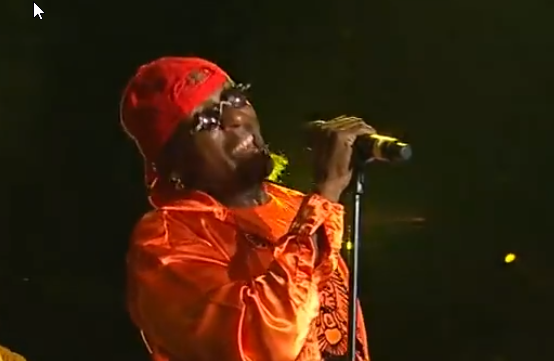
Jimmy Cliff, complete biography, international reggae, cinema, concerts and discography
Profile
Jimmy Cliff (James Chambers; Somerton District, Saint James Parish, Jamaica, April 1, 1948) is a Jamaican singer, songwriter, musician, and actor, and one of the earliest reggae artists to achieve sustained international success before Bob Marley’s global breakthrough.
Jimmy Cliff played a key role in the spread of reggae outside Jamaica, combining recording output, international touring, and major cinematic visibility.

Origins and training (1950s – early 1960s)
Raised in rural Jamaica, Jimmy Cliff moved as a teenager to Kingston, where he came into contact with:
He began writing songs at a young age and attracted local producers thanks to a clear, immediate vocal delivery.
1960s: early local hits and opening to the United Kingdom (1962–1969)
Key songs
Miss Jamaica
Hurricane Hattie
Activity and countries
During the 1960s he:
achieved radio success in Jamaica,
spent time in the United Kingdom,
recorded material aimed at the British market.
This phase made him one of the first reggae artists to attempt a structured international career already before the 1970s.
1970s (first half): international breakthrough and cinema (1970–1974)
Albums and key songs
Cinema and impact
In 1972 Jimmy Cliff starred in The Harder They Come, a film that:
received wide distribution in Europe and North America,
introduced reggae to an international audience,
became a cultural reference point for Jamaican music.
The soundtrack’s success consolidated his popularity outside Jamaica.
1970s (second half): touring and European success (1975–1979)
Albums and key songs
1974 – Struggling Man
1976 – Follow My Mind
Concerts and key markets
In this period Jimmy Cliff:
toured regularly across Europe (United Kingdom, France, Germany, Netherlands),
performed in the United States, mainly in theatres and festivals,
built particularly strong reception in Western Europe.
His commercial reach remained solid, though below Bob Marley’s level in the same years.
1980s: continued releases and selective touring (1980–1989)
Albums and key songs
Live activity
During the 1980s he:
reduced studio output,
maintained concert activity in Europe and North America,
appeared at reggae and world music festivals.
1990s: revival and international recognition (1990–1999)
Activity
renewed attention from international audiences,
concerts in Europe, the United States, and Japan,
frequent use of his historical repertoire in live sets.
In this decade Cliff consolidated his reputation as a pioneer of international reggae.
2000s and 2010s: continued activity and global touring
Albums and key songs
Concerts
In the last decades Jimmy Cliff:
continued to tour worldwide,
maintained strong presence in Europe, North America, and Australia,
appeared at major festival and celebratory events.
Musical style (practical points)
Jimmy Cliff is recognized for:
clear, accessible vocal delivery,
straightforward reggae and rocksteady structures,
lyrics in standard English that travel easily,
arrangements suited to radio and live performance.
Discography
Early period / Studio One and first productions (1962–1969)
Studio albums
| Year | Album | Main singles |
|---|
| 1962 | Miss Jamaica | Miss Jamaica · Hurricane Hattie |
| 1967 | Jimmy Cliff | Time Will Tell · Waterfall |
| 1969 | Wonderful World, Beautiful People | Wonderful World, Beautiful People · Vietnam |
International breakthrough period (1970–1972)
Studio albums
| Year | Album | Main singles |
|---|
| 1970 | Vietnam | Vietnam · World Upside Down |
| 1971 | Another Cycle | The Harder They Come · Many Rivers to Cross |
| 1972 | The Harder They Come (soundtrack) | The Harder They Come · You Can Get It If You Really Want |
Island Records period and artistic maturity (1973–1978)
Studio albums
| Year | Album | Main singles |
|---|
| 1973 | Struggling Man | Struggling Man · Sooner or Later |
| 1974 | Follow My Mind | Wild World · Going Back West |
| 1975 | Brave Warrior | Reggae Night · The Roots Radical |
| 1978 | Give Thankx | Give Thankx · Love Me Love Me |
1980s period – reggae, pop, and crossover (1980–1989)
Studio albums
| Year | Album | Main singles |
|---|
| 1980 | I Am the Living | I Am the Living · Another World |
| 1982 | The Power and the Glory | Reggae Night · American Sweet |
| 1985 | Cliff Hanger | Hot Shot · Cliff Hanger |
| 1989 | Images | Rhythm · True Confessions |
Later period and return to roots (1995–2018)
Studio albums
| Year | Album | Main singles |
|---|
| 1995 | Higher & Higher | Higher & Higher · Love Solution |
| 2004 | Black Magic | Black Magic · Children’s Bread |
| 2010 | Sacred Fire | Sacred Fire · Love Season |
| 2018 | Rebirth | Refugees · One More |
Documented career indicators
Among the earliest reggae artists to achieve success in Europe and the United Kingdom.
Central role in reggae’s international spread through cinema and soundtrack impact.
Continuous international touring activity for more than 50 years.
Conclusion
Jimmy Cliff represents one of the most early and documentable cases of reggae internationalization.
His career is supported by:
regular touring outside Jamaica already in the 1960s,
consolidated European success in the 1970s,
sustained live and recording activity into the 21st century.
His contribution remains essential for understanding how reggae became a global musical language.



 Jimmy Cliff