
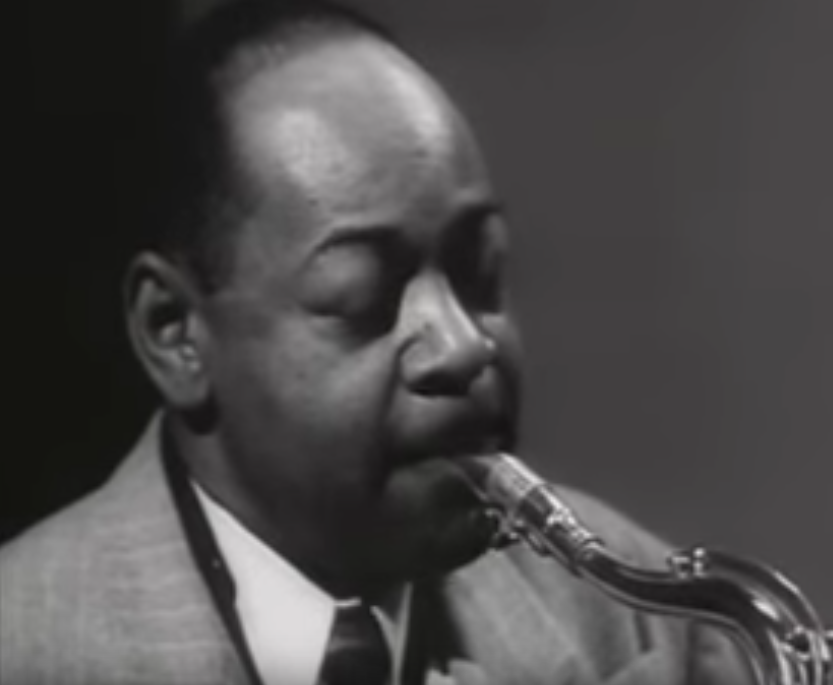
Charlie Parker, complete biography, the birth of bebop and complete discography
Profile
Charlie Parker (Charles Christopher Parker Jr.; Kansas City, Kansas, August 29, 1920 – New York, March 12, 1955) was an American alto saxophonist and composer, a foundational figure of bebop and one of the most influential musicians in the entire history of jazz.
His contribution permanently redefined harmony, rhythm, and improvisation, marking a clear break with swing jazz and inaugurating the language of modern jazz. In less than fifteen years of activity, Parker transformed the saxophone into an instrument of advanced musical thought.

Origins and training (Kansas City)
Raised in the musical environment of Kansas City, shaped by extended jam sessions and a strong blues imprint, Parker took up the alto saxophone early. After a difficult start and largely self-directed training, he developed an extreme practice discipline based on:
A serious car accident during adolescence marked a turning point, strengthening his determination to surpass technical and musical limits.
The stylistic breakthrough and the birth of bebop (1940s)
In the early 1940s Parker moved to New York, where he encountered a new generation of musicians determined to move beyond swing conventions.
Together with figures such as Dizzy Gillespie, Parker helped shape bebop, characterized by:
fast tempos and complex articulations,
advanced harmonies built on substitutions and tensions,
improvisation as continuous reworking of harmonic structure.
His style introduced a new concept of the solo: no longer melodic variation, but harmonic discourse in real time.
Improvisational language and harmonic revolution
Charlie Parker’s language rests on several core principles:
systematic use of harmonic extensions and alterations,
asymmetrical phrases and exceptionally fluid articulation,
total integration between melodic line and chord structure.
Parker made improvisation an act that is rational and instinctive at the same time, establishing a model that became the standard for all subsequent jazz.
Recording activity and New York centrality
Between 1945 and 1953 Parker recorded most of the performances that define the bebop canon. His sessions as leader and sideman represent a permanent laboratory of experimentation.
In parallel, his presence in New York jam sessions helped consolidate a new musical ecosystem in which virtuosity is subordinated to conceptual complexity.
Personal fragility and decline
Alongside extraordinary musical creativity, Parker faced severe personal instability marked by addictions, health problems, and financial difficulties. These factors progressively affected his activity, without diminishing the artistic impact of his work.
His premature death at only 34 years old ended a creative trajectory that had already changed 20th-century music forever.
Musical style and distinctive characteristics
Central elements of Parker’s style:
Unprecedented speed and precision on the alto saxophone.
Advanced harmonic thinking, the foundation of bebop.
Synthesis of blues and modernity, grounding and innovation.
Structural influence on jazz, music education, and modern improvisation.
Complete discography
Key recordings as leader (studio and historical sessions)
1944–1945 – Town Hall, New York City
1945 – Charlie Parker’s Reboppers
1945–1947 – Savoy Sessions
1946–1947 – Dial Sessions
1947 – Bird and Diz
1949 – Charlie Parker with Strings
1950 – Charlie Parker with Strings, Vol. 2
1952 – Charlie Parker Plays Cole Porter
1953 – Charlie Parker Now’s the Time
Live albums and live recordings
1946 – Live at Billy Berg’s
1950 – One Night in Birdland
1952 – Jazz at Massey Hall
1954 – Bird on 52nd Street
Posthumous releases and archival collections
1957 – The Complete Savoy Recordings
1961 – The Complete Dial Sessions
1995 – The Complete Charlie Parker on Verve
2000 – The Complete Live Performances on Savoy
Historical and cultural impact
Charlie Parker refounded jazz as a modern language, shifting it from entertainment music to an intellectually complex art form. Every subsequent development in jazz—from cool to hard bop to the avant-garde—emerges from his vocabulary.
Critical reading: Charlie Parker as the origin of modern jazz
Parker’s contribution should be understood as a foundational act. He created a language that not only defined bebop, but imposed new standards of musical competence, study, and harmonic awareness.
Charlie Parker remains the ground zero of modern jazz: everything that comes after engages, directly or indirectly, with his vision.
