Stevie Ray Vaughan was an American blues rock guitarist and singer, widely considered one of the most influential electric guitarists in the history of music. Known for his ferocious guitar playing and soulful voice, Vaughan played a pivotal role in reviving the blues in the 1980s.

Here's a brief overview of his life and career:
Early Life: Stevie Ray Vaughan was born on October 3, 1954, in Dallas, Texas. He began playing guitar at a young age, inspired by his older brother, Jimmie Vaughan, who is also a renowned guitarist.
Rise to Fame: In the late 1970s and early 1980s, Vaughan and his band Double Trouble (comprising Tommy Shannon on bass and Chris Layton on drums) became a mainstay in the Austin, Texas music scene.
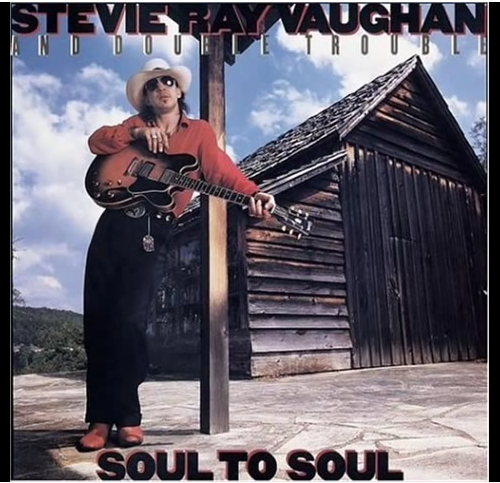
Commercial Success: Vaughan's debut album, "Texas Flood" (1983), was a massive success, showcasing his virtuosic guitar work and passionate vocals. The album was followed by "Couldn't Stand the Weather" (1984) and "Soul to Soul" (1985), both of which further cemented his reputation.
Struggles: Vaughan struggled with alcoholism and drug addiction during the height of his fame. These issues took a toll on his health and initially affected his music career. However, in the latter part of the 1980s, he underwent rehab and made a triumphant return to the stage, clean and sober.
Tragic Death: Stevie Ray Vaughan died in a tragic helicopter crash on August 27, 1990, after performing in a concert at the Alpine Valley Music Theatre in East Troy, Wisconsin. He was only 35 years old.
Legacy: Even though his mainstream career spanned just seven years, Vaughan's influence is immeasurable. He's been inducted into the Rock and Roll Hall of Fame and is remembered for hits like "Pride and Joy", "Crossfire", "Cold Shot", and his renditions of Jimi Hendrix's "Voodoo Child (Slight Return)" and "Little Wing".
Impact: Vaughan played a crucial role in introducing a new generation to the blues genre. His style, deeply rooted in blues traditions but infused with rock energy, was instrumental in revitalizing blues music during the 1980s.
Stevie Ray Vaughan's music continues to inspire countless guitarists and music enthusiasts around the world. He's remembered not only for his incredible skill but also for his raw emotion and connection with his audience.
Breakthrough period with Double Trouble (1983–1985)
Studio albums
| Year | Album | Main singles |
|---|
| 1983 | Texas Flood | Pride and Joy · Love Struck Baby |
| 1984 | Couldn’t Stand the Weather | Couldn’t Stand the Weather · Cold Shot |
| 1985 | Soul to Soul | Say What! · Lookin’ Out the Window |
Transition and artistic maturity (1986–1989)
Albums
| Year | Album | Main singles |
|---|
| 1986 | Live Alive (live) | Superstition (live) · Texas Flood (live) |
| 1989 | In Step | Crossfire · Tightrope |
Side projects and collaborations (1990)
Studio albums
| Year | Album | Main singles |
|---|
| 1990 | Family Style (with The Vaughan Brothers) | Hard to Be · Telephone Song |
Posthumous releases (1991–2014)
Major albums
| Year | Album | Main tracks / singles |
|---|
| 1991 | The Sky Is Crying | The Sky Is Crying · Boot Hill |
| 1992 | SRV | Taxman · Little Wing |
| 1997 | Live at Carnegie Hall | Rude Mood · Pride and Joy (live) |
| 1999 | Blues at Sunrise | Testify · Mary Had a Little Lamb |
| 2014 | The Fire Meets the Fury | Pipeline · Riviera Paradise (live) |