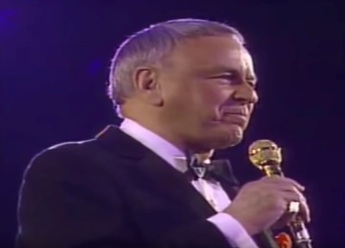
Frank Sinatra, complete biography, vocal style, interpretation and centrality in 20th-century music
Profile
Frank Sinatra (Francis Albert Sinatra; Hoboken, New Jersey, December 12, 1915 – Los Angeles, California, May 14, 1998) was an American singer, actor, and producer, and one of the most influential and enduring figures in 20th-century popular music.
Sinatra redefined the role of the modern singer, turning vocal interpretation into a narrative art form grounded in technical control, deep textual understanding, and direct emotional communication.

Origins and training (New Jersey)
Raised in Hoboken, in a family of Italian heritage, Sinatra developed musically outside academic institutions, absorbing vocal models from radio, jazz, and American popular singing.
The influence of singers such as Bing Crosby is evident in his early years, but Sinatra quickly forged a personal identity based on:
His training was essentially empirical, built through listening, live experience, and meticulous observation of musical language.
The big band years and the rise (1940s)
The turning point came with his joining Tommy Dorsey’s orchestra, a decisive experience for Sinatra’s technical maturation. Here he refined his celebrated breath control, inspired by the instrumental phrasing of the trombone.
In the 1940s Sinatra became a mass phenomenon, anticipating modern celebrity culture. At the same time, he shaped an interpretive style that moved beyond entertainment, aiming for intimacy, introspection, and emotional storytelling.
Crisis and artistic rebirth (1950s)
In the early 1950s Sinatra went through a profound personal and professional crisis. His career appeared to be in decline, yet this period marked a decisive artistic rebirth.
His return to recording with Capitol Records inaugurated a new season defined by:
This phase established Sinatra as an adult artist, capable of giving voice to themes of loneliness, disillusionment, and existential awareness.
The album as a narrative form
Frank Sinatra was among the first to conceive the album as a coherent work, rather than a mere collection of songs. His records are built around:
clearly defined emotional states,
psychological trajectories,
timbral and thematic coherence.
His collaboration with arrangers such as Nelson Riddle was central to developing this vision, in which voice and orchestra engage in a structured dialogue.
Vocal style and interpretation
Sinatra’s style is considered a paradigm of interpretation. His defining traits include:
spoken-sung phrasing, natural and fluid,
mastery of time and rubato,
absolute attention to the text,
breath control as a technical foundation,
absence of showy virtuosity, in favor of expression.
Sinatra turns the song into a personal narrative, making every sung word feel credible.
Cinema, public image and cultural role
Alongside music, Sinatra built a significant film career, helping to shape a complex public image: artist, actor, charismatic figure, and cultural symbol.
His media presence and role in American culture made him a reference not only in musical terms, but also in social and generational terms.
Death and symbolic legacy
Frank Sinatra died on May 14, 1998 in Los Angeles, at the age of 82, following cardiac arrest after a long series of health problems.
His passing marked a symbolic end to an era in American music. The global tributes that followed confirmed his status as a cross-generational cultural icon, capable of uniting different styles, audiences, and generations.
Complete discography (studio albums as main artist)
Columbia Records
1946 – The Voice of Frank Sinatra
1946 – Songs by Sinatra
1947 – Christmas Songs by Sinatra
1947 – Frank Sinatra Sings
1948 – Frankly Sentimental
1949 – Dedicated to You
1950 – Sing and Dance with Frank Sinatra
1950 – Frank Sinatra Conducts the Music of Alec Wilder
1950 – Songs for Young Lovers
1950 – Swing Easy!
1951 – Frank Sinatra Sings for the Lonely
1952 – Frank Sinatra Sings the Music of Victor Young
Capitol Records
1954 – Songs for Young Lovers (LP edition)
1954 – Swing Easy! (LP edition)
1955 – In the Wee Small Hours
1956 – Songs for Swingin’ Lovers!
1957 – Close to You
1957 – A Swingin’ Affair!
1957 – Where Are You?
1958 – Come Fly with Me
1958 – Frank Sinatra Sings for Only the Lonely
1959 – Come Dance with Me!
1959 – No One Cares
1960 – Nice ’n’ Easy
1961 – Ring-a-Ding-Ding!
Reprise Records
1961 – Sinatra’s Swingin’ Session!!!
1961 – I Remember Tommy
1962 – Sinatra and Swingin’ Brass
1962 – Sinatra and Strings
1962 – Point of No Return
1963 – Sinatra’s Sinatra
1964 – Sinatra Sings Days of Wine and Roses, Moon River, and Other Academy Award Winners
1964 – America, I Hear You Singing (with Bing Crosby and Fred Waring)
1965 – September of My Years
1966 – Moonlight Sinatra
1966 – That’s Life
1967 – Francis Albert Sinatra & Antônio Carlos Jobim
1968 – Cycles
1969 – My Way
1970 – Watertown
1971 – Sinatra & Company
1973 – Ol’ Blue Eyes Is Back
1974 – Some Nice Things I’ve Missed
1974 – Trilogy: Past Present Future
1976 – She Shot Me Down
1980 – Trilogy II: Past Present Future
1981 – The Concert Sinatra
1984 – L.A. Is My Lady
1993 – Duets
1994 – Duets II
Historical and cultural impact
Frank Sinatra played a decisive role in defining the language of modern popular singing, influencing generations of performers across jazz, pop, and popular song.
His legacy lies in demonstrating that the voice can function as a narrative instrument, capable of conveying emotional complexity without technical artifice.
Critical reading: Frank Sinatra as the archetype of the modern interpreter
Sinatra’s contribution should not be read only in discographic terms, but as a redefinition of the singer’s role. He showed that interpretation means understanding, internalizing, and returning a text with emotional truth.
Frank Sinatra remains the archetype of the modern interpreter, an essential reference for understanding the evolution of popular vocal art in the 20th century.



 Frank Sinatra