

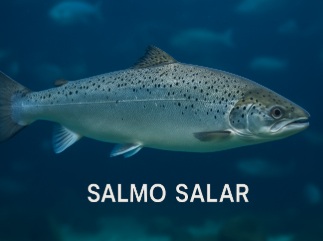
Salmon
Rating : 8
| Evaluation | N. Experts | Evaluation | N. Experts |
|---|---|---|---|
| 1 | 6 | ||
| 2 | 7 | ||
| 3 | 8 | ||
| 4 | 9 | ||
| 5 | 10 |
10 pts from Ark90
| Sign up to vote this object, vote his reviews and to contribute to Tiiips.Evaluate | Where is this found? |
| "Descrizione" about Salmon Review Consensus 10 by Ark90 (12472 pt) | 2025-Nov-16 11:32 |
| Read the full Tiiip | (Send your comment) |
Salmon
(Salmo salar, Oncorhynchus spp. – fresh, frozen, smoked, marinated, canned)
Description
Salmon is a cold-water, fatty fish with flesh ranging from pale pink to deep orange, depending on species, diet and pigment content (mainly astaxanthin).
Commercially, most of the market is farmed Atlantic salmon (Salmo salar), while several Pacific salmon (Oncorhynchus spp.) (sockeye, chinook, coho, chum, pink) are often wild-caught.
Main commercial forms:
Fresh or chilled fillets, with or without skin, whole sides or portions;
Frozen fillets, portions, cubes, burgers;
Smoked salmon (cold- or hot-smoked);
Marinated salmon (e.g. gravlax);
Canned salmon (in brine, in oil, in its own juices).

Indicative nutritional values (per 100 g raw edible portion)
(Typical ranges; strong variation between wild vs farmed, species and fatness.)
Energy: 140–210 kcal
Water: ≈ 65–72 g
Protein: 20–25 g
Total fat: 6–14 g
First occurrence: SFA/MUFA/PUFA = saturated/monounsaturated/polyunsaturated fatty acids. In salmon, SFA are typically about 1–3 g/100 g, while MUFA and PUFA make up the majority of the fat, with a substantial share of long-chain omega-3. Within a diet where total saturated fat is kept moderate, this profile is generally considered favourable compared with many red and processed meats.
Carbohydrates: 0 g
Cholesterol: 40–70 mg
Sodium (intrinsic, no added salt): ≈ 35–70 mg
Indicative micronutrients (per 100 g)
B vitamins:
Niacin (B3): ≈ 7–15 mg
Vitamin B6: ≈ 0.7–1.0 mg
Vitamin B12: often ≥ 100% of daily requirement in 100 g of wild salmon
Minerals:
Selenium: ≈ 30–60 µg
Phosphorus: ≈ 200–250 mg
Potassium: ≈ 300–450 mg
Magnesium: ≈ 25–30 mg
Long-chain omega-3 (EPA + DHA): typically 1–2 g/100 g, with wild salmon often at the higher end (but usually slightly leaner overall).
(Smoked/canned products with added salt/oil can reach 180–250 kcal and 2–4 g salt per 100 g.)
Key constituents
Proteins
High biological value (BV) proteins, with a complete essential amino acid profile.
Good content of BCAA (leucine, isoleucine, valine), important for muscle metabolism and recovery.
Lipids
Medium-to-high overall fat (fatty fish), typically higher in farmed than in wild salmon.
Moderate SFA, substantial monounsaturated (oleic) and polyunsaturated fatty acids.
Significant levels of long-chain omega-3 EPA (eicosapentaenoic acid) and DHA (docosahexaenoic acid).
No industrial trans fats; only small amounts of natural marine trans isomers, not considered problematic at usual intakes.
Pigments
The colour is mainly due to astaxanthin, a carotenoid: naturally accumulated from the food web in wild salmon (crustaceans) and added to feed in farmed salmon (synthetic or from microbial/algal sources).
Other components
Non-protein nitrogenous compounds, nucleotides and low levels of biogenic amines when properly handled.
Parvalbumin, a muscle protein and the major allergen in salmon and many fish species

Production process
(Generic overview – details vary for wild vs farmed and fresh vs smoked/canned products.)
Capture or farming
Wild salmon (mainly Pacific species): caught using gillnets, seines, troll lines and other regulated gears.
Farmed Atlantic salmon: hatchery (broodstock, eggs, fry), freshwater rearing (parr, smolt), then ongrowing in sea cages or land-based recirculating aquaculture systems (RAS).
Harvest and slaughter
Stunning, bleeding, gutting and washing.
Rapid chilling (ice, refrigerated seawater) and maintenance of the cold chain to preserve quality and safety.
Primary processing
Filleting, trimming, removal of pin bones.
Grading by size, fat content, presence/absence of skin.
Vacuum or MAP packaging for chilled products.
Rapid freezing and glazing for frozen products.
Further processing
Smoking:
cold smoking (low temperature, raw-like texture), or
hot smoking (cooking plus smoking, firmer texture);
Marination: salt, sugar, herbs/spices, sometimes alcohol (e.g. gravlax).
Canning: pre-cooking or raw-packing of portions into cans, addition of brine or oil, sealing and thermal sterilisation in retorts.
Physical properties
Colour: from pale pink to deep orange; wild salmon often appear more intensely coloured, farmed salmon more uniform.
Texture: firm yet relatively tender, easily flaking into layers.
Typical post-mortem pH: ≈ 6.0–6.5; high water activity.
Smoked salmon shows a glossier surface, more intense colour and slightly firmer bite.
Sensory and technological properties
Flavour
Characteristic rich, fatty, slightly sweet flavour;
Wild salmon tends to have a more pronounced “marine” character;
Smoked salmon adds smoke and salt notes, sometimes with spices/herbs.
Texture
Fat contributes to succulence and tenderness;
Salmon performs well under both fast, high-heat cooking and low-and-slow methods (e.g. sous-vide).
Technological behaviour
Suitable for grilling, baking, pan-frying, steaming, poaching, sous-vide;
Works well in emulsions (mousses, pâtés, terrines) thanks to its protein–fat matrix;
The relatively high fat content makes oxidation control (oxygen, light, temperature) important to avoid rancidity and off-flavours.
Food applications
Home cooking and foodservice
Fillets and portions grilled, baked, pan-fried, steamed, en papillote;
Salmon en croûte, skewers, curries, poké bowls, tartare and carpaccio (where legally allowed and properly frozen for parasite control);
Smoked salmon for starters, canapés, salads, pasta, risottos, bagels.
Food industry
Retail smoked salmon slices, carpaccio and gravlax;
Chilled or frozen ready meals (pasta dishes, risottos, lasagne, soups, fish pies);
Canned salmon in brine, oil or its own juice;
Salmon burgers, fish cakes, spreads, salad toppings and ingredient cubes for sauces and prepared dishes.
Nutrition & health
Salmon is considered a high nutrient-density food because it provides:
High-quality protein (20–25 g/100 g) for muscle maintenance and repair;
Substantial amounts of omega-3 EPA and DHA (≈ 1–2 g/100 g), which, within a balanced diet, contribute to:
normal heart function and more favourable blood-lipid profile,
support of certain brain and vision functions;
B vitamins (B12, B3, B6) supporting energy metabolism and nervous system;
Vitamin D, selenium and phosphorus, important for bone health, immune function and antioxidant defence.
Points to watch:
Smoked and canned salmon can have high salt (2–4 g/100 g); this can be relevant for individuals managing blood pressure or sodium intake.
Energy intake may be relatively high for very fatty cuts or preparations rich in added oils or creamy sauces.
Portion note:
Typical adult portion as a main protein dish: 120–150 g cooked (≈ 150–180 g raw), supplying roughly 25–35 g protein and 1.5–3 g EPA+DHA, depending on type and fat content.
Allergens and intolerances
Salmon is classified as a fish allergen and must be labelled.
The main allergen is parvalbumin, which is heat-stable: allergic individuals can react to salmon whether raw, cooked or processed.
Reactions may include urticaria, gastrointestinal symptoms, bronchospasm and anaphylaxis.
Cross-reactivity with other fish species is common: many people allergic to one fish need to avoid several species.
Salmon itself is gluten-, milk- and egg-free, but composite products (burgers, ready meals, sauces) may contain other allergens (wheat, egg, dairy, soy, mustard, etc.).
Quality and specifications (typical themes)
Composition
Total fat and fatty-acid profile, protein and moisture within specification;
Salt content controlled in smoked, marinated and canned products.
Physical–sensory parameters
Uniform, bright colour without excessive browning or grey patches;
Fresh, marine odour (not rancid, not ammoniacal);
Firm yet elastic texture, not mushy;
Minimal pin bones and defects.
Chemical parameters
Lipid oxidation indicators (peroxide value, anisidine value) within target ranges;
Environmental contaminants (dioxins, PCB, heavy metals) below legal limits;
Residues of veterinary drugs for farmed fish compliant with regulations.
Microbiological parameters
Low total viable counts in fresh/chilled products;
Absence of specified pathogens;
Particular focus on Listeria monocytogenes for smoked and ready-to-eat salmon.
Storage and shelf-life
Fresh/chilled
Recommended storage at 0–2 °C, ideally on ice or under MAP;
Typical shelf-life: a few days, up to 5–10 days for well-managed, packaged products.
Frozen
Store at ≤ −18 °C;
Good sensory quality for 6–12 months, with gradual declines (oxidation, dehydration).
Smoked and marinated
Store at 0–4 °C;
Shelf-life ranges from a couple of weeks to several weeks, depending on salt level, aw, packaging and processing.
Canned
Shelf-stable for 2–5 years unopened at ambient temperature;
Once opened, refrigerate and consume within 1–3 days.
Safety and regulatory
Main safety issues:
Parasites (Anisakis) in raw or undercooked salmon: regulations often require freezing treatments for fish intended to be eaten raw or nearly raw.
Histamine formation is less typical in salmon than in some scombroid fish, but good temperature control is still necessary.
Environmental contaminants (dioxins, PCB, heavy metals) regulated by maximum levels; monitoring is more critical in some regions and for fatty species.
Veterinary medicines and treatments (for farmed salmon) must comply with residue limits and withdrawal periods.
Production must follow:
Regulations on fish and fishery products;
GMP/HACCP with CCPs on harvesting, chilling, smoking, packaging and storage;
Labelling rules on origin, production method (wild/farmed) and, in some markets, optional eco-labels or organic certification.
Labelling
Product name: “salmon” with indication of species (Salmo salar, Oncorhynchus keta, etc.) where required, and of state (fresh, frozen, smoked, canned).
Typical mandatory information:
Origin / FAO fishing area or country of farming;
Indication “farmed” or “wild-caught”;
Ingredient list with emphasis of fish as an allergen;
For smoked/canned salmon: salt, sugars, oils, flavours, additives;
Nutrition declaration.
Troubleshooting
Strong rancid or “fishy” odour
Cause: lipid oxidation, age, poor cold chain.
Actions: improve temperature control, reduce exposure time, use oxygen- and light-barrier packaging, adjust shelf-life.
Dull, greyish or brownish colour
Cause: oxidation of pigments and lipids, product too old or poorly stored.
Actions: review storage conditions, shelf-life, stock rotation (FIFO), packaging type.
Dry, fibrous texture
Cause: overcooking or overly aggressive cooking conditions.
Actions: lower cooking time/temperature, use gentler methods (baking at moderate temperature, steaming, sous-vide), apply marinades.
Surface slime or mould in smoked products
Cause: high surface moisture, long storage, poor hygiene.
Actions: optimise aw and salt, improve hygiene and environmental controls, adjust packaging and realistic shelf-life.
Sustainability and supply chain
Most salmon on the market is farmed, especially from Norway, Chile, UK, Canada and others.
Key challenges in salmon aquaculture:
Environmental impact (organic waste, nutrients, chemicals) on local ecosystems;
Escapes and genetic interaction with wild stocks;
Sea lice and diseases in sea-cage systems;
Use of fish meal and fish oil in feed, partly mitigated by increasing use of plant and algal ingredients.
Positive aspects:
High feed-conversion efficiency compared with many terrestrial animals;
High nutrient density (protein, omega-3) per unit of product;
Growth of certification schemes for sustainable aquaculture and fisheries.
Best practices:
Prefer products with clear traceability and, where possible, credible sustainability certifications;
Wastewater treatment with monitoring of BOD/COD;
Use of recyclable packaging and valorisation of by-products (skins, trimmings) for fish oil and fishmeal;
Application of FIFO stock rotation to limit oxidation and waste.
Main INCI functions (cosmetics)
Salmon can be the source of cosmetic ingredients such as:
Salmon Oil / Fish Oil: emollient, skin conditioning, omega-3 carrier;
Hydrolyzed Fish Collagen (often from salmon skin): film-forming, hydrating, supportive of perceived skin firmness and elasticity;
Purified lipid fractions (omega-3 concentrates) for dermocosmetic and nutricosmetic products.
High-grade purification, low oxidation, odour control and contaminant monitoring are essential.
Conclusion
Salmon is a highly nutritious fish combining high-quality protein, long-chain omega-3, vitamin D, B vitamins and key minerals. From a health perspective, regular but balanced consumption—especially of lower-salt forms—can contribute positively to cardiometabolic health and support brain and visual functions. At the same time, the predominance of aquaculture makes rigorous management of environmental impact, animal welfare, contaminants and disease control crucial. Informed choices about origin, production method and product type allow consumers and professionals to take advantage of salmon’s nutritional benefits while minimising health risks and environmental footprint.
Mini-glossary
SFA/MUFA/PUFA – Saturated/monounsaturated/polyunsaturated fatty acids; in salmon, SFA are moderate while MUFA and PUFA (including omega-3) are substantial, supporting a more favourable lipid profile than many high-SFA meats when part of a balanced diet.
EPA/DHA/ALA – Eicosapentaenoic acid / docosahexaenoic acid / alpha-linolenic acid; EPA and DHA are marine long-chain omega-3s linked to heart, brain and eye benefits; ALA is a plant omega-3 that the body converts only partially into EPA/DHA.
BV (biological value) – Measure of how efficiently dietary protein can be used for body protein synthesis; salmon protein has high BV.
BCAA – Branched-chain amino acids (leucine, isoleucine, valine), important for muscle function and recovery, abundant in fish and meat proteins.
GMP/HACCP – Good Manufacturing Practices / Hazard Analysis and Critical Control Points; core systems for hygienic, safe and traceable production of fish and fish products.
BOD/COD – Biochemical/Chemical Oxygen Demand; indicators of organic and oxidisable load in wastewater, used to design and monitor treatment plants in aquaculture and seafood processing.
FIFO – First In, First Out; stock-rotation principle whereby older lots are used before newer ones, limiting oxidation, quality loss and waste.
Studies
Conservation efforts are underway to protect its habitats and sustainably manage populations, however, despite the implementation of various rehabilitation measures to mitigate and compensate for the negative effects of pollution, fishing, and regulation of the river, Atlantic salmon stocking appears to be far from effective throughout Europe (1).
A danger has emerged: the escapement of farmed salmon that changes the breed and characteristics of wild salmon. (2).
The average total length of Atlantic salmon, measured in Norway on the Imsa River, has decreased (3).
References_____________________________________________________________________
(1) Lenders HJ, Chamuleau TP, Hendriks AJ, Lauwerier RC, Leuven RS, Verberk WC. Historical rise of waterpower initiated the collapse of salmon stocks. Sci Rep. 2016 Jul 20;6:29269. doi: 10.1038/srep29269.
Abstract. The collapse of Atlantic salmon (Salmo salar) stocks throughout North-Western Europe is generally ascribed to large-scale river regulation, water pollution and over-fishing in the 19(th) and 20(th) century. However, other causes have rarely been quantified, especially those acting before the 19(th) century. By analysing historical fishery, market and tax statistics, independently confirmed by archaeozoological records, we demonstrate that populations declined by up to 90% during the transitional period between the Early Middle Ages (c. 450-900 AD) and Early Modern Times (c. 1600 AD). These dramatic declines coincided with improvements in watermill technology and their geographical expansion across Europe. Our extrapolations suggest that historical Atlantic salmon runs must have once been very abundant indeed. The historical perspective presented here contributes to a better understanding of the primary factors that led to major declines in salmon populations. Such understanding provides an essential basis for the effective ecological rehabilitation of freshwater ecosystems.
(2) Hindar K., Fleming I. A., McGinnity P., and Diserud O. H. 2006. Genetic and ecological effects of salmon farming on wild salmon: modelling from experimental results. ICES Journal of Marine Science 63:1234–1247.
Abstract. Cultured salmonids are released or escape into the wild in large numbers and may make up significant proportions of wild salmonid populations in fresh- and saltwater, causing considerable concern for the fitness and productivity of these populations. This paper focuses on the effects of escaped farmed Atlantic salmon (Salmo salar) on wild salmon. Farmed salmon have been under artificial selection for growth and other economically important traits for 30 years and are genetically different in their origin at the molecular and quantitative genetic levels. Escaped farmed salmon spawn in the wild with limited success. Their offspring outgrow those of wild origin but suffer higher mortality. Whole-river experiments in Ireland and Norway have shown that the lifetime success of farmed salmon is reduced relative to wild salmon. Based on data from these experiments, we model the future of wild salmon populations experiencing invasions of escaped farmed salmon. Simulations with a fixed intrusion rate of 20% escaped farmed salmon at spawning suggest that substantial changes take place in wild salmon populations within ten salmon generations (∼40 years). Low-invasion scenarios suggest that farmed offspring are unlikely to become established in the population, whereas high-invasion scenarios suggest that populations are eventually mixtures of hybrid and farmed descendants. Recovery of the wild population is not likely under all circumstances, even after many decades without further intrusion. Managers of wild salmon will have difficulty in obtaining broodstock of the original wild population after a few generations of high intrusion. We conclude that further measures to reduce escapes of farmed salmon and their spawning in wild populations are urgently needed.
(3) Jonsson B, Jonsson N, Albretsen J. Environmental change influences the life history of salmon Salmo salar in the North Atlantic Ocean. J Fish Biol. 2016 Feb;88(2):618-37. doi: 10.1111/jfb.12854. Epub 2016 Jan 3. PMID: 26725985.
Hvidsten NA, Jensen AJ, Rikardsen AH, Finstad B, Aure J, Stefansson S, Fiske P, Johnsen BO. Influence of sea temperature and initial marine feeding on survival of Atlantic salmon Salmo salar post-smolts from the Rivers Orkla and Hals, Norway. J Fish Biol. 2009 May;74(7):1532-48. doi: 10.1111/j.1095-8649.2009.02219.x.
Abstract. The abundance of returning adult Atlantic salmon Salmo salar, in the River Orkla in mid-norway (1 sea-winter, SW, fish) and River Hals in north Norway (1-3 SW fish), was tested against the early marine feeding and the seawater temperature experienced by their corresponding year classes of post-smolts immediately after entry into the Trondheimsfjord (Orkla smolts, 22 years of data) and Altafjord (Hals smolts, 17 years of data). In both river-fjord systems, there was a significant positive correlation between the abundance of returning S. salar and the mean seawater temperature at the time of smolts descending to the sea. The number of 1SW fish reported caught in River Orkla was positively correlated to the proportion of fish larvae in the post-smolt stomachs in Trondheimsfjord. The abundance of returning S.salar was, however, neither correlated to forage ratio (R(F)) nor other prey groups in post-smolt stomachs in the two fjord systems. In the Altafjord, the post-smolts fed mainly on pelagic fish larva (70-98%) and had a stable R(F) (0.009-0.023) over the 6 years analysed. In the Trondheimsfjord, however, there was a higher variation in R(F) (0.003-0.036), and pelagic fish larvae were dominant prey in only two (50 and 91%) of the 8 years analysed. These 2 years also showed the highest return rates of S. salar in River Orkla. These results demonstrate that the thermal conditions experienced by post-smolts during their early sea migration may be crucial for the subsequent return rate of adults after 1-3 years at sea. Pelagic marine fish larvae seem to be the preferred initial prey for S. salar post-smolts. As the annual variation in abundance of fish larvae is related to seawater temperature, it is proposed that seawater temperature at sea entry and the subsequent abundance of returning adult S. salar may be indirectly linked through variation in annual availability of pelagic fish larvae or other suitable food items in the early post-smolt phase.
| Sign up to vote this object, vote his reviews and to contribute to Tiiips.EvaluateClose | (0 comments) |
Read other Tiiips about this object in __Italiano (2)
Family:   Last update:   2023-11-24 21:05:43 | Fattori di minaccia:   |

