

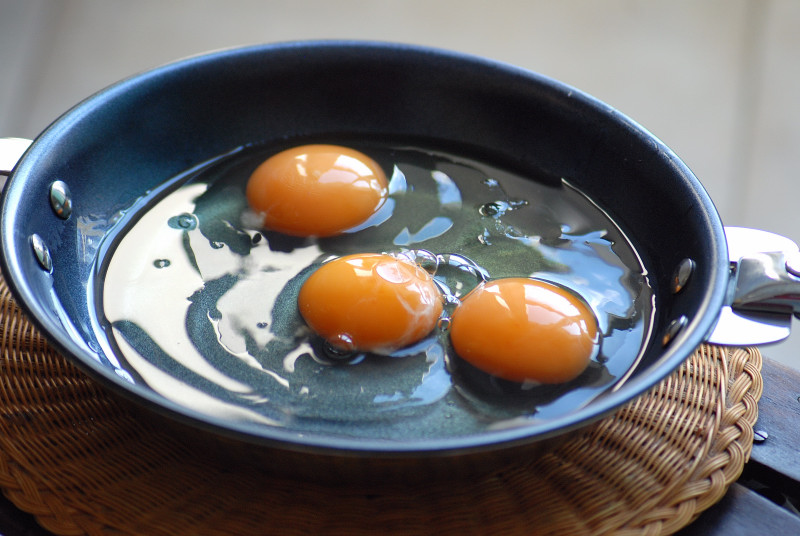
Chicken egg yolk
Rating : 6.2
| Evaluation | N. Experts | Evaluation | N. Experts |
|---|---|---|---|
| 1 | 6 | ||
| 2 | 7 | ||
| 3 | 8 | ||
| 4 | 9 | ||
| 5 | 10 |
Cons:
Allergen (1)10 pts from FRanier
| Sign up to vote this object, vote his reviews and to contribute to Tiiips.Evaluate | Where is this found? |
| "Egg yolk studies" about Chicken egg yolk Review Consensus 8 by FRanier (10041 pt) | 2019-Sep-05 19:05 |
| Read the full Tiiip | (Send your comment) |
Dietary cholesterol and egg yolk should be avoided by patients at risk of vascular disease.
David Spence J.
J Transl Int Med. 2016 Apr 1;4(1):20-24. doi: 10.1515/jtim-2016-0005.
Extraction of phospholipid-rich fractions from egg yolk and development of liposomes entrapping a dietary polyphenol with neuroactive potential.
Bernardo J, Videira RA, Valentão P, Veiga F, Andrade PB.
Food Chem Toxicol. 2019 Aug 1;133:110749. doi: 10.1016/j.fct.2019.110749.
Comparison of long-term effects of egg yolk consumption under normal and high fat diet on lipid metabolism and fatty acids profile in mice.
Yu Z, Wang N, Hu G, Ma M.
Food Sci Biotechnol. 2019 Jan 23;28(4):1195-1206. doi: 10.1007/s10068-018-00545-w
Egg yolk antibodies (IgY) and their applications in human and veterinary health: A review.
Pereira EPV, van Tilburg MF, Florean EOPT, Guedes MIF.
Int Immunopharmacol. 2019 Aug;73:293-303. doi: 10.1016/j.intimp.2019.05.015.
Food protein-induced enterocolitis syndrome caused by egg yolk in an infant.
Doi M, Matsubara Y, Iwakoshi N, Furuichi Y.
Pediatr Int. 2019 Apr;61(4):411-412. doi: 10.1111/ped.13785.
High Density Lipoprotein from Egg Yolk (EYHDL) Improves Dyslipidemia by Mediating Fatty Acids Metabolism in High Fat Diet-induced Obese Mice.
Yu Z, Mao C, Fu X, Ma M.
Food Sci Anim Resour. 2019 Apr;39(2):179-196. doi: 10.5851/kosfa.2018.e38.
Advances in techniques for reducing cholesterol in egg yolk: A review.
Puertas G, Vázquez M.
Crit Rev Food Sci Nutr. 2019;59(14):2276-2286. doi: 10.1080/10408398.2018.1448357.
Consuming a buttermilk drink containing lutein-enriched egg yolk daily for 1 year increased plasma lutein but did not affect serum lipid or lipoprotein concentrations in adults with early signs of age-related macular degeneration.
van der Made SM, Kelly ER, Berendschot TT, Kijlstra A, Lütjohann D, Plat J.
J Nutr. 2014 Sep;144(9):1370-7. doi: 10.3945/jn.114.195503.
Egg yolk proteins and peptides with biological activity.
Zambrowicz A, Dąbrowska A, Bobak Ł, Szołtysik M.
Postepy Hig Med Dosw (Online). 2014 Dec 24;68:1524-9. doi: 10.5604/17322693.1133600.
Specific Chicken Egg Yolk Antibody Improves the Protective Response against Gallibacterium anatis Infection.
Zhang JJ, Kang TY, Kwon T, Koh H, Chandimali N, Huynh DL, Wang XZ, Kim N, Jeong DK.
Infect Immun. 2019 Feb 21;87(3). pii: e00619-18. doi: 10.1128/IAI.00619-18
Egg Yolk Immunoglobulin Supplementation Prevents Rat Liver from Aflatoxin B1-Induced Oxidative Damage and Genotoxicity.
Qiu T, Shen X, Li X, Gong Y, Zou Z, Liu C, Ye F, Mi C, Xu Z, Sun Y, Lin J, Zhang H, Lei H.
J Agric Food Chem. 2018 Dec 19;66(50):13260-13267. doi: 10.1021/acs.jafc.8b04659.
| Sign up to vote this object, vote his reviews and to contribute to Tiiips.EvaluateClose | (0 comments) |
| "Descrizione" about Chicken egg yolk Review Consensus 10 by FRanier (10041 pt) | 2025-Nov-10 18:14 |
| Read the full Tiiip | (Send your comment) |
Egg yolk
(from Gallus gallus domesticus)
Description
• Lipoprotein fraction of the egg, a natural emulsion of water, lipids, phospholipids, and proteins enclosed by the vitelline membrane.
• Provides intense yellow colour, rich flavour, emulsifying capacity, and heat-induced coagulation to recipes and formulations.
• Widely used in mayonnaise and sauces, pastry and ice cream, egg pasta, batters/coatings, and culinary preparations.

Indicative nutrition values (per 100 g raw yolk)
• Energy: 300–325 kcal
• Protein: 15–17 g
• Fat: 26–28 g
• SFA (first occurrence: saturated fatty acids; moderate intake advised): ~8–9 g
• MUFA (first occurrence: monounsaturated fatty acids; generally favourable when balanced): ~11–12 g
• PUFA (first occurrence: polyunsaturated fatty acids, mainly n-6): ~4–5 g
• Carbohydrate: ~3 g
• Cholesterol: 1000–1100 mg
• Intrinsic sodium: ~45–55 mg
• Micronutrients: vitamins A, D, E, K, B2, B12, folate, choline; phosphorus, iron, zinc, selenium.
Key constituents
• Lipoproteins (lipovitellin, livetin) and phosvitin: bind lipids and minerals; contribute to emulsification and stability.
• Phospholipids (lecithin, cephalin): strong natural emulsifiers.
• Triglycerides and minor fractions (mono-/di-glycerides, cholesterol).
• Carotenoids (lutein, zeaxanthin): colour and antioxidant action.
• Fat-soluble vitamins and choline.
Production process
• Breaking and separation of eggs → isolation of intact yolks.
• Optional pasteurization of liquid yolk for industrial use.
• Filtration/homogenization and packing chilled or frozen; for stabilized products: possible high pasteurization or technical sugaring/salting where applicable.
Physical properties
• Appearance: viscous golden-yellow fluid; density ~1.02–1.06 g/mL.
• pH: 6.0–6.8.
• High emulsifiability; coagulation begins ~65–70 °C, forming a compact gel.
Sensory & technological properties
• Emulsifier/stabilizer (mayonnaise, sauces) via lecithin.
• Coagulates/gelifies on heating (custards, curd, flan).
• Contributes colour, gloss (egg-wash), and Maillard aroma in baking.
• Synergies with sugars and starches for pastry/ice-cream texture; with oils/fats for stable emulsions.
Food applications
• Sauces/condiments (mayonnaise, hollandaise).
• Pastry/ice cream (custards, zabaglione, rich ice creams).
• Egg pasta/gnocchi, batters and binders.
• Baked goods (surface glazing, colour, structure).
Nutrition & health
Egg yolk provides complete proteins, mostly unsaturated fats, fat-soluble vitamins, and choline (supportive of liver and lipid metabolism). Lutein/zeaxanthin are linked to eye health. Cholesterol content is high, yet in many healthy individuals the impact on blood lipids is modest when intake is moderate and part of a balanced diet (seek medical advice in hypercholesterolemia or where prescribed).
• For a lighter profile, pair with MUFA/PUFA-rich oils, and limit added salt and sugars.
• Pasteurization reduces microbiological risk while preserving most nutritional value.
Portion note: home cooking 1 yolk (≈18 g); industrial sauces 8–12% of total phase; pastry 10–20% on flour/milk weight depending on recipe.
Allergens & intolerances
• Egg is a major allergen (EU Reg. 1169/2011). Yolk proteins (e.g., vitellogenins/lipovitellins) can be allergenic, though the most reactive fraction often involves egg white.
• Not suitable for individuals with egg allergy; reactions can range from mild to anaphylaxis.
• Cross-contact with egg white during processing must be controlled under GMP/HACCP with validated cleaning.
• Clearly label “egg/egg derivatives” and apply precautionary statements per regulation when relevant.
Quality & specifications (typical topics)
• Freshness indices (source eggs), pH, colour (yellowness scales).
• Microbiology: pathogens absent/25 g; low total counts.
• Residues/contaminants compliant with MRL; free from foreign matter.
• For liquid yolk: emulsion stability, coagulation capacity, and viscosity to spec.
Storage & shelf-life
• Fresh: 0–4 °C, away from light/oxygen; use promptly.
• Pasteurized liquid: 0–4 °C; typically 3–7 days (follow label).
• Frozen: ≤ −18 °C; 6–12 months (thaw under refrigeration). Avoid refreezing.
Safety & regulatory
• Produced and used under EU Reg. 852/2004 and 853/2004; full lot traceability.
• Processes under GMP/HACCP; for RTE items, control Listeria and Salmonella.
• Strict raw/ready segregation and hygienic tools/surfaces.
Labeling
• Ingredient name (egg yolk; pasteurized yolk if applicable).
• Mandatory allergen declaration; storage and date code (BBD/expiry).
• For semi-finished goods: any processing aids (technical sugar/salt) and directions for use.
Troubleshooting
• Unstable emulsions → insufficient aqueous phase/lecithin or inadequate shear → rebalance phases, increase shear gradually, control pH.
• Premature coagulation → excessive temperature → work below 65 °C in sauces/custards; use bain-marie.
• Rancid notes → lipid oxidation → oxygen-barrier packaging, natural antioxidants (e.g., tocopherols).
• Faded colour → carotenoid oxidation → protect from light/oxygen.
Sustainability & supply chain
• Sourced from traceable, welfare-compliant chains; shells/membranes can be valorised.
• Plants manage effluents to BOD/COD targets, recover heat, and use recyclable packs.
INCI functions (cosmetics)
• Egg Yolk / Lecithin / Hydrolyzed Egg Protein — emollient, skin-conditioning, film-forming; use per cosmetic regulation and tolerability profiles.
Conclusion
Egg yolk is a natural emulsifier and nutrient-rich ingredient delivering technological functionality (emulsion, gelation, colour) and nutritional value. Proper temperature, hygiene, and formulation control enable stable, safe, and sensorially pleasing products.
Mini-glossary
• SFA — saturated fatty acids; excessive intake should be moderated.
• MUFA — monounsaturated fatty acids; generally supportive of a healthier lipid profile.
• PUFA — polyunsaturated fatty acids (n-6/n-3); balance matters for health.
• MRL — maximum residue limit for contaminants/residues.
• GMP/HACCP — good manufacturing practice / hazard analysis and critical control points.
• BOD/COD — biochemical/chemical oxygen demand; effluent impact indicators.
Studi
Egg yolk is composed of 70% lipids and 30% proteins. It contains carotenoids such as zeaxanthin and lutein, vitamins.

Egg yolk has a high content of cholesterol and saturated fatty acids, which can promote cardiovascular disease. One egg yolk contains between 200 mg and 300 mg of cholesterol/100 g (1).
Egg yolk can increase the risk of microbial contamination and reduce the shelf life of products (2) ; for this reason, there is more interest in introducing new emulsifiers as alternatives to egg yolk. Some suitable options are hydrocolloids and polysaccharides (3).
Hen egg yolk has been studied and the effects of its antibodies on the immune responses of the intestinal mucosa of laboratory animals with Salmonella typhimurium have been determined. The results suggest a positive immune response (4).
Oral administration of hen's egg yolk influenced behaviour and cognitive functions in young and aged rats. It primarily led to mitigating the behavioural symptoms of aging and supported cognitive and memory learning in rats of both age groups (5).
References______________________________________________________________________
(1) Bautista Villarreal M, Gallardo Rivera CT, García Márquez E, Rodríguez Rodríguez J, Núñez González MA, Chávez Montes A, Báez González JG. Comparative Reduction of Egg Yolk Cholesterol Using Anionic Chelating Agents. Molecules. 2018 Dec 5;23(12). pii: E3204. doi: 10.3390/molecules23123204.
Abstract. Egg yolk is used as an emulsifying agent. Nevertheless, its high concentration of cholesterol is linked to chronic degenerative diseases that cause cardiovascular disease. In this study, three methods for reducing the level of cholesterol in egg yolks were studied. The first method consisted of physical separation of the granules contained in the yolk (NaG). The second method applied was the use of anionic chelating biopolymers, such as arabic gum solution (AG) and mesquite gum solution (MG), and the third method was extraction with a solvent (SA). For this purpose, the cholesterol present in egg yolks, the microstructure, particle size, zeta potential, and its emulsifying capacity were determined. The amount of cholesterol removed was 97.24% using 1% mesquite gum (MG1%), and 93.26% using 1% Arabic gum (AG1%). The zeta potential was determined, and the isoelectric point (ζ = 0) of egg yolk was identified as pH 4.6. While, at this pH, the zeta potential of mesquite gum was -14.8 mV, the zeta potential for the arabic gum was -16 mV. The emulsifying capacity of MG1% was 62.95%, while the emulsifying capacity of AG1% was 63.57%. The complex obtained can be used in the development of functional foods reduced in cholesterol.
(2) Abedinzadeh S, Torbati M, Azadmard-Damirchi S. Some Qualitative and Rheological Properties of Virgin Olive Oil- Apple Vinegar Salad Dressing Stabilized With Xanthan Gum - Adv Pharm Bull. 2016 Dec;6(4):597-606. doi: 10.15171/apb.2016.074.
Abstract. Purpose: Lipid oxidation and rheological properties are the main qualitative parameters determined in food emulsions. Salad dressings are food emulsions important in our daily diet, but conventional salad dressings have high amounts of cholesterol and saturated fatty acids because of egg yolk in their formulations. There are many studies on the modification of salad dressing formulations to replace egg yolk and saturated fats. The present study describes new formulation of salad dressing with olive oil and apple vinegar to produce a functional food product. Methods: This study investigated the qualitative properties, oxidative stability, rheological behavior and microstructure of the salad dressing without egg yolk. Oil-in-water emulsions were prepared with virgin olive oil and apple vinegar stabilized with various percentages of xanthan (T1: 0.25%, T2: 0.5%. T3: 0.75%). Samples were stored at refrigerator for 90 days and experiments were performed at production day and during storage. Results: The obtained results showed that peroxide value was increased for all samples during storage, but it was at an acceptable level. Fatty acid changes were not significant during storage. Droplet size was reduced by increasing xanthan gum. T2 had the best rheological properties during storage. Generally, T2 and T3 had higher scores and were more acceptable in organoleptic assay. Conclusion: Obtained results showed that T2 had suitable qualitative and rheological properties and can be a proper egg yolk free salad dressing to introduce to the market.
(3) Dickinson E. Hydrocolloids at interfaces and the influence on the properties of dispersed systems. Food Hydrocoll. 2003;17(1):25–39. doi: 10.1016/S0268-005X(01)00120-5
Abstract. Although traditionally associated with thickening and gelation behaviour, food hydrocolloids also influence the properties of dispersed systems through their interfacial properties. Hence, surface-active hydrocolloids may act as emulsifiers and emulsion stabilisers through adsorption of protective layers at oil–water interfaces, and interactions of hydrocolloids with emulsion droplets may affect rheology and stability with respect to aggregation and serum separation. A review of literature evidence suggests that much of the reported emulsifying capability of polysaccharides is explicable in terms of complexation or contamination with a small fraction of surface-active protein. To support this point of view, the specific cases of gum arabic, galactomannans and pectin are considered in some detail. In mixed protein+polysaccharide systems, associative electrostatic interactions can lead to coacervation or soluble complex formation depending on the nature of the biopolymers and the solution conditions (pH and ionic strength). Protein–hydrocolloid complexation at interfaces can be associated with bridging flocculation or steric stabilisation. As well as controlling rheology, the presence of a non-adsorbing hydrocolloid can affect creaming stability by inducing depletion flocculation.
(4) Li X, Yao Y, Wang X, Zhen Y, Chicken egg yolk antibodies (IgY) modulate the intestinal mucosal immune response in a mouse model of Salmonella typhimurium infection. Thacker PA, Wang L, Shi M, Zhao J, Zong Y, Wang N, Xu Y. - Int Immunopharmacol. 2016 Jul
(5) Lemieszewska M, Jakubik-Witkowska M, Stańczykiewicz B, Zambrowicz A, Zabłocka A, Polanowski A, Trziszka T, Rymaszewska Pro-Cognitive Properties of the Immunomodulatory Polypeptide Complex, Yolkin, from Chicken Egg Yolk and Colostrum-Derived Substances: Analyses Based on Animal Model of Age-Related Cognitive Deficits. J. Arch Immunol Ther Exp (Warsz). 2016 Oct
Abstract. The study aimed to assess the effect of the polypeptide Y complex (Yolkin), isolated from chicken egg yolk, on behavioural and cognitive functions. It also aimed to compare this activity with colostrum-derived substances (Colostrinin, Coloco), which have a confirmed impact on learning and memory. In the study, the effect of Yolkin, administered to rats of different ages, who performed various tasks involving spatial and episodic memory, motor functions and exploratory behavior, was assessed. The experiment was carried out in rats which were 6 and 12 months old. Two different doses of the studied specimens based on previous comparative studies and two different routes of administration (oral and retroperitoneal) were used. A series of behavioural tests were carried out, including an open field test, a novel object recognition test and a Morris water maze. They were used to evaluate the impact of the studied specimen on improving locomotor function and exploratory behaviour, preventing their decline and assess the functioning of episodic and spatial memory in aging rats. The administration of Yolkin gave distinct effects compared to colostrum-derived substances, although confirmed its suggested pro-cognitive action. Therefore, it may be used to enhance cognitive functions and inhibit the progression of dementia in the course of neurodegenerative disorders.
| Sign up to vote this object, vote his reviews and to contribute to Tiiips.EvaluateClose | (0 comments) |
Read other Tiiips about this object in __Italiano (3)
Content:   Last update:   2019-09-05 18:33:21 | Kcal/100g:   322 Family:   Threat factors:   |

