

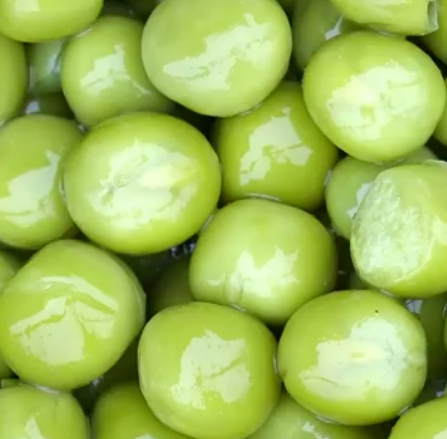
Pea
Rating : 7
| Evaluation | N. Experts | Evaluation | N. Experts |
|---|---|---|---|
| 1 | 6 | ||
| 2 | 7 | ||
| 3 | 8 | ||
| 4 | 9 | ||
| 5 | 10 |
Pros:
Antidiabetic (1) Antioxidant (1) Anti-aging (1)10 pts from FRanier
| Sign up to vote this object, vote his reviews and to contribute to Tiiips.Evaluate | Where is this found? |
| "Pea studies" about Pea Review Consensus 8 by FRanier (10041 pt) | 2019-Aug-19 21:19 |
| Read the full Tiiip | (Send your comment) |
Potential of wheat (Triticum aestivum L.) and pea (Pisum sativum) for remediation of soils contaminated with bromides and PAHs.
Shtangeeva I, Perämäki P, Niemelä M, Kurashov E, Krylova Y.
Int J Phytoremediation. 2018 May 12;20(6):560-566. doi: 10.1080/15226514.2017.1405375.
Lack of efficacy of transgenic pea (Pisum sativum L.) stably expressing antifungal genes against Fusarium spp. in three years of confined field trials.
Kahlon JG, Jacobsen HJ, Chatterton S, Hassan F, Bowness R, Hall LM.
GM Crops Food. 2018;9(2):90-108. doi: 10.1080/21645698.2018.1445471.
The impact of newly produced protein and dietary fiber rich fractions of yellow pea (Pisum sativum L.) on the structure and mechanical properties of pasta-like sheets.
Muneer F, Johansson E, Hedenqvist MS, Plivelic TS, Markedal KE, Petersen IL, Sørensen JC, Kuktaite R.
Food Res Int. 2018 Apr;106:607-618. doi: 10.1016/j.foodres.2018.01.020
Effect of Processing on the in Vitro and in Vivo Protein Quality of Yellow and Green Split Peas (Pisum sativum).
Nosworthy MG, Franczyk AJ, Medina G, Neufeld J, Appah P, Utioh A, Frohlich P, House JD.
J Agric Food Chem. 2017 Sep 6;65(35):7790-7796. doi: 10.1021/acs.jafc.7b03597.
Phytotoxicity of glyphosate in the germination of Pisum sativum and its effect on germinated seedlings.
Mondal S, Kumar M, Haque S, Kundu D.
Environ Health Toxicol. 2017 Aug 16;32:e2017011. doi: 10.5620/eht.e2017011.
Pea, Pisum sativum, and Its Anticancer Activity.
Rungruangmaitree R, Jiraungkoorskul W.
Pharmacogn Rev. 2017 Jan-Jun;11(21):39-42. doi: 10.4103/phrev.phrev_57_16. Review.
Chemical composition and pharmacological activities of Pisum sativum.
Zilani MN, Sultana T, Asabur Rahman SM, Anisuzzman M, Islam MA, Shilpi JA, Hossain MG.
BMC Complement Altern Med. 2017 Mar 27;17(1):171. doi: 10.1186/s12906-017-1699-y.
Nutritional quality and sensory acceptability of complementary food blended from maize (Zea mays), roasted pea (Pisum sativum), and malted barley (Hordium vulgare).
Fikiru O, Bultosa G, Fikreyesus Forsido S, Temesgen M.
Food Sci Nutr. 2016 May 6;5(2):173-181. doi: 10.1002/fsn3.376
Hypolipidemic Effect of the Autoclaved Extract Prepared from Pea (Pisum sativum L.) Pods In Vivo and In Vitro.
Inagaki K, Nishimura Y, Iwata E, Manabe S, Goto M, Ogura Y, Hotta H.
J Nutr Sci Vitaminol (Tokyo). 2016;62(5):322-329.
| Sign up to vote this object, vote his reviews and to contribute to Tiiips.EvaluateClose | (0 comments) |
| "Descrizione" about Pea Review Consensus 10 by FRanier (10041 pt) | 2025-Nov-27 11:51 |
| Read the full Tiiip | (Send your comment) |
Pea (Pisum sativum) is the well-known annual climbing plant that provides one of the most popular legumes that arrive on our table.
Synonyms/labeling: green peas (fresh/frozen), dry peas, split peas; common types: smooth/round, wrinkled (sweet), snow peas and sugar snap (edible pod)

Definition
Annual legume (family Fabaceae). Seeds (peas) are eaten fresh or dry; some cultivars have edible pods. Peas provide plant protein, dietary fiber, B vitamins, vitamin C (in fresh peas), and minerals.
Common name: Pea
Parent plant: Pisum sativum L.
Kingdom: Plantae
Clade: Angiosperms
Clade: Eudicots
Order: Fabales
Family: Fabaceae
Genus: Pisum
Species: Pisum sativum L.
Climate:
Pea is a crop that prefers cool and temperate climates.
It tolerates cold well and can be sown early in spring.
Optimal temperatures: 13–20 °C.
Temperatures above 25–28 °C reduce fruit set and pod quality.
Sensitive to strong late frosts, especially during flowering.
Sun exposure:
Requires full sun, essential for:
balanced vegetative growth,
abundant flowering,
good pod formation.
It can grow in partial shade, but yields decrease significantly.
Soil:
Pea prefers soils that are:
well drained,
medium-textured or slightly sandy,
rich in organic matter,
with pH 6.0–7.5.
Heavy or compact soils with waterlogging favor root rot and fungal diseases.
As a legume, pea fixes atmospheric nitrogen through symbiosis with Rhizobium, improving soil fertility.
Irrigation:
Water needs are moderate but regular:
Water is especially important during flowering and pod setting.
Avoid waterlogging to prevent root diseases.
Prolonged water stress reduces seed development inside pods.
Temperature:
Germination: 5–10 °C
Optimal growth: 13–20 °C
Heat stress above 28–30 °C
Moderate tolerance to cold in early stages
Fertilization:
Pea has low nutrient requirements:
Nitrogen: usually unnecessary due to nitrogen fixation.
Phosphorus: supports root development and flowering.
Potassium: improves pod size and quality.
Light organic fertilization (mature compost) is beneficial.
Crop care:
Light hoeing at the beginning to remove weeds.
Many varieties benefit from stakes, trellises, or netting to support climbing stems.
Crop rotation with cereals reduces soil-borne diseases.
Monitoring for aphids, cutworms, and powdery mildew.
Harvest:
Harvest depends on the type (garden peas, shelling peas, snow peas):
Pods are harvested when firm, green, and filled with tender seeds.
Frequent harvesting stimulates the production of new pods.
Peas grown for seed are harvested when pods are completely dry and brown.
After harvest, fresh peas should be consumed or processed quickly, as sweetness declines rapidly due to conversion of sugars into starch.
Propagation:
Pea is propagated by seed, usually direct-sown:
Depth: 3–5 cm
Spacing: 5–7 cm between plants
Sowing in late winter or early spring; in mild climates, also in autumn.
Germination is fast if soil is cool, fresh, and well drained.
Caloric value
Fresh, cooked peas (seeds only): ~80–90 kcal per 100 g
Dry peas, cooked: ~115–130 kcal per 100 g
Dry peas, uncooked: ~340–360 kcal per 100 g
(values vary with moisture, cultivar, and preparation)
Indicative composition
Fresh peas (100 g, cooked):
Carbohydrates ~14–16 g (sugars ~4–6 g; remainder starch)
Dietary fiber ~4–6 g
Protein ~5–6 g
Fat ~0.4–0.8 g
Vitamins/minerals: residual vitamin C after cooking, folate (B9), K, Mn, Fe (moderate bioavailability)
Dry peas (100 g, cooked):
Carbohydrates ~18–22 g (notably resistant starch)
Dietary fiber ~6–9 g (soluble + insoluble)
Protein ~8–10 g
Fat ~0.8–1.5 g
Micronutrients: folate, thiamin (B1), iron, zinc, magnesium, potassium
Bioactive components
Fibers (incl. resistant starch and galacto-oligosaccharides) modulate glycemic response and support the microbiota.
Phytochemicals: saponins, polyphenols (flavones/flavonols), lutein/zeaxanthin (notably in fresh peas).
Antinutrients: phytates, trypsin inhibitors, tannins (higher in dry peas); reduced by soaking, cooking, germination, and fermentation.
Techno-functional properties (culinary/industrial)
Hydration: dry peas benefit from 6–12 h soaking (not required for split peas), then cook to a creamy texture.
Gel/structure: gelatinized starch and coagulated proteins give good purees/soups and act as binders in plant burgers.
Emulsification: pea protein fractions (legumin/vicilin) offer decent emulsifying capacity (useful in sauces/creams).
Sweetness & color: fresh peas retain sugars and chlorophyll—brief cooking in minimal water or steam preserves green color and flavor.
Primary uses
Fresh/frozen: sides, risottos, pastas, soups, purees, salads; quick cooking.
Dry/split: soups and dals, purees, plant burgers/loaves, flours/semiprocessed ingredients.
Industrial: pea protein (isolates/concentrates), pea flour and starch for plant-based products, high-protein pasta, extruded snacks.
Digestion, FODMAPs, tolerance
Fresh peas: moderate FODMAP (GOS); small portions often well tolerated.
Dry peas: higher FODMAPs; soaking + rinsing + cooking lowers GOS; germination further improves tolerance and micronutrient availability.
Allergy: not among EU top-14 allergens, but legume allergies occur; possible cross-reactivity with peanut or lupin in some individuals.
Nutrition and health considerations
Good-quality plant protein (lysine-rich; methionine limiting → pair with cereals).
Low–moderate glycemic impact due to fiber and resistant starch (lower GI in al dente cooked dry peas).
Naturally low sodium—suitable for low-salt diets.
Phytates can lower Fe/Zn absorption—co-consume vitamin C sources (e.g., lemon) or apply soaking/germination.
Storage and quality
Fresh: refrigerate and use promptly (sugars convert to starch over time).
Frozen: excellent alternative preserving color/nutrients.
Dry: store cool, dark, dry; 12–24 months shelf life; protect from insects; rinse and discard soak water before cooking.
Labeling
“Green peas” (fresh/frozen); “dry peas” or “split peas” for shelf-stable legumes; for ingredients: pea flour, pea protein, pea starch.
Practical tips
Creamy soups: use split peas (no soak), water:pea ≈ 4:1, cook 40–60 min.
Salads: blanch fresh/frozen peas 2–3 min, then ice-shock to fix bright green.
Plant burgers: combine cooked peas with grains (rice/quinoa), binders (psyllium/egg), and fats (oils/coconut oil) for juiciness.
Conclusion
Peas are a versatile, nutrient-dense legume—quick and sweet when fresh, higher in protein and fiber when dry. With proper soaking/cooking and smart pairings (cereals, vitamin C), they deliver balanced dishes, reliable textures, and a strong contribution to vegetarian/omnivorous diets seeking high-quality plant protein.
Studies
In a controlled diet, daily consumption of whole and fractionated yellow pea meal at doses equivalent to half a cup of yellow peas reduced insulin resistance in hypercholesterolaemic, while whole pea meal reduced android adiposity in women (1).
Purified peptides extracted from Pisum sativum have demonstrated a broad spectrum of antibacterial activity that can be used as a selective agent against infections and bacteria (2).
This study informs us that as the skin ages, impairment of extracellular matrix protein synthesis and increased action of degradative enzymes manifest as atrophy, wrinkles, and laxity. There is growing evidence for the functional role of exogenous peptides in many areas, including in offsetting the effects of skin aging. Here, using an artificial intelligence approach, RTE62G, a natural and unmodified peptide with extracellular matrix stimulatory properties, was identified. The predicted anti-aging properties of RTE62G peptide were then validated through in vitro, ex vivo, and proof-of-concept clinical trials (3).
References_________________________________________________________________
(1) Marinangeli CP, Jones PJ. Br J Whole and fractionated yellow pea flours reduce fasting insulin and insulin resistance in hypercholesterolaemic and overweight human subjects. Nutr. 2011 Jan;105(1):110-7. doi: 10.1017/S0007114510003156
Abstract. The objective of the present study was to compare whole pea flour (WPF) to fractionated pea flour (FPF; hulls only) for their ability to reduce risk factors associated with CVD and diabetes in overweight hypercholesterolaemic individuals. Using a cross-over design, twenty-three hypercholesterolaemic overweight men and women received two-treatment muffins/d containing WPF, FPF or white wheat flour (WF) for 28 d, followed by 28 d washout periods. Daily doses of WPF and FPF complied with the United States Department of Agriculture's recommended level of intake of half a cup of pulses/d (approximately 50 g/d). Dietary energy requirements were calculated for each study subject, and volunteers were only permitted to eat food supplied by the study personnel. Fasting insulin, body composition, urinary enterolactone levels, postprandial glucose response, as well as fasting lipid and glucose concentrations, were assessed at the beginning and at the end of each treatment. Insulin concentrations for WPF (37·8 (SEM 3·4) pmol/ml, P = 0·021) and FPF (40·5 (SEM 3·4) pmol/ml, P = 0·037) were lower compared with WF (50·7 (SEM 3·4) pmol/ml). Insulin homeostasis modelling assessment showed that consumption of WPF and FPF decreased (P < 0·05) estimates of insulin resistance (IR) compared with WF. Android:gynoid fat ratios in women participants were lower (P = 0·027) in the WPF (1·01 (sem 0·01) group compared with the WF group (1·06 (SEM 0·01). Urinary enterolactone levels tended to be higher (P = 0·087) in WPF compared with WF. Neither treatment altered circulating fasting lipids or glucose concentrations. In conclusion, under a controlled diet paradigm, a daily consumption of whole and fractionated yellow pea flours at doses equivalent to half a cup of yellow peas/d reduced IR, while WPF reduced android adiposity in women.
(2) S Rehman, A Khanum - Pak. J. Isolation and characterization of peptide (s) from Pisum sativum having antimicrobial activity against various bacteria Bot., 43(6): 2971-2978, 2011.
Abstract. A systematic approach was taken to isolate and characterize the antimicrobial peptide (s) from the crude aqueous extract, solubilized ammonium sulphate precipitates and purified gel filtration chromatographic fractions of seed/pod of Pisum sativum L.(garden pea). Their antibacterial activity was investigated against a number of bacteria: Micrococcus luteus, Staphylococcus aureus, Staphylococcus epidermidis, Escherichia coli, Klebsiella pneumonia, Salmonella typhi, Proteus vulgaris Pasterurella multocida, and Pseudomonas aeruginosa using disc diffusion method. Two active peptides from seed ie, S4, S5 and pod ie, P7, P8 were obtained having molecular weight~ 19 kDa,~ 22 kDa,~ 10 kDa and~ 11 kDa, respectively. The bioactivity of each peptide was tested against different enzymes, temperatures and pH. The results showed that the all purified peptides were susceptible to inactivation by trypsin and proteinase K, stable at temperature 4, 25 C and active at pH 5-7. Further S. aureus was found to be the most sensitive strain based on minimum inhibition concentration (MIC) value.
(3) Kennedy K, Cal R, Casey R, Lopez C, Adelfio A, Molloy B, Wall AM, Holton TA, Khaldi N. The anti-ageing effects of a natural peptide discovered by artificial intelligence. Int J Cosmet Sci. 2020 Aug;42(4):388-398. doi: 10.1111/ics.12635.
| Sign up to vote this object, vote his reviews and to contribute to Tiiips.EvaluateClose | (0 comments) |
Read other Tiiips about this object in __Italiano (3)
Content:   Last update:   2019-08-19 21:16:35 | Kcal/100g:   81 Family:   Threat factors:  
|

