

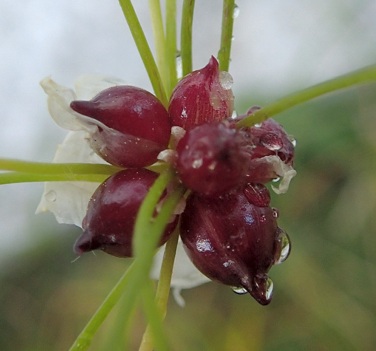
White daffodil garlic
Rating : 7.5
| Evaluation | N. Experts | Evaluation | N. Experts |
|---|---|---|---|
| 1 | 6 | ||
| 2 | 7 | ||
| 3 | 8 | ||
| 4 | 9 | ||
| 5 | 10 |
Pros:
Antioxidant (1)10 pts from Ark90
| Sign up to vote this object, vote his reviews and to contribute to Tiiips.Evaluate | Where is this found? |
| "White daffodil garlic studies" about White daffodil garlic Review Consensus 8 by Ark90 (12472 pt) | 2019-Jun-27 18:58 |
| Read the full Tiiip | (Send your comment) |
Composition of the Essential Oil of Allium neapolitanum Cirillo Growing Wild in Sicily and its Activity on Microorganisms Affecting Historical Art Crafts.
Casiglia S, Bruno M, Senatore F, Senatore F.
J Oleo Sci. 2015;64(12):1315-20. doi: 10.5650/jos.ess15188.
Preliminary sensory evaluation of edible flowers from wild Allium species.
D'Antuono LF, Manco MA.
J Sci Food Agric. 2013 Nov;93(14):3520-3. doi: 10.1002/jsfa.6291
In vitro antioxidant activity of aged extracts of some Italian Allium species.
Nencini C, Menchiari A, Franchi GG, Micheli L.
Plant Foods Hum Nutr. 2011 Mar;66(1):11-6. doi: 10.1007/s11130-010-0204-2.
Cardiovascular receptor binding affinity of aqueous extracts from Allium species.
Nencini C, Franchi GG, Micheli L.
Int J Food Sci Nutr. 2010 Jun;61(4):433-9. doi: 10.3109/09637481003591608.
Evaluation of antioxidative properties of Allium species growing wild in Italy.
Nencini C, Cavallo F, Capasso A, Franchi GG, Giorgio G, Micheli L.
Phytother Res. 2007 Sep;21(9):874-8.
Antibacterial activity of two canthin-6-one alkaloids from Allium neapolitanum.
O'Donnell G, Gibbons S.
Phytother Res. 2007 Jul;21(7):653-7.
The flavonoids of Allium neapolitanum.
Carotenuto A, Fattorusso E, Lanzotti V, Magno S, De Feo V, Cicala C.
Phytochemistry. 1997 Mar;44(5):949-57.
| Sign up to vote this object, vote his reviews and to contribute to Tiiips.EvaluateClose | (0 comments) |
| "Descrizione" about White daffodil garlic Review Consensus 10 by Ark90 (12472 pt) | 2025-Dec-04 12:15 |
| Read the full Tiiip | (Send your comment) |
Neapolitan garlic, White daffodil garlic (Allium neapolitanum Cirillo)
The term Neapolitan garlic refers to Allium neapolitanum Cirillo, a bulbous herbaceous species of the genus Allium, occurring spontaneously in Mediterranean climate regions of Southern Europe and locally used both as an aromatic plant and as a food ingredient. It prefers sunny sites, well-drained soils, generally calcareous or with a medium organic matter content, and shows good adaptability to fallow land, dry meadows, and rural margins. The plant is characterised by an underground bulb, basal strap-like leaves, and a typical umbel inflorescence borne on an erect scape, consisting of small white flowers with six tepals.
From a morphological standpoint, Neapolitan garlic is distinguished by its spring growth and by the mild yet recognisable aroma typical of the genus Allium. The bulb acts as a storage organ and enables seasonal regrowth, while the inflorescence, usually produced between late spring and early summer, allows seed formation and dispersal. In some areas, wild populations are harvested locally for culinary use or as a traditional herb.
The composition of Allium neapolitanum includes carbohydrates (mainly simple sugars), a fraction of sulphur-containing compounds typical of Allium species, responsible for the characteristic aroma, as well as fibre, minerals, and traces of phenolic substances. The content and profile of volatile compounds may vary according to ecotype, pedoclimatic conditions, and growth stage, with possible changes in both aroma profile and odour intensity.
From an application perspective, Neapolitan garlic is used in the food sector, mainly as an aromatic herb to flavour traditional dishes, vegetable-based preparations, and seasonings. It can be consumed fresh or dried, using leaves, bulbs, or inflorescences, most often in home cooking or regional cuisines. The quality of the raw material depends on harvesting methods, storage conditions, and compositional characteristics, with particular attention to preserving the sulphur compounds responsible for its aromatic profile.
It is known by many names:

Botanical name: Allium neapolitanum Cirillo
Common name: Neapolitan garlic, Naples garlic, white-flowered garlic
Family: Amaryllidaceae
Order: Asparagales
Modern clades (phylogenetic):
Angiosperms
Monocots
Domain: Eukaryota
Kingdom: Plantae
Neapolitan garlic is typical of Mediterranean and sub-Mediterranean climates, with mild or moderately cool winters and warm, dry summers. It behaves as a perennial bulb with an autumn–spring vegetative cycle and summer dormancy. It tolerates winter cold reasonably well, provided frosts are not extremely intense and prolonged, especially on waterlogged soils.
The plant prefers full sun. High light levels support photosynthesis, robust leaf growth, and well-developed flower stems. It can adapt to bright partial shade, but in overly shaded conditions the foliage becomes lank, flowering is reduced, and bulbs remain smaller.
Neapolitan garlic is fairly rustic but performs best in soils that are:
Well drained, with no waterlogging;
Of loam or loam-sandy texture, with good porosity;
With a slightly acidic to neutral pH (about 6.0–7.5);
With a moderate content of organic matter.
Very heavy, compact, clay-rich soils, especially if prone to standing water, predispose the bulbs to rot and shorten the lifespan of clumps.
In Mediterranean regions, autumn–spring rainfall often covers most of the water requirement. In ornamental or medicinal plantings:
After planting the bulbs, one settling irrigation helps ensure good soil–bulb contact.
During active leaf growth and flower stalk (scape) emergence, the soil should be kept moderately moist, avoiding both severe dryness and saturation.
During the summer dormancy period, irrigation should be reduced or suspended in open ground, to prevent bulb rot.
The optimal range for growth is roughly 10–22 °C.
Young plants tolerate light frosts but may be damaged by very intense or prolonged cold, especially with wet soil.
Mild spring temperatures favour regular elongation of the scapes and flowering.
During summer dormancy, higher temperatures are not problematic if bulbs are in well-drained soil that is not continuously wet.
Nutrient demands are moderate. A rational fertilization plan may include:
Application of well-matured organic amendments (compost, manure) before planting, to improve soil structure and basic fertility.
A modest supply of nitrogen (N) to support early leaf growth, avoiding excess that would encourage overly soft tissues and susceptibility to disease.
Adequate levels of phosphorus (P) and potassium (K) to support bulb development, tissue robustness, and flowering.
Fertilization should be adjusted to soil conditions and to the intensity of cultivation (ornamental beds, medicinal plots, home gardens).
Soil preparation: Light to medium tillage to obtain a fine, well-drained seedbed or planting bed.
Weed management: Important in the early stages, because Neapolitan garlic competes only weakly with vigorous weeds. Shallow hoeing or organic mulches can be used effectively.
Bulb management: In gardens and medicinal plant beds, bulbs can often remain in place for more than one season if the soil remains well drained. In heavier soils, it may be advisable to lift bulbs during summer dormancy and replant them in autumn.
Plant health: The species is generally robust; problems arise mainly where there is persistent waterlogging (bulb rot) or high pressure from pests shared with other bulbous Allium species (some fungi and sap-sucking or mining insects).
Depending on the intended use:
Leaves: Can be harvested during the vegetative period when they are fully developed but still tender, generally in spring.
Inflorescences: For ornamental use, flower stems can be cut at full colour development if used as cut flowers.
Bulbs: Where bulbs are used, they are lifted at the end of the cycle, once the aerial part has dried and bulbs have completed maturation.
Plant material destined for culinary or technical–herbal use should be harvested on dry days and handled carefully to limit damage and preserve quality.
Neapolitan garlic is propagated mainly vegetatively:
Bulbs / bulbils: The most common method. Bulbs or lateral bulbils are detached from mother plants and replanted in autumn in prepared, well-drained soil.
Division of clumps: In established beds, clumps can be divided after the dormancy period to renew the stand and increase plant numbers.
Indicative nutritional values per 100 g (fresh edible part)
Energy: ~120–150 kcal
Protein: ~5–6 g
Total carbohydrates: ~25–28 g
Dietary fibre: ~2–3 g
Total fat: ~0.5–1 g
SFA
MUFA
PUFA
Minerals: calcium, iron, potassium, magnesium
Vitamins: vitamin C, folates, small amounts of B-group vitamins
Sodium: low
(Values may vary between bulbs and leaves, and according to agronomic and climatic conditions.)
Key constituents
Sulphur-containing compounds (typical of the genus Allium), aromatic precursors responsible for the characteristic odour and flavour
Polyphenols and other natural antioxidants
Carbohydrates, mainly plant-derived sugars and storage polysaccharides
Macronutrients: carbohydrates and vegetable proteins, with trace lipids that include SFA, MUFA and PUFA
Micronutrients: minerals (Ca, Fe, Mg, K), vitamin C and B-group vitamins
Production process
Open-field cultivation in temperate climates
Harvesting of bulbs and leaves, typically in spring
Removal of soil and damaged outer layers
Optional light drying or use as a fresh vegetable
Cleaning, grading and packing for culinary use
Possible preparation of extracts or natural flavouring ingredients for industrial applications
Physical properties
Herbaceous plant with narrow, strap-like green leaves
Small white bulb, tunicated, with multiple cloves depending on development
Distinct sulphurous aroma, similar to garlic but less intense
White–ivory bulb colour and bright green foliage
Sensory and technological properties
Mild garlic-like aroma
Herbaceous, slightly pungent and aromatic flavour
Enhances the aromatic profile of cooked and raw dishes
Good flavour stability under gentle cooking (light sautéing, steaming, short braising)
Can be used whole, chopped or as part of a flavour base with other vegetables and fats
Food applications
Flavouring for vegetables, sauces, meat and fish dishes, soups and stews
Used in regional Mediterranean cuisines as a softer alternative to garlic
Use in salads, omelettes, herb mixes and dressings
Possible application in flavoured oils, marinades and condiments
Fresh leaves may be used as a finishing herb, adding mild green and garlic notes
Nutrition & health
Low caloric impact at typical culinary doses
Presence of organosulphur compounds, polyphenols and vitamin C
Contributes small amounts of fibre and micronutrients in the context of a varied diet
Generally perceived as more digestible than common garlic when used in moderate amounts
Suitable for balanced diets due to its low fat content and natural nutrient profile
This vegetable should not be given to animals, as it may be harmful to their health.
Portion note
Typical culinary use ranges from small chopped amounts (5–15 g) to one or more small bulbs per recipe, depending on portion size and desired flavour intensity.
Allergens & intolerances
Not listed among the major regulated food allergens
Occasional hypersensitivity to Allium sulphur compounds is possible in susceptible individuals
In composite recipes and processed foods, potential allergens usually derive from other ingredients (e.g. dairy, gluten, nuts) and not from aglietto itself
Storage & shelf-life
Fresh bulbs: store in a cool, dry, well-ventilated place
Fresh leaves: store under refrigeration, use within a short time for best quality
Lightly dried or processed product: store in closed containers, away from light, heat and humidity
Avoid high temperatures and high humidity to preserve aroma and functional components
Safety & regulatory
As a fresh vegetable and aromatic ingredient, aglietto is subject to general food safety and hygiene requirements and must be managed under HACCP principles in production and handling
Controls include checks for soil residues, foreign matter, microbial quality and possible contaminants
When used as a flavouring ingredient in industrial products, it must comply with regulations on plant ingredients, hygiene, traceability and labelling
Labelling
On aglietto sold as a fresh or preserved vegetable, the label should indicate:
product name (e.g. “aglietto”, “Allium neapolitanum”)
country of origin
net weight, batch code and best-before/use-by date (where applicable)
storage conditions
For multi-ingredient foods, aglietto is listed in the ingredient list in descending order by weight.
Allergens from other ingredients must be clearly highlighted.
Troubleshooting
Weak aroma in dishes
possible causes: old bulbs, improper storage, excessive drying
corrective actions: select fresher material, adjust dose, improve storage conditions
Flavour too pungent
possible causes: high dosage or concentration in a small volume
corrective actions: reduce quantity, cook more gently or for slightly longer to soften the profile
Loss of aroma during storage
causes: exposure to light, heat or humidity
actions: store in cool, dry, ventilated conditions for bulbs; refrigerate leaves; use airtight containers for dried or chopped product
Sustainability & supply chain
Aglietto is a typical Mediterranean species with relatively simple agronomic requirements and limited environmental impact when grown under good agricultural practices
Short local supply chains (local or regional production) can reduce transport distances and support rural economies
Responsible harvesting and selection reduce waste and help maintain biodiversity
Traceable, quality-controlled supply chains support both sustainability and consistent product quality
Main INCI functions (cosmetics)
From aglietto and related Allium species, cosmetic ingredients may appear as:
Allium Neapolitanum Extract
used as a botanical extract, with possible antioxidant and conditioning functions
potential contribution to the sensory profile and marketing positioning of natural or botanical skin and hair-care products
Use in cosmetics must respect cosmetic regulations, including requirements on purity, safety, stability and maximum use levels where relevant.
Conclusion
Aglietto (Allium neapolitanum) is a natural aromatic ingredient characterised by sulphur-containing compounds, polyphenols and micronutrients. It is appreciated in cooking as a milder alternative to garlic, adding flavour with limited caloric impact and modest but useful nutritional contributions.
With correct cultivation, storage and handling, aglietto offers a stable, versatile and safe ingredient for culinary applications, and its extracts may find specialised use in cosmetic formulations as botanical components, provided that safety and quality criteria are met.
Mini-glossary
SFA – saturated fatty acids; fats without double bonds, potentially less favourable if they displace other fats in excess.
MUFA – monounsaturated fatty acids; fats with one double bond, generally more favourable than high SFA intake when part of a balanced diet.
PUFA – polyunsaturated fatty acids; fats with two or more double bonds, including omega-3 and omega-6 families.
HACCP – Hazard Analysis and Critical Control Points; systematic approach to identifying and controlling food-safety hazards.
Studies
Contains antioxidant and antibacterial substances.
Composition of essential oils (1):
References__________________________________________________________________________
(1) Casiglia S, Bruno M, Senatore F, Senatore F. Composition of the Essential Oil of Allium neapolitanum Cirillo Growing Wild in Sicily and its Activity on Microorganisms Affecting Historical Art Crafts. J Oleo Sci. 2015;64(12):1315-20. doi: 10.5650/jos.ess15188.
Abstract. Essential oil of the aerial parts of Allium neapolitanum Cirillo collected in Sicily were analyzed by gas-chromatography-flame-ionization detection and gas-chromatography-mass spectrometry. Nineteen compounds were identified in the oil and the main components were found to be (E)-chrysanthenyl acetate (28.1%), (Z)-chrysanthenyl acetate (23.8%), (E)-β-farnesene (9.6%), dimethyl trisulfide (9.6%), camphor (7.4%), methyl allyl disulfide (6.8%) and 1-methyl-3-allyl trisulfide (5.8%). The essential oil showed good antimicrobial activity against 11 strains of test microorganisms, including several species infesting historical material.
Carotenuto A, Fattorusso E, Lanzotti V, Magno S, De Feo V, Cicala C. The flavonoids of Allium neapolitanum. Phytochemistry. 1997 Mar;44(5):949-57. doi: 10.1016/s0031-9422(96)00663-2.
Abstract. An investigation of the extracts from Allium neapolitanum has led to the isolation of 13 flavonoid glycosides, based on kaempferol, quercetin and isorhamnetin. Four of them are new compounds and have been identified as: kaempferol 3-O-[[2-O-alpha-L-rhamnopyranosyl-4-O-beta-D-glucopyranosyl]-beta-D- glucopyranoside]], isorhamnetin 3-O-[[2-O-alpha-L-rhamnopyranosyl-6-O-beta- D-glucopyranosyl]-beta-D-glucopyranoside], isorhamnetin 3-O-[[2-O-alpha-L-rhamnopyranosyl-6-O-beta-D-glycopyranosyl] beta-D-glucopyranoside]-7-O-beta-D-glucopyranoside and isorhamnetin 3-O-[[2-O-alpha-L-rhamnopyranosyl-6-O-beta-D-gentiobiosyl]- beta-D-glucopyranoside]]. The isolated compounds were evaluated for their anti-aggregation human platelet activity.
Nencini C, Franchi GG, Cavallo F, Micheli L. Protective effect of Allium neapolitanum Cyr. versus Allium sativum L. on acute ethanol-induced oxidative stress in rat liver. J Med Food. 2010 Apr;13(2):329-35. doi: 10.1089/jmf.2008.0180.
Abstract. This study investigated the protective effect of Allium neapolitanum Cyr., a spontaneous species of the Italian flora, compared with garlic (Allium sativum L.) on liver injury induced by ethanol in rats. Male albino Wistar rats were orally treated with fresh Allium homogenates (leaves or bulbs, 250 mg/kg) daily for 5 days, whereas controls received vehicle only. At the end of the experimental 5-day period, the animals received an acute ethanol dose (6 mL/kg, i.p.) 2 hours before the last Allium administration and were sacrificed 6 hours after ethanol administration. The activities of catalase (CAT), superoxide dismutase (SOD), and glutathione reductase (GR) and the levels of malondialdehyde (MDA), ascorbic acid (AA), and reduced (GSH) and oxidized glutathione in liver tissue were determined. Administration of both Allium species for 5 days (leaves or bulbs) led to no statistical variation of nonenzymatic parameters versus the control group; otherwise Allium treatment caused an increase of GSH and AA levels compared with the ethanol group and a diminution of MDA levels, showing in addition that A. neapolitanum bulb had the best protective effect. Regarding to enzymatic parameters, GR and CAT activities were enhanced significantly compared with the ethanol group, whereas SOD activity showed a trend different from other parameters estimated. However, the treatment with both Allium species followed by acute ethanol administration reestablished the nonenzymatic parameters similar to control values and enhanced the activities of the enzymes measured. These results suggest that fresh Allium homogenates (leaves or bulbs) possess antioxidant properties and provide protection against ethanol-induced liver injury.
Nencini C, Franchi GG, Micheli L. Cardiovascular receptor binding affinity of aqueous extracts from Allium species. Int J Food Sci Nutr. 2010 Jun;61(4):433-9. doi: 10.3109/09637481003591608.
Abstract. Introduction: The aims of this study were to evaluate whether the antihypertensive effect of garlic could to be associated to interactions with adrenergic and dopaminergic receptors involved in regulating blood pressure and to compare these data with those obtained from wild Allium species. Methods: The aqueous extracts of bulbs or leaves of Allium sativum L. (garlic), Allium neapolitanum Cyr., Allium subhirsutum L., and Allium roseum L. were tested for their in vitro affinity for the adrenergic (alpha(1), alpha(2), beta(1) and beta(2)) and dopaminergic (D(1) and D(2)) receptors by radioligand binding assays. Results: Interesting results were shown by bulbs extracts of A. neapolitanum and A. subhirsutum with higher affinities for the beta(2) receptors and by bulbs extract of A. roseum for D(2) receptors. Conclusions: The known antihypertensive activity of Allium sativum cannot be correlated with binding to receptors involved in blood pressure regulation. However, aqueous extracts of the wild-type species of Allium show much higher affinities, warranting further explorations.
| Sign up to vote this object, vote his reviews and to contribute to Tiiips.EvaluateClose | (0 comments) |
Read other Tiiips about this object in __Italiano (2)
Content:   Last update:   2019-06-27 19:00:54 | Kcal/100g:   22 Family:   Threat factors:   |

