

Olive Taggiasche
Rating : 8
| Evaluation | N. Experts | Evaluation | N. Experts |
|---|---|---|---|
| 1 | 6 | ||
| 2 | 7 | ||
| 3 | 8 | ||
| 4 | 9 | ||
| 5 | 10 |
Pros:
Antioxidant (1)10 pts from A_Partyns
| Sign up to vote this object, vote his reviews and to contribute to Tiiips.Evaluate | Where is this found? |
| "Taggiasca olive, olive fruit fly" about Olive Taggiasche Review Consensus 8 by A_Partyns (13031 pt) | 2019-Aug-12 19:37 |
| Read the full Tiiip | (Send your comment) |
Taggiasca olive, olive fruit fly
Symbiotic bacteria affect oviposition behavior in the olive fruit fly Bactrocera oleae.
Arul Jose P, Ben-Yosef M, Jurkevitch E, Yuval B.
J Insect Physiol. 2019 Aug 2:103917. doi: 10.1016/j.jinsphys.2019.103917.
A Re-Evaluation of Olive Fruit Fly Organophosphate-Resistant Ace Alleles in Iberia, and Field-Testing Population Effects after in-Practice Dimethoate Use.
Nobre T, Gomes L, Rei FT.
Insects. 2019 Aug 1;10(8). pii: E232. doi: 10.3390/insects10080232.
One for all: Mating compatibility among various populations of olive fruit fly (Diptera: Tephritidae) for application of the sterile insect technique.
Ahmad S, Haq IU, Cáceres C, Sto Tomas U, Dammalage T, Gembinsky K, Paulus H, Vreysen MJB, Rempoulakis P.
PLoS One. 2018 Nov 1;13(11):e0206739. doi: 10.1371/journal.pone.0206739.
Molecular characterization of pyrethroid resistance in the olive fruit fly Bactrocera oleae.
Pavlidi N, Kampouraki A, Tseliou V, Wybouw N, Dermauw W, Roditakis E, Nauen R, Van Leeuwen T, Vontas J.
Pestic Biochem Physiol. 2018 Jun;148:1-7. doi: 10.1016/j.pestbp.2018.03.011.
Feasibility of using the radiation-based sterile insect technique (SIT) to control the olive fruit fly, Bactrocera oleae Gmelin (Diptera: Tephritidae) in Iran.
Ahmadi M, Salehi B, Abd-Alla AMM, Babaie M.
Appl Radiat Isot. 2018 Sep;139:279-284. doi: 10.1016/j.apradiso.2018.05.032
Residual degradation and toxicity of insecticides against Bactrocera oleae.
Varikou K, Garantonakis N, Marketaki M, Charalampous A, Anagnostopoulos C, Bempelou E.
Environ Sci Pollut Res Int. 2018 Jan;25(1):479-489. doi: 10.1007/s11356-017-0347-x.
| Sign up to vote this object, vote his reviews and to contribute to Tiiips.EvaluateClose | (0 comments) |
| "Descrizione" about Olive Taggiasche Review Consensus 10 by A_Partyns (13031 pt) | 2025-Dec-03 18:19 |
| Read the full Tiiip | (Send your comment) |
Taggiasca olive (Olea europaea L.)
The term Taggiasca olive refers to a specific cultivar of Olea europaea L. originating in *western Liguria, historically linked to the area of Taggia and now widespread mainly in the provinces of Imperia and Savona. Cultivation is typically located on terraced hillsides close to the coastline, with mild winters, dry summers and sea breezes that mitigate temperature extremes. Soils are often shallow, well-drained, and of calcareous or mixed nature, with moderate water availability and traditional agricultural practices featuring relatively low planting density. This pedoclimatic context, together with local selection, has contributed to defining the distinctive characteristics of the fruit and the oil obtained from it.
From a botanical and agronomic perspective, Taggiasca is a dual-purpose cultivar, suitable both for table olive production and for oil processing. The drupes are generally small to medium-small, elliptic in shape, with a thin skin (epicarp) and tender flesh; the oil yield is considered good in relation to fruit size, with a lipid profile dominated by monounsaturated fatty acids and a prevalence of oleic acid. The relatively high content of phenolic compounds, which varies according to ripening stage and environmental conditions, contributes to the oxidative stability of the oil and to its organoleptic profile. For use as table olives, this cultivar is subjected to debittering processes and subsequent brine fermentation, or to canning processes designed to enhance its texture and aroma.
The compositional characteristics of the Taggiasca olive depend on genetic factors, the ripening stage, and climatic conditions during the season: variations in lipid content, in the ratio between monounsaturated and polyunsaturated fatty acids, in the level of polyphenols (including oleuropein and derivatives), and in water content affect yield, shelf-life and commercial destination. Cultivation tends to preserve traditional methods, with relatively low planting densities and harvesting that may be manual or mechanically assisted, depending on the terrain. The oil obtained from Taggiasca olives is regarded as a typical product of Liguria, recognisable by its delicate, harmonious sensory profile, and the cultivar represents an important component of regional olive production both for oil extraction and for the marketing of table olives.
![]() | ![]() |
Botanical classification
Botanical name: Olea europaea L. cultivar “Taggiasca”
Botanical family: Oleaceae
Order: Lamiales
Class: Magnoliopsida
Kingdom: Plantae
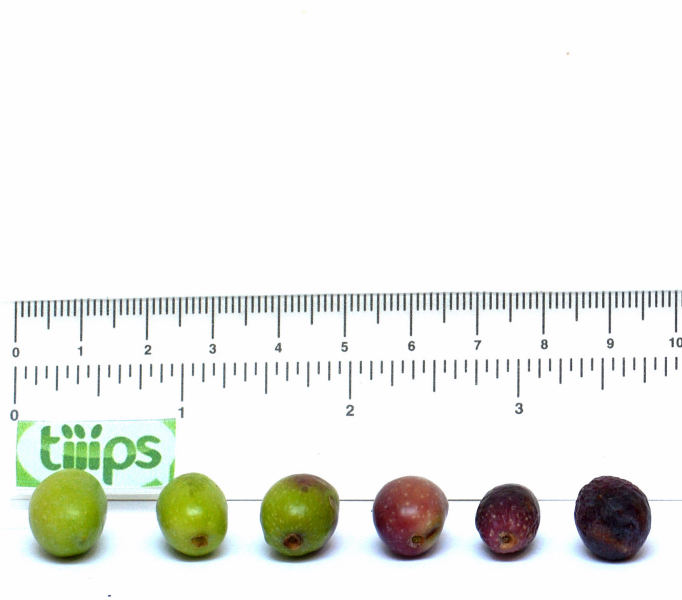
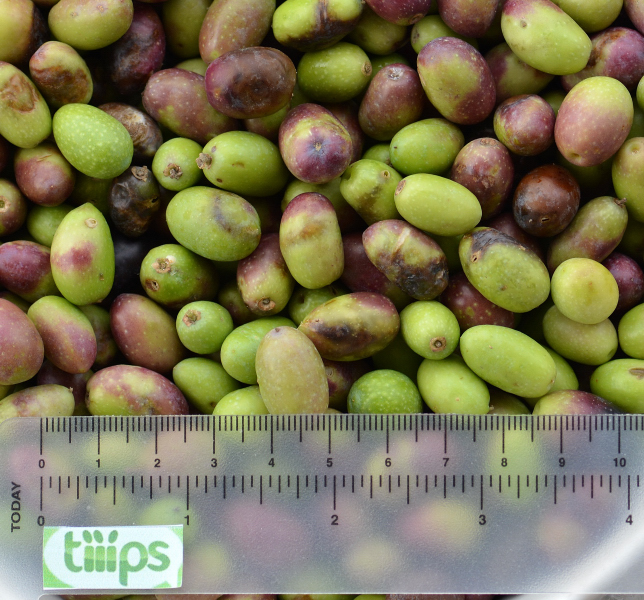
The name “Taggiasca” identifies a cultivar typical of the Ligurian Riviera, particularly widespread in the province of Imperia. It is a dual-purpose variety (oil and table olives), known for its small, elongated drupes and high yield of oil with very good quality.
Cultivation and growth conditions
Climate
The Taggiasca olive prefers a Mediterranean climate, with mild winters and dry, ventilated summers. It is moderately tolerant to cold, but prolonged sub-zero temperatures can damage both fruiting and vegetative parts. It requires good light availability and benefits from the limited temperature range typical of coastal areas.
Exposure
It requires full-sun exposure to ensure adequate photosynthesis, flower induction, and drupe ripening. South or south-west facing slopes are generally the most suitable. Excessively high temperatures in conditions of shade or low light reduce productivity and oil quality.
Soil
It tolerates poor, loose soils with moderate stoniness, typical of the Ligurian hillsides. It prefers well-drained substrates with loam or loam-sandy texture. It is sensitive to waterlogging, which promotes root rot and fungal diseases. The optimal pH is slightly alkaline (around 7–8), but the plant can adapt to slightly lower values.
Irrigation
This cultivar is rustic and can grow with limited water availability, but for stable yields and good fruit quality, supplemental irrigation in summer is advisable. Irrigation should be moderate, avoiding excess water that can alter the lipid concentration of the drupes and favor disease development.
Temperature
The ideal range is approximately 12–28 °C. It withstands short frost events, but damage to wood, buds, and roots may occur at temperatures below about –5 °C. During fruit set and drupe enlargement, prolonged heat extremes can hinder development and reduce yield and quality.
Fertilization
Fertilization should be based on soil analysis and on the phenological stages of the tree. The main macronutrients are nitrogen (N), phosphorus (P), and potassium (K). Nitrogen is useful during vegetative growth, whereas potassium supports fruit set and ripening. Micronutrients such as boron, zinc, and magnesium may be required when analyses or leaf symptoms indicate deficiencies. The use of organic fertilizers or soil improvers is recommended to enhance soil structure and long-term fertility.
Crop care
Pruning: Annual or biennial pruning to maintain a balance between vegetative growth and fruiting, improve canopy aeration, and optimize light penetration.
Weed control: Management of ground cover or light hoeing in the most drought-sensitive areas.
Plant protection: Regular monitoring for insect pests (e.g., olive fruit fly) and fungal diseases, with targeted interventions according to good agricultural practices.
Harvest
Olives are generally harvested between late autumn and early winter, at an advanced veraison stage. Slow and gradual ripening is characteristic of this cultivar. Harvesting is carried out by hand picking or using mechanical aids, avoiding damage to the fruits in order to preserve integrity and oil quality.
Propagation
Taggiasca olive trees are propagated mainly by semi-hardwood cuttings or by grafting onto Olea europaea rootstocks adapted to local soils. Propagation from seed is not used, as it does not preserve the varietal characteristics. Rooted cuttings are raised in the nursery and then transplanted to the final orchard, preferably in spring.
Indicative nutritional values per 100 g
Typical values for Taggiasca olives in brine (per 100 g edible portion) are:
Energy: about 236 kcal (963 kJ)
Protein: ≈ 1.6 g
Carbohydrates: ≈ 0.1 g (negligible sugars)
Fat: ≈ 23.8 g (of which saturated ≈ 2.8 g; the rest mainly monounsaturated fats (MUFA))
Fibre: ≈ 6.7 g
Salt: ≈ 4.1 g (depending on brine)
Values may vary slightly according to the processing method (brine, in oil, pitted).
Key constituents
Lipids (oil): the cultivar can contain around 25 % oil by fruit weight.
Fatty acids: prevalence of monounsaturated oleic acid (typical of olives), with a smaller amount of saturated fatty acids.
Dietary fibre: mainly in the pulp.
Minerals and salt: sodium content can be high in brined olives.
Phenolic compounds and antioxidants: characteristic of olives and extra virgin olive oil, contributing to flavour, bitterness, mild pungency and oxidative stability.
Production process
Harvesting
Taggiasca is relatively late-ripening (often harvested in winter, e.g. January).
Traditional systems involve natural fruit drop (fall of ripe olives onto nets or mats) and manual or semi-manual collection.
Modern systems can use mechanical shakers and beating rods to increase efficiency.
Processing for oil
Olives are cleaned and milled as quickly as possible after harvest to preserve sensory and chemical quality.
The result is a high-quality extra virgin olive oil, typically with low free acidity (often < 0.5 %), delicate fruity notes and a balanced profile.
Processing for table olives
The fruits may be kept whole or pitted.
They are preserved in brine (water and salt) or packed in oil.
Herbs and spices (e.g. thyme, laurel, rosemary) may be added as traditional flavourings.
Physical properties
Firm pulp that maintains its structure during brining and storage.
Good oil yield, around 25 % of fruit weight.
Favourable flesh-to-stone ratio, suitable for both table use and oil extraction.
Sensory and technological properties
Taste: mild and harmoniously balanced, with a slight bitterness and, at times, a delicate pungency.
Aroma: fruity, with almond and pine-nut notes; as oil, it shows ripe fruity aromas and a yellow to yellow-green colour.
Texture: compact flesh that remains firm after processing, making the olive suitable for serving whole, sliced or pitted.
Technological versatility: the delicacy and elegance of Taggiasca oil make it suitable for refined dishes and for pairing with delicate ingredients (fish, white meats, salads).
Food applications
Table olives
As appetizers and snacks (whole or pitted).
In mixed antipasti, salads, focaccia and pizza toppings.
Cooking ingredient
In traditional Ligurian recipes such as “coniglio alla ligure” (rabbit with Taggiasca olives and herbs), fish or stockfish preparations, vegetable dishes and savoury pies.
As a garnish in pasta and rice dishes, or in sauces and tapenades.
Olive oil
Monovarietal Taggiasca extra virgin olive oil, often marketed as part of Riviera Ligure PDO.
Use as a finishing oil on fish, raw vegetables, salads and delicate dishes where a gentle fruity profile is desired.
Nutrition & health
The high lipid content, dominated by monounsaturated fats (MUFA), is associated with a favourable lipid profile when consumed in moderation as part of a varied diet.
Phenolic compounds and natural antioxidants contribute to protection against oxidative stress and may play a role in cardiovascular health.
Dietary fibre supports intestinal transit and contributes to the feeling of satiety.
The salt content in brined olives can be significant; people on sodium-restricted diets should moderate their intake or prefer lower-salt products.
Portion note
A typical portion can be considered about 5–10 olives (≈ 15–25 g). This provides a meaningful contribution of monounsaturated fats and antioxidants without overly increasing calorie and sodium intake, especially when balanced within a Mediterranean-style eating pattern.
Allergens and intolerances
Taggiasca olives themselves are not among the common major food allergens. However, attention should be paid to:
Additional ingredients used in marinades and seasonings (e.g. nuts, spices, herbs, garlic) which may include allergens.
Possible cross-contamination in mixed antipasti or deli preparations.
Storage and shelf-life
Olives in brine
Store in clean containers, completely covered by brine.
Once opened, keep refrigerated and consume within the period indicated by the producer for best quality.
Olives in oil
Ensure the olives remain fully covered by oil.
Store in a cool, dark place; refrigerate after opening if indicated on the label.
Extra virgin olive oil from Taggiasca olives
Store in dark glass bottles or other light-protective packaging.
Keep away from heat sources and direct light to limit oxidation and preserve aroma and nutritional quality.
Safety and regulatory
Production of olive oil marketed as Riviera Ligure PDO must comply with the official product specification, which defines:
Geographical area of cultivation.
Minimum percentage of Taggiasca cultivar.
Agronomic practices and harvest methods.
Processing conditions (e.g. maximum time between harvest and milling).
General EU and Italian food safety regulations apply (hygiene, contaminants, labelling, traceability).
Labelling
Labels for Taggiasca olives and Taggiasca olive oil should include:
Product name and indication of the variety (Taggiasca).
Net weight or volume and drained weight (for olives in brine or oil).
List of ingredients (e.g. olives, water, salt, oil, herbs).
Nutritional declaration per 100 g (mandatory in the EU for most prepacked foods).
Storage conditions, best before or use by date, and lot code.
For Riviera Ligure PDO olive oil: PDO logo and exact PDO geographical mention (e.g. “Riviera dei Fiori”).
Troubleshooting
Olives too hard or rubbery
Possible causes: harvesting too early, insufficient curing, or incorrect brine composition.
Corrective actions: adjust harvest maturity, review curing time and brine concentration.
Off-odour or rancid flavour in olives or oil
Possible causes: oxidation due to exposure to light, heat or air; poor-quality raw material.
Corrective actions: improve storage conditions, shorten storage time, use dark containers and maintain correct headspace.
High acidity in olive oil
Possible causes: damaged or over-ripe olives, delayed milling, poor hygienic conditions during storage.
Corrective actions: select sound olives, reduce time between harvest and milling, improve handling and hygiene.
Sustainability and supply chain
Taggiasca olives are traditionally grown on terraced hillsides in Liguria, often in small family-run groves.
Terrace maintenance helps prevent soil erosion and preserves the characteristic Ligurian landscape.
The PDO framework supports:
Protection of local agro-ecosystems and traditional practices.
Economic sustainability of small producers through value recognition of origin and quality.
Main INCI functions (cosmetics)
Although primarily a food, oil obtained from Taggiasca olives can also be used in cosmetic formulations. On cosmetic labels it appears under the generic INCI name Olea Europaea (Olive) Fruit Oil and performs mainly:
Emollient function: softens and conditions skin and hair.
Antioxidant function: contributes to protection from oxidative damage in formulations and on the skin.
Auxiliary emulsifying and solubilising role in creams, lotions and oil-in-water emulsions, depending on formula design.
Conclusion
Taggiasca is a high-value olive cultivar that combines excellent sensory quality, technological versatility and strong territorial identity. As a table olive or as a raw material for extra virgin olive oil, it offers a delicate and distinctive profile, rich in monounsaturated fats and bioactive compounds. With proper portion control, especially for brined products with higher salt content, Taggiasca olives can be part of a balanced diet and are emblematic of the Mediterranean culinary and cultural heritage.
Mini-glossary
MUFA: monounsaturated fatty acids, a class of fats generally associated with favourable effects on blood lipid profile when consumed in moderation.
PDO: Protected Designation of Origin, an EU quality scheme for foods whose production, processing and preparation take place in a defined geographical area, according to a recognised specification.
INCI: International Nomenclature of Cosmetic Ingredients, standardized naming system used on cosmetic ingredient lists worldwide.
Studies
In the olive there are bioactive compounds useful for human health such as polyphenols, proteins (1).
The amount of phenolic compounds is significant and explains the antioxidant activity of olive and olive oil:
These values change substantially depending on the type of oleander, harvest period and other parameters (2).
The good protein and amino acid content of olive and in particular maslinic acid, a tripenoid, have shown that, together with moderate exercise, they can increase muscle mass, grip strength, knee pain and thus prevent disability related to mobility in older people (3).
Olive cultivation is damaged by the so-called "Olive Fly" (Bactrocera oleae).
References________________________________________
(1) Montealegre C, Esteve C, García MC, García-Ruiz C, Marina ML. Proteins in olive fruit and oil. Crit Rev Food Sci Nutr. 2014;54(5):611-24. doi: 10.1080/10408398.2011.598639. Review.
Abstract. This paper is a comprehensive review grouping the information on the extraction, characterization, and quantitation of olive and olive oil proteins and providing a practical guide about these proteins. Most characterized olive proteins are located in the fruit, mainly in the seed, where different oleosins and storage proteins have been found. Unlike the seed, the olive pulp contains a lower protein content having been described a polypeptide of 4.6 kDa and a thaumain-like protein. Other important proteins studied in olive fruits have been enzymes which could play important roles in olives characteristics. Part of these proteins is transferred from the fruit to the oil during the manufacturing process of olive oil. In fact, the same polypeptide of 4.6 kDa found in the pulp has been described in the olive oil and, additionally, the presence of other proteins and enzymes have also been described. Protein profiles have recently been proposed as an interesting strategy for the varietal classification of olive fruits and oils. Nevertheless, there is still a lot of knowledge without being explored requiring new studies focused on the determination and characterization of these proteins.
(2) Özcan MM, Fındık S, AlJuhaimi F, Ghafoor K, Babiker EE, Adiamo OQ. The effect of harvest time and varieties on total phenolics, antioxidant activity and phenolic compounds of olive fruit and leaves. J Food Sci Technol. 2019 May;56(5):2373-2385. doi: 10.1007/s13197-019-03650-8.
Abstract. The effect of harvest periods on total phenol, antioxidant activity, individual phenolic compounds of fruit and leaves of Tavşan Yüreği, Memecik, Edremit, Ayvalık and Gemlik olive varieties grown in Turkey were investigated. The highest total phenol (317.70 mg/100 g and 2657.81 mg/100 g) were observed in Tavşan Yüreği olive fruit and Ayvalık leaves harvested in December, respectively. The highest antioxidant activities (83.84%) were determined in Edremit fruit harvested in August and 83.33% in either Edremit olive leaves harvested in November and Tavşan Yüreği leaves harvested in December. The olive fruit contained gallic acid ranging from 7.18 mg/100 g (August) to 35.85 mg/100 g (December) in case of Ayvalık and 2.09 mg/100 g (November) to 21.62 mg/100 g (December) in Edremit. Gemlik olives showed higher gallic acid contents compared to the other varieties, however it depended significantly on harvest time in all cases. 3,4-Dihydroxybenzoic acid contents ranged from 33.11 mg/100 g (October) to 25.17 mg/100 g (September) in Memecik olives; 12.17 mg/100 g (August) to 33.11 mg/100 g (December) in case of Tavşan Yüreği olives depending on harvest time. The 3,4-dihydroxybenzoic acid contents of Memecik leaves ranged between 122.25 mg/100 g (September) to 196.58 mg/100 g (August) and that of Tavşan Yüreği leaves changed between 99.38 mg/100 g (November) and 179.90 mg/100 g (August). The leaves of these two varieties contained significantly (p < 0.01) higher 3,4-dihydroxybenzoic acid contents than other varieties. The highest gallic acid (144.83 mg/100 g) was detected in Memecik leaves (September) whereas lowest were found in Gemlik leaves collected in October.
(3) Nagai N, Yagyu S, Hata A, Nirengi S, Kotani K, Moritani T, Sakane N. Maslinic acid derived from olive fruit in combination with resistance training improves muscle mass and mobility functions in the elderly. J Clin Biochem Nutr. 2019 May;64(3):224-230. doi: 10.3164/jcbn.18-104.
Abstract. Maslinic acid, derived from olive fruit, reduces pro-inflammation cytokines, which are involved in muscle fiber atrophy. Therefore, the maslinic acid ingestion may enhance the muscular response to resistance training through anti-inflammatory action. We therefore conducted a parallel, double-blind, randomized, placebo-controlled trial that examined whether a combination of maslinic acid supplementation and resistance training improve mobility functions in community-dwelling elderly persons. Over a 12-week period, 36 participants underwent moderate resistance training and are assigned to the maslinic acid supplementation (n = 17, 60 mg/day) or the placebo (n = 19) group. At baseline and at 12-weeks, we assessed body composition, grip strength, walking speed, leg strength, mobility functions, and knee pain scores. Following the 12-weeks, skeletal muscle mass, segmental muscle mass (right arm, left arm, and trunk) and knee pain score of the right leg were significantly improved in the maslinic acid group, while there was no change or parameters had worsened in the placebo group. Grip strength of the better side significantly increased only in the maslinic acid group. These results suggest that maslinic acid supplementation combined with moderate resistance training may increase upper muscle mass and grip strength, and reduce knee pain, could be effective for preventing mobility-related disability in elderly persons. Clinical trial registration number: UMIN000017207.
| Sign up to vote this object, vote his reviews and to contribute to Tiiips.EvaluateClose | (0 comments) |
| "Oliva taggiasca studies" about Olive Taggiasche Review Consensus 8 by A_Partyns (13031 pt) | 2019-Aug-12 18:55 |
| Read the full Tiiip | (Send your comment) |
Oliva taggiasca studies
A preliminary study on the authentication and traceability of extra virgin olive oil made from Taggiasca olives by means of trace and ultra-trace elements distribution.
Aceto M, Calà E, Musso D, Regalli N, Oddone M.
Food Chem. 2019 Nov 15;298:125047. doi: 10.1016/j.foodchem.2019.125047.
Combined effect of starter culture and temperature on phenolic compounds during fermentation of Taggiasca black olives.
Pistarino E, Aliakbarian B, Casazza AA, Paini M, Cosulich ME, Perego P.
Food Chem. 2013 Jun 1;138(2-3):2043-9. doi: 10.1016/j.foodchem.2012.11.021.
Taggiasca extra virgin olive oil colonization by yeasts during the extraction process.
Ciafardini G, Cioccia G, Zullo BA.
Food Microbiol. 2017 Apr;62:58-61. doi: 10.1016/j.fm.2016.09.014.
Antioxidant activity and biological evaluation of olive pomace extract.
Aliakbarian B, Palmieri D, Casazza AA, Palombo D, Perego P.
Nat Prod Res. 2012;26(24):2280-90. doi: 10.1080/14786419.2012.660692
Influence of cultivar and concentration of selected phenolic constituents on the in vitro chemiopreventive potential of olive oil extracts.
Fabiani R, Sepporta MV, Mazza T, Rosignoli P, Fuccelli R, De Bartolomeo A, Crescimanno M, Taticchi A, Esposto S, Servili M, Morozzi G.
J Agric Food Chem. 2011 Aug 10;59(15):8167-74. doi: 10.1021/jf201459u.
Study of the phenolic composition of spanish and italian monocultivar extra virgin olive oils: Distribution of lignans, secoiridoidic, simple phenols and flavonoids.
Oliveras-López MJ, Innocenti M, Giaccherini C, Ieri F, Romani A, Mulinacci N.
Talanta. 2007 Oct 15;73(4):726-32. doi: 10.1016/j.talanta.2007.04.045.
| Sign up to vote this object, vote his reviews and to contribute to Tiiips.EvaluateClose | (0 comments) |
Read other Tiiips about this object in __Italiano (3)
Content:   Last update:   2025-12-03 18:20:37 | Kcal/100g:   145 Family:   Threat factors:   |


