

White poppy (Papaver somniferum – family Papaveraceae)
Description
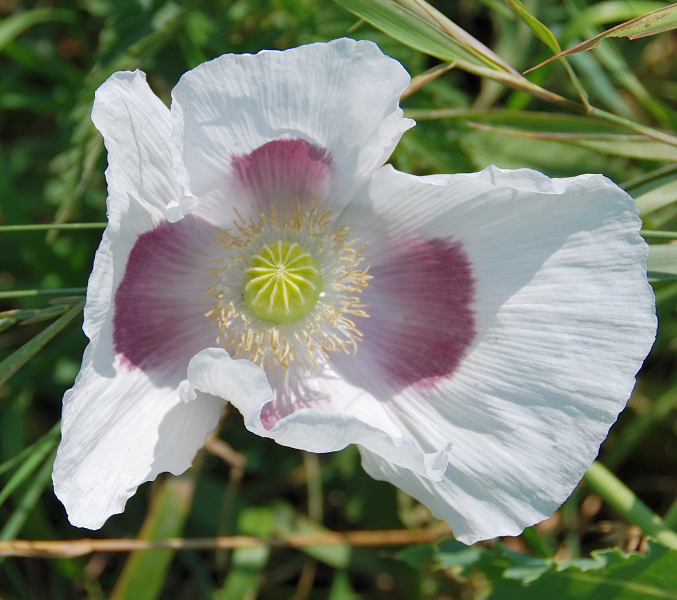
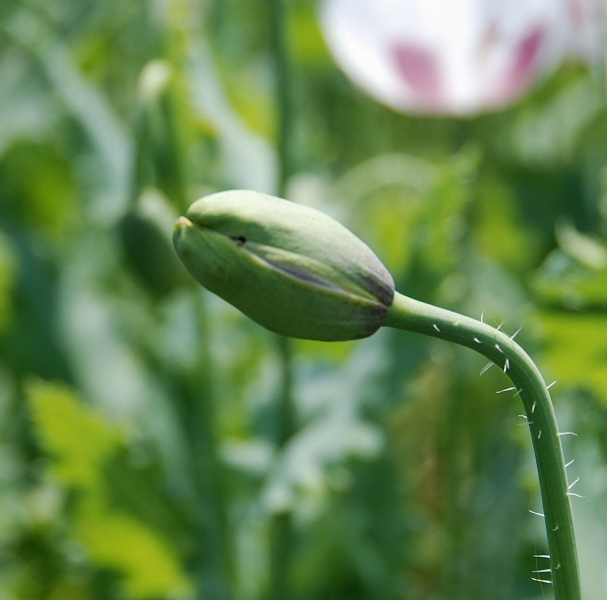
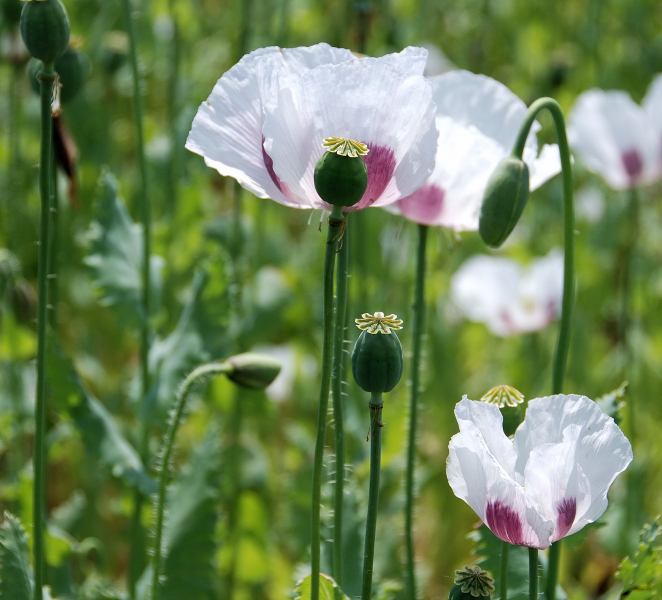
White poppy (Papaver somniferum) is an annual herbaceous plant native to the Mediterranean region and Western Asia, now cultivated in various temperate areas worldwide. The plant is characterized by an erect, glabrous stem, lobed bluish-green leaves, and large solitary flowers with white or cream-colored petals. After flowering, a rounded capsule develops, containing numerous poppy seeds.
From an agronomic perspective, white poppy grows best in temperate climates and well-drained soils. Cultivation is regulated in many countries due to the presence of naturally occurring alkaloids in immature plant tissues. However, the fully mature seeds intended for food use do not exhibit pharmacological activity and are widely accepted for culinary purposes.
In nutrition, white poppy seeds are valued for their lipid profile and content of plant proteins, dietary fiber, and minerals. The oil extracted from the seeds contains a high proportion of unsaturated fatty acids, particularly linoleic acid. White poppy seeds are commonly used in bakery products, bread making, and traditional recipes, where they play a defined nutritional and functional role.
Classification
| Level | Classification |
|---|
| Origin | Plant-based |
| Species | Papaver somniferum |
| Botanical family | Papaveraceae |
| Category | Annual herbaceous plant |
| Edible part | Seeds |
Plant and raw material characteristics
| Aspect | Description |
|---|
| Plant type | Annual herb |
| Average height | 60–120 cm |
| Flowers | Large, white |
| Fruit | Capsule |
| Used part | Mature seeds |
| Form of use | Whole or ground |
| Main components | Lipids, proteins, fiber |
| Allergens | None known |
Indicative average nutritional values per 100 g
| Component | Average value |
|---|
| Energy | 525 kcal |
| Protein | 18.0 g |
| Carbohydrates | 28.0 g |
| of which sugars | 2.9 g |
| Dietary fiber | 19.5 g |
| Fat | 41.0 g |
| of which saturated | 4.5 g |
| Calcium | 1,400 mg |
| Magnesium | 350 mg |
| Potassium | 720 mg |
| Vitamin E | 1.8 mg |
Average values referring to white poppy seeds. Natural variability may occur depending on cultivar and growing conditions.
Note on nutritional use of the bioactive compounds present
White poppy seeds provide unsaturated fatty acids that support a balanced lipid profile, along with plant proteins and a significant amount of dietary fiber. Their mineral content, particularly calcium and magnesium, contributes to bone and muscle health. Food use is limited to fully mature seeds, which are considered safe and nutritionally functional when consumed as part of a balanced diet.
Cultivation and growing conditions
Climate
Annual plant adapted to temperate climates.
Optimal growth temperature: 15–25 °C.
Tolerates cool conditions during early growth stages.
Prolonged high temperatures during flowering negatively affect development.
Exposure
Requires full sun for proper growth and flowering.
At least 6–8 hours of direct sunlight per day are recommended.
Shading reduces vigor and capsule formation.
Soil
Prefers light, well-drained soils with moderate fertility.
Ideal texture: sandy-loam or loam.
Optimal pH: 6.5–7.5 (neutral to slightly alkaline).
Avoid overly rich or compacted soils.
Irrigation
Requires moderate watering.
Soil should be kept slightly moist during germination.
Once established, the plant tolerates short periods of drought.
Avoid waterlogging, especially during capsule maturation.
Fertilization
Generally does not require intensive fertilization.
A light application of well-matured organic matter before sowing may be beneficial.
Excess nitrogen promotes vegetative growth at the expense of flowering.
Crop care
Light hoeing to control weeds during early growth stages.
Does not tolerate transplanting; direct sowing is recommended.
Fast-growing plant with limited management requirements.
Good air circulation helps reduce fungal diseases.
Harvest
Flowers are harvested at full bloom for ornamental use.
Capsules are harvested at full maturity, when they are completely dry.
Harvest timing depends on the intended use (ornamental or botanical).
Propagation
Exclusively by seed.
Direct sowing in autumn or late winter–early spring.
Germination is rapid under suitable conditions.
Shallow sowing improves seedling emergence.
How to grow it
Best suited for open-field cultivation, flowerbeds, or garden plots.
Generally unsuitable for container growing due to its root system.
Requires adequate spacing to develop properly.
Simple and targeted management ensures uniform growth and consistent flowering.