

Hemerocallis (Daylily): properties, uses, pros, cons, cultivationDaylily (Hemerocallis), often called “daylily” in English, is a genus of rhizomatous perennial herbs grown primarily f ...
Hemerocallis (Daylily): properties, uses, pros, cons, cultivation
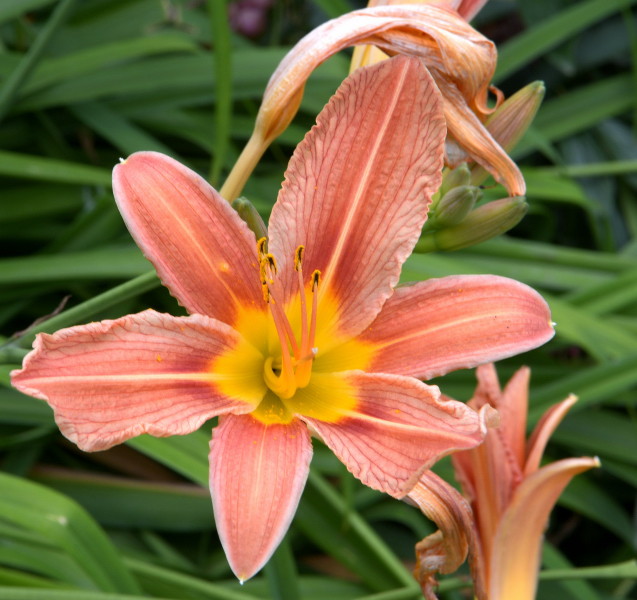
Daylily (Hemerocallis), often called “daylily” in English, is a genus of rhizomatous perennial herbs grown primarily for ornamental purposes due to their showy flowers and notable hardiness. The genus is native to Asia and is now widely used in gardens and green spaces, with multiple species and an extremely large number of cultivars. Despite the common name “lily,” it does not belong to the genus Lilium.

Botanical framework
Plant characteristics
Vegetative system: perennial with rhizomes and, in many species/cultivars, thickened storage roots.
Leaves: strap-like, arching, arranged in basal clumps; foliage typically regrows vigorously after flowering.
Flowers: large and sometimes fragrant in certain species; each individual flower is typically short-lived (hence the name “daylily”), but the plant produces many buds in succession.
Inflorescences: erect or arching scapes carrying multiple flowers; flowering continuity depends on species and cultivar (early, late, reblooming).
Fruits and seeds: capsule with seeds; in cultivation, the most reliable propagation to preserve traits is clump division.
Ecology and adaptability: generally tolerates heat, moderate dry periods, and a range of soils provided drainage is good; some species may naturalise.
Chemical composition and structure
Composition varies substantially across species (e.g., H. citrina, H. fulva, H. middendorffii) and across organs (flowers, buds, leaves, roots). The main classes and representative molecules reported in the literature are summarised below.
Polyphenols and phenolic acids (mainly flowers and aerial parts): commonly reported include chlorogenic acid, caffeic acid, p-coumaric acid, and ferulic acid. These compounds are typically associated with antioxidant profiles of flower and aerial-part extracts.
Flavonoids (flowers, buds, and aerial parts): frequently cited include quercetin, kaempferol, rutin, myricetin, naringenin, as well as flavan-3-ols such as catechin and epicatechin. In some studies on cultivars and species, phenolic profiles are also linked to potential cosmetic applications or research on cellular oxidative stress.
Carotenoids (flower pigments, relevant to colour and quality of dried food material): reported carotenoids include lutein and zeaxanthin, and in several species also β-carotene, lycopene, β-cryptoxanthin, and related xanthophylls (including possible acylated esters in some taxa). Content and stability may be influenced by processing such as soaking and drying.
Saponins and terpenoids (edible buds and other organs): triterpenoid saponins and terpenoids have been reported in edible buds of certain species (notably H. citrina), with developmental-stage-dependent accumulation.
Anthraquinones and related compounds (mainly roots, in some species): root extracts of H. citrina have yielded anthraquinones such as chrysophanol, rhein, aloe-emodin, and related compounds including obtusifolin and 2-methoxy-obtusifolin, as well as metabolites reported as hemerocallone and hemerocallin.
Other compounds relevant to food use and safety (flowers/buds): some food-safety discussions on fresh flowers mention the presence of a colchicine-related alkaloid-like compound described as oxydicolchicine, associated with gastrointestinal upset when consumption is not appropriately managed.
Uses and benefits
Ornamental: the primary use; valued for hardiness, broad colour range, and ease of cultivation; many cultivars are selected for rebloom and resilience.
Traditional food use (selected species): in Asian cuisines, the dried buds of Hemerocallis citrina (often called “golden needles”) are commonly used, and in some traditions other parts are used with appropriate processing.
Phytochemical and functional research: flowers and aerial parts are studied for phenolic profiles and pigments (carotenoids), including experimental evaluations of antioxidant activity and cellular models.
Applications
Gardening and landscape: borders, beds, mass plantings, and controlled naturalisation; suitable for low-maintenance settings.
Food production (suitable species): supply chains for dried buds used in gastronomy; quality depends on harvest stage and processing/drying conditions.
Research and ingredient development: flower/aerial-part extracts used in studies on polyphenols and in vitro biological activity.
Cultivation
Exposure: full sun to maximise flowering; tolerates bright partial shade with potential reduction in bloom performance.
Soil and water: prefers fertile but well-drained soils; regular watering during growth and flowering, avoiding waterlogging.
Management: divide clumps every few years to rejuvenate and control spread; remove spent scapes for tidiness and, in some cultivars, to support rebloom.
Environmental and safety considerations
Environmental impact: some species may naturalise; where conditions favour spread, containment measures are advisable (division, residue management, seed control).
Pet safety: Hemerocallis species are considered highly toxic to cats, with risk of acute kidney failure even after small ingestions (including pollen and floral parts).
Human safety (food use): edible use applies to specific species and preparations; consuming raw parts or large amounts may cause gastrointestinal upset in sensitive individuals. For fresh flowers, some authorities have noted compounds such as oxydicolchicine, associated with episodes of gastrointestinal discomfort.
Good practices: prevent cat access to the plants; for food use, rely on correct species identification and on processing methods traditionally adopted.