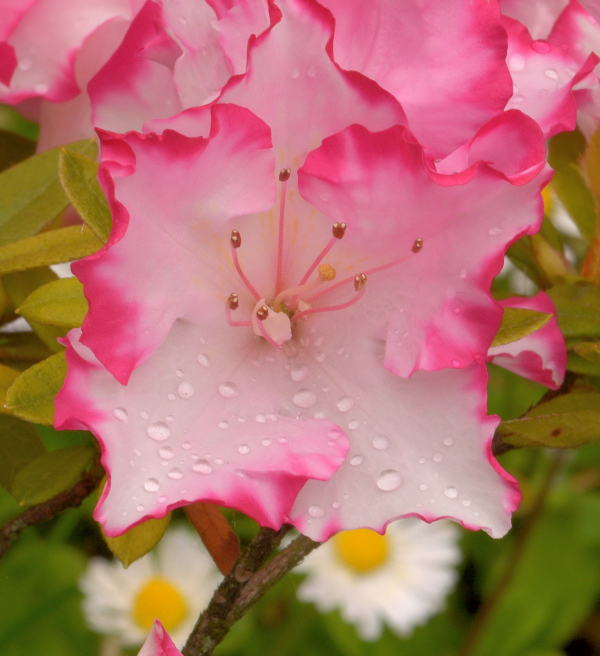
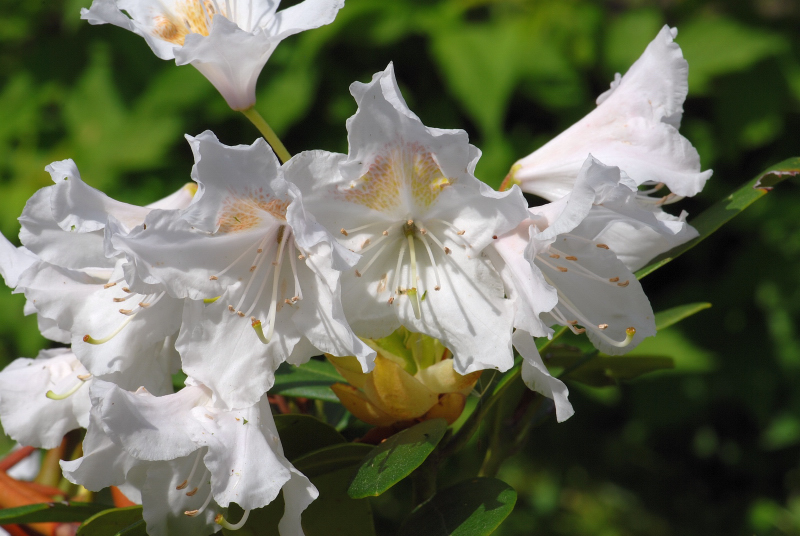
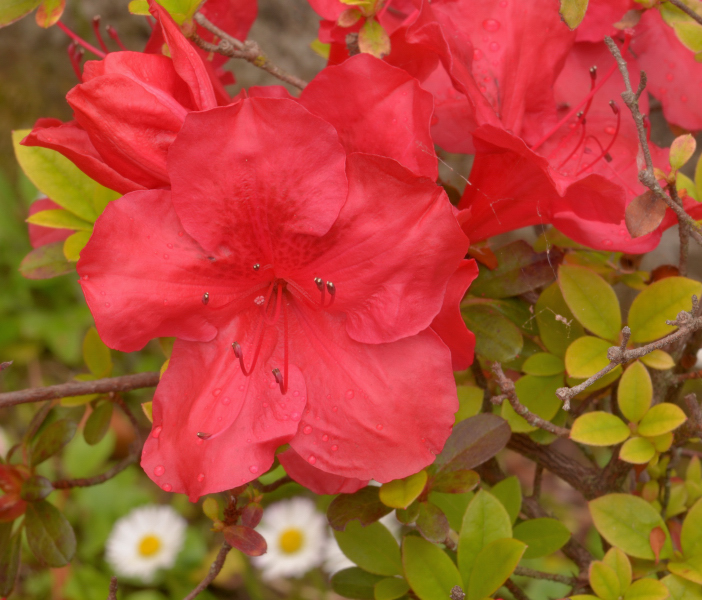
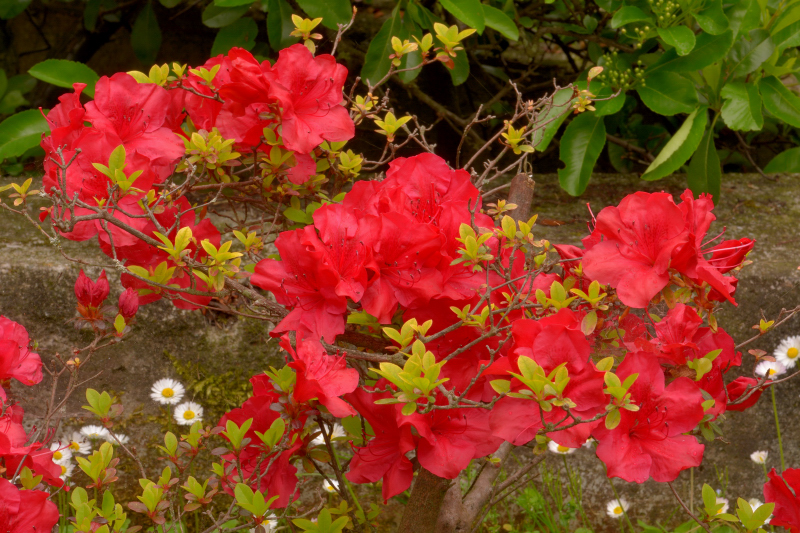
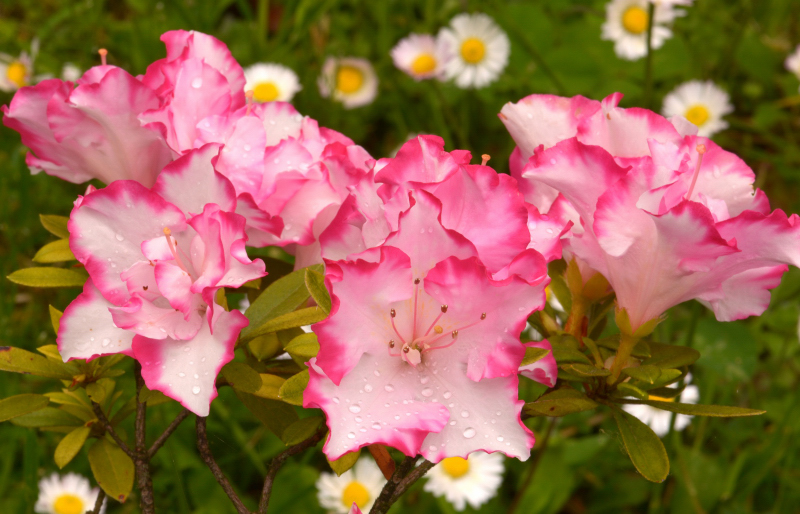
The rhododendron belongs to the family of the Ericaceae and is a shrub that blooms in May/June with very fragrant white, red or purple flowers.
It is a delicate plant, difficult to grow, reaches the height of 2 meters and is an evergreen.
There are ten species of Rhododendron:
- Rhododendron tomentosum
- Rhododendron ferrugineum
- Rhododendron ovatum
- Rhododendron stamineum
- Rhododendron arboreum
- Rhododendron niveum
Let’s look at the most interesting species:
Rhododendron ferrugineum, commonly known as the rusty-leaved rhododendron or alpine rose, is a species of rhododendron native to the mountainous regions of Europe, particularly the Alps and the Pyrenees. This evergreen shrub is notable for its attractive foliage and vibrant flowers, which add beauty to alpine landscapes and gardens.
Botanical Classification:
- Kingdom: Plantae
- Order: Ericales
- Family: Ericaceae
- Genus: Rhododendron
- Species: Rhododendron ferrugineum
Plant Characteristics: Rhododendron ferrugineum is characterized by:
- Size and Shape: A compact, low-growing evergreen shrub typically reaching heights of 0.5 to 1 meter. It has a dense, rounded form.
- Leaves: The leaves are small, lance-shaped, and covered with a rusty-brown indumentum (fine hairs) on the underside, giving them a distinctive appearance. The upper side is dark green and glossy.
- Flowers: The flowers are bell-shaped, usually in shades of pink or red, and appear in dense clusters. They bloom in summer, typically from June to July, adding a vibrant splash of color to alpine meadows and rock gardens.
- Fruit: The fruit is a small capsule that releases seeds when mature, aiding in reproduction and dispersal.
- Soil and Light: Prefers acidic, well-drained soils and thrives in full sun to partial shade. It is well-adapted to rocky, alpine environments and can withstand cold temperatures.
Chemical Composition and Structure: The chemical composition of Rhododendron ferrugineum includes:
- Flavonoids: Includes compounds such as quercetin and kaempferol, which are known for their antioxidant properties.
- Tannins: Present in the leaves and bark, providing astringent qualities.
- Essential Oils: Found in small quantities, contributing to the plant’s aromatic profile.
- Phenolic Compounds: These contribute to the plant's potential health benefits and flavor profile.
Uses and Benefits:
- Aesthetic: Valued for its attractive flowers and evergreen foliage, making it a popular choice for ornamental gardens, particularly in alpine or rock gardens.
- Cosmetic: While not commonly used in commercial cosmetics, the plant’s extracts may offer some potential benefits due to its antioxidant properties.
- Medicinal: Traditionally used in herbal remedies in some cultures, particularly for its potential anti-inflammatory and astringent properties. However, scientific evidence supporting medicinal uses is limited.
- Ecological: Plays a role in alpine ecosystems by providing habitat and food for various wildlife species.
Applications:
- Gardening: Ideal for alpine gardens, rock gardens, and as ground cover in acidic soil environments. Its vibrant flowers and evergreen foliage enhance garden aesthetics.
- Cosmetics: Potential use in natural cosmetics due to its antioxidant properties, though not widely utilized.
- Medicinal: Used in traditional remedies for its potential anti-inflammatory and astringent effects. Research on these uses is limited.
- Ecological: Contributes to biodiversity in alpine ecosystems and supports local wildlife.
Environmental and Safety Considerations:
- Environmental Impact: Non-invasive and beneficial for alpine and rocky garden settings. It supports local biodiversity and provides habitat for wildlife.
- Safety: Generally safe for handling. However, as with all plants, care should be taken to avoid ingestion of non-edible parts, which could cause digestive upset. Consult a healthcare provider before using the plant for medicinal purposes.
References__________________________________________________________________________
Tahara Y, Fujita M, Zhang T, Wang D, Tateishi H, Togami A, Nyame P, Terasawa H, Monde N, Appiah-Kubi J, Amesimeku WO, Alsaadi DHM, Wada M, Sugimura K, Gezici S, Ciftci H, Karahan F, Sekeroglu N, Otsuka M, Sawa T, Maeda Y, Watanabe T, Monde K. Turkish Plants, Including Quercetin and Oenothein B, Inhibit the HIV-1 Release and Accelerate Cell Apoptosis. Biol Pharm Bull. 2023;46(11):1535-1547. doi: 10.1248/bpb.b23-00328.
Abstract. The introduction of combined anti-retroviral therapy (cART) in 1996, along with a continual breakthrough in anti-human immunodeficiency virus-1 (HIV-1) drugs, has improved the life expectancies of HIV-1-infected individuals. However, the incidence of drug-resistant viruses between individuals undergoing cART and treatment-naïve individuals is a common challenge. Therefore, there is a requirement to explore potential drug targets by considering various stages of the viral life cycle. For instance, the late stage, or viral release stage, remains uninvestigated extensively in antiviral drug discovery. In this study, we prepared a natural plant library and selected candidate plant extracts that inhibited HIV-1 release based on our laboratory-established screening system. The plant extracts from Epilobium hirsutum L. and Chamerion angustifolium (L.) Holub, belonging to the family Onagraceae, decreased HIV-1 release and accelerated the apoptosis in HIV-1-infected T cells but not uninfected T cells. A flavonol glycoside quercetin with oenothein B in Onagraceae reduced HIV-1 release in HIV-1-infected T cells. Moreover, extracts from Chamerion angustifolium (L.) Holub and Senna alexandrina Mill. inhibited the infectivity of progeny viruses. Together, these results suggest that C. angustifolium (L.) Holub contains quercetin with oenothein B that synergistically blocks viral replication and kills infected cells via an apoptotic pathway. Consequently, the plant extracts from the plant library of Turkey might be suitable candidates for developing novel anti-retroviral drugs that target the late phase of the HIV-1 life cycle.



 Rhododendron