

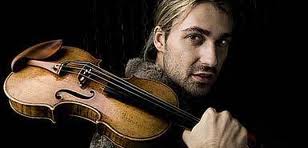
David Garrett, complete biography, crossover violinist, international concerts, and discography
Profile
David Garrett (David Christian Bongartz; Aachen, Germany, September 4, 1980) is a German violinist and composer, internationally known for developing and popularizing crossover between classical music and pop/rock.
David Garrett is recognized for his ability to combine classical-school technical virtuosity, traditional symphonic repertoire, and contemporary musical languages, contributing to the wider diffusion of instrumental music among a broad and cross-generational audience.

Origins and training (From the 1980s to the 1990s)
Raised in Germany within a structured musical environment, David Garrett began studying the violin at a very early age. During childhood and adolescence, he:
studied classical violin with an academic approach,
performed as a young talent in concerts and competitions,
tackled solo repertoire from the Baroque, Classical, and Romantic traditions.
In the 1990s he continued his education at high-level music institutions, developing complete solo technique and a solid command of the concerto repertoire.
From the 1990s: Professional debut and classical career (1995–1999)
By the late 1990s, David Garrett:
debuted as a soloist with symphony orchestras,
recorded his first albums in the classical repertoire,
established himself as a technically virtuosic performer.
In this phase his activity was oriented primarily toward the traditional classical circuit.
From the 2000s: Experimentation and the birth of crossover (2000–2009)
Throughout the 2000s Garrett initiated a gradual artistic transformation.
Stylistic turning point
introduced arrangements of pop and rock tracks for solo violin,
retained rigorous classical technique,
developed a language accessible to non-specialist audiences.
Key albums
2007 – Free
2008 – Encore
2009 – Classic Romance
This phase marks the beginning of major commercial success on a European scale.
From the 2010s: International breakthrough and major tours (2010–2019)
This decade represents the period of greatest global visibility.
Albums
2010 – Rock Symphonies
2011 – Legacy
2013 – Music
2015 – Explosive
2017 – Rock Revolution
Concerts and countries
During the 2010s David Garrett:
toured across Europe, North America, and Asia,
performed in major arenas and theatres,
reached a cross-generational audience.
His live activity combines solo violin, a rock band, and symphonic orchestrations, depending on the context.
Cinema and parallel activity
In 2013 he played the role of Niccolò Paganini in the film The Devil’s Violinist, helping to introduce the figure of the Romantic virtuoso to a wider public.
From the 2020s: Artistic continuity and return to the classical repertoire (2020–today)
In more recent years Garrett alternates:
Albums
This phase shows a more explicit balance between the popular dimension and a classical identity.
Musical style (Practical elements)
David Garrett is recognized for:
soloist-level violin technique of international standard,
use of both electric and acoustic violin,
structured crossover arrangements,
ability to adapt pop, rock, and classical repertoires,
a stage approach aimed at direct communication with the audience.
His style focuses on cultural mediation between art music and contemporary entertainment.
Documentable career facts
Sustained international concert activity.
High record sales in the crossover segment.
Stable presence in major European and Asian markets.
A relevant role in the wider dissemination of instrumental music.
David Garrett discography
Early classical career (1988–2000)
Classical albums
| Year | Album | Main works / tracks |
|---|
| 1988 | Free | Paganini: Caprice No. 24 · Bach: Violin works |
| 1991 | Paganini: 24 Caprices | Caprice No. 5 · Caprice No. 24 |
| 1995 | The 5 Seasons | Vivaldi-inspired violin works |
| 2000 | Violin Concertos | Beethoven · Mozart violin concertos |
Transition to crossover style (2001–2006)
Albums
| Year | Album | Main tracks |
|---|
| 2001 | Encore | Classical violin highlights |
| 2004 | Virtuoso | Hungarian Dance No. 5 · Zigeunerweisen |
| 2006 | Free (reissue / concept album) | Classical reinterpretations |
Crossover breakthrough and mainstream success (2007–2013)
Studio albums
| Year | Album | Main tracks / singles |
|---|
| 2007 | Free | Smooth Criminal · Summer |
| 2008 | Encore | Carmen Fantasy · Paganini Rhapsody |
| 2009 | Classic Romance | Nothing Else Matters · Romance |
| 2010 | Rock Symphonies | Smells Like Teen Spirit · Kashmir |
| 2011 | Legacy | Who Wants to Live Forever · Clair de Lune |
| 2013 | Music | Viva La Vida · Shake It Off |
Mature crossover period (2014–2018)
Studio albums
| Year | Album | Main tracks |
|---|
| 2014 | Timeless – Brahms & Bruch | Brahms Violin Concerto · Bruch Concerto No. 1 |
| 2015 | Explosive | Explosive · Dangerous |
| 2017 | Rock Revolution | Seven Nation Army · Eye of the Tiger |
Recent period and cinematic focus (2020–present)
Studio albums
| Year | Album | Main tracks |
|---|
| 2020 | Alive – My Soundtrack | The Show Must Go On · Game of Thrones Theme |
| 2022 | ICONIC | Beethoven Symphony No. 5 · Paint It Black |
| 2023 | Alive – Live (live) | Greatest crossover performances |