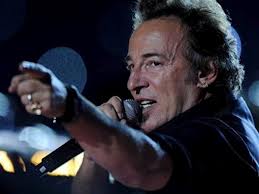
Bruce Springsteen, complete biography, e street band, american poetics and essential albums
Profile
Bruce Frederick Joseph Springsteen (Long Branch, New Jersey, September 23, 1949) is an American singer-songwriter, guitarist, and performer widely regarded as one of the most influential figures in contemporary rock music. Nicknamed “The Boss,” he is known for narrative songwriting deeply rooted in the American experience, for the intensity of his live performances, and for a catalog that interweaves rock, folk, and soul with social, existential, and political themes.

Profile
Bruce Frederick Joseph Springsteen (Long Branch, New Jersey, September 23, 1949) is an American singer-songwriter, guitarist, and performer widely regarded as one of the most influential figures in contemporary rock music. Nicknamed “The Boss,” he is known for narrative songwriting deeply rooted in the American experience, for the intensity of his live performances, and for a catalog that interweaves rock, folk, and soul with social, existential, and political themes.
Origins and formation (New Jersey, early bands)
Raised in Freehold, New Jersey, Springsteen developed an early interest in rock music, influenced by Elvis Presley, Chuck Berry, Bob Dylan, and the rhythm & blues tradition. In the 1960s he played in several local bands (including The Castiles), refining a musical language that combines rock energy with a strong focus on storytelling.
The working-class, small-town and urban-industrial environment of New Jersey soon became a structural element of his poetics: factories, streets, cars, dreams of escape, and everyday frustrations are already present in his earliest compositions.
Recording debut and breakthrough (1970s)
His recording debut came with “Greetings from Asbury Park, N.J.” (1973), followed the same year by “The Wild, the Innocent & the E Street Shuffle.” These works display rich, verbose writing strongly influenced by Dylan, yet already marked by a pronounced sense of stagecraft.
The turning point arrived with “Born to Run” (1975), the album that propelled Springsteen to international prominence. Here an epic, cinematic aesthetic takes shape, supported by the central role of the E Street Band, which would become a defining hallmark of his career.
Artistic maturity and thematic shift (1980s)
In the 1980s Springsteen entered a period of deep thematic reworking. “Darkness on the Edge of Town” (1978) and “The River” (1980) shift the focus toward disillusionment, adult responsibility, and the fragility of the American dream.
With “Nebraska” (1982), recorded almost entirely in an acoustic, lo-fi form, Springsteen set aside the spectacular dimension for a stripped, uneasy narrative centered on marginality, violence, and solitude.
Global success arrived with “Born in the U.S.A.” (1984), often misread as a patriotic anthem but built on lyrics that are critical and ambiguous. The album cemented Springsteen as a worldwide icon while preserving a strong tension between popularity and content.
The 1990s: transitions and introspection
After the temporary dissolution of the E Street Band, Springsteen released more introspective albums such as “Human Touch” and “Lucky Town” (1992). In this phase he explored personal and family themes, with a less epic and more direct language.
A renewed artistic centrality emerged in the second half of the decade, alongside a sharpened attention to memory, the passage of time, and identity.
Reunion with the e street band and renewed centrality (2000s–2010s)
The official reunion with the E Street Band marked a new period of major artistic and performative relevance. Albums such as “The Rising” (2002), also inspired by the events of September 11, reaffirmed Springsteen’s role as a collective narrator able to interpret the traumas and hopes of American society.
Subsequent releases alternated rock, folk, and roots-driven approaches while maintaining a strong authorial coherence. In parallel, the tours became benchmark events for length, intensity, and audience relationship.
Recent phase: memory, archives and event concerts
In more recent years, Springsteen has complemented his recording activity with a significant valorization of his creative archive (box sets, thematic releases) and an autobiographical reflection that includes books and theatrical performances.
Tours with the E Street Band continue to generate exceptional impact, with long shows and a repertoire spanning the entire career—confirming the centrality of live performance as a primary expressive form.
Springsteen’s writing and poetics
Some defining traits of Springsteen’s poetics:
Social narration: songs built like short stories, with recognizable characters and settings.
Ambiguity of the American dream: a constant tension between hope, failure, and resilience.
Physicality of rock: the band used as a compact sonic body capable of carrying complex lyrics without losing energy.
Centrality of live performance: songs change shape on stage, expanding in duration and meaning.
Essential discography (curated selection)
“Greetings from Asbury Park, N.J.” (1973)
“Born to Run” (1975)
“Darkness on the Edge of Town” (1978)
“The River” (1980)
“Nebraska” (1982)
“Born in the U.S.A.” (1984)
“The Rising” (2002)
“Letter to You” (2020)
Recognition and cultural impact
Springsteen has received numerous awards, including Grammy Awards, an Academy Award, and U.S. institutional honors. He is inducted into the Rock & Roll Hall of Fame both as a solo artist and as a member of the E Street Band.
His cultural impact extends beyond music: he is considered one of the most authoritative voices in narrating the American working class and the social transformations of the past fifty years.
Critical reading: why Bruce Springsteen
Bruce Springsteen demonstrated that rock can be, at once, popular and literary, spectacular and intimate. His work acts as a bridge between tradition and contemporaneity, between mass entertainment and civic reflection, making him a key figure in Western musical culture from the late twentieth century onward.