


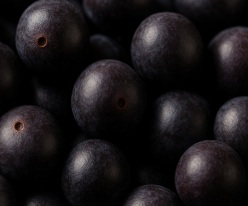

Acai
Acai (Euterpe oleracea Mart., sin. Euterpe badiocarpa Barb. Rodr.; Arecaceae)
L’acai (o açaí) è il frutto di palme amazzoniche, tradizionalmente riferito a Euterpe oleracea; Euterpe badiocarpa è considerato un sinonimo tassonomico storico della stessa specie. Le bacche, di colore porpora scuro, forniscono polpa destinata a alimenti e bevande, estratti standardizzati e ingredienti cosmetici a funzione antiossidante ed emolliente.

Nome comune: Açai (acai)
Pianta di origine: Euterpe oleracea Mart.
Regno: Plantae
Clado: Angiosperme
Clado: Monocotiledoni
Ordine: Arecales
Famiglia: Arecaceae
Genere: Euterpe
Specie: Euterpe oleracea Mart.
Coltivazione e condizioni di crescita
Clima:
L’açai è una palma tipica delle regioni tropicali umide dell’Amazzonia. Richiede temperature elevate durante tutto l’anno e non tollera il gelo. Predilige ambienti caldo-umidi con precipitazioni costanti e un’elevata umidità atmosferica.
Esposizione:
Preferisce la piena esposizione solare, ma cresce bene anche in mezz’ombra, soprattutto durante i primi stadi. La luce intensa favorisce una crescita vigorosa e una maggiore produzione di frutti.
Terreno:
Si sviluppa in suoli ricchi di sostanza organica, profondi e ben drenati, anche se tollera terreni periodicamente allagati, come nelle foreste a igapó o nelle valli fluviali. Il pH ideale è compreso tra 5,0 e 6,5. Terreni troppo compatti o poveri di nutrienti rallentano la crescita.
Irrigazione:
In coltivazione richiede irrigazioni regolari per mantenere il suolo costantemente umido, ma non stagnante. La carenza idrica compromette la produzione dei frutti e la formazione delle nuove infiorescenze.
Temperatura:
Crescita ottimale: 24–30 °C
Sensibile a temperature inferiori a 10 °C
L’ambiente caldo-umido è essenziale per mantenere un ciclo produttivo continuo
Concimazione:
La palma di açai risponde bene a una fertilizzazione ricca di nutrienti:
Azoto: stimola crescita del fusto e delle foglie.
Potassio: favorisce lo sviluppo dei frutti.
Fosforo: utile nelle prime fasi di radicazione.
L’aggiunta di materia organica è particolarmente importante nelle coltivazioni intensive.
Cure colturali:
Rimozione delle piante infestanti attorno ai giovani esemplari.
Potature leggere limitate alla rimozione di foglie secche e rachidi vecchi.
Controllo dei parassiti tropicali come coleotteri e lepidotteri.
Monitoraggio di malattie fungine favorite da umidità eccessiva, come marciumi radicali.
Raccolta:
I frutti maturano in grappoli (pannocchie) e vengono raccolti quando assumono un colore viola scuro brillante. La raccolta avviene scalando la palma o utilizzando strumenti specifici per raggiungere le infruttescenze. I frutti deperiscono rapidamente e vengono lavorati subito per ottenere polpa o purè.
Moltiplicazione:
L’açai si moltiplica per seme. I semi devono essere freschi e vengono posti a germinare in un substrato costantemente umido, con temperature alte. La germinazione può richiedere da alcune settimane a due mesi. Le giovani piante si trapiantano quando hanno sviluppato un fusto robusto.
Valore calorico (per 100 g di prodotto)
Polpa non zuccherata (congelata/purea): ~60–85 kcal/100 g (valori tipici di mercato ~70–75 kcal/100 g).
Polvere liofilizzata di polpa: ~400–550 kcal/100 g (concentrazione di solidi).
Estratto idroalcolico: ~50–150 kcal/100 g (dipende da solidi e EtOH residuo).
Estratto glicerico/glicolico: ~150–300 kcal/100 g.
Estratto secco standardizzato (polvere): ~200–350 kcal/100 g.
Olio di polpa/seme: ~880–900 kcal/100 g (valore lipidico).
Ai dosaggi d’uso alimentari il contributo energetico dipende da forma e impiego; le “acai bowl” commerciali possono risultare molto caloriche se ricche di topping zuccherati.
Principali sostanze contenute
Polifenoli: antociani (prevalentemente cianidina-3-glucoside e cianidina-3-rutinoside), proantocianidine; fenolici minori (acidi vanillico, siringico, ferulico).
Carotenoidi e tocoferoli: presenza di carotenoidi e vitamina E (γ-tocoferolo) in frazioni oleose.
Frazione lipidica: profilo tipico dell’olio con oleico (MUFA) ~60%, palmitico (SFA) ~22%, linoleico (PUFA) ~12% (valori indicativi).
Fibre: quota rilevante di fibra alimentare nella polpa.
Minerali: calcio, magnesio, manganese, ferro (tenori variabili).
Marcatori analitici: TPC (Folin–Ciocalteu); antociani via HPLC (C3G, C3R); per l’olio profilo FA (GC-FID), perossidi e acidità.
Processo di produzione
Materie prime: selezione di racemi maturi; rimozione di corpi estranei; refrigerazione rapida.
De-pulping: macerazione in acqua e separazione meccanica della polpa dal seme; regolazione del pH per stabilità del colore.
Stabilizzazione: pastorizzazione/HTST della purea; per polvere—liofilizzazione o spray-dry con veicoli idonei.
Estrazione: per estratti polifenolici, solventi idonei (acqua/EtOH) e, se necessario, resine a scambio; per l’olio—spremitura/cold-press o centrifugazione della polpa seguita da filtrazione.
Standardizzazione: titolazione in TPC/antociani (estratti idrofili) o specifiche di acidità/perossidi/indice di iodio (olio).
Controlli qualità: profilo HPLC degli antociani, residui di solventi, metalli/pesticidi, microbiologia; confezionamento secondo GMP/HACCP.
Proprietà sensoriali e tecnologiche
Aroma/colore: note fruttate scure con accenni vinacei e cacao; tonalità porpora profonda in ambiente acido.
Funzionalità: attività antioxidant in vitro delle frazioni polifenoliche; l’olio conferisce corpo e lucidità in emulsioni.
Compatibilità: rischio di torbidità per complessi polifenolo–proteina o con ioni Ca/Mg; sensibilità alla luce/ossigeno (sbiadimento del colore).
Impieghi alimentari
Bevande, smoothie e RTD, dessert congelati, gelati e lattiero-caseari, prodotti da forno e ripieni, confetteria, topping/salse; polvere liofilizzata per “acai bowl”. Dosaggi indicativi: polpa 5–20% in miscele/semilavorati; polvere liofilizzata 1–5% in bevande/dessert; estratti antocianici come frazioni coloranti (E163) secondo target cromatico.
Nutrizione e salute
Le frazioni di acai apportano polifenoli con attività antioxidant in vitro; in ambito alimentare non si attribuiscono claim salutistici senza autorizzazione. Gli integratori ad alto titolo in antociani o EGCG non sono tipici dell’acai; per l’olio di acai la prevalenza di MUFA (oleico) è in linea con un profilo lipidico tecnicamente interessante, fermo restando che la valutazione nutrizionale dipende dal contesto dietetico.
Qualità e specifiche (temi tipici)
Titolo in TPC e profilo HPLC degli antociani; assorbanza ~520 nm (colore).
Parametri fisico-chimici: pH, °Brix (polpa), umidità/aw (polveri).
Olio: acidità libera, numero di perossidi, profilo FA, indici di ossidazione.
Contaminanti: pesticidi/metalli entro limiti; microbiologia conforme; solventi residui ove applicabile.
Tracciabilità/igiene: conformità GMP/HACCP lungo la filiera.
Conservazione e shelf-life
Proteggere da luce e ossigeno (DO basso); imballi barriera a bassa permeabilità, atmosfera protettiva o inertizzazione.
Polpa/puree: mantenere catena del freddo; evitare cicli di congelamento–scongelamento ripetuti.
Polveri: controllare RH/aw per prevenire caking e perdita di colore/aroma.
Olio: aggiunta di antiossidanti tecnici idonei; conservare al fresco, ben chiuso. Applicare rotazione FIFO.
Allergeni e sicurezza
L’acai non è tra gli allergeni maggiori; il rischio microbiologico è mitigato da igiene in raccolta e pastorizzazione. Verificare requisiti di etichettatura (eventuali EtOH negli estratti; indicazioni su contenuto di caffeina non pertinenti per acai puro).
Funzioni INCI in cosmesi
Voci tipiche: Euterpe Oleracea Fruit Extract; Euterpe Oleracea Pulp Powder; Euterpe Oleracea Fruit Oil.
Ruoli: antioxidant, skin conditioning, emolliente; l’olio apporta MUFA e PUFA utili per la fase lipidica e per il tocco cosmetico.
Troubleshooting
Perdita di colore: pH elevato/ossigeno/luce → acidificare entro limiti di prodotto, proteggere da luce/DO, usare antiossidanti idonei.
Torbidità/precipitati: complessi polifenolo–proteina/metalli → chiarifica, chelanti blandi, filtrazione fine.
Ossidazione dell’olio: numero di perossidi in crescita → migliorare barriera all’ossigeno, abbassare T° di stoccaggio, aggiungere antiossidanti.
Variabilità lotto-lotto: origine, maturazione, processo → standardizzare su TPC/antociani o su specifiche dell’olio con tolleranze strette.
Sostenibilità e filiera
Raccolte in aree di várzea (piane alluvionali) con attenzione a biodiversità e pratiche locali; valorizzazione dei sottoprodotti (noccioli/semi) per energia o biochar; gestione degli effluenti con target BOD/COD; imballaggi riciclabili e logistica a temperatura controllata.
Conclusione
L’acai combina pigmenti antocianici, note fruttate scure e una frazione lipidica ricca in MUFA: la performance in applicazione dipende da qualità della materia prima, controllo di pH/ossigeno/temperatura e rigorosa standardizzazione analitica; con tali presidi si ottengono prodotti stabili, ripetibili e sensorialmente efficaci.
Mini-glossario
EtOH — etanolo: co-solvente idroalcolico; rilevante per etichettatura se residuo.
TPC — total phenolic content: contenuto fenolico totale (Folin–Ciocalteu), indicatore globale non specifico.
HPLC — high-performance liquid chromatography: analisi quantitativa di antociani e marcatori.
MUFA — mono-unsaturated fatty acids (acidi grassi monoinsaturi, es. oleico): positivi per profilo lipidico, stabilità e texture.
PUFA — poly-unsaturated fatty acids (acidi grassi polinsaturi, es. linoleico): funzionali ma più suscettibili a ossidazione.
SFA — saturated fatty acids (acidi grassi saturi, es. palmitico): stabilità ossidativa alta, ma da bilanciare nella dieta.
E163 — antociani: classe di coloranti alimentari di origine vegetale (UE).
DO — dissolved oxygen: ossigeno disciolto; ridurlo limita ossidazioni e sbiadimenti.
RH — umidità relativa: da controllare per stabilità delle polveri.
aw — attività dell’acqua: quota di acqua “libera”, utile a prevedere stabilità e microbiologia.
GMP/HACCP — buone pratiche di produzione/analisi dei pericoli e punti critici di controllo.
BOD/COD — domanda biochimica/chimica di ossigeno: indicatori del carico organico degli effluenti.
Bibliografia__________________________________________________________________________
Interdonato L, Marino Y, Franco GA, Arangia A, D'Amico R, Siracusa R, Cordaro M, Impellizzeri D, Fusco R, Cuzzocrea S, Paola RD. Açai Berry Administration Promotes Wound Healing through Wnt/β-Catenin Pathway. Int J Mol Sci. 2023 Jan 3;24(1):834. doi: 10.3390/ijms24010834. PMID: 36614291;
Abstract. Recently, wound healing has received increased attention from both a scientific and clinical point of view. It is characterized by an organized series of processes: angiogenesis, cell migration and proliferation, extracellular matrix production, and remodeling. Many of these processes are controlled by the Wnt pathway, which activates them. The aim of the study was to evaluate the molecular mechanism of açai berry administration in a mouse model of wound healing. CD1 male mice were used in this research. Two full-thickness excisional wounds (5 mm) were performed with a sterile biopsy punch on the dorsum to create two circular, full-thickness skin wounds on either side of the median line on the dorsum. Açai berry was administered by oral administration (500 mg/kg dissolved in saline) for 6 days after induction of the wound. Our study demonstrated that açai berry can modulate the Wnt pathway, reducing the expression of Wnt3a, the cysteine-rich domain of frizzled (FZ)8, and the accumulation of cytosolic and nuclear β-catenin. Moreover, açai berry reduced the levels of TNF-α and IL-18, which are target genes strictly downstream of the Wnt/β-catenin pathway. It also showed important anti-inflammatory activities by reducing the activation of the NF-κB pathway. Furthermore, Wnt can modulate the activity of growth factors, such as TGF-β, and VEGF, which are the basis of the wound-healing process. In conclusion, we can confirm that açai berry can modulate the activity of the Wnt/β-catenin pathway, as it is involved in the inflammatory process and in the activity of the growth factor implicated in wound healing.
Impellizzeri D, D'Amico R, Fusco R, Genovese T, Peritore AF, Gugliandolo E, Crupi R, Interdonato L, Di Paola D, Di Paola R, Cuzzocrea S, Siracusa R, Cordaro M. Açai Berry Mitigates Vascular Dementia-Induced Neuropathological Alterations Modulating Nrf-2/Beclin1 Pathways. Cells. 2022 Aug 22;11(16):2616. doi: 10.3390/cells11162616.
Abstract. The second-most common cause of dementia is vascular dementia (VaD). The majority of VaD patients experience cognitive impairment, which is brought on by oxidative stress and changes in autophagic function, which ultimately result in neuronal impairment and death. In this study, we examine a novel method for reversing VaD-induced changes brought on by açai berry supplementation in a VaD mouse model. The purpose of this study was to examine the impact of açai berries on the molecular mechanisms underlying VaD in a mouse model of the disease that was created by repeated ischemia-reperfusion (IR) of the whole bilateral carotid artery. Here, we found that açai berry was able to reduce VaD-induced behavioral alteration, as well as hippocampal death, in CA1 and CA3 regions. These effects are probably due to the modulation of nuclear factor erythroid 2-related factor 2 (Nrf-2) and Beclin-1, suggesting a possible crosstalk between these molecular pathways. In conclusion, the protective effects of açai berry could be a good supplementation in the future for the management of vascular dementia.
Laurindo LF, Barbalho SM, Araújo AC, Guiguer EL, Mondal A, Bachtel G, Bishayee A. Açaí (Euterpe oleracea Mart.) in Health and Disease: A Critical Review. Nutrients. 2023 Feb 16;15(4):989. doi: 10.3390/nu15040989.
Abstract. The açaí palm (Euterpe oleracea Mart.), a species belonging to the Arecaceae family, has been cultivated for thousands of years in tropical Central and South America as a multipurpose dietary plant. The recent introduction of açaí fruit and its nutritional and healing qualities to regions outside its origin has rapidly expanded global demand for açaí berry. The health-promoting and disease-preventing properties of this plant are attributed to numerous bioactive phenolic compounds present in the leaf, pulp, fruit, skin, and seeds. The purpose of this review is to present an up-to-date, comprehensive, and critical evaluation of the health benefits of açaí and its phytochemicals with a special focus on cellular and molecular mechanisms of action. In vitro and in vivo studies showed that açaí possesses antioxidant and anti-inflammatory properties and exerts cardioprotective, gastroprotective, hepatoprotective, neuroprotective, renoprotective, antilipidemic, antidiabetic, and antineoplastic activities. Moreover, clinical trials have suggested that açaí can protect against metabolic stress induced by oxidation, inflammation, vascular abnormalities, and physical exertion. Due to its medicinal properties and the absence of undesirable effects, açaí shows a promising future in health promotion and disease prevention, in addition to a vast economic potential in the food and cosmetic industries.
Shim HR, Lee JS, Nam HS, Lee HG. Nanoencapsulation of synergistic combinations of acai berry concentrate to improve antioxidant stability. Food Sci Biotechnol. 2016 Dec 31;25(6):1597-1603. doi: 10.1007/s10068-016-0246-9.
Abstract. The objectives of this study were to increase the antioxidant activity of acai berry concentrate (Acai) by combining it with various antioxidants to exploit synergistic effects and improve antioxidant stability by nanoencapsulation. Ascorbic acid and trolox were identified as synergistic antioxidants for Acai. The optimal mixing ratio of ascorbic acid (74.64 μg/mL) and trolox (47.88 μg/mL) for synergistic activity in both oxygen radical absorbance capacity (ORAC) and DPPH assays was 1.56:1. A mixture of Acai, ascorbic acid, and trolox at the optimum ratio was nanoencapsulated using chitosan and gum arabic. Nanoparticles exhibited homogenous dispersion with a 230 to 260 nm particle size. During storage, nanoparticles exhibited better antioxidant stability than non-nanoencapsulated antioxidants. These results suggest that mixing Acai with ascorbic acid and trolox or nanoencapsulating this mixture with chitosan and gum arabic are both effective techniques for improving antioxidant activities.
Sadowska-Krępa E, Kłapcińska B, Podgórski T, Szade B, Tyl K, Hadzik A. Effects of supplementation with acai (Euterpe oleracea Mart.) berry-based juice blend on the blood antioxidant defence capacity and lipid profile in junior hurdlers. A pilot study. Biol Sport. 2015 Jun;32(2):161-8. doi: 10.5604/20831862.1144419.
Abstract. The purpose of this pilot study was to examine whether regular consumption of an acai berry-based juice blend would affect sprint performance and improve blood antioxidant status and lipid profile in junior athletes. Seven junior hurdlers (17.5±1.2 years) taking part in a pre-season conditioning camp were supplemented once a day, for six weeks, with 100 ml of the juice blend. At the start and the end of the camp the athletes performed a 300-m sprint running test on an outdoor track. Blood samples were taken before and immediately after the test and after 1 h of recovery. Blood antioxidant status was evaluated based on activities of antioxidant enzymes (superoxide dismutase [SOD], catalase [CAT], glutathione peroxidase [GSH-Px], glutathione reductase [GR]), concentrations of non-enzymatic antioxidants (reduced glutathione [GSH], uric acid), total plasma polyphenols, ferric reducing ability of plasma (FRAP), thiobarbituric acid reactive substances (TBARS) and activities of creatine kinase (CK) and lactate dehydrogenase (LDH) as muscle damage markers. In order to evaluate potential health benefits of the acai berry, the post-treatment changes in lipid profile parameters (triglycerides, cholesterol and its fractions) were analysed. Six weeks' consumption of acai berry-based juice blend had no effect on sprint performance, but it led to a marked increase in the total antioxidant capacity of plasma, attenuation of the exercise-induced muscle damage, and a substantial improvement of serum lipid profile. These findings strongly support the view of the health benefits of supplementation with the acai berry-based juice blend, mainly attributed to its high total polyphenol content and the related high in vivo antioxidant and hypocholesterolaemic activities of this supplement.
ALNasser MN, AlSaadi AM, Whitby A, Kim DH, Mellor IR, Carter WG. Acai Berry (Euterpe sp.) Extracts Are Neuroprotective against L-Glutamate-Induced Toxicity by Limiting Mitochondrial Dysfunction and Cellular Redox Stress. Life (Basel). 2023 Apr 15;13(4):1019. doi: 10.3390/life13041019.
Abstract. Aberrant accumulation of the neurotransmitter L-glutamate (L-Glu) has been implicated as a mechanism of neurodegeneration, and the release of L-Glu after stroke onset leads to a toxicity cascade that results in neuronal death. The acai berry (Euterpe oleracea) is a potential dietary nutraceutical. The aim of this research was to investigate the neuroprotective effects of acai berry aqueous and ethanolic extracts to reduce the neurotoxicity to neuronal cells triggered by L-Glu application. L-Glu and acai berry effects on cell viability were quantified using 3-(4,5-Dimethylthiazol-2-yl)-2,5-diphenyltetrazolium bromide (MTT) and lactate dehydrogenase (LDH) assays, and effects on cellular bioenergetics were assessed via quantitation of the levels of cellular ATP, mitochondrial membrane potential (MMP), and production of reactive oxygen species (ROS) in neuroblastoma cells. Cell viability was also evaluated in human cortical neuronal progenitor cell culture after L-Glu or/and acai berry application. In isolated cells, activated currents using patch-clamping were employed to determine whether L-Glu neurotoxicity was mediated by ionotropic L-Glu-receptors (iGluRs). L-Glu caused a significant reduction in cell viability, ATP, and MMP levels and increased ROS production. The co-application of both acai berry extracts with L-Glu provided neuroprotection against L-Glu with sustained cell viability, decreased LDH production, restored ATP and MMP levels, and reduced ROS levels. Whole-cell patch-clamp recordings showed that L-Glu toxicity is not mediated by the activation of iGluRs in neuroblastoma cells. Fractionation and analysis of acai berry extracts with liquid chromatography-mass spectrometry identified several phytochemical antioxidants that may have provided neuroprotective effects. In summary, the acai berry contains nutraceuticals with antioxidant activity that may be a beneficial dietary component to limit pathological deficits triggered by excessive L-Glu accumulations.
de Moura RS, Resende ÂC. Cardiovascular and Metabolic Effects of Açaí, an Amazon Plant. J Cardiovasc Pharmacol. 2016 Jul;68(1):19-26. doi: 10.1097/FJC.0000000000000347.
Abstract. Despite being used for a long time as food and beverage by Brazilian people who live on the Amazon bay, only in the beginning of this century, açaí berries have been the object of scientific research. Açaí berries are rich in polyphenols that probably explains its versatile pharmacological actions and huge consumption, not only in Brazil but also in Europe and United States. In this review, not all but some pharmacological aspects of açaí berries are analyzed. Chemical and pharmacological differences between extracts obtained from the skin and seed of açaí are considered. Polyphenols from the seed of açaí increase endothelial nitric oxide production leading to endothelium-dependent relaxation, reduce reactive oxygen species and regulate key targets associated with lipid metabolism in different conditions such as hypertension, renal failure, and metabolic syndrome. We review the novel mechanisms of actions of açaí on different targets which could trigger the health benefits of açaí such as antioxidant, vasodilator, antihypertensive, cardioprotector, renal protector, antidyslipidemic, antiobesity, and antidiabetic effects in cardiovascular and metabolic disturbances.
Leggi altri Tiiips su questo oggetto in inglese (1)
Scheda tecnica
Informazioni e collegamenti principali


