



Corn starch (Zea mays L.)
Finely milled powder obtained from the starchy fraction of the maize kernel, isolated mainly from the endosperm by milling, sieving and wet separation processes. It appears as a very fine, white, odourless powder with a neutral taste and the typical behaviour of gelatinising polysaccharides. Final quality depends on the purity of the raw material, the efficiency of removal of proteins and lipids, and on drying and milling conditions.
The composition of corn starch is dominated by complex carbohydrates, consisting of amylose and amylopectin in proportions that vary according to the maize variety and extraction parameters. Minor components include traces of proteins, lipids and residual minerals, generally at very low levels. The high concentration of the starchy fraction gives corn starch its ability to gel and thicken when hydrated and heated, forming a viscous structure influenced by the amylose/amylopectin ratio and the gelatinisation temperature.
From a food technology perspective, corn starch is used as a thickener, stabiliser, binding agent and texturiser in numerous preparations: sauces, creams, puddings, baked goods, soups, beverages and infant foods. Its rheological properties allow modulation of viscosity, texture and stability over time, while its neutral flavour permits use without sensory interference. Industrial formulations may include modified starches, obtained by physical or enzymatic treatments, to optimise heat resistance, clarity or stability under freeze–thaw conditions.
Product quality is assessed by measuring purity, particle size, moisture content, gelatinisation temperature, residual protein level, viscosimetric behaviour and absence of contaminants. Appropriate storage conditions — dry, cool environments protected from moisture — are essential to preserve functional properties and prevent caking or degradation of the starchy fraction.
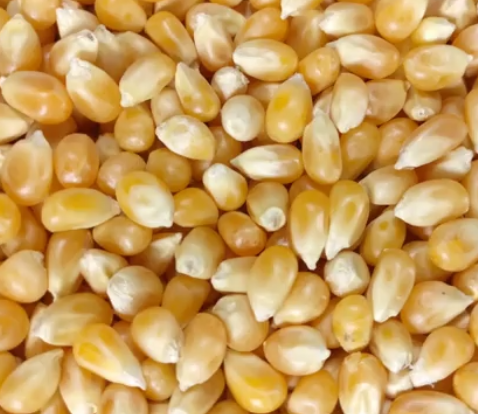
Indicative nutritional values per 100 g (dry corn starch)
Average values (may vary slightly by brand and origin):
Energy: ~350–380 kcal
Protein: ~0.2–0.5 g
Total carbohydrates: ~90–92 g
sugars: <0.5 g
Fibre: negligible
Total fat: ~0.1–0.5 g
SFA: traces
MUFA: traces
PUFA: traces
Minerals: very small amounts of potassium, phosphorus and other elements
Vitamins: negligible
Sodium: very low
Corn starch is therefore an ingredient with very high carbohydrate density and minimal protein, fat and fibre.
Key constituents
Starch (polysaccharides)
amylopectin (branched fraction, predominant)
amylose (linear fraction, minor component influencing gel strength and retrogradation)
Minor components
traces of proteins and nitrogenous compounds
traces of lipids and residual phospholipids
very small amounts of minerals, most of which are removed during refining
From both a nutritional and technological perspective, the key component is the starch polysaccharide.
Production process
Cleaning of corn
removal of foreign bodies, dust, broken kernels and impurities
Steeping (maceration)
kernels are soaked in water (often with a small amount of sulphur dioxide) to soften them and facilitate separation of germ, fibre, protein and starch
Separation of kernel fractions
removal of the germ (used for corn oil extraction)
separation of fibre (bran/hull)
concentration of the starch–protein slurry
Starch purification
washing and separation steps (screens, hydrocyclones, centrifuges) to reduce protein and fibre and obtain a high-purity starch suspension
Dewatering and drying
dewatering and drying to produce dry starch powder
Sieving and standardisation
sieving and, if needed, adjustment of particle size
packaging as food-grade corn starch (or as a raw material for modified starches and sweeteners)
Physical properties
White, very fine, free-flowing powder.
Insoluble in cold water but readily dispersible, forming opaque suspensions.
In the presence of sufficient water and heat (gelatinisation), it forms viscous pastes and gels whose behaviour depends on concentration, temperature, shear and pH.
Essentially odourless and neutral in taste.
Sensory and technological properties
Flavour: neutral; does not significantly interfere with the flavour profile of foods.
Colour: imparts a white/milky opacity to sauces, creams and desserts.
Main technological functions:
thickener for sauces, soups, gravies, fillings and desserts
gelling agent (within limits) when combined with water and adequate heating
contribution to texture and mouthfeel in baked goods (softness, crumbliness)
stabiliser in fillings, pie fillings and certain suspensions
base substrate for the production of glucose syrups and modified starches
The behaviour can vary with processing conditions and with the use of native versus modified starches.
Food applications
Thickening of sauces, gravies, soups and veloutés
Preparation of custards, puddings, creams and dessert fillings
Ingredient in cakes, biscuits and baked goods to modulate crumb structure, softness and crispness (often combined with wheat flour or gluten-free flour mixes)
Component of gluten-free formulations as a structural starch source
Use in ready meals, baby foods and instant mixes, according to product-specific standards and regulations
Raw material for sweetener production (e.g. glucose syrup, high-fructose corn syrup) and industrial starch derivatives
Nutrition & health
Corn starch is essentially a source of complex carbohydrates, with almost no protein, fat or fibre.
The glycaemic load of preparations based mostly on corn starch can be significant, especially if portion sizes are large and fibre or fat are low.
It contributes energy rather than micronutrients; the supply of vitamins and minerals is negligible.
In gluten-free products it can provide structure and thickness, but it is nutritionally advisable to associate it with ingredients richer in fibre, protein and micronutrients to improve overall nutritional quality.
Portion note
Corn starch is not consumed on its own but as an ingredient:
In sauces/creams: typically 5–20 g per 100 ml of liquid, depending on the desired thickness.
In baked goods: variable levels (e.g. 10–30% of the total flour/starch blend), depending on the recipe.
The actual amount of corn starch per serving of finished food is therefore relatively small, but it still contributes to the total carbohydrate content.
Allergens & intolerances
Corn starch is naturally gluten-free, but can be cross-contaminated with gluten-containing cereals if produced in non-dedicated facilities.
People with coeliac disease should choose products labelled “gluten-free”, supported by appropriate quality controls.
True allergy to corn is uncommon but possible; in such cases corn starch should also be avoided.
In composite foods (instant desserts, sauces, baking mixes) the major allergens usually come from other ingredients (milk, egg, soy, nuts, etc.) and must be checked on the label.
Storage & shelf-life
Store in a cool, dry place, protected from light and in well-closed containers.
Corn starch is hygroscopic; exposure to moisture can lead to clumping and, in case of high water activity, possible microbial growth.
Under proper conditions, typical shelf-life is about 1–2 years, as indicated by the best-before date.
Avoid storage near products with strong odours, as starch can absorb some volatile compounds.
Safety & regulatory
Corn starch is a widely used food ingredient and falls under general legislation on starches and cereal products; native starch itself is not considered a food additive.
Production and packaging must follow HACCP-based food-safety systems, with controls on:
identity and purity (no undeclared mixing with other starches)
contaminants (mycotoxins, pesticide residues, heavy metals) within legal limits
microbiological quality and hygienic conditions of processing lines
Modified starches derived from corn starch (where used) are subject to specific names and sometimes E-numbers, and must be clearly identified on labels.
Labelling
For corn starch sold as such or as an ingredient in composite foods, the label should state:
product name (e.g. “corn starch”, “maize starch”)
list of ingredients (in composite products, in descending order of weight)
net quantity, batch code, best-before date
recommended storage conditions
any gluten-free claim, if applicable and supported by controlled supply chain and analytical checks
clear indication of any allergens present from other ingredients in the finished product
nutrition declaration per 100 g (and per serving, where applicable)
Troubleshooting
Lumps in sauces or creams
Causes: starch added directly to hot liquid or insufficient dispersion in cold liquid.
Solutions: disperse starch in a small amount of cold liquid before adding to the hot phase; stir vigorously during heating.
Insufficient thickening
Causes: dose too low, inadequate cooking time or temperature, or excessive dilution.
Solutions: increase the starch dose, extend gentle cooking to allow full gelatinisation, verify starch-to-liquid ratio.
Overly thick or “gluey” texture
Causes: starch overdose, too much evaporation of liquid, or unsuitable formulation.
Solutions: reduce starch quantities or increase liquid; combine corn starch with other flours/starches to adjust texture.
Sustainability & supply chain
Corn starch is derived from maize, a widely cultivated field crop; its sustainability depends on farming practices (crop rotation, soil management, fertiliser and pesticide use, water management).
Whole-kernel valorisation (germ for corn oil, starch from the endosperm, by-products for feed) helps reduce raw-material waste.
A traceable supply chain, with control of raw materials, process conditions and quality specifications (including non-GMO requirements where relevant), is essential to ensure safety, consistency and regulatory compliance.
Efficient wet-milling and refining, as well as proper use of co-products, support a better environmental profile of corn starch production.
Main INCI functions (cosmetics)
In cosmetics, corn starch is typically listed as:
Zea Mays (Corn) Starch
Typical cosmetic functions:
absorbent for sebum and moisture in powders, dry shampoos, body powders and make-up
contribution to silky feel and improved spreadability in creams and lotions
mattifying and soft-focus effect on skin and hair
alternative or complement to other plant starches (rice, tapioca) in “natural” or “talc-free” formulations
Use requires appropriate standards of purity, controlled particle size and safety assessment according to cosmetic regulations.
Conclusion
Corn starch is a key technological ingredient in the food industry, characterised by an almost pure content of starch polysaccharides, neutral taste and excellent thickening and texturising properties. Nutritionally, it primarily supplies carbohydrate energy, with negligible contributions in protein, fat and micronutrients.
When correctly incorporated and dosed, it allows precise control of viscosity, texture and stability in a wide variety of foods, and also offers broad use in cosmetic formulations as an absorbent, mattifying and sensorially enhancing powder. Overall quality and safety depend on the maize supply chain, extraction processes and storage conditions, which must ensure consistent performance and compliance with applicable standards.
Mini-glossary
SFA – saturated fatty acids; fats with no double bonds. Excessive use at the expense of unsaturated fats may be less favourable for blood-lipid profiles.
MUFA – monounsaturated fatty acids; fats with one double bond, generally preferable when they replace part of SFA in the diet.
PUFA – polyunsaturated fatty acids; fats with two or more double bonds, including omega-6 and omega-3, involved in numerous physiological functions.
HACCP – Hazard Analysis and Critical Control Points; structured food-safety management system based on hazard analysis and control of critical points in production.
Food characteristics
It depends a lot on the percentages of amylose and amylopectin, generally not declared by the producers, two components with different characteristics.Amylose allows better cooking of foods.Amylopectin, which has a very high glycemic value and low nutritional value, can lead to weight gain.
- Thickener for biscuits, creams, puddings, béchamel sauce etc.
- It makes the fried crispy
- Gluten-free
Pregelatinized cornstarch. It's a modified cornstarch. Modified starches are substances modified with physical or chemical properties to improve the conditions of the starch when it is processed. With these modifications, corn starch will be better able to withstand cooking, cold, sterilization. It can be a GMO (Genetically modified organism).
In cosmetics Is used in hydrolyzed form as:
Binder agent. Ingredient that is used in cosmetic, food and pharmaceutical products as an anti-caking agent with the function of making the product in which it is incorporated silky, compact and homogenous. The binder, either natural such as mucilage, gums and starches or chemical, may be in the form of a powder or liquid.
Humectant. Hygroscopic compound used to minimise water loss in the skin and to prevent it from drying out by facilitating faster and greater absorption of water into the stratum corneum of the epidermis. The epidermis is the most superficial of the three layers that make up human skin (epidermis, dermis and hypodermis) and is the layer that maintains hydration in all three layers. In turn, the epidermis is composed of five layers: horny, the most superficial, granular, spinous, shiny, and basal. Humectants have the ability to retain the water they attract from the air in the stratum corneum and have the function of moisturising the skin. They are best used before emollients, which are oil-based.
Skin conditioning agent. It is the mainstay of topical skin treatment as it has the function of restoring, increasing or improving skin tolerance to external factors, including melanocyte tolerance. The most important function of the conditioning agent is to prevent skin dehydration, but the subject is rather complex and involves emollients and humectants that can be added in the formulation.
Viscosity control agent. It controls and adapts, Increasing or decreasing, viscosity to the required level for optimal chemical and physical stability of the product and dosage in gels, suspensions, emulsions, solutions.
Farmaceuticals
Specifically, in medicinal tablets, cornstarch has the function of facilitating the disintegration.
Contents of carotenoids in maize or maize (1):
- Neoxanthine and violetxanthin: 9%
- Lutein: 60%
- Zeaxanthin: 25%
- Criptoxanthin: 5%
- Lycopene: 0%
- Alpha carotene: 0
- Beta carotene: 0

