



Bicarbonate of soda, best known as Sodium Bicarbonate: properties, uses, pros, cons, and safety
Sodium bicarbonate, INCI name Sodium Bicarbonate, is an inorganic salt of carbonic acid composed of sodium ions and hydrogen carbonate ions.
Its chemical formula is:
NaHCO₃
and its molecular weight is approximately:
84.01 g/mol.
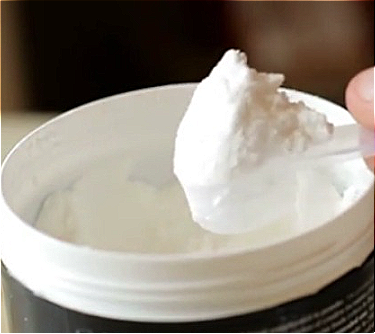
It normally occurs as a white, odourless crystalline powder, soluble in water and practically insoluble in ethanol. A 1% aqueous solution has a pH of approximately 8.0–8.6, which accounts for its mildly alkaline and buffering behaviour.
It is widely used in:
food;
cosmetics;
oral care;
pharmaceuticals;
household cleaning;
chemical industry;
effervescent products.
In cosmetics, its documented functions include Abrasive, Buffering, Deodorant, Fragrance Functional, Oral Care, and Skin Protecting.
In food applications it is identified as:
E 500(ii) – Sodium Hydrogen Carbonate / Sodium Bicarbonate.
Description
Sodium bicarbonate is a salt composed of:
Na⁺ – sodium ion;
HCO₃⁻ – hydrogen carbonate ion.
In water, it dissociates into these ions.
The bicarbonate ion belongs to the carbonate/bicarbonate system, which is important in acid-base equilibrium.
Sodium bicarbonate is not a strong base like sodium hydroxide. Instead, it produces moderately alkaline solutions.
This property allows it to be used as:
a buffering agent;
a pH regulator;
an acid neutraliser;
an effervescent agent;
a leavening agent.
In the presence of an acid, it reacts and releases carbon dioxide (CO₂).
A simplified representation is:
NaHCO₃ + H⁺ → Na⁺ + CO₂ + H₂O
The production of CO₂ explains many of the applications of sodium bicarbonate in foods and effervescent formulations.
Sodium bicarbonate and baking powder
Sodium bicarbonate should not be confused with baking powder.
In English:
baking soda = sodium bicarbonate
whereas:
baking powder = a leavening mixture generally consisting of sodium bicarbonate + one or more acidic components + starch or another carrier.
Pure sodium bicarbonate normally requires an acidic component to produce carbon dioxide rapidly.
Baking powder already contains the ingredients required for this reaction.
Origin
Sodium bicarbonate can be manufactured industrially through different processes.
It may be obtained from:
chemical processes based on sodium carbonate;
the Solvay process;
carbonation of alkaline solutions;
naturally occurring bicarbonate-containing minerals such as nahcolite;
processing of natural carbonate minerals, depending on the production chain.
The final NaHCO₃ molecule is the same regardless of the source, but:
purity;
particle size;
moisture;
contaminants;
food, cosmetic, or pharmaceutical grade
depend on the manufacturing process and supplier specifications.
Production process
One industrial method involves reacting a sodium-containing solution with carbon dioxide.
In the Solvay process, in simplified form, the main materials include:
sodium chloride;
ammonia;
water;
carbon dioxide.
Sodium bicarbonate, which is relatively poorly soluble under the process conditions, precipitates and can subsequently be:
separated;
washed;
purified;
dried;
milled;
classified by particle size;
packaged.
Another production route involves carbonation of sodium carbonate:
Na₂CO₃ + CO₂ + H₂O → 2 NaHCO₃
The final material can be produced in different particle sizes depending on its intended application.
For example, a grade intended for toothpaste may require particle characteristics different from those of a grade intended for food production.
Composition
High-purity sodium bicarbonate consists almost entirely of:
NaHCO₃
European specifications for food additive E 500(ii) require a content of not less than 99% on an anhydrous basis.
The raw material may also contain very small amounts of:
sodium carbonate;
chlorides;
sulfates;
water;
other mineral salts;
trace elements.
Composition and limits depend on the commercial grade and applicable specifications.
Identification data and specifications
| Characteristic | Value | Note |
|---|---|---|
| INCI name | Sodium Bicarbonate | cosmetic nomenclature |
| Common name | sodium bicarbonate | common name |
| Chemical name | sodium hydrogen carbonate | systematic name |
| Molecular formula | NaHCO₃ | inorganic salt |
| Molecular weight | 84.01 g/mol | approximately |
| CAS | 144-55-8 | chemical identifier |
| EC / EINECS | 205-633-8 | European identifier |
| PubChem CID | 516892 | chemical database |
| EU food additive | E 500(ii) | sodium carbonates |
| Cosmetic functions | Abrasive; Buffering; Deodorant; Fragrance Functional; Oral Care; Skin Protecting | documented functions |
| Current EU glossary | entry 26293 – SODIUM BICARBONATE | cosmetic nomenclature |
| Specific cosmetic restrictions | no specific entry identified in Annexes II–VI | use subject to finished-product safety |
Physicochemical properties
| Characteristic | Indicative value | Note |
|---|---|---|
| Appearance | white powder or crystals | typical |
| Odour | odourless | pure material |
| Formula | NaHCO₃ | |
| Molecular weight | 84.01 g/mol | |
| Water solubility | soluble | increases with temperature |
| Solubility in ethanol | insoluble | E 500(ii) specification |
| pH of 1% solution | 8.0–8.6 | mildly alkaline |
| Chemical character | mildly alkaline | bicarbonate system |
| Stability at room temperature | good | when kept dry |
| Behaviour on heating | decomposes | forms carbonate, CO₂, and water |
Thermal decomposition
When sufficiently heated, sodium bicarbonate decomposes according to the reaction:
2 NaHCO₃ → Na₂CO₃ + CO₂ + H₂O
The products are therefore:
sodium carbonate;
carbon dioxide;
water.
This property contributes to its function as a leavening agent.
Heat accelerates gas production, although the reaction can also be promoted by acidic ingredients.
Food use
In food applications, sodium bicarbonate is classified as:
E 500(ii) – sodium hydrogen carbonate.
Common English synonyms include:
sodium bicarbonate;
sodium hydrogen carbonate;
sodium acid carbonate;
bicarbonate of soda;
baking soda.
It is mainly used for:
leavening;
acidity regulation;
pH control;
production of effervescence;
modification of texture in certain foods.
It is particularly common in:
biscuits;
cakes;
baked goods;
crackers;
chemically leavened products;
effervescent preparations.
When it reacts with acids in a dough or batter, it produces CO₂, which forms gas bubbles and contributes to volume expansion.
Caloric value
Sodium bicarbonate is an inorganic salt and is not a source of:
carbohydrates;
fats;
proteins;
alcohol.
Its energy contribution is therefore:
0 kcal per 100 g
from a nutritional energy standpoint.
This does not mean that it can be used without limitation in foods, because it contributes sodium.
Sodium content
The molecular weight of sodium bicarbonate is approximately 84.01 g/mol, while sodium accounts for approximately 22.99 g/mol.
Sodium bicarbonate therefore contains approximately:
27.4 g sodium per 100 g
or about:
274 mg sodium per gram of sodium bicarbonate.
When converted to the conventional nutritional salt equivalent using:
salt = sodium × 2.5
1 g of sodium bicarbonate provides an amount of sodium nutritionally equivalent to approximately:
0.685 g salt.
Sodium bicarbonate is not sodium chloride, so this is only the nutritional conversion of its sodium content into “salt equivalent”.
Cosmetics
Sodium Bicarbonate may be used in:
toothpastes;
tooth powders;
oral-care products;
deodorants;
bath products;
bath bombs;
effervescent bath salts;
cleansers;
exfoliating products;
skin-care products;
formulations requiring pH adjustment.
Its documented cosmetic functions include:
Abrasive
It contributes to the mechanical removal of deposits and impurities through abrasive or polishing action.
Buffering
It helps control the pH of a formulation.
Deodorant
It helps reduce or mask unpleasant body odours.
Fragrance Functional
It may perform a technical function as an excipient in fragrance or aromatic systems.
Oral Care
It contributes to cleansing, deodorising, or protecting the oral cavity and teeth.
Skin Protecting
It may help protect the skin surface from external factors.
Oral care
Sodium bicarbonate is particularly common in oral-care products.
It can contribute to:
removal of superficial deposits;
polishing of the tooth surface;
partial neutralisation of acidic conditions;
reduction of odours;
improved cleaning.
In toothpastes, it can provide controlled abrasive action.
Its ability to make teeth appear visually lighter is mainly due to the removal of surface stains.
This should not be confused with deeper chemical whitening achieved using oxidising agents.
Abrasivity
Sodium bicarbonate is a relatively soft particulate material compared with several mineral abrasives.
However, the final abrasive effect depends on:
particle size;
particle shape;
concentration;
formulation;
method of use;
applied force;
frequency of use.
It is therefore not scientifically correct to assess the abrasivity of a toothpaste solely from the presence of Sodium Bicarbonate.
The complete formulation must be considered.
Deodorants
Sodium bicarbonate is frequently used in deodorants.
It does not necessarily prevent sweat production.
Its function therefore differs from that of antiperspirants based on aluminium salts.
It may help modify the chemical conditions in which unpleasant odours develop and can reduce or mask such odours.
It should therefore not automatically be described as:
antiperspirant.
It is more accurately described as:
deodorant.
Bath bombs and effervescent products
One of its most characteristic applications is in bath bombs.
Sodium bicarbonate is commonly combined with an acid, often:
citric acid.
When the product comes into contact with water, the ingredients react and release:
CO₂
which produces the characteristic effervescence.
The reaction rate depends on:
bicarbonate-to-acid ratio;
particle size;
presence of water;
temperature;
structure of the compressed product;
excipients.
During storage, moisture should be avoided because it may prematurely initiate the reaction.
pH regulation
Sodium bicarbonate can contribute to pH control through the bicarbonate/carbonate system.
It is not, however, a strong alkalising agent.
This may be advantageous when more moderate adjustment is required compared with strong bases.
The amount required depends on the buffering capacity of the formulation.
It should therefore be determined through actual pH measurements rather than using a standard amount applicable to every product.
Household cleaning
Sodium bicarbonate is also widely used in household cleaning.
It may help:
neutralise acids;
reduce certain odours;
provide mild abrasive action;
assist mechanical cleaning;
buffer pH.
However, it is not a surfactant and does not have the same ability to solubilise grease and dirt as a detergent formulated with surfactants.
It should therefore not be regarded as a universal substitute for detergents.
Sodium bicarbonate and sodium carbonate
These two substances should not be confused.
Sodium bicarbonate
NaHCO₃
It is mildly alkaline.
Sodium carbonate
Na₂CO₃
It is significantly more alkaline.
Sodium carbonate can therefore cause much greater increases in pH than sodium bicarbonate.
One should not automatically be substituted for the other in a formulation.
Sodium bicarbonate and acids
Sodium bicarbonate reacts with many acids, including:
citric acid;
tartaric acid;
acetic acid;
lactic acid.
The reaction generally produces:
a salt;
water;
carbon dioxide.
This property must be considered in aqueous formulations because the simultaneous presence of bicarbonate and significant amounts of acid can cause:
effervescence;
pH changes;
increased pressure in a closed container;
progressive loss of CO₂.
Pros
Chemically simple and well-characterised ingredient.
Extensive history of use.
Water-soluble.
Mildly alkaline.
Useful as a pH regulator and buffer.
Effective for generating effervescence in the presence of acids.
Useful as a leavening agent.
Can perform a deodorant function.
Can be used as an abrasive in oral-care products.
Provides no calories.
Authorised as the food additive E 500(ii) in the European Union.
EU food legislation establishes defined purity specifications.
Has a favourable safety profile under appropriate cosmetic conditions of use.
Cons:
Provides a significant amount of sodium.
Excessive food use may increase total sodium intake.
Very high oral intake may alter the body's acid-base balance.
Can cause gastric distension due to CO₂ formation when it reacts with acids.
Contact with the eyes may cause mechanical irritation or discomfort.
Very fine dust may irritate the respiratory tract during high occupational exposure.
Frequent, concentrated application to the skin may not be suitable for sensitive individuals.
Its alkaline pH differs considerably from the physiological pH of the skin surface.
In deodorants, it is not necessarily well tolerated by everyone.
In the presence of acids and moisture, it reacts to produce CO₂, which may create formulation-stability problems.
It is not a universal preservative.
It is not a surfactant.
It is not a broad-spectrum disinfectant.
It should not be confused with baking powder.
It should not be confused with sodium carbonate, which is much more alkaline.
Cosmetic safety
Sodium Bicarbonate has been evaluated by the Cosmetic Ingredient Review together with Sodium Carbonate and Sodium Sesquicarbonate.
The assessment concluded that Sodium Bicarbonate is safe as a cosmetic ingredient in the practices of use and concentrations described in the safety assessment.
This conclusion does not mean that any amount applied to the skin is automatically appropriate.
Tolerability depends on:
concentration;
final pH;
particle size;
vehicle;
frequency of application;
skin area;
presence of skin damage;
combination with other ingredients.
In particular, applying pure sodium bicarbonate directly to the skin is not equivalent to using the same ingredient in a properly formulated and safety-assessed cosmetic product.
Skin and pH
The skin surface normally has a mildly acidic environment.
A sodium bicarbonate solution is moderately alkaline.
Frequent or concentrated applications can therefore temporarily modify the surface pH.
This may be more relevant:
on sensitive skin;
after shaving;
in the presence of irritation;
in skin folds;
when the product remains on the skin for prolonged periods.
However, the presence of sodium bicarbonate in a cosmetic product is not sufficient by itself to determine whether the product is harsh: the final pH and complete formulation must be assessed.
Food use and safety
Sodium bicarbonate has a long history of food use and belongs to the additive group:
E 500 – sodium carbonates.
The specific form is:
E 500(ii) – sodium hydrogen carbonate.
EU specifications for E 500(ii) include:
purity of not less than 99% on an anhydrous basis;
pH of 8.0–8.6 for a 1% solution;
limits for arsenic;
limits for lead;
limits for mercury;
requirements concerning loss on drying.
As with all authorised food additives in the EU, food uses must comply with the conditions established by the applicable legislation.
High oral intake
The fact that sodium bicarbonate is a common food ingredient does not mean that large quantities can be consumed without consequences.
High amounts may increase:
sodium intake;
alkaline load;
gastric CO₂ production.
Excessive intake may contribute to disturbances in:
acid-base balance;
electrolyte balance;
fluid balance.
Its use as an antacid medicine should therefore be distinguished from its ordinary use as a food ingredient.
EU cosmetic restrictions
Sodium Bicarbonate is included in the current European cosmetic ingredient glossary as:
26293 – SODIUM BICARBONATE
No specific:
Cosmetics Regulation provisions
have been identified for sodium bicarbonate in Annexes II–VI of Regulation (EC) No 1223/2009.
This does not mean that it may be used without assessment.
The finished cosmetic product must still be safe under the intended conditions of use and must undergo the appropriate safety assessment.
Raw-material control
For a professional assessment, it is advisable to check:
updated SDS;
Certificate of Analysis (COA);
technical data sheet;
CAS number;
EC number;
raw-material grade;
purity;
NaHCO₃ assay;
residual sodium carbonate;
chlorides;
sulfates;
moisture;
loss on drying;
pH;
particle-size distribution;
bulk density;
heavy metals;
arsenic;
lead;
mercury;
specific contaminants where relevant;
microbiological quality where relevant;
origin;
manufacturing method;
storage conditions.
It is particularly important to distinguish between:
technical grade;
cosmetic grade;
food grade;
pharmaceutical grade.
The same chemical name does not automatically mean that all commercial grades are interchangeable.
Particle size
Particle-size distribution can be highly relevant.
It may influence:
abrasivity;
dissolution rate;
powder flow;
compaction;
rate of effervescent reaction;
skin feel;
performance in toothpastes.
A product intended for effervescent tablets may therefore require a different particle-size distribution from sodium bicarbonate intended for toothpaste.
Storage
Sodium bicarbonate is generally stable when stored correctly.
It should be protected from:
moisture;
contamination;
acids;
excessive heat;
inadequately closed containers.
Moisture is particularly important in systems containing both bicarbonate and acidic components.
Premature contact with water may initiate the reaction and cause loss of CO₂ before the product is used.
Environment
Sodium bicarbonate is an inorganic salt that in water gives rise mainly to:
sodium ions;
bicarbonate ions.
These ions occur naturally in aquatic systems and geochemical cycles.
It does not have the typical characteristics of persistent and bioaccumulative organic substances.
Its overall environmental impact depends mainly on:
quantity released;
concentration;
ionic balance of receiving waters;
manufacturing process;
energy consumption;
extraction of raw materials;
transport.
Highly concentrated salt discharges should nevertheless not be regarded as environmentally irrelevant, since they can modify local salinity and water chemistry.
Conclusion
Sodium bicarbonate, INCI Sodium Bicarbonate, is an inorganic salt with the formula NaHCO₃, characterised by mild alkalinity, water solubility, and the ability to react with acids to release carbon dioxide.
These properties account for its considerable versatility in:
food;
cosmetics;
oral care;
pharmaceuticals;
household applications;
industrial applications.
In cosmetics it has documented functions including Abrasive, Buffering, Deodorant, Fragrance Functional, Oral Care, and Skin Protecting. Its safety profile is favourable when used under appropriate formulation and exposure conditions.
In food applications, it is authorised as E 500(ii), and European specifications require a purity of at least 99% on an anhydrous basis. It provides no metabolizable energy, so its caloric value is 0 kcal/100 g, but it contains a significant amount of sodium.
Sodium bicarbonate can therefore be regarded as a simple, versatile ingredient with a favourable safety profile under appropriate conditions of use, with particular attention to purity, particle size, concentration, formulation pH, sodium contribution, compatibility with acids, and the specific quality grade of the raw material used.
Studies
Sodium bicarbonate is used orally to treat metabolic acidosis in patients with chronic kidney disease. The study found that the use of oral sodium bicarbonate at the start of dialysis significantly reduced all-cause mortality in patients undergoing dialysis therapy. ( (Morooka H, Yamamoto J, Tanaka A, Inaguma D, Maruyama S. Relationship between mortality and use of sodium bicarbonate at the time of dialysis initiation: a prospective observational study. BMC Nephrol. 2021 Apr 6;22(1):118. doi: 10.1186/s12882-021-02330-0.)
Baking soda is used in over-the-counter medicines to alleviate dyspepsia, bloating, common symptoms after large meals However, in rare cases, it has been associated with acute gastric dilatation. (Han YJ, Roy S, Siau AMPL, Majid A. Binge-eating and sodium bicarbonate: a potent combination for gastric rupture in adults-two case reports and a review of literature. J Eat Disord. 2022 Nov 9;10(1):157. doi: 10.1186/s40337-022-00677-9.)
The most relevant studies on this chemical compound have been selected with a summary of their contents:
- Molecular Formula: NaHCO3 or CHNaO3
- Molecular Weight: 84.006 g/mol
- CAS: 144-55-8 199723-76-7 151127-72-9 196216-68-9 246180-97-2 172672-17-2 1182403-48-0 276253-15-7
- UNII: 8MDF5V39QO
- EC Number: 205-633-8
- PubChem Substance ID 329824559
- MDL number MFCD00003528
- Beilstein Registry Number 4153970
- Baking soda
- Sodium hydrogencarbonate
- Sodium acid carbonate
- Bicarbonate of soda
- Carbonic acid monosodium salt
- Neut
- Col-evac
- Sel De vichy
- Monosodium carbonate
- Natrium bicarbonicum
- Monosodium hydrogen carbonate
- Sodium hydrocarbonate
- Natron
- Natriumhydrogenkarbonat
- sodiumbicarbonate

